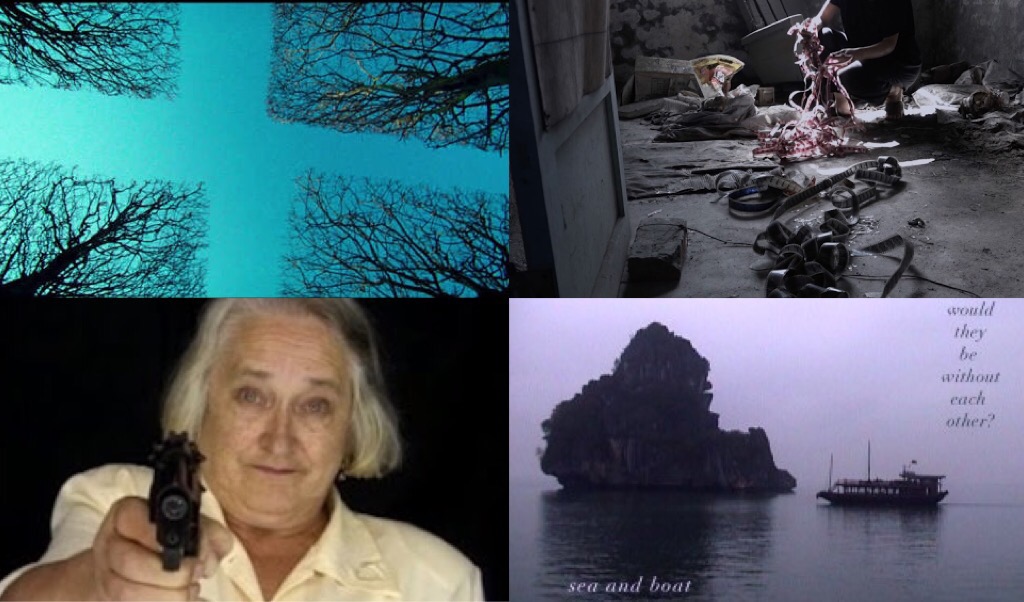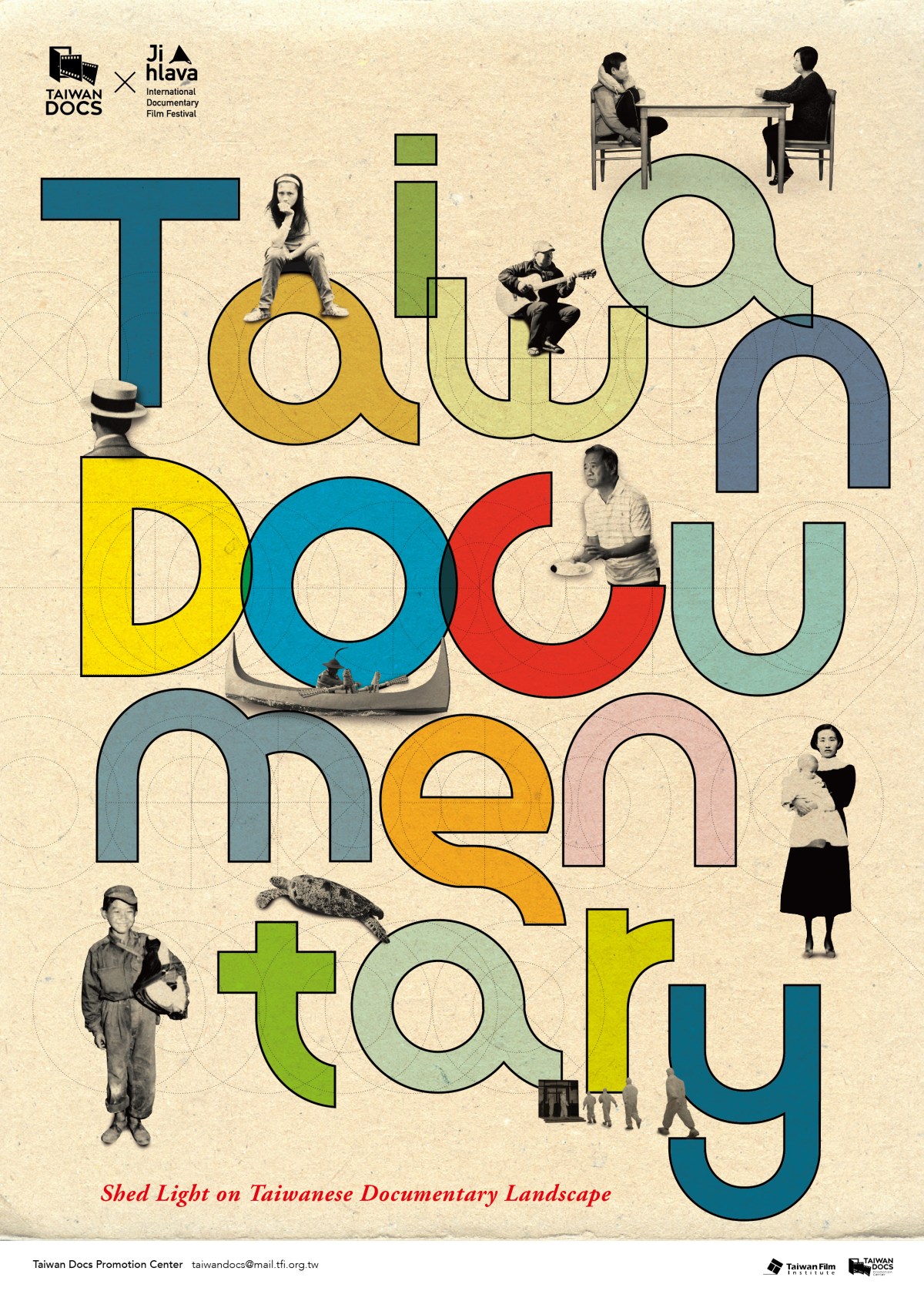
Retrospective of Taiwanese documentary cinema at the Jihlava International Doc Film Fest

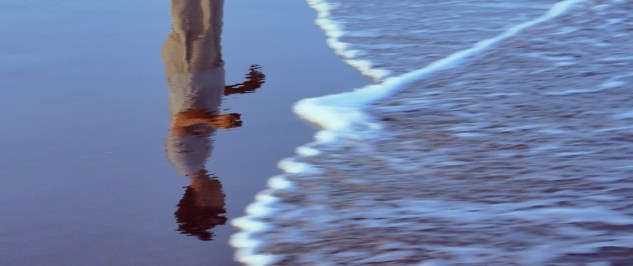
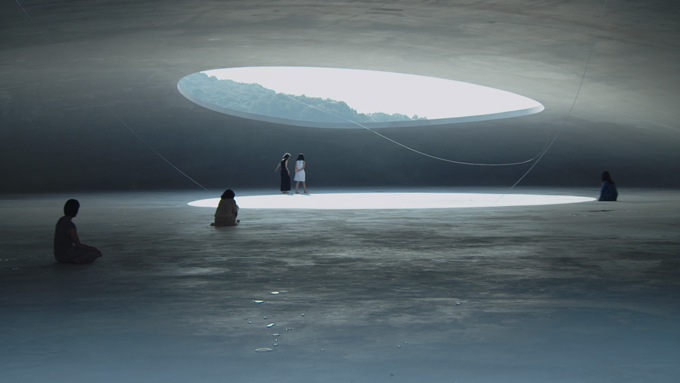
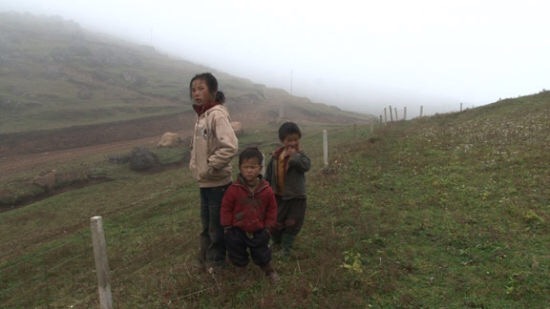
Since the discovery of Le Moulin two or so years ago, non-fiction cinema in contemporary Taiwan has been one of my main cinematic obsessions and a research interest that drove me to explore the flourishing documentary scene of the island. This year edition of the  Ji.hlava International Documentary Film Festival (October 24-29) is currently holding a retrospective on Taiwanese documentary from 1937 to 2014 titled Transparent Landscape: Taiwan, a program that presents 25 Taiwanese documentaries from the period, according to the festival “the historically most comprehensive showcase of Taiwanese documentary cinema ever”.  I won’t be able to attend it, but, it goes without saying, it’s an event I’m highly interested in and I hope a catalogue will be published, here the press release:

The section will include some of the most important works of Taiwanese independent filmmakers. Allowing a glimpse into Taiwan’s complicated historical-political development, these films offer significant insights into different periods of recent Taiwanese history.
The earliest Taiwanese documentaries are the 8mm ”home videos“, shot by photographer DENG Nan-guang in the 1930s. They realistically portray scenes of daily life under Japanese occupation, such as life and work along the Tamsui river and family outings. The recently restored short The Mountain by Richard Yao-chi CHEN (1967) will be presented outside of Taiwan for the first time. Other representative works from the1960s, are the films by renowned director BAI Jing-rui and photographer ZHUANG Ling. In this decade, only government-commissioned propaganda films could be produced, but with their creative ingenuity, those filmmakers still managed to convey the lives and thoughts of ordinary people.
The Green Team, the most important non-mainstream media in the period prior to and after the lifting of martial law in Taiwan (1987), will also be represented by two important productions. The Green Team documented many social movements and protests that took place on Taiwan’s road to democracy in the 80s, and their images eventually became weapons against the authoritarian state. There are obvious connections with the situation in Czech society in the late 80s before the collapse of the Soviet regime.
Apart from its focus on history, Transparent Landscape: Taiwan also pays tribute to the experimental spirit of Ji.hlava IDFF. By showcasing aesthetically experimental, creative films, traditional expectations on documentaries are challenged. The selection includes several masterpieces, such as works by internationally renowned artist CHEN Chieh-jen, photographer CHANG Chien-chi, the first Taiwanese to become a member of Magnum Photos, and YUAN Goang-ming, the pioneer of video art in Taiwan.
This comprehensive retrospective also includes early documentaries by the leading figures of Taiwanese cinema, such as CHUNG Mong-hong, WU Mi-sen, HUANG Ting-fu and others. Beginning from the 90s, they used experimental vocabulary to explore the boundaries of documentary filmmaking. Even today, their films are regarded as avant-garde filmmaking, no matter if they deal with aesthetic conceptions or with human problems.

You can find the complete program here, and more information about documentary in Taiwan on the TaiwanDoc page.
This slideshow requires JavaScript.

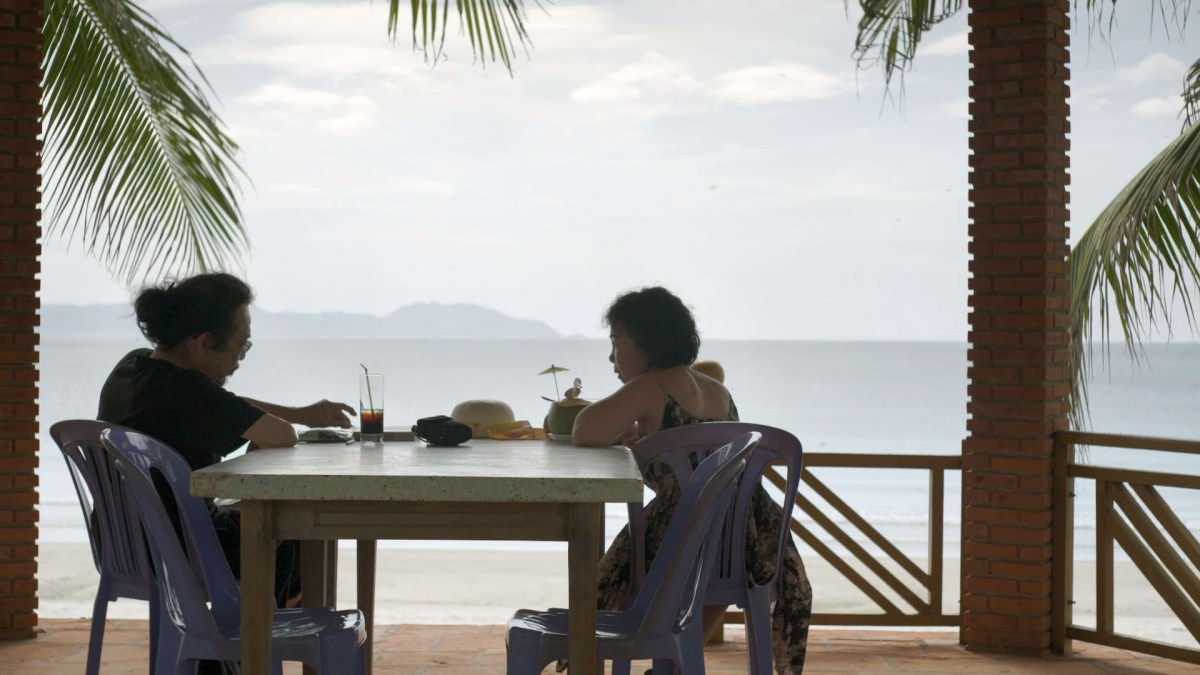
A House in Ninh Hoa

Recently I’ve been trying to catch up with some of the movies I missed at the Yamagata International Documentary Film Festival, it’s basically impossible to see all the works screened, and so two weeks ago or so I had the chance to watch A House in Ninh Hoa by Philip Widmann and Nguyễn Phương-Đan, a documentary shot in Vietnam and described as follows on the movie’s official page:

The old paternal house of the Le family, set in a rural scenery at the fringes of the small town of Ninh Hoa, close to the southern coast of Vietnam: A household dominated by women, neither rich nor poor, with chicken behind the kitchen and ‘rice paddies bordering the plot.
Through the everyday life of the inhabitants of the house, the constellation of the extended family becomes visible. A constellation that is fundamentally marked by the course that history took in the second half of the 20th century, and that has made Germany a substantial reference point in the life of the Le family.
One part of the family has been living close to the former West German capital of Bonn for more than 40 years while the other part still resides in Ninh Hoa. The community of the Les includes both relatives that are present and absent, and extends into the realm of the spirit world.
Three brothers embody the trajectories that history has taken: One brother was assigned as a diplomat to the embassy of the Republic of Vietnam in Bonn in the early 1970s. He took his wife and children with him. At the end of the war in 1975, the nation that had employed him ceased to exist, and they stayed in West Germany. Another brother who was a soldier disappeared in the last days of the war. His remains have never been found. The third one was sent into a re-education camp after the end of the war. Today, he is the only male family member left in the house in Ninh Hoa.

A House in Ninh Hoa is the kind of documentary I can easily connect with and relate to, challenging in its form, the movie questions the limits and the ontological foundation of the “genre”, even if it might look just as an “ordinary” documentary, at first glance.
Composed only by static shots, as far as I know there are no camera movements (no even one!), everything in the movie is told in tableaux, sort of Ozu-esque pillow shots, that reveal, fragment after fragment, the family story and the landscape where the movie takes place, and the movie is, to some extent, the very landscapes it depicts. The slow pace of the movie and its insistence on these spaces, domestic and external, build a very specific sense of duration, a cinematic tide that eventually envelopes the viewer in its own rhythm and its own time. This is achieved primarily through the editing, the shot compositions and the use of natural light, all stylistic elements that enhance the digital image, used here its full potential.
The title appears on screen only after 20 minutes or so and while the first fragments of the family stories are hinted here and there, it is only after an hour into the movie that everything becomes clearer, and the complete story of the family is explained in the last scene of the movie, when we see the only male family member left in the house reading from a piece of paper. Widmann and Phương-Đan thus construct the movie by removing information and data, and focusing instead on those elements usually considered secondary or peripheral such as anodyne landscapes and daily activities, presenting the family stories through an elliptical and fragmented narrative.
The afterlife, the connection with the departed and the spiritual world, in particular the brother never found at the end of the Vietnam war, is one of the central elements around which everything evolves for the family and consequently for the movie itself. Not only is the documentary imbued with an ethereal and contemplative aesthetic, but also everyone in the family speaks and moves around like they are themselves ghostly presences hovering around the house, thus evoking in the movie a sense of distance and absence, a metaphysical absence, and becoming in the end a reflection of the ephemerality of life.

Another point of interest of the movie, a major and more problematic one for me, is the position of the camera and the director/cameraman in relation to the people seen in the documentary. In the whole movie the camera is always an absent gaze, that is to say, there is never a look at the camera by the family members and never the person behind it is addressed directly by them. This raises a few questions, while there are no doubts that the story told in the documentary is true (Nguyễn Phương-Đan is a member of the family), A House in Ninh Hoa gives the idea of being composed also of reenacted and staged scenes. Exploring what the documentary form is and how much truth is conveyable through a certain cinematic style and approach, A House in Ninh Hoa is not only an eye pleasing piece of work — the stillness and beauty of the locations, and the shot compositions are outstanding — but also a fascinating dive into the limits of representation and the meaning of “truth” in relation to moving images. A beautiful and thought-provoking film that goes hand in hand with some of my favourite non-fiction works and that reminded me of a line spoken in Jocelyn Saab’s Beirut, My City (1982), a movie and a filmmaker I’ve also discovered in Yamagata. Reacting to a bombed landscape after buildings have been erased and reduced to ruins, the narrator/voice says that, I’m paraphrasing, a filmmaker/artist should try to capture reality, paradoxically, before it crystallizes into an image. A House in Ninh Hoa inhabits this paradox.

Director Philip Widmann was kind enough to reply to some of my questions and observations about the movie, and allowed me to use some of his words in the article.

P.S. The review of the movie was written before we exchanged our opinions and I decided not to modify it.

What is happening on the screen is maybe not entirely true but it is truthful, and personally I consider this more important. Truthfulness unites non-fiction and fiction as both need their inner logic, and unless you deal with public (historical) knowledge, it doesn’t matter if what you speak about is true as long as it is truthful. For the family members of course their truth is more important. But for the viewers of the film it isn’t.

The film is a staging of elements of the family’s everyday life that are punctuated by several discourses (biographical, historical, relating to identity, community, partnership etc.). In the eyes of the writers of the film these discourses are virulent but are rarely played out in the family life. Through the script we tried to infuse traces of these discourses into the scenes of the film. In order to work together, we explained the scenes and their supposed meaning to the family and discussed them. This exchange created a transparency that together with the static camera work relatively clearly delineated what would be part of the film and what wouldn’t, both in terms of framing and in terms of dialogue. Compared to forms that give preference to a mobile camera that follows people around and a way of speaking through interviews, this gave both the people in front and behind the camera a stronger sense of understanding and control.


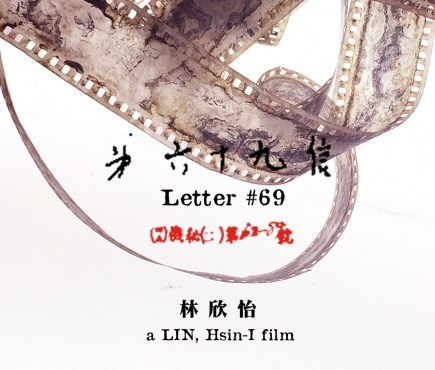
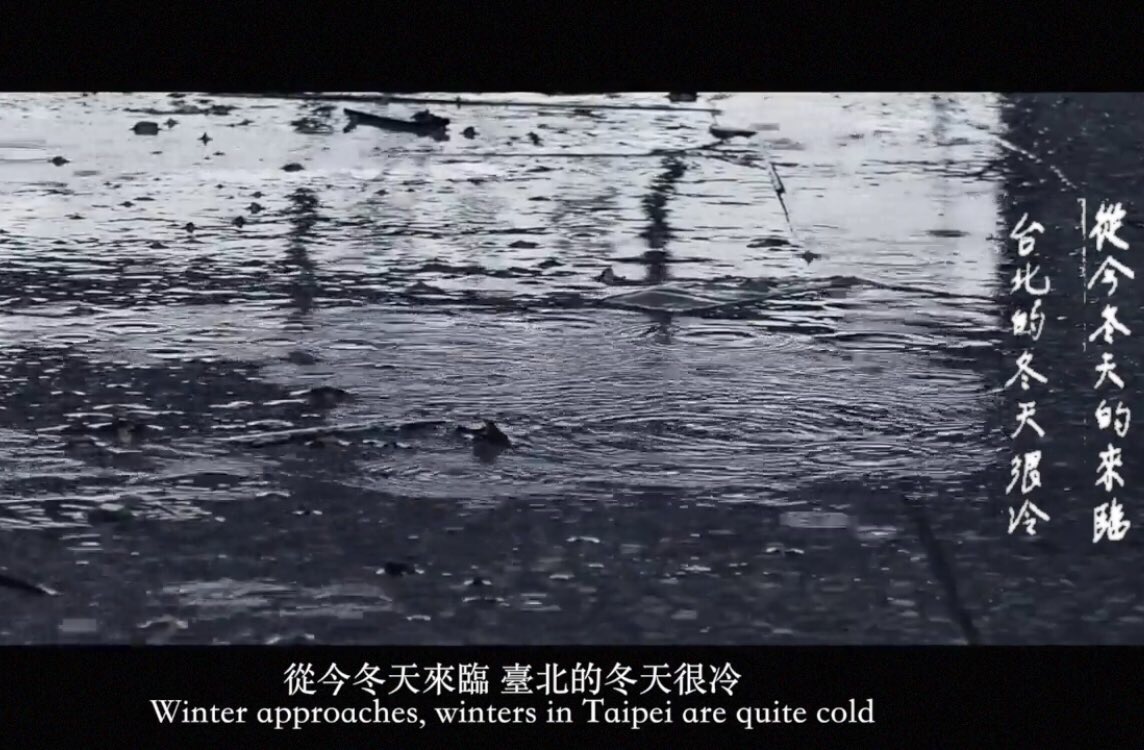
Letter #69 (Lin Hsin-i, 2016) 

I’ve written at length, here and elsewhere, about 3 Islands, an experimental documentary by Taiwanese female filmmaker and artist Lin Hsin-i, one of my favorite nonfiction movies of last year. Yesterday I had the chance to watch another of her works, Letter #69, a short film (19 min) that was screened at this year Visions du Réel and in 2016 at the Women Make Waves Film Festival where it received the Excellence Award.

Here is the synopsis from Visions du Réel:

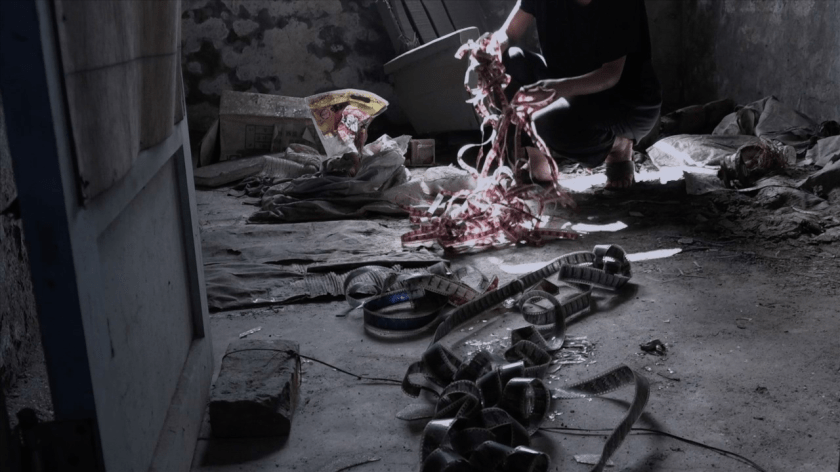
In the White Terror period in Taiwan, Shui-Huan SHI was imprisoned for hiding her brother, and was soon executed later. In the prison, she wrote 69 letters for her family. Simulating the life in the prison, this film silently criticizes the history. The “photographic film image” in the video, Letter #69, is an old photographic film from an abandoned old Taiwanese theater. After cleaning the film, Shi Shui-Huan’s letters were printed on it to construct a stop motion. The reproduction of old film serves as a response to the esoteric, dark history of Shi Shui-Huan and her brother Shi Zhi-Cheng in their last escape where they hid in the ceiling. It is also a response to the historical violence of Taiwan that cannot be cleared and is difficult to look back at.

In 1954 Shi Sui Huan was imprisoned for hiding her brother who was resisting the regime of Chiang Kai-shek. During the period spent in prison, she will eventually be executed, she wrote letters to her family and her last one, the letter number 69, was left blank.
The blankness of the last letter is the canvas from which the director starts her investigation into the so called White Terror, a period of purges when political dissidents who were protesting or resisting against the Kuomintang-led Republic of China government, were persecuted, incarcerated and killed. While the period started in 1947 and ended in 1987 when the martial law was officially lifted, I think the director is referring here to a more specific time and place, the first years of the White Terror and a corner of the Liuzhangli Cemetery in Taipei where Shi Sui Huan and other 201 people are buried. Most of them were leftist thinkers or activists but also, like Shi Sui herself, people who just protected their relatives. The graves were forgotten and basically untouched in fear of repercussions till the end of the martial law, when slowly the country started to breath again, a “rebirth” that is well reflected in cinema (the so called Taiwanese new wave of Hou Hsiao-hsien,  Edward Yang, Tsai Ming-liang, etc.)

The absence of written words in the last letter embodies the impossibility of directly connecting with the tragic period and its remnants, yet the blankness also represents the white noise resulting from the accumulation of all the phantasmic memories that in one way or another, while denied for so many years, are still alive and present. Sowing together all these fragments of scattered memories in an heterogeneous piece of cinematic patchwork, Lin Hsin-i’s short movie is an attempt to discover and create images and sounds of a lost and tragic period. The letters of Shi Sui Huan are juxtaposed with the narration in the present (done by family members of the victims), and images of ruins are overlapped with performative actions that recreate some of the gestures that the prisoner might have done.
Not only Letter #69 brings to the surface an obliviated past and directs its gaze towards a crucial spot in Taiwanese history, but the filmmaking style that made 3 Islands so powerful and fascinating for me is here in full display again. Aesthetically Letter #69 is a fragmented and kaleidoscopic work that blends the beauty and clearness of the digital image with the grain and the roughness of overused celluloid film ー an old strip of film where the director printed the woman’s letters ー sound manipulation and voice distortion with reenactment, and read and written passages from letters with the constant sound of a running film projector.

I might be partial because my cinematic taste tends definitely towards hybrid documentaries, but 3 Islands and now this Letter #69 are so fascinating and challenging that make Lin Hsin-i one of the most interesting filmmakers working in experimental nonfiction today.

A Yangtze Landscape (Xu Xin, 2017)

Festivalscope is giving access, till mid April,  to some of the documentaries screened at this year edition of Cinéma du réel, one of the most prestigious festivals dedicated to non-fiction cinema. (You can learn more here)
I grabbed the chance and last night I watched A Yangtze Landscape, a movie directed, photographed and edited by Xu Xin. IMDB describes it as follows:

A Yangtze Landscape utilizes a non-narrative style, setting off from the Yangtze’s marine port Shanghai, filming all the way to the Yangtze River’s source, Qinghai/Tibet – filming a total distance of thousands of kilometers. Experimental music and noise recorded live on scene are used in post-production, painstakingly paired with relatively independent visuals, creating a magically realistic atmosphere contrasted with people seeming to be ‘decorative figures’ right out of traditional Chinese landscape scrolls.

The documentary is composed of stunning scenary rendered in beautiful digital black & white, particularly the night landscapes are of almost pictorial quality, punctuated by scenes of people inhabiting the areas along the river, mostly areas ruined or emptied by the industrial and urban changes of the last decades. These parts with people are, in my opinion, performative, in a sense that the people seen, most of them poors, with mental problems or homeless, are performing themselves and their daily routine in front and for the camera. A Yangtze Landscape is for this reason a very partial film that focuses its attention on certain edges of Chinese society, I’m pretty sure that most of the comunities living near or on the banks of the Yangtze river are very different from the few exceptional individuals shown in the movie. Yet this is not a demerit of the film, a certain quality of artificiality so to speak, or performance as I have called it above, is very obviously present from the first minutes of the documentary, and the fact that it’s shot in its entirety in black & white is after all the biggest hint of its poetic aspiration and quality. Also on a technical side, it is worth noticing how in more than 2 hours and half there’s never a camera movement and a zoom in or out, the frame never moves, everything is crystallized and done by a very crafted editing, we have the camera “moving” only in the scenes where it is positioned on a ship floating on the river.
The movie has some similarity in its basic concept and structure to P. J. Sniadecki’s The Iron Ministry, if I’m not wrong, the american director is among the people thanked at the end of the documentary. There the camera followed the lives of Chinese people commuting by train from one part of the country to the other, from the lower to the upper class, here Xu Xin directs his gaze from the port of Shanghai to its source in Tibet.
We see and learn through intertitles, there’s no narration, about abandoned old villages, a bridge where every year many people commit suicide and other disasters and accidents that have happened near or on the river in the last 5 or 10 years.
The only witness of all these happenings seems to be the landscape, it is almost useless to say it, but the real protagonist of the movie is the landscape, a space where natural, human and industrial histories/stories intermingle and merge.

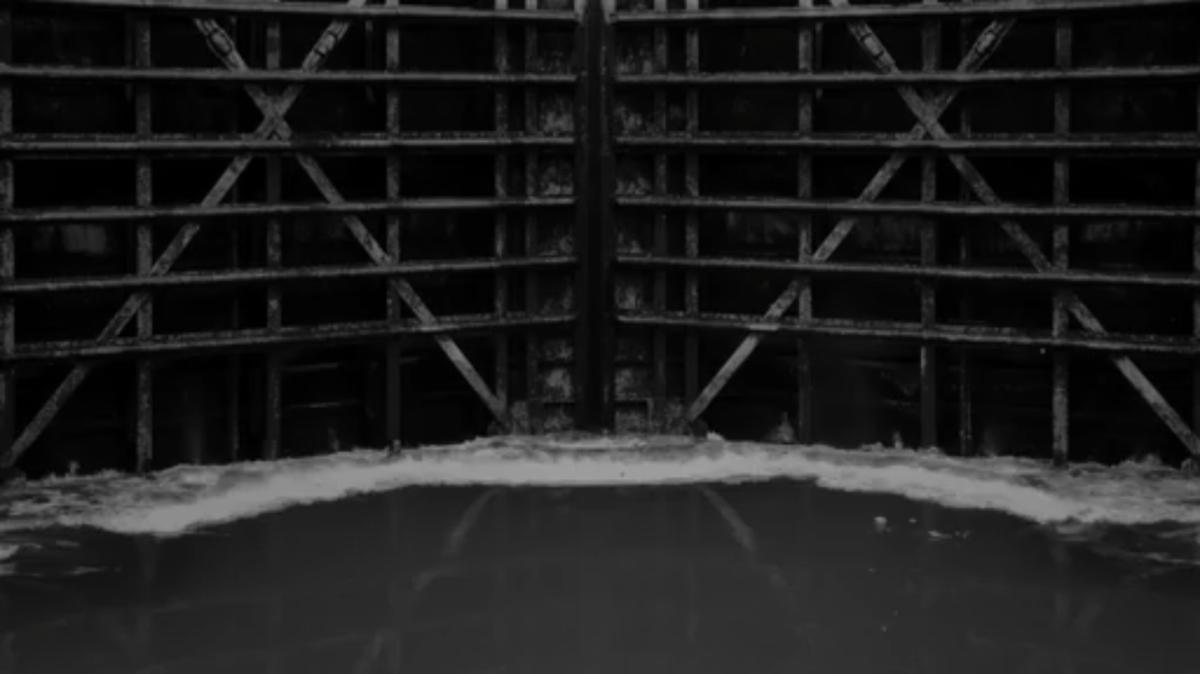
Interesting and well crafted as it is, I nonetheless feel that something is missing from it, to denounce and criticize certain aspects of contemporary Chinese society, and not only China, is something that absolutely must be done, but now that the country is in the spotlight internationally the risk is to look too redundant. For instance, towards the end of the movie there’s a long part all dedicated to a couple of homeless, their shacks and their dogs, we can see them on the foreground sitting in an old sofa or wandering among ruins with the ultramodern city and its skyscrapers on the background. The image is beautiful in its contrast, and even if it possesses a degree of truth, it ends up being trite and obvious, weakening the potential of the movie. While I like the general style, again the black & white is pictorial and the editing is perfect, it must be said that sometimes the film looks too “beautiful” and the image too “clean” without being subversive. The parts that resonate with me the most are those where Xu Xin explores the aesthetics of documentary to its limits. The aforementioned night scenes of the cities lights along the river, shiny but empty jewel boxes, or those at the river locks, slow and almost endless images of the water level, the ships raising and the gates opening, paired with a cacophonous soundscape made of squeaking noises and experimental music.

My favourite documentaries of 2016

2016 has been a busy year and unfortunately, and for various reasons (one of them being the place where I live, Japan), I haven’t had the chance to see as many new documentaries as I wanted to. On the other hand though, having had access to many documentaries produced in Taiwan through Taiwan Docs, for a couple of months I binge-watched the non-fiction movies produced in the island in 2016 (and 2015), and it was a revelation. Not only it allowed me to discover and explore the complex sociopolitical situation of the area and its recent history, but luckily I also stumbled upon a couple of formally challenging films.

That being said, I can’t really miss what recently has become a sort of yearly custom, so here is my list of the best documentaries I’ve seen in 2016, some of them are from 2015, but released internationally, or at least in Japan, only this year. At the end I’ve also compiled a short list of the best (re)discoveries of 2016. (disclaimer: best should here be understood as “favourite” of course)

8. Quemoy (Chiu Yu-nan)

quemoy_doc

“Quemoy, the islands adjacent to Mainland, used to be the frontier between Taiwan and China. However, it opens its border for the cross-strait exchanges. The film shows traces of Quemoy people in different generations and builds up a picture of complicated national identity in the boundary island.”
A relatively short movie (just 45′) whose main appealing point is its depiction of the complex geopolitical situation of the area.

7. Into the Inferno  (Werner Herzog)
6. Lo and Behold, Reveries of the Connected World (Werner Herzog)

“This boiling mass is just monumentally indifferent to scurrying roaches, retarded reptiles and vapid humans alike.”
Both movies are pure Herzog, for better or for worse, I personally adore the man, but the risk the great German director is running in his recent documentaries – especially now in an era when the social media is so pervasive and his persona in the mediascape is sort of overexposed – is that of becoming prisoner of the image forged in almost 50 years of incredible career.
Be that as it may, if you like Herzog, these two documentaries released in 2016 are very enjoyable, Lo and Behold is a better work in my opinion, or at least more appealing to me, and not necessarily for its subject, more for its rhythm and editing. Into the Inferno in some points wanders a bit too much, the segment set in North Korea for instance, albeit fascinating for the unique insights on the country, felt too much like a long digression.

5. Further Beyond

An interesting experiment in meta-documentary and a non banal reflection of what identity and its construction through images and storytelling is. The movie is maybe a bit excessive in its meandering here and there, but 
some passages are pure digital beauty.

4. A Room of Her Own: Rei Naito and Light (Yuko Nakamura)

a_room_of_her_own_rei_naito

Graced by outstanding sound design and soundtrack, the movie captures and beautifully embodies the sense of fragility and ephemerality of life seen through the art of Naito Rei. But A Room of her Own is interesting on many other different levels, partly experiment in non-fiction, partly personal documentary – what brought Nakamura to approach Naito was the severe illness of her mother – and partly a work that explores the intangibility of life, the movie is a very refreshing work of non-fiction, especially when considered in the context of Japanese contemporary documentary. I wish the last part, when four women are gathered on Teshima island, would have been longer. 
One last note on the photography, in tone with the themes explored by the movie, is really one of the most accomplished aspects of it.

3. 15 Corners of the World (Zuzanna Solakiewicz)

15_corners_of_the_world

I cheated, I know it’s a movie from 2014, but I watched it this year and it made a big impression on me, so I decided to include it in my list anyway.
15 Corners of the World is a mesmerizing and hypnotic documentary about the Polish electronic-music pioneer Eugeniusz Rudnik and, more importantly, about the visualisazion of sound and its materiality. An incredible visual and auditory experience.

2. Forgetting Vietnam

forgetting_vietnam

The latest visual work from Trinh Minh-ha, I’ve written more about the movie here.

1. 3 Island (Lin Hsin-i)

img_2531

A work that creates a complex and experimental mapping of three distinct geographical Asian areas, interweaving poetry, abstract imagining, historical data and archival footage. If you want, you can read more here.


(re)discoveries (in no particular order)


Asia is One (NDU), read more here.

On the Road: A Document (Tsuchimoto Noriaki, 1964), read more here.

Hospital ( Frederick Wiseman, 1970)

Broadway by Light (William Klein, 19589

The Festival Pan-African of Algiers (William Klein, 1969)

East and Southeast Asian documentaries, a list/database of the most significant works


updated September 14th 2016
In the past few days I was online looking for list(s) about East and Southeast Asian documentaries, lists that could give me an idea of what to watch if I wanted to explore the history non-fiction cinema in East and Southeast Asia, well….I couldn’t really find anything. So I told myself “why not making this list? a list that would also function as a sort of database for people interested in non-fiction” and then I realized that although I’m a kind of an expert in the history of Japanese documentary, I don’t really know that much about non-fiction cinema in the rest of Asia, besides of course Wang Bing, Rithy Panh and few others.


In most of these Asian countries cinema as a form of art is something pretty new and still in development, and often documentary is basically nothing more than state propaganda, fortunately things have slowly started to change few decades ago, when the new digital technologies allowed virtually everyone to become a documentary filmmaker and the social unrest set in motion the arts.
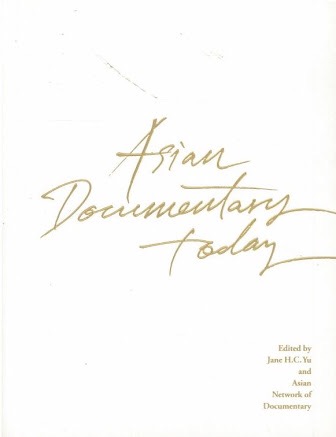
An interesting and useful resource on the topic, although it focuses more on the contemporary situation, is Asian Documentary Today, a book published by the Busan International Film Festival in 2012 and compiled and edited by AND (Asian Network of Documentary).

If anybody out there in the vastity of the internet is interested in helping me with this tiny project, a list/database of the most significant and important documentaries made in East and Southeast Asia, please feel free to get in touch with me: matteojpjp [at] gmail.com
Just a few “rules”:

– new works are accepted but don’t forget that the list is about “important and significant documentaries in the history of cinema”

– accepted are documentaries from these countries:  China, Hong Kong, Japan, North Korea, South Korea, Mongolia, Taiwan, Indonesia, Malaysia, Singapore, Philippines, East Timor, Brunei, Christmas Island, Cambodia, Laos, Myanmar (Burma), Thailand and Vietnam.

– if you’re kind enough to send me some suggestions or titles, it would be nice to have also few sentences contextualizing the documentary and briefly explaining what the movie is about.

the deadline is the end of September, once done and organised properly, I’ll publish it here on the blog and I’ll try to have it spread in the internet.

Thank you

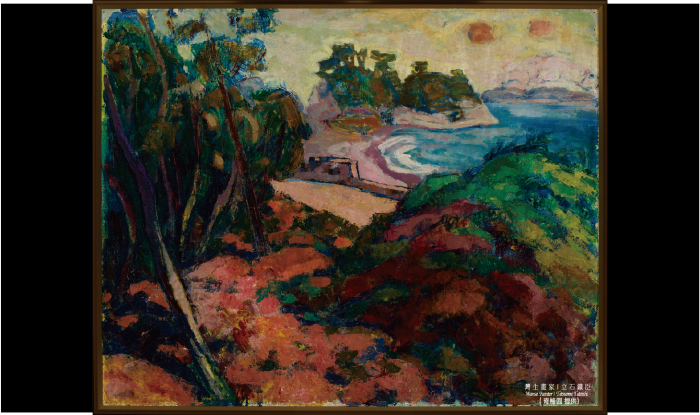
Wansei Painter – Tetsuomi Tateishi


After Le Moulin, and partly Asia is One, my personal exploration of the period when Taiwan was under Japanese rule (1895 – 1945) continues today with Wansei Painter – Tetsuomi Tateishi (2015), a documentary directed by Kuo Liang-yin and Fujita Shuhei, and presented at the last Taiwan International Documentary Festival, where it received the Audience Award.
Here the synopsis:

Tateshi Tetsuomi was born in Taiwan in 1905. He returned to his birthplace to find painting subjects and then he had been attracted by the landscape and local cultures of Taiwan. During his stay in Taiwan, he made oil paints, illustrations and wood engravings for the magazine Minzoku Taiwan (Taiwanese Folklore). He was regarded as a promising painter, but his achievements were to be forgotten when he was repatriated to Japan at the end of WWII and lost most of his paintings. He earned a living as an illustrator for children’s books, but finally achieved unique expressions in his last years. This film reveals his ambition and struggle, and reflects the dramatic political, cultural and social change in Taiwan.”

The word Wansei refers to the Japanese individuals born in Taiwan during the colonial occupation of the island, people who were forced to leave Taiwan, and de facto deported, in the years following the end of the Pacific War (1945). The movie, exploring the life of one of these people and a very special one, is indeed a biopic, but at the same time and on a more subtle level, it’s a depiction of what it means to belong and to live in two different cultures in times of shifting historical changes.

Tateishi was born and lived part of his life in Taiwan, a place and a culture that played a great part in his development as an artist and human being, when he returned there from Japan during the 1930s, the colors and landscape absorbed in his daily experiences would remain forever with him and would be very recognisable in his future paintings. As he writes in his memoir “I have always peferred strong colors and bold lines. Taiwan’s landscapes suited my personality perfectly”.
Things started to dramatically change in the sociopolitical environment at the beginning of the 40s, when the “divide began to emerge between Japanese and Taiwanese in areas such as painting, literature, and theater. The government was promoting Japanesation, Taiwanese culture was considered vulgar and barbaric”. In such a period, when the imperialistic and fascistic oppression promoted by Japan was at its peak and the propaganda machine was in full swing, Teteishi extensively wrote for Folklore Taiwan, a magazine (in Japanese) exploring and reviving the traditional arts and custom of the island. This (re)discovery of Taiwanese cultural heritage was so important that is still praised nowadays among Taiwanese scholars.
At the age of 39 in 1944 Tateishi was drafted and sent to the war front, and after the conflict ended his family stayed in Taiwan, part of those people called “overseas Japanese” in a land now under Chinese administration. In 1949 they were forced to leave the country and go back to Japan, where he continued to paint and eventually became a well-known illustrator for encyclopedias and scientific publications, many of his illustrations can be found in Japanese children’s books and covers of the 1960s and 70s. As for his painting, after the war his style changed considerably, becoming more surrealistic and abstract “military and post-war experiences in Taiwan cast a shadow over my heart, I searched for new styles of painting, yet I could not make up my mind on a particular style.”

From a purely cinematic point of view, the documentary is mainly composed by still photos, paintings, archival images and interviews with Tateishi’s relatives, his wife and his two sons, and Taiwanese arts scholars. The narration is heterogeneous, the main voice, the one from his granddaughter, is intertwined with short pieces read from his memoir and the voices of his wife and children. There are also few scenes of modern Taiwan and Japan, a school where he used to teach or places where he used to go, and everything is held together by a minimal and unobtrusive music, a sound design that gives the movie its almost contemplative mood.

When the story moves to Japan after the war, the documentary loses, for me, its appeal, it’s still a well crafted work, but the risk of becoming an hagiography is very strong. Fortunately balancing up this tendency are the artist’s beautiful and diverse paintings filling up the screen with their colors, shapes and mystery. Another problem I have with the movie is that the period of colonization, to my eyes at least, is depicted with some indulgence, of course the aim of the work wasn’t to deeply explore the violence of the occupation, but still, watching the documentary it seems like the period was after all a positive phase in Taiwan history, especially when opposed to the post-war Chinese administration. I am maybe reading too much into it, and again I’m not an expert on the subject, so I could be wrong and it may well be that amid all the violence and oppression, important cultural and artistic achievement were obtained, but at what price?  
If raising doubts about a subject is one of the best achievements a movie can obtain, willingly or not, Wansei Painter – Tatsuomi Tateishi for what I’ve written above is certainly a compelling work and a must-watch for anyone interested in how the life of an individual interweaves and is shaped by the events of a very intricate historical period.

The next installment in my personal series about Japan/Taiwan will be, time permitting, 3 Islands by Lin Hsin-i, you can now read my review here.

Documentary film festivals in East Asia

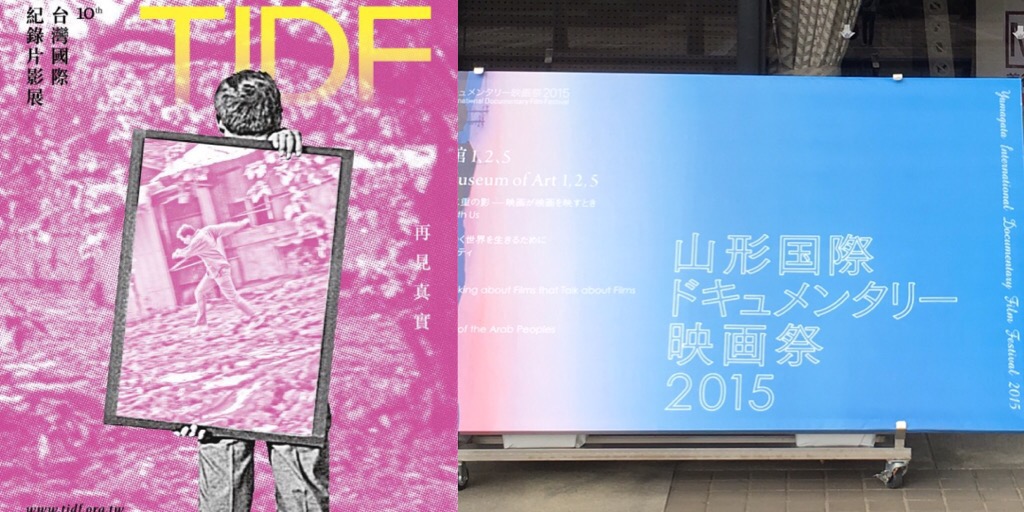
Surfing through the internet in search of information and publications about documentary in East Asia, I’ve stumbled upon what seems to be an interesting and original dissertation.”Extending the local: documentary film festivals in East Asia as sites of connection and communication” is a thesis written in 2012 by Cheung Tit Leung at Lingnan University and, as the title suggests, it’s a study about the importance of East Asian documentary film festivals for the development, nurture and distribution of Asian non-fiction cinema, and Asia in general, across the globe. The author focuses his attention on four film festivals in the region, arguably the most important ones, the Yamagata International Documentary Film Festival (Japan), the Documentary Film Festival China (China), the Taiwan International Documentary Festival (Taiwan) and the Hong Kong’s Chinese Documentary Festival (Hong Kong). 
I’ve read a dozen of pages so far and I have to say that the topic is really fascinating, more than I expected; whether or not you’re into Asian cinema, this thesis is an important piece to the relatively new field of Film Festival studies, but also one that explores the connections between cinema and a region, East Asia, seldom analysed on specialist periodicals or inside academic circles. 

Your can legally download and read the thesis here.

Aragane 「鉱」by Oda Kaori

Aragane is the first full-length movie by Oda Kaori, a talented Japanese director who had her debut in 2012 at the Nara International Film Festival with the short Thus A Noise Speaks, a meta self-documentary that unflinchingly explored her coming out as a female gay and the subsequent reactions from her family. Aragane is a completely different work though, an experimental documentary that Oda directed, photographed and edited herself, but also a “product” of Bela Tarr‘s film.factory, the film school based in Sarajevo and established by the Hungarian director few years ago, a place where the Japanese director studied for three years. Aragane, the Japanese title means “ore” or small pieces of stone, was shot in a Bosnian coal mine and it’s an immersive and hypnotic sensorial experience, a very special and rewarding one that was presented last year at the Yamagata International Documentary Film Festival and later at the DocLisboa in Portugal.

I had the pleasure of meeting Oda in Yamagata and later on she was kind enough to answer my questions by email, you can read the interview here.

Aragane

Bosnia and Herzegovina, Japan              2015, 68’                                                Director: Kaori Oda, Cinematographer: Kaori Oda, Editor: Kaori Oda, Producers: Shinji Kitagawa – FieldRain, Emina Ganic – film.factory.

The movie starts overground with the camera gazing at some busy workers preparing and checking the machines before going deep down into the mine, the camera then ride on a cart and with a very long tracking shot slowly starts its descent into the inner part of earth. Once inside, we’re introduced and enveloped in  a world of darkness, a pitch black curtain broken only by sudden and random flashes of lights revealing a segment of a machine here and a face smeared with coal there. There are really few spoken words, we hear some random sentences uttered every now and then by the workers, but that’s all, much more important is the wall of noise created by movie, the soundscape being a crucial element of it. In the 68 minutes of deep immersion into the chthonian and dissonant world of the mine, we are almost constantly submerged by the cacophonous noise of the machinery, although the movie is also punctuated by sparse but significant and sudden moments of deafening silence. At the end of the movie for instance, when we emerge from the bowels of the earth, the peace and the vivid colors of the changing rooms and the stillness of the hanging clothes have an almost soothing quality for our eyes and ears.
As stated by the director herself, Aragane is not a direct inquiry into the harsh conditions of the people working in the mine, although it’s something that eventually and necessarily emerges, but more an attempt to convey on screen the time and the space of the coal mine as experienced by the workers, or, I would add, as experience by the mine itself. It takes some time to get used to the alien space and almost abstract geographies of the mine, for most of the time we don’t really know what’s going on and who is doing what, it’s more like being thrown into a cubistic landscape in the middle of its making. Once we get accustomed to the time and the space presented on screen though, everything slowly begins to make sense, what starts to surface from the images and sounds, and through the tracking shots and the slow and hypnotic camera movements, is the time of the mine – time experienced as duration – and the materiality of the space depicted. On this point Aragane is a documentary very akin to the works of the the Harvard Sensory Ethnography Lab, Aragane reminded me – albeit with some distinctions of course- of Leviatahn, Single Stream and The Iron Ministry, just to name a few.             
Aragane is a compelling viewing experience, not a cinematic revolution or a masterpiece of course, but nonetheless a very significant work for Japanese documentary – it’s only partly Japanese to be honest, since it was produced and shot outside the archipelago.  What particularly interests me here is that finally Japanese cinema has an important work of non-fiction able to emancipate itself from the imprint of social and political documentary that usually dominates the contemporary non-fiction scene in Japan, and a work that in doing so liberate and explore the experimental qualities of documentary. I might exaggerate, but to find something similar in the history of Japanese cinema we have to go back to the great Matsumoto Toshio and his Ishi no uta (The Song of Stone, 1963).

img_1304

East and Southeast Asian documentary. And beyond 


Today just a quick note to announce a small topic shift I’d like to give to my blog. I will still primarily write about Japanese documentaries, but in the past months I realised just how limiting it is to keep the focus only on the works coming out of Japan and by doing so missing the chance to explore the rich and vibrant non-fiction scene of East and Southeast Asian countries. To be honest, I don’t know where this decision will bring the blog and even if there will be real changes in my blogging at all. Reviews of Asian documentaries? news about a new DVD/Blu-ray or an interesting movie from China, Taiwan, South Korea or the Philippines? More about film festivals in the region? I have no idea, stay tuned.