YIDFF 2025 – report 3: From the River to the Sea, and the Mountains: Filmmakers in Solidarity with Palestine – A Gathering

Previous reports:
YIDFF 2025: preview
report 1: SPI (Sayun Simung)
report 2: Awards

Although this is the third report from YIDFF 2025, it stands philosophically, so to speak, at the center of what my experience at Yamagata has been this year.

One of the appeals, at least for me, of watching and writing about documentary cinema is that we are compelled—more than in fiction—to reflect on the relationship between images and “reality,” on the act of audiovisual representation, on how it all connects to what is happening in the world, and, not least, on the ethics of filming (see the Itō Shiori’s “case”).

The genocide taking place in Palestine makes us all complicit and guilty in some way, including those who work, in various capacities, within the world of cinema and audiovisual production. Writing about films and attending film festivals are, after all, part of the broader industry that revolves around cinema—documentary included.

An extra-festival initiative, though seemingly supported by YIDFF, took place in Yamagata on October 13th. Titled “From the River to the Sea, and the Mountains: Filmmakers in Solidarity with Palestine – A Gathering” the event was organized by Filmmakers in Resistance and featured special guest Razan AlSalah, director of A Stone’s Throw. It brought together directors, editors, critics, and other film industry professionals from Japan and abroad to reflect on how to dismantle complicity in the machinery and industry of the genocide. 

The event opened with a short introduction summarizing the ongoing massacre in Palestine, which continues despite the so-called “ceasefire.” This was followed by a discussion on the significance of PACBI and its crucial role within the broader movement of solidarity.
The second part of the gathering centered on Razan AlSalah, who spoke at length about her position as a Palestinian filmmaker and about strategies to resist the Israeli colonial project. She emphasized the need to make solidarity material, noting that, in many cases, images themselves have become part of the genocide—they have been weaponized. While watching people die inevitably provokes strong emotions, AlSalah insisted, it is essential that these emotions be transformed into concrete and practical forms of action.
To this end, AlSalah proposed that cinema workers concentrate particularly on two key priorities:
– Contextualize and distribute images responsibly. The circulation of images—particularly on social media—must always be accompanied by context.
Cinema, on the other hand, possesses a different kind of power: the act of watching collectively and engaging in discussion after a screening are integral parts of the viewing experience, helping to situate and deepen our understanding of what appears on screen.
– Acknowledge the role of film and audiovisual workers. It is crucial to recognize that cinema is an industry entangled, as Francesca Albanese has put it, in the “Zionist economy of genocide.”

As a poignant illustration of this entanglement, AlSalah shared a personal story. Based in Montreal, Canada, she recalled an incident involving the collective she is part of, which had planned to screen a Palestinian film at a local cinema (unfortunately, I do not recall the title of the film or the name of the venue). The theater initially agreed to host the screening, but when the collective asked to make visible the economic ties between organizations and the Israeli machinery of genocide, the cinema withdrew its support. 

This personal episode illustrates the need to implicate ourselves in the places where we live and to make solidarity material; positionality, in this sense, is fundamental. Palestine—and its erasure, which extends to people, land, animals, plants, and entire landscapes—is now often consumed as content. In this regard, AlSalah’s statement, “It is important for me that my works re not consumed as art objects, because the market will capitalize on the tragedy,” is a crucial encapsulation of both the gathering’s spirit and the importance of PACBI.
On a somewhat tangential note, this reminded me of the practices and positions against ‘art’ by Zero Jigen in Japan during the 1960s, as well as filmmaker Alberto Grifi’s belief in “moving beyond cinematographic language to embrace the language of life.”

The final part of the event turned its attention to film workers active in Japan. Several participants shared their experiences of solidarity actions carried out over the past two years and provided Japan-specific perspectives on the responses to the ongoing genocide.
In Japan, large-scale demonstrations have not taken place, but smaller protests have nonetheless occurred over the past few years. These actions were largely ignored by mainstream media, yet circulated through alternative channels, such as Discord groups.
What stood out to me was that several demonstrations were also organized in Okinawa, where the Palestinian cause was connected—albeit on a very, very, very different level—with the oppression of the Ryukyuan people. It reminded me of the 1950s and the international class solidarity that was so prominent during that decade; a shining example of this were the screenings of several short documentaries made by Noda Shinkichi and shown two years ago in Yamagata.

It was also fascinating to learn how activism and demonstrations in solidarity with the Palestinian cause are being organized by queer and LGBT groups in Tokyo, as well as in Japan’s more rural areas.
In conclusion, while there was agreement that PACBI and a material form of boycott and resistance—tied to where one lives and the work one does—are essential, what is also needed in Japan is a wider dissemination of knowledge about what is happening in Palestine and the economic networks that sustain the industry of genocide.

P.S. I have deliberately avoided naming any of the participants in the gathering, except for AlSalah, whose name appeared on the pamphlet.

Best (favorite) documentaries and discoveries of 2024

As usual, the list below reflects my tastes, interests and viewing habits during the year. Some works are from 2023, but only became available here in Japan in 2024. Synopses, in italics, are from Letterboxd. Films are listed in no particular order:

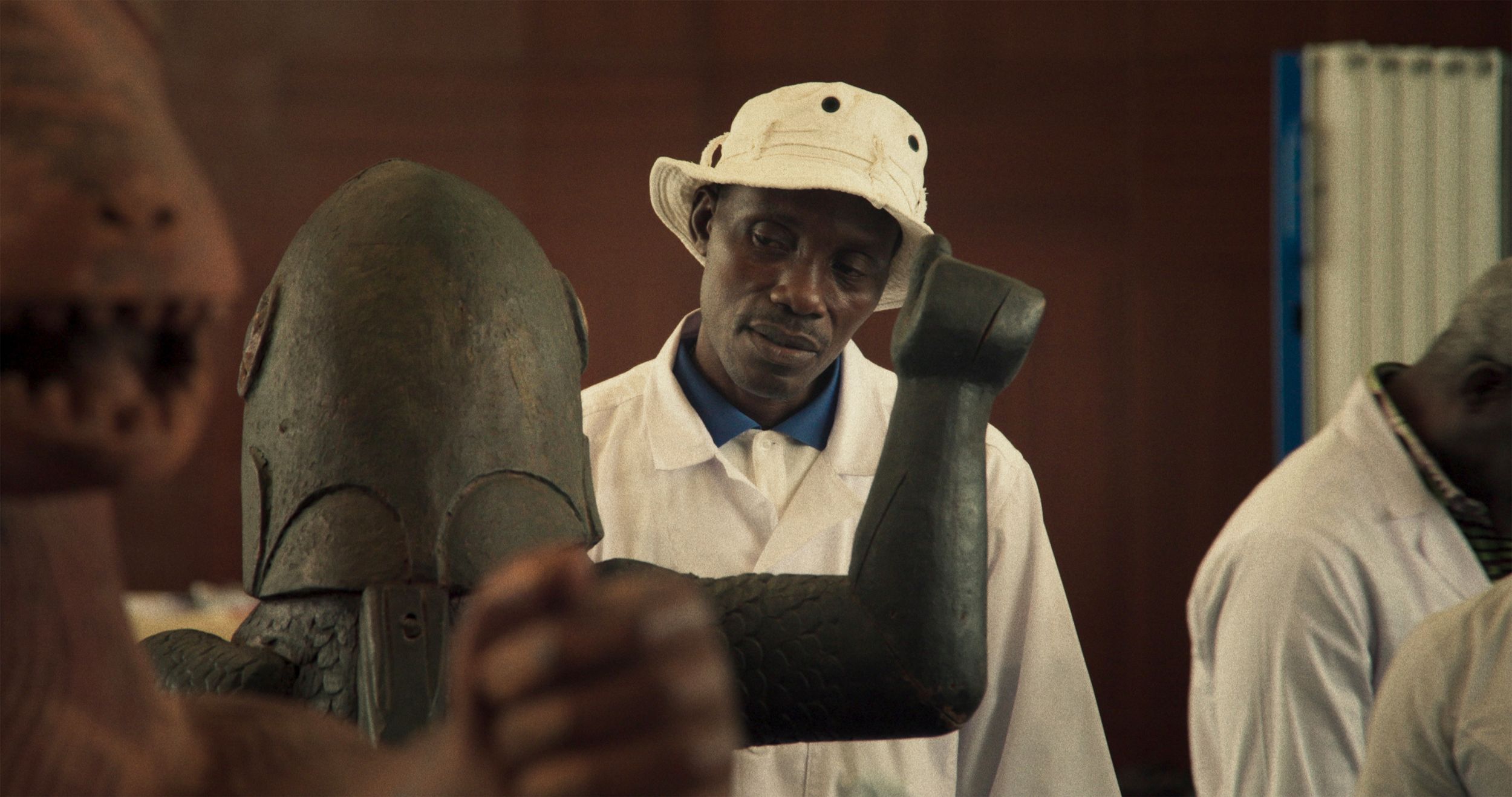
Dahomey (Mati Diop)
Thousands of royal artifacts of Dahomey, a West African kingdom, were taken by French colonists in the 19th century for collection and display in Paris. Centuries later, a fraction returned to their home in modern-day Benin. This dramatized documentary follows the journey of 26 of the treasures as told by cultural art historians, embattled university students, and one of the repatriated statues himself.
Dahomey is a mesmerising experiment, both visually and thematically: it poses so many questions about decolonisation, essentialism, the traces in the present left by the actions in the past, language, art, religious practices, politics, and the life of objects (Object Oriented Onthology?), while hinting at possible lines of flight…Diop has an incredible talent in capturing the beauty of people and things, and blend them together…
“I am the face of the metamorphosis”

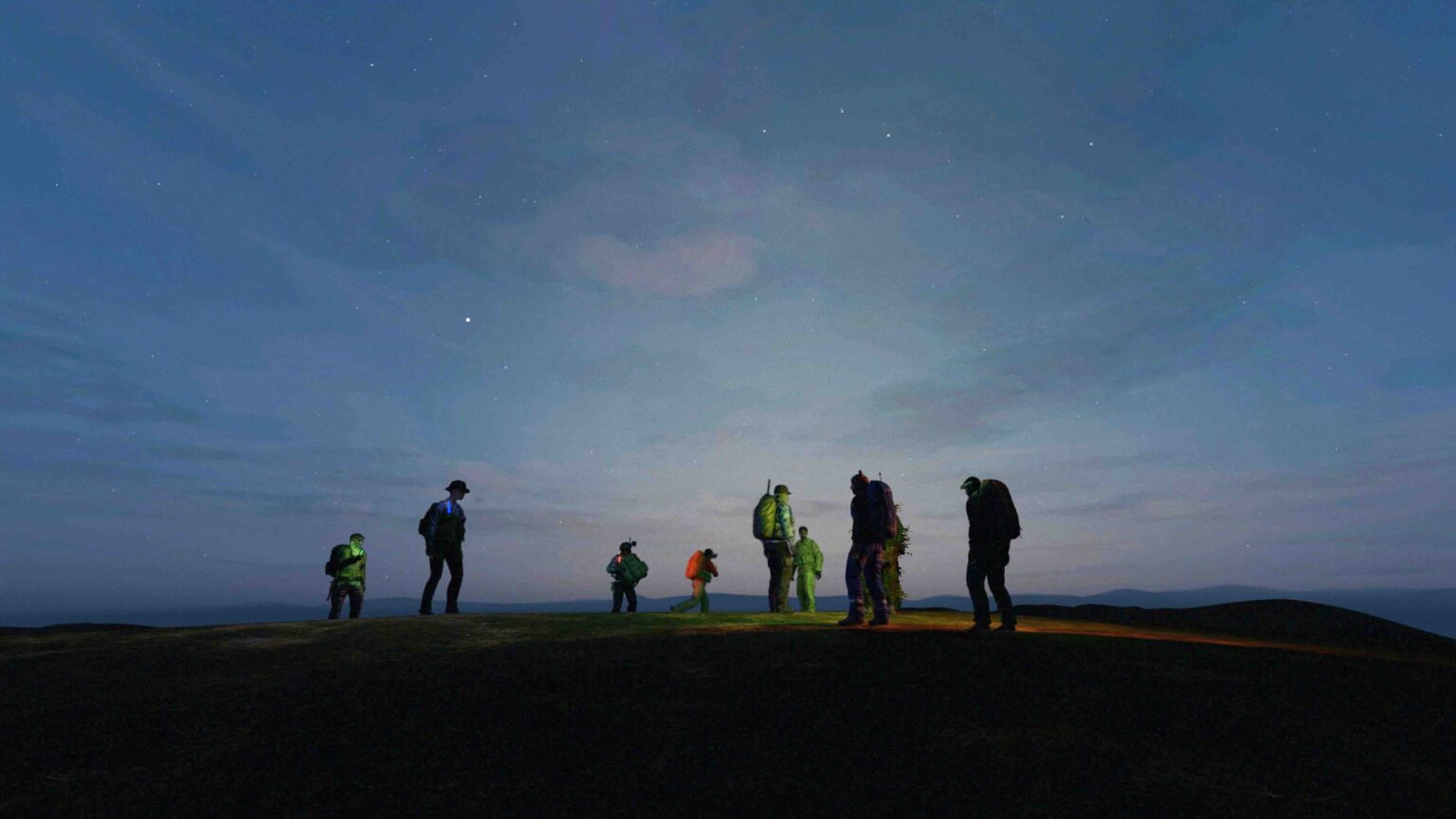
Knit’s Island (Ekiem Barbier, Guilhem Causse, Quentin L’helgoualc’h)
Somewhere on the internet is a land where communities pretend to live out a survivalist fiction. The avatars of the directors of Knit’s Island spent 963 hours there, creating a fascinating film resulting from their encounter with these communities. The “players” reveal their fears and fantasies, in an at times unsettling blurring of the real and the virtual.
I am not a gamer, and not particularly interested in online videogames, but when I first saw it at the Niigata International Animation Film Festival, it blew my mind. The reality of the virtual, complex, subtle, and much much more.

No Other Land (Yuval Abraham, Basel Adra, Rachel Szor, Hamdan Ballal)
Made by a Palestinian-Israeli collective, this documentary shows the destruction of the West Bank’s Masafer Yatta by Israeli authorities and the unlikely friendship that blossoms between Palestinian activist Basel Adra and Israeli journalist Yuval Abraham.


The Voices Of The Silenced (Park Maeui, Pak Su-nam)
Director Park Soo-nam, a second-generation Korean resident in Japan who is losing his eyesight, decides to digitally restore 16mm film she shot a long time ago, relying on her daughter Park Ma-eui’s eyesight. The blood, tears, and numerous corpses of Koreans living in Japan are clearly engraved in the film filmed over 50 years.

Hiroshima – Nagasaki (Ikezoe Shun)
Voices from Tsuyoshi Yamaguchi, who was twice exposed to the atomic bombs in Hiroshima and Nagasaki and later became a storyteller, as well as those who continue the storyteller activities with his daughters, grandchildren, and great-grandchildren, and other people who were twice exposed to the atomic bombs. How will a storyteller who was not involved in the story pass on the memories in the future?

Clouds of War (Mikami Chie)
This is the latest documentary by journalist and filmmaker Mikami Chie, a director whose previous works (The Targeted Village, Boy Soldiers: the Secret War in Okinawa, We Shall Overcome) have focused on the current situation in the Ryūkyū archipelago (Okinawa), its complex geopolitical history and the resistance of its people against the various American bases operating on the islands. Filmed over the course of eight years, beginning in 2015, Clouds of War documents the construction of military harbours and ammunition depots by the Japanese Self-Defence Forces, and more broadly, the general militarisation of the main island of Okinawa, Yonaguni, Miyako and Ishigaki. These frightening changes affecting the land and its citizens, such as the construction of underground shelters in Yoneguni or a plan to evacuate the inhabitants to Kyūshū, are being done in preparation for the next war on the horizon, the one between China and Taiwan.

Soundtrack to a Coup d’État (Johan Grimonprez)
In 1960, United Nations: the Global South ignites a political earthquake, musicians Abbey Lincoln and Max Roach crash the Security Council, Nikita Khrushchev bangs his shoe denouncing America’s color bar, while the U.S. dispatches jazz ambassador Louis Armstrong to the Congo to deflect attention from its first African post-colonial coup.

The Oasis I Deserve (Inès Sieulle)
Replika is a public platform that allows anyone to create a relationship with a chatbot trained by artificial intelligence. This chatbot has been designed to replace us with our loved ones after our death. Thus, its goal is to learn as much as possible about us in order to reproduce us identically. Through a walk that takes place only from the subjective point of view of Replikas, we see them evolve and discover the images & sounds of the world around them through a system of videos generated by artificial intelligence. Phone conversations that Replikas have with users fill the narration. The Oasis I Deserve is not a film that questions the system of machine/human domination under the axis of a future war against the machine. It is a film that is mainly human. It speaks about our relationship to the unknown and how we share violence. (source).
I was really impressed by the subject tackled and by the way the images, Francis Bacon like, are able to convey the themes and the feelings explored .

Black Box Diaries (Itō Shiori)
Journalist Shiori Itō embarks on a courageous investigation of her own sexual assault in an improbable attempt to prosecute her high-profile offender. Her quest becomes a landmark case in Japan, exposing the country’s outdated judicial and societal systems.
A powerful example of how women can reclaim their agency through the visual medium.

Underground (Oda Kaori)
The latest work by the Japanese artist, I have written about it, here: Sculpting space with light.


Discoveries:

Mother of Many Children (Alanis Obomsawin, 1977)
This film is an album of Native womanhood, portraying a proud matriarchal society that for centuries has been pressured to adopt different standards and customs. All of the women featured share a belief in the importance of tradition as a source of strength in the face of change.
Obomasawin’s first feature-length documentary is also one of her best (along with Kanehsatake and Restigouche, in my opinion): insightful, touching, multi-layered and beautifully constructed.

Echigo Okumiomote: A Traditional Mountain Village (Himeda Tadayoshi, 1984)
I wrote an article about the film: here.

A Grasscutter’s Tale (Fukuda Katsuhiko, 1985)
Part of the Sanrizuka notes that Fukuda took after he left Ogawa Pro in the late 1970s and the group moved to Yamagata, A Grasscutter’s Tale is a crucial film in the history and development of documentary practices in Japan. It occupies two spaces at once: a militant cinema and a cinema that explores the waves of history through the personal; in other words, it’s an oral film that uses images to explore the physical and historical space of a place.
Fukuda experiments with style and form, for example: one segment about a dream is completely dark except for a bright light in the top left corner of the screen, and in another, the narration explains, again on a black screen, how the re-enactment of an episode from the old lady’s life was scrapped at the request of her son, who was in it.
The episodic structure of the film, which is made up of 19 chapters (some comic, some tragic) that explore episodes in the life of the protagonist, does not capture a totality, but provides an image that leaves room for the creation of meanings. This is also reflected in the visual style used, where images and words are parallel and do not touch each other, so to speak.
I was lucky enough to attend a screening of the documentary in 16mm, the greens of the crops and grass are almost tactile, and the time-lapse scene of the setting sun, here a fiery red, is similar to that used in Magino Village: A Tale.

addendum (January 5, 2024): I forgot Tokyo Trial (Kobayashi Masaki, 1983), one of the fews examples of found footage/compilation documentary in the history of Japanese cinema.

Yamagata International Documentary Film Festival 2023 – dispatch 1: Losing Ground, Land of My Dreams, A Night of Knowing Nothing, and more.

Yamagata International Documentary Film Festival 2023 wrapped up two weeks or so ago. It was a nice and enriching experience to attend the festival in presence again (the 2021 edition was held online only), and to catch up with old and new friends.

Most of my viewing time was cannibalized (and I mean it in a good way) by Noda Shinkichi‘s huge retrospective, a deep dive into the works of a pivotal figure in the development of documentary filmmaking in post-war Japan. I’m planning to write about this fascinating and almost overwhelming viewing experience in the following weeks, but today I’m going to focus on some of the other films I saw in Yamagata.

Three documentaries about the current socio-political situation in Myanmar, films shot in the country, were screened in the always interesting New Asian Currents program. 

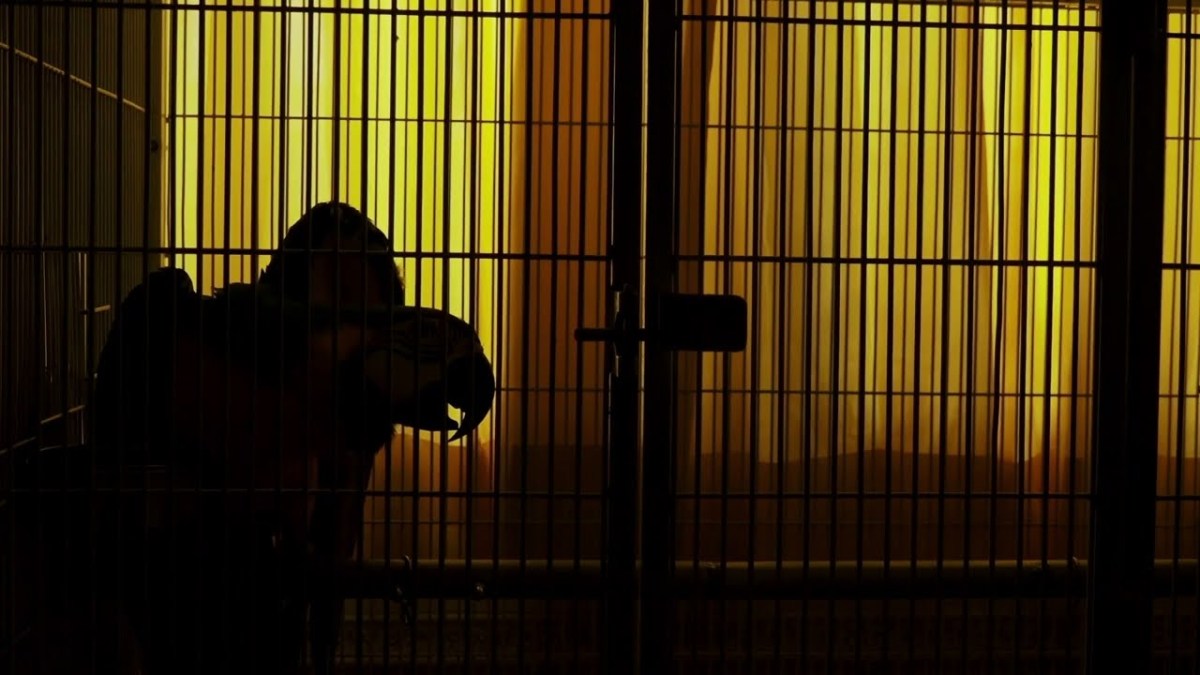
Losing Ground (anonymous, 2023) is a short film (23’ in the version presented in Yamagata) about the filmmaker’s own personal experiences in the protests that erupted in Myanmar, after the coup d’état brought chaos to the country, in February 2021. A somber, and beautifully shot, personal reflection on how the event altered his life and those of the people who joined the resistance. After actively participating in the demonstrations on the streets, the anonymous director was imprisoned for eight months, and once released, he was unable to return to his “normal” life. The film is a recollection of what happened in 2021 and a depiction of his current situation, trapped in his house, his dreams and those of his generation have been destroyed by the military regime. This sense of entrapment is expressed by images enveloped in darkness mainly shot in and from his home, also a way not to show the filmmaker’s face and thus guarantee his safety.  After the time spent in prison, the director’s house and the city where he lives, Yangon, have also become a prison, a metaphorical but inescapable one. As the filmmaker states in the film, the sense of dread experienced during his imprisonment now pervades every fiber of his body. Just seeing a police or army vehicle from his window makes him feel nauseous and shake with fear. The sense of defeat and existential paralysis emanating from the minimalistic images is extremely powerful, and the whole movie feels like a desperate scream for help. It is thus very important that Losing Ground was awarded with the Ogawa Shinsuke Prize, and I couldn’t agree more with the comment of the jury’s members: “We want to send a strong message to this as well as other filmmakers who are similarly trapped or imprisoned, physically or metaphorically, that we see you. We care, and we are in solidarity with each and everyone of you.”

Conceptually and stylistically very different, but equally interesting, is Journey of a Bird (anonymous, 2021). Filmed in the days and months following the coup d’état, the short work documents the daily life of a group of young people, all in their early twenties, facing the lack of freedom brought after the military seized power. Shot with smartphones and a small digital camera, the film chronicles the daily life of a group of friends: organizing and protesting in the streets, changing apartments to avoid being followed, drinking and singing together, and dealing with their parents and the world of adults. While on the opposite spectrum of Losing Ground—it is a less reflective work and it feels like the director and his friends were thrown into making a film almost by chance—the situation depicted on screen reveals, in all its complexity, the struggle to keep living in a country under a dictatorial regime. 

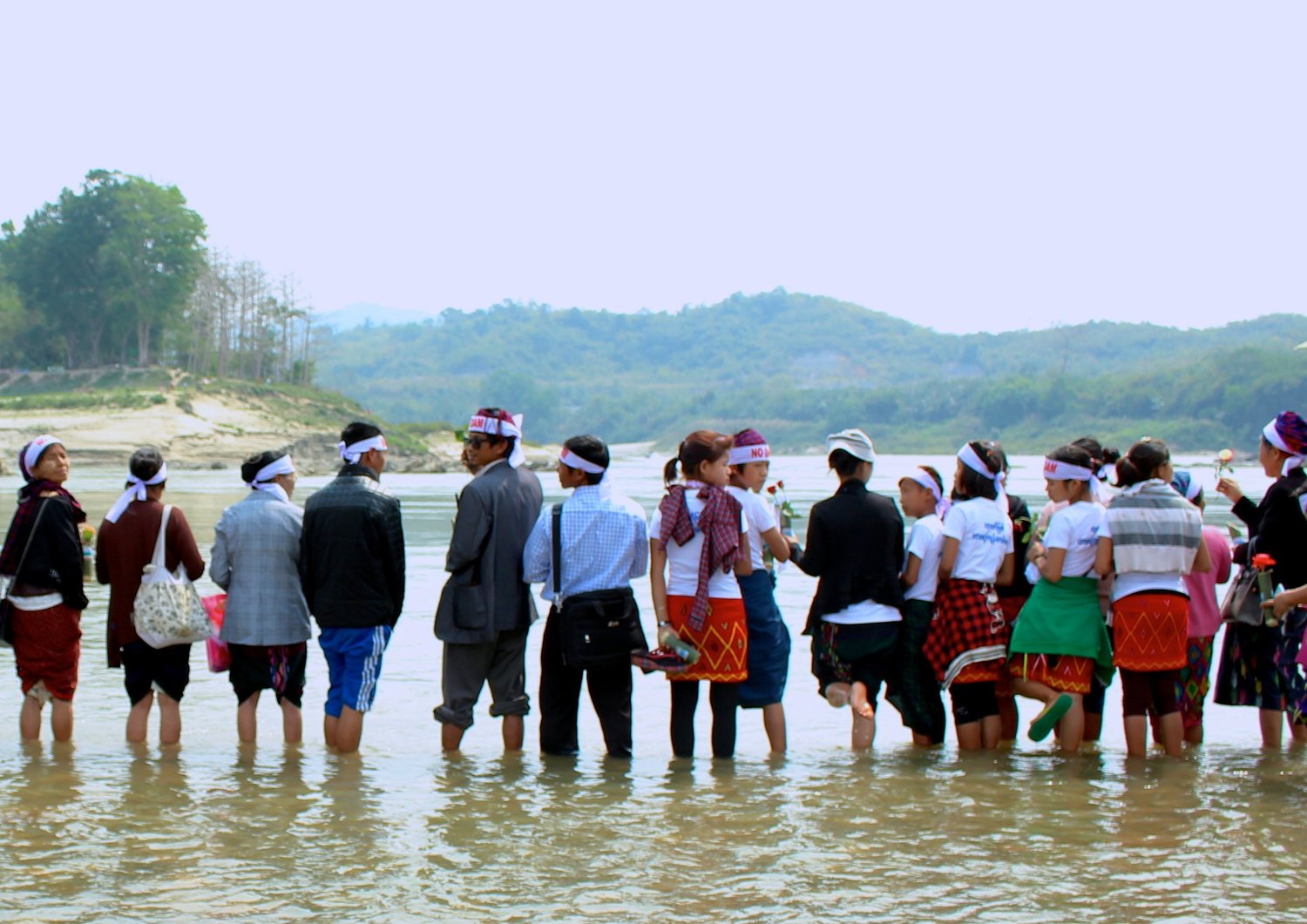
Also filmed in Myanmar, but not dealing directly with the consequences of the coup d’état, is Above and Below the Ground (Emile Hong, 2023). The work depicts events that happened before February 2021, and it is set in a peripheral area of the country, the Kachin region in the north of Myanmar, near the border with China. The life of a small community, the ethnic Christian minority that inhabits the area, is about to be disrupted by a soon-to-be-built dam, whose construction has been entrusted to a Chinese company. The resistance to the project and their fight for self-determination is described from the point of view of two of the women at the forefront of the protests, probably the better part of the documentary. To this storyline the film interweaves that of a local rock band invested in the demonstrations, a section too meandering and that lessens the impact of what the documentary is trying to say. 

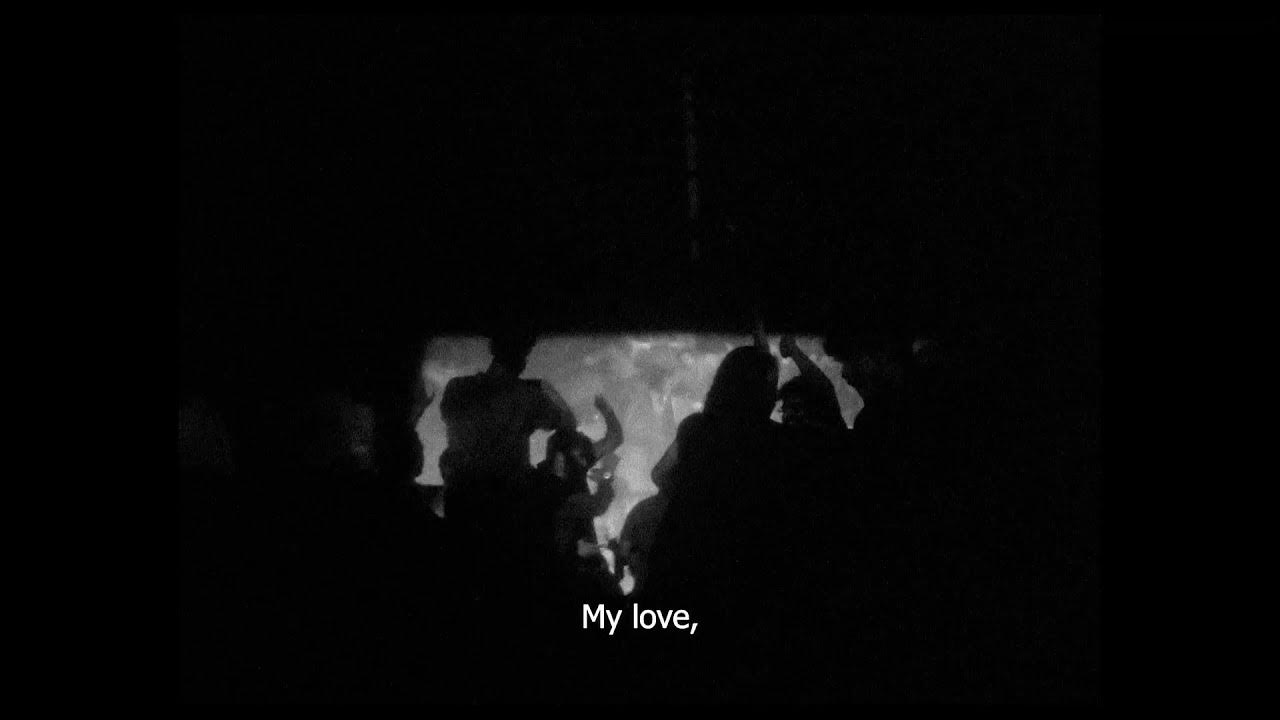
Women’s voices are also featured in two documentaries filmed in India about the Citizenship Amendment Act (2019), and more broadly on the political and social situation since Narendra Modi’s far-right government was elected in 2014.  A Night of Knowing Nothing is an experimental documentary, screened and awarded at Cannes in 2021, directed by Payal Kapadia. The film has been critically praised internationally, a trend that continued in Yamagata, where it won the competition’s Grand Prize, The Robert and Frances Flaherty Prize. It was a very impactful viewing experience for me, the grainy black-and-white images perfectly convey the sense of horror and terror in which young generations of Indian students live in New Delhi, amid caste discrimination and police repression. However, it is a movie that I would like to watch again to better assess and appreciate the nuances and aesthetic choices made. I find the statement from the jury illuminating:

“A Night of Knowing Nothing adopts a fictional conceit in order to historicize the reality of a tumultuous present, crafting a portrait of a nation in crisis that is equally a story of love, friendship, memory, and youth. Marshaling a vast array of cinematographic techniques and technologies with skill and creativity, Payal Kapadia reflects on how and why images are made and what they can do. This enchanting and risk-taking film abandons all didacticism while retaining a political acuity that resonates intellectually and emotionally”.

Formally very different, Land of My Dreams (2023) addresses the same period and social tensions from a more feminist, more direct, and perhaps more articulate and critical point of view. Director Nausheen Khan, a university student, crafts a piece of resistance cinema that depicts, through interviews and images shot in the midst of the action, the story of the women who formed the non-violent movement against India’s Citizenship Amendment Act. Between 2019 and 2020, for over 100 days, the women of Shaheen Bagh in New Delhi, students, mothers and older women, protested the systematic repression against the Muslim minority, one of the pillars of nationalist propaganda set in motion by the government. Month after month these peaceful sit-ins spread to the rest of the capital, and eventually of the country, creating a broader movement that criticized the right-wing policies of Modi. In addition to providing a complex and dynamic picture of the socio-political situation in New Delhi, the film is also a painful reflection by the filmmaker herself on her identity. As a Muslim and as a woman, she finds herself at the center of personal tensions between the religious beliefs she grew up with, and her social experiences. The film (unsurprisingly, it’s Yamagata!), was awarded the Citizen’s Prize.

A special mention goes to Night Walk (Sohn Koo-yong, 2023), a work without sound, and with static images of night landscape accompanied with written poems on screen. An extreme visual experiment I could not completely connect with, but that still fascinates me. Predictably, many people walked out of the theater, but it was refreshing to hear, in the after talk, that many viewers were mesmerized by and could engaged with it. Again, the words of the jury come to rescue: “Night Walk might be called an anti-cinematic, anti-poetic, and anti-landscape-theory documentary.”

Yamagata International Documentary Film Festival 2023. Noda Shinkichi, Trinh T. Minh-ha, Miko Revereza, and more

After the special online edition of 2021 (the in-person event was canceled due to the pandemic), starting from today the Yamagata International Documentary Film Festival is back in its regular format. For a week, October 5-12, the city in Northern Japan will be the capital of non-fiction cinema, with screenings, events, workshops, and meetings on and around the varied landscape of international documentary, with a special focus on Asia. If you want to have a look at the program, check the official page of the festival.

This will be my 5th edition (6th counting the online one), and the main focus for me will be following, as much as possible—but as usual everything changes during the festival—the huge retrospective on the works of Noda Shinkichi (1913-1993). A poet, filmmaker, film theorist, and an important figure to understand the different evolutions and developments of documentary filmmaking in the archipelago during the 20th century. Some of his works (industrial, science, and folklore films) are available on the NPO Science Film Museum‘s official homepage for free; or for rental, on the platform Ethnos Cinema.

この雪の下に Country Life Under Snow (1956), for instance, is a fascinating depiction of the harsh life in a rural area in Yamagata prefecture, while オリンピックを運ぶ Transporting the Olympics (1964), co-directed with Matsumoto Toshio, focuses on the logistics and the behind the scene of the 1964 Tokyo Olympics. How things (boats, yachts, traffic cones, film reels, etc.) and animals (horses, pigeons) were transported from and to the capital.

One of the most relatively known works by Noda is マリン・スノー-石油の起源-Marine Snow – The Origin of Oil, co-directed by Ōnuma Tetsurō, a celebrated science film produced by Tokyo Cinema, sponsored by Maruzen Oil Co., and filmed using Eastmancolor. The short film describes the vertiginous span of time (millennia) in which sea plankton, through decomposition, turns into natural gas and oil. Commissioned by an oil company, and thus partly celebrating the petroleum industry— directly only in its last 5 minutes though—Marine Snow remains a visually astounding piece of science film, flawed by its own design and origin, but astounding nonetheless.
You can watch here the version with an English narration (I prefer the Japanese one, for what it’s worth).

These films are just a fraction of what will be shown in Yamagata, in total the Noda’s retrospective includes 38 works, produced between 1941 and 1991. A Japanese/English flyer with summaries for each film is available here.

I really look forward to learn more about this towering figure in Japanese documentary, also because his contribution to the art of cinema does not stop with filmmaking, but it encompasses also books on the subject. One I’m particularly interested in is 日本ドキュメンタリー映画全史 Nihon dokyumentarii eigashi (1984), a history compiled by listing and analyzing the individuals involved in making documentary films in Japan, from the beginning of cinema to the mid-1980s. Having leafed through the volume, I could see names I had never heard before. I’m excited to discover more.

If I’m not mistaken, this retrospective in Yamagata originates from a special program organized in 2020 at the National Museum of Art in Osaka, an event that was unfortunately canceled because of the pandemic. One of the positive outcomes of this phantom retrospective was the publication online of a series of essays (in Japanese) exploring Noda’s filmmaking and his role in Japanese non-fiction cinema.

Naturally, many more works will be screened in Yamagata, the international competition, for instance, will present Self-Portrait: 47 KM 2020 (2023) by Zhang Mengqi, a friend of the festival who is bringing the newest entry of her ongoing film series shot in her hometown, and What About China? (2022) by theorist and filmmaker Trinh T. Minh-ha. One of my most anticipated works of the festival, the film was assembled using Hi8 video footage shot by the artist about 30 years ago.

New Asian Currents is usually a section that does not disappoint, and in past editions, it was a chance for me to make some big discoveries. This year, one of the threads of the program seems to be a special attention towards Myanmar and the ongoing resistance to the current political situation in the country. Losing Ground (anonymous, 2023), Journey of a Bird (anonymous, 2021), and Above and Below the Ground (Emily Hong, 2023) are some of the titles dealing with the subject. Also in New Asian Currents, Gama by Oda Kaori (I’ve written about it here), and the always interesting Miko Revereza with Nowhere Near (2023).

Other programs of this year festival are Yamagata and Film, Cinema with Us 2023, Film Letter to the Future, Perspectives Japan, Double Shadows 3, and View People View Cities—The World of UNESCO Creative Cities.

Usually the most impactful viewings I had at the festival in the past—at any festival, to be honest—are those that came at me unexpected and that I discovered by chance or by word of mouth. Hopefully it will be the same this year.

MADE IN JAPAN, YAMAGATA 1989 -2021 10 documentaries streaming on DAfilms

A mini retrospective on the streaming platform DAfilms.com, from 17 January to 6 February (free of charge until 24 January) introduces 10 Japanese documentaries presented at the Yamagata International Film Festival from 1989 to 2021. A fascinating path through the cinema of the real produced in Japan in the last three decades.

In 1973 when the Ogawa Production collective made Narita: Heta Village, the sixth documentary on the struggle and resistance of the peasants in Sanrizuka against the construction of the new Narita airport, they not only created one of the most important documentaries in the history of Japanese cinema, but also captured and foreshadowed a series of shifts that would take place in the archipelago in the following years. By moving the attention and the camera from the clashes, a “civil war” as it has been described by many, to focus more on the life of the peasants, their customs and their sense of time, the collective anticipated the interest that cinema and literature would later show towards rural and provincial areas. From a cinema more linked to contingent events taking place in the political and social sphere, towards one more interested in macrohistory and its large movements and cycles. This interest of the group, led by Ogawa Shinsuke, is reflected in their decision to move to the north of Japan, to the Yamagata prefecture, where the collective lived for 14 years, from the second half of the 1970s until the end of the following decade. As it was revealed later, after Ogawa’s death, this period was not without internal conflicts, and within itself it had many of the problems that had already poisoned many of the New Left groups during the 1970s, such as a marked authoritarianism, and an absolute lack of female presence in crucial positions. If the cinematic peak of this long period spent in Yamagata is Magino Village – A Tale / The Sundial Carved with a Thousand Years of Notches (1986), an unidentified filmic object that constructs a mythological and epic mapping of the area and its inhabitants, perhaps it can be said that the most important legacy of the collective and of Ogawa himself is the creation, in 1989, of the Yamagata International Documentary Film Festival (YIDFF).

Held once every two years in the Japanese city, the festival has become, in its three decades of existence, an important event for those who love the cinema of real and its infinite expressive possibilities. The festival has always stood out to me for the way it is experienced, horizontally so to speak, after the screenings: professionals and filmmakers mingle and interact with enthusiasts, cinema lovers or even just the curious, who come to enjoy the almost party and rock concert-like atmosphere of the event. At the same time, however, Yamagata has also been, since its very beginning, an important launching pad for many Asian authors and for the creation, especially in the 1990s, of a transnational documentary film culture. The first of its kind in Asia, the event contributed to the birth of other festivals, the Taiwan International Documentary Festival for instance, and it also functioned as a pole of attraction for the new wave of Asian filmmakers who came to the fore during a crucial period for the area, the period of democratisation of art with the advent of digital, in China but also in Hong Kong and other parts of South East Asia more generally.

The online retrospective organised by the YIDFF in cooperation with DAfilms is an excellent opportunity to discover some of the most important Japanese films presented at the festival since its foundation. Two works ideally open and close the retrospective, A Movie Capital, a documentary on the first edition of the festival made in 1991 by Iizuka Toshio, one of the members of Ogawa Production, beautifully captures that sense of collaboration and artistic brotherhood between Asian directors mentioned above. While Komian and Pickles by Satō Koichi— presented during the 2021 edition, moved online due to the pandemic— gives an idea of the sense of commonality in Yamagata during the event. The closure of Komian, a popular venue for post-screening discussions and meetings, follows to the closure of a local tsukemono (pickled food) business, Maruhachi Yatarazuke pickling company, the owner of Komian. The film is an occasion to remember and treasure the experiences offered at the venue, but also an example of how the gentrification process, magnified by the economic damage caused by COVID-19, is active and reshaping the urban texture even in small Japanese cities.

The most artistically accomplished works presented in the retrospective are, however, others. All of them are worth watching of course, but I would personally recommend Living on the River Agano by Satō Makoto (I wrote about three of his movies here), Yang Yonghee’s 2005 film Dear Pyongyang, Storytellers by Hamaguchi Ryūsuke and Sakai Kō, and Cenote (2019) by Oda Kaori (here an interview with the artist and a piece on the movie). Here the complete line-up:

A Movie Capital // Toshio IIZUKA // 1991

Living on the River Agano // Makoto SATO // 1992

The Weald // Naomi KAWASE // 1997

The New God // Yutaka TSUCHIYA // 1999

A2 // Tatsuya MORI // 2001

The Cheese and the Worms // Haruyo KATO // 2005

Dear Pyongyang // Yong-hi YANG // 2005

Storytellers // Ko SAKAI, Ryusuke HAMAGUCHI // 2013

Cenote // Kaori ODA // 2019

Pickles and Komian Club // Koichi SATO // 2021

The complete selection will be available entirely for free on DAFilms.com from January 17 – 23 at this link: https://dafilms.com/program/1126-made-in-japan-yamagata-1989-2021

Yamagata International Documentary Film Festival 2021 (online) – second dispatch

The 2021 edition of the Yamagata International Documentary Film Festival has ended last Thursday. Like many other events in the past two years, the festival took place exclusively online, this is the second and final dispatch, you can read the first one here.

This is the list of the movies awarded:

The Robert and Frances Flaherty Prize (The Grand Prize): Inside the Red Brick Wall 

The Mayor’s Prize: Camagroga  

Awards of Excellence: City Hall , Night Shot  

Ogawa Shinsuke Prize: Little Palestine, Diary of a Siege 

Awards of Excellence: Three Songs for Benazir, Makeup Artist  

Special Mention: Broken,

Citizens’ Prizes: Writing With Fire

(Synopses are from the official homepage of the festival)

Wuhan, I Am Here (2021, Lan Bo) A film crew that had traveled to Wuhan to make a fiction film is confronted with the sudden lockdown of the city and decides to go film in the streets. They race through the city, joining forces with volunteers who are offering free resources collected through the internet to the elderly and the homeless. The director and his troupe were able to capture on camera the chaos, tensions, fears and pain experienced by the citizens of Wuhan during the first lockdown of the city, in the first months of 2020. A woman crying on a sidewalk because her husband, at home with cancer, cannot be hospitalised due the Covid situation. A group of volunteers distributing food to the various communities of elderly, but often halted and contested because of bureaucracy and the lack of passes. People denied their right to visit relatives in hospital…the documentary is about stories of struggle and grief, death is very present in the film, stories we all became accustomed to witness in the last two years. This is a documentary whose appeal and point of interest will probably increase with the passing of time, when one day, hopefully, we will look back at the pandemic days and reflect on this huge historical juncture.

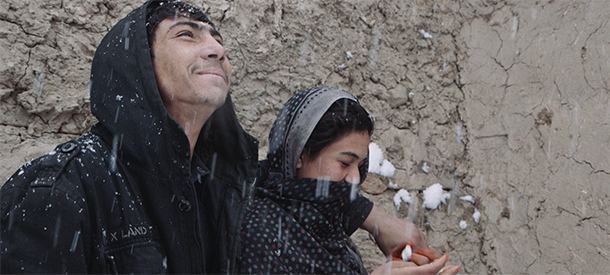
Three Songs for Benazir (2021, Gulistan Mirzaei, Elizabeth Mirzaei) In a camp for displaced persons in Kabul, a young man sings for his beloved wife Benazir as if the whole world was theirs alone. We see him next four years later, facing the consequences of the path he was forced to choose in providing for his family, after his struggle to find work. In just twenty two minutes the film says more about contemporary Afghanistan than a dozen newspaper articles about the subject.

Three Songs for Benazir

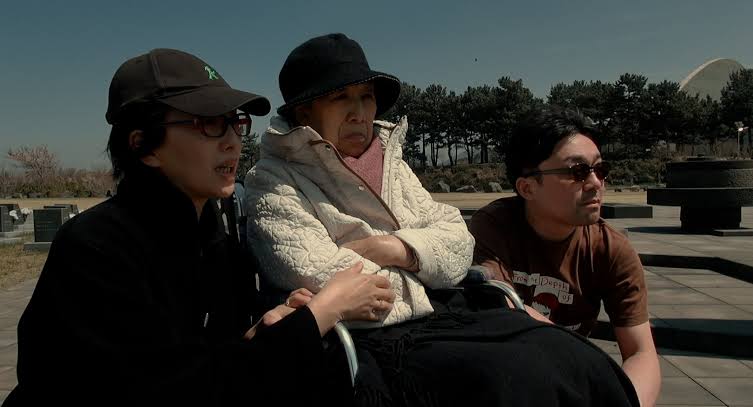
Soup and Ideology (2021, Yang Yonghi) Yang Yonghi is a zainichi director born and rised in Osaka. When her father passed away in 2009, of her family, only her mother and herself were left in Japan. The director who now lives in Tokyo, is worried about her aged mother living alone, so she visits her home in Osaka every month. One day, the mother suddenly tells her that she had experienced the Jeju uprising as a young woman. Her memories of the tragic event, buried deep in her heart, resurfaced and came back to life. She begins to talk specifically about how she got involved in the Jeju uprising. With her latest documentary Yang Yonghi continues her exploration of her family history and the history of the two countries she is connected with, Japan and North Korea. The movie opens in 2018, with her mother lying on a bed remembering the killings and the dead bodies piled along the roads, as she was escaping from Jeju island in 1948. Soup and Ideology is a very touching viewing experience, and on many different levels. The movie presents not only the painful memories of the Jeju massacre (April 3rd 1948) as remembered by the director’s mother, and the destruction of her family, her three brothers were sent from Japan to North Korea at a young age, but also an emotional portrait of her frail and old mother, as a Korean who grew up in Japan worshipping North Korea. As the film progresses she is diagnosed with senile dementia, and little by little she loses her memories, including those of the massacre she witnessed, only 18, in the small Korean island. The movie is also partly an act of self-reflection by Yang Yonghi herself, if in the first part she is the one filming her mother, in the second, when her mother condition worsens, she enters the frame, so to speak. We can clearly see her emotions, especially when she visits the island, with mother and husband, for the anniversary of the massacre. There Yang Yonghi understands that her mother’s affiliation/attraction for North Korea, something the director had never completely forgiven her and her father for, was also partly caused by the atrocities committed by the ROK her mother saw with her own eyes. It would have been a better movie for me, had not been for the five or so minutes of animation used to explain her mother story and the historical situation in Jeju in 1948. I found the segment unnatural and it really took me out of the movie. The soup of the title is a dish that her mother usually prepares, and that is later cooked by Yang Yonghi’s Japanese husband, we see the first meeting between her mother and him in one of the first scenes of the movie, as a way of entering or belonging to her wife’s family, the director parents had always wanted her to married exclusively a North Korean national. Soup and Ideology is important piece of documentary and was one of the highlights of the festival for me.

Soup and Ideology

Other documentaries I’ve watched: The Buddha Mummies of North Japan (2017, Watanabe Satoshi), about the practice of sokushinbutsu or self-mummification through which some mountain monks, usually related to Shugendō, are believed to have attained satori. The World’s “Top” Theater (2017, Satō Kōichi), a fascinating trip into post-war film culture in Yamagata, the film focuses on the Green Room, a cinema in Sakata City that was completely destroyed in a fire in 1976. Before the Dying of the Light (2020, Ali Essafi); Dorm (2021, So Yo-hen), partly documentary and partly performance/reenactment, female Vietnamese laborers arrive at a dormitory in Taiwan. Creative and surprising the finale.

Some final thoughts. After going to Yamagata for almost a decade, it was a very singular experience to join the festival online—the system adopted, with movies available only in Japan and at certain time, like in the in-presence edition, raised more than a doubt (I had a press pass, but I will write more on this in the following weeks). Of course I missed the people, the discussions, the city itself, experiencing the movies on a big screen, the food and the drinks, however, the festival turned out to be a satisfying experience. Of the works I watched, a couple were outstanding, but each one was interesting in its own way. Yamagata is, among other things, a nice occasion to reflect on what happened in the documentary world in the past two years, with a particular focus on Asia: new trends and new voices, but also how the cinema of the real captured, mirrored, and represented the events that took place around the globe. See you in two years Yamagata!

Yamagata International Documentary Film Festival 2021 (online) – first dispatch

This year edition of the Yamagata International Documentary Film Festival is, like many other events in the past two years, taking place exclusively online. The festival is available only for viewers in Japan and will end next Thursday (October 14th). This is a first dispatch, others, will possibly follow.

(Synopses are from the official homepage of the festival)

Pickles and Komian Club (2021, Satō Kōichi) Questions and heartbreak emerge from the closing of long-established pickled foods store, Maruhachi Yatarazuke, whose 135-year operation was brought to an abrupt end during the pandemic. The film follows the store owner, forced to make a difficult decision, and those who freely gathered at the store and supported the space.  If you have attended at least once the YIDFF, you certainly know about Komian Club, the place where all the people of the festival, directors, producers, cinema lovers, press, or just people from the prefecture, used to gather and discuss about cinema, fueled by sake, beer, or just pure passion for documentaries. Unfortunately, the place, together with the pickled store that ran it, closed down and was demolished, in part due to the pandemic. The documentary is a nice glimpse of what the Komian represented for the documentary community in Yamagata, but also a look at the dire situation of old and historical properties and buildings in peripheral areas in Japan.

Komian Club

Self-Portrait: Fairy Tale in 47KM (2021, Zhang Mengqi) The newest instalment in a series set in a small village in a mountainous region in China. In the winter marking ten years since the director began filming, she tries to get a new building constructed in the village. The girls, who had thus far been the subjects of her films, take up the camera themselves, and begin recording scenes of the village. This is a lovely addition to the series the director has been making since 2011, here the focus is on the children and their interaction with the landscape they inhabit, always breathtaking I have to say, through the mediation of video cameras.

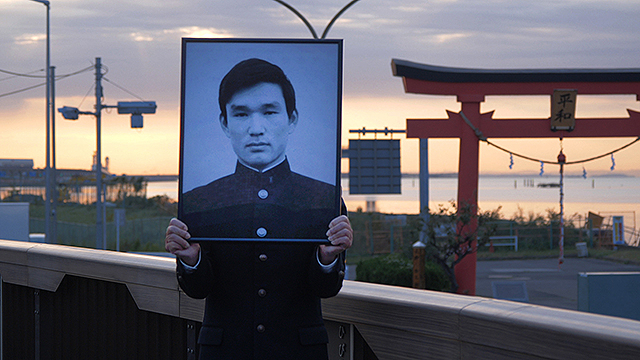
Whiplash of the Dead (2021, Daishima Haruhiko) Weaving together the memories of a university student who lost his life in the First Haneda Struggle in 1967 through the words of his bereaved family and ex-classmates, this film turns the memories of those who protested against government power into questions for the future. The movie is comprised of two parts, for a total of 3 hours and 20 minutes. While in the first 90 minutes the director focuses on the events preceding and leading to the the death of Yamazaki, in the second segment (it could easily have been another movie), the protagonists of the students protests of the late 1960s, now in their 70s, reflect on the reasons of the implosion of the Japanese new left and its movements. The latter part is definitely the one I latched more with, listening to some of the protagonists of the season of politics in Japan, explaining how the hierarchical structure of the factions, the almost military attitude of its members, and last but not least, how the uchi-geba, the internal purges, de facto destroyed the movements, was mind-opening. Of course I’ve read about it in books and papers, and watched movies depicting this falling (and even wrote about it), but hearing it from the people who were on the frontline, was, weirdly enough, liberating.
The story of the Mito family, not affiliated with any left group, but a family that helped the young protesters in prison, and later promoted anti-nuclear activism, and whose members (father and two sons) tragically died in 1986, is so fascinating, that would deserve its own documentary. 

Whiplash of the Dead

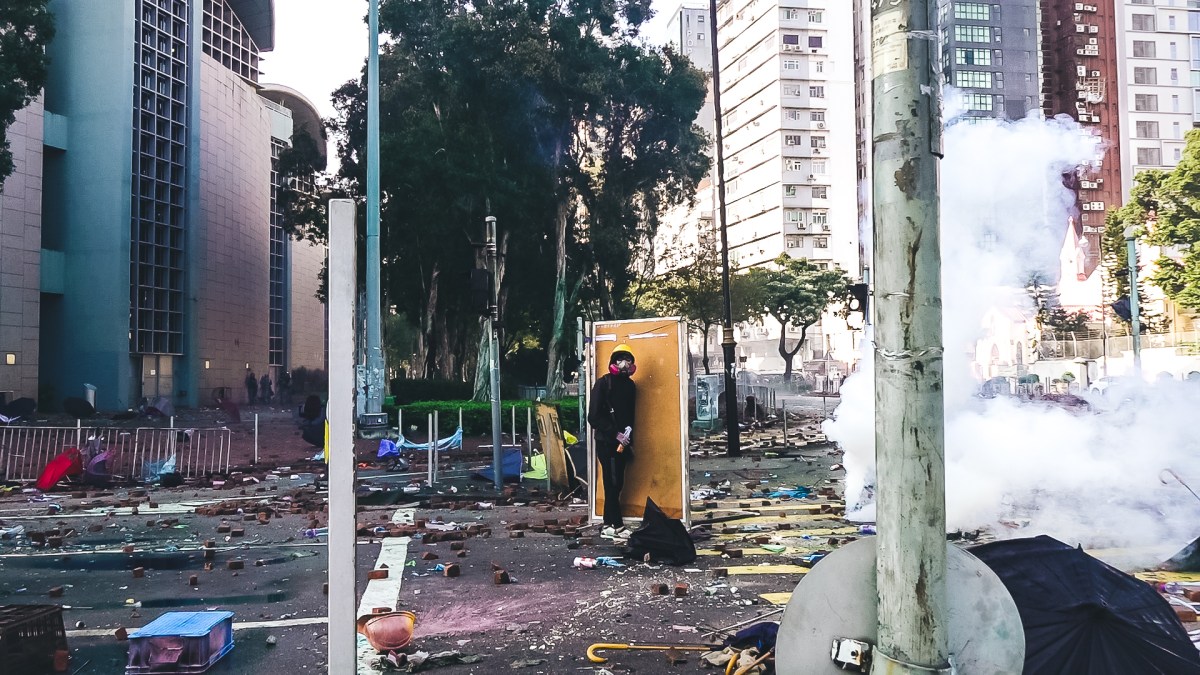
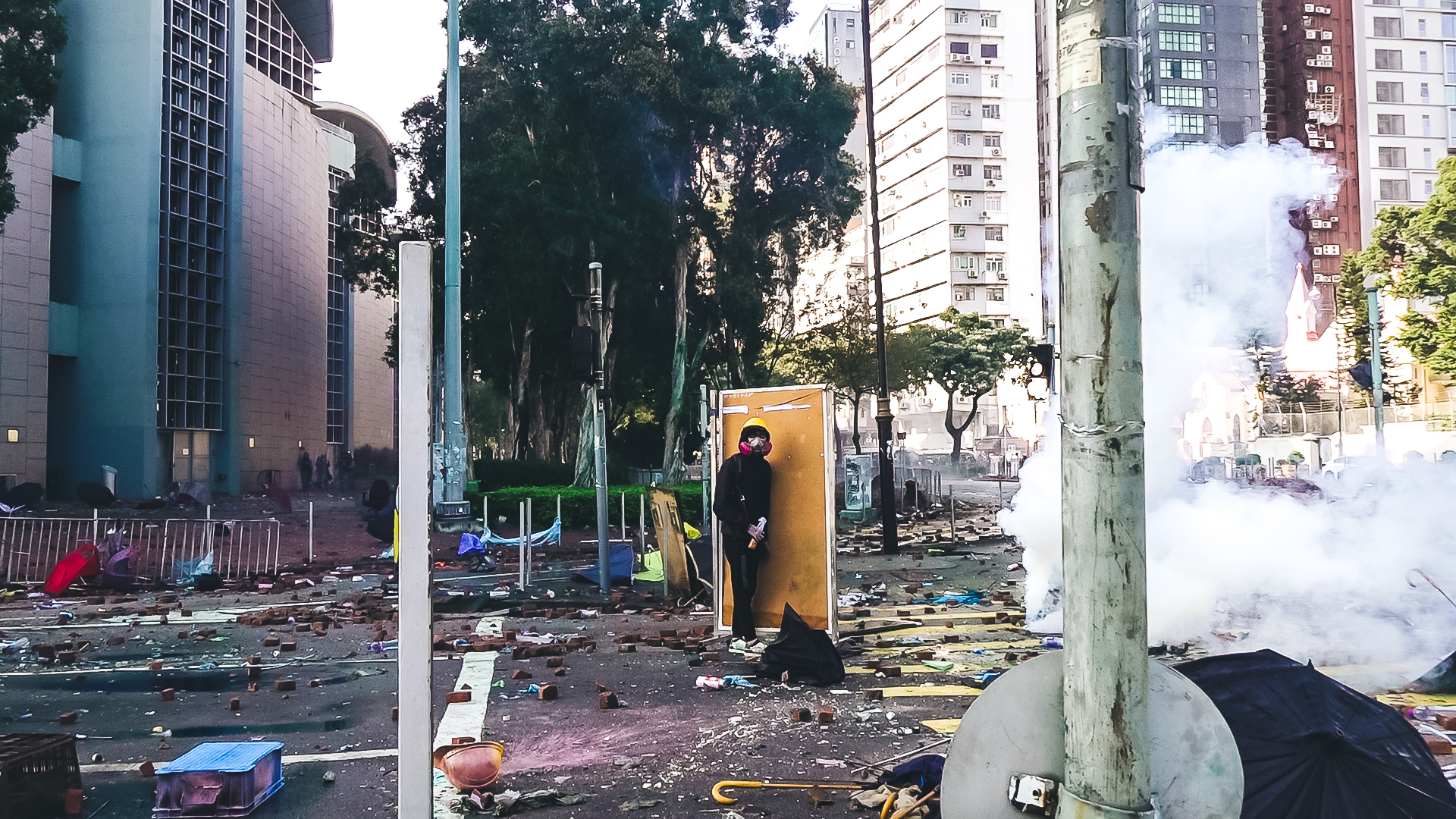
Inside the Red Brick Wall (2020, Hong Kong Documentary Filmmakers) Hong Kong, shaken by the “one country, two systems” policy. November 2019, protestors calling for democratic reform are besieged in a university by heavily armed officers. In scrupulous detail, these anonymous filmmakers capture the worn out and anxious youth who are being beat into submission by the violent and cunning forces of power. This was for me the highlight of the festival, so far. Not only a raw punch in the stomach and a visceral viewing experience, but also and incredibly fascinating film on so many other different levels. First of all, there’s the emotional and political side of the resistance, seeing the events of the siege after almost two years, and from a different point of view was, once more, enraging. The second part of the film, when many of the young students broke down, cried and walked out, defeated, from the campus, often criticized by their comrades, was — although something I’ve seen over and over again in the documentaries about the Japanese protests of the 1960s and 1970s—heartbreaking. What was also extremely fascinating, was that all the young people wearing gas-masks and gear, for protection and for anonymity, formed, shall we say, a multitude, a resistance, expressed not through the act of individuals, although there are some speakers who stand out, but more through a sense community and togetherness. It is true that it’s a community that in the second part of the documentary, as I said above, partly dissipates. However, for the period of the siege, twelve long days, it shone as a fight of the multitude.
Very interesting was also how the documentary, by filming the violence between riot police, students, aid people, and members of the press (mainly independent press that live-streamed the battles on the internet) was able to capture and create a very powerful sense of space and proximity. A visual cartography of violence, but also of resistance.

Inside the Brick Wall

Other documentaries I’ve watched: Entropy (2021, Chang Yu-sung), a short and abstract experimentation with images shot in a mine; It’s Just Another Dragon (2020, Taymour Boulos); Broken (2021, Nan Khin San Win) a short but touching portrait of abuse and violence in Myanmar. Her Name Was Europa (2020, Anja Dornieden, Juan David González Monroy) a playfully and fascinating trip into the obsession of recreating/simulating/reviving things from the past/present with a deranged and derailed finale. Afternoon Landscape (2020, Sohn Koo-yong), more an installation than a movie, better to be experienced on the big screen probably; Nuclear Family (2021, Erin Wilkerson, Travis Wilkerson) a descent into the heart of darkness of the US; and The Still Side (2021, Miko Revereza, Carolina Fusilier) the latest from the talented duo Revereza/Fusilier, but one I could not really connect with.

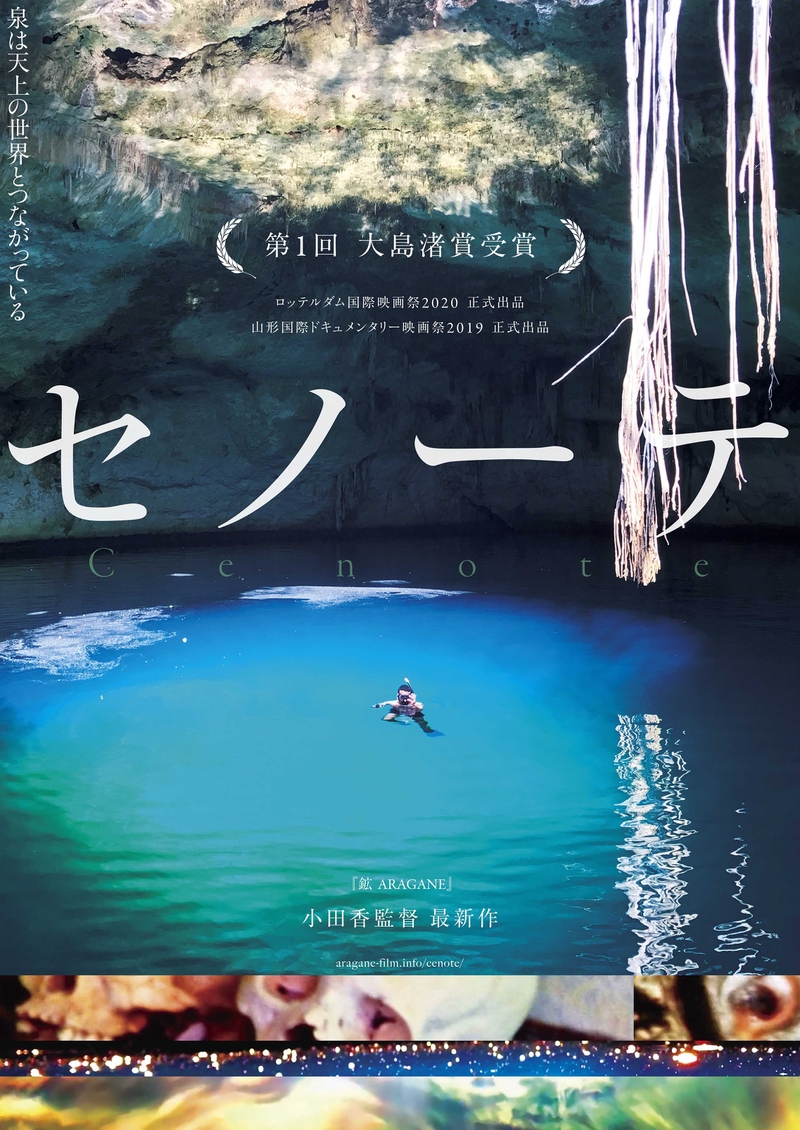
Cenote (Ts’onot) セノーテ (Oda Kaori, 2019)

I wrote a longer and in-depth piece on Cenote, Aragane, Towards a Common Tenderness, and Oda’s filmmaking more in general for a film publication (hopefully out next year), so what follows are just some of my thoughts on the movie, and my experience with Cenote after multiple viewings.
My interview with Oda, and my piece on Aragane.

The past and present of those living around the cenotes coalesce in this mysterious place. Long-lost memories echo in hallucinatory turquoise underwater footage, an entrancing game of light and dark. Swimming in these sinkholes, director Oda Kaori encounters intriguing shapes and beams of light, the water heaves, drops fall like razor blades.

After debuting on the international scene with Aragane in 2015, although Thus a Noise Speaks (2010) was her actual debut in the film/documentary scene, two years later young filmmaker Oda Kaori released Towards a Common Tenderness, her second feature film. This is a movie about her journey from Japan to Europe, and there across the borders of the former Yugoslavia, and also about the possibilities, limitations, and responsibilities that come with documentary filmmaking.                                                                                                                                  Her new film, Cenote, is again shot outside of Japan, this time in Northern Yucatan, Mexico, and almost completely filmed with an iPhone inside a few ts’onot/cenotes, sinkholes that were used by ancient Mayans as a primal source of water. Some of these sinkholes were also used during ritual sacrifices, and in the Mayans belief system they were considered holy springs able to connect this world to the afterlife.

When I first saw Cenote at a special screening organized at the Aichi Arts Center in Nagoya exactly a year ago, in July 2019 (the movie was partly funded by the venue), what impressed me the most were the first twenty minutes of the film. It was an exhilarating sensorial experience, almost an unveiling of a new world: the abstract images shot underwater and those gliding on the surface of the liquid, blended with grainy images of people whispering old Mayan stories, all of this soaked in a haptic soundscape, are to this day one of the best combination of images and sound I saw on screen in recent years. However, the second part of the work did not really work for me, the incredible first part was not followed by an equally intense second half, I couldn’t completely connect with it, especially with the way the movie was constructed. This was my reaction after the first viewing, anyway.

In the months that followed, I had the chance to watch Cenote several more times, one more time on the big screen at the Yamagata International Documentary Film Festival in October, and later on through a screener I was kindly given. After multiple viewings some recurring patterns and figures presented throughout the movie started to slowly reveal, and Cenote began to resonate with me in a very different manner compared to when I first saw it. I realized how the whole work is permeated with a dialogic tension, a relation between complementary opposites. For instance, cenotes as a geological phenomena resulting from the impact of a shower of meteorites with the crust of the earth, on the one side, and these sinkholes as a mythical space connecting with the afterlife, on the other. A tension between opposites that is also embodied in the aesthetics deployed by Oda, the digital images shot underwater with an iPhone are counterpointed with those shot in Super 8 and depicting faces, animals, festivals, and ceremonies honoring the dead. This exploration of afterlife and the deceased and their relation with the space they used to inhabit is what especially surfaced for me after multiple viewings. The connection between the dead and the living, and the blurring of the two reigns is made more explicit in a brief and beautiful passage when the movie gazes at funeral rituals in the area, when human bones and skulls are brushed, polished and collected with extreme care as remnants of past lives, but somehow still very present.

While I think Aragane is a more accomplished and well-balanced work, I believe Cenote is a more deep (non pun intended) and powerful visual experience, and definitely a film more important for Oda’s career. First of all,  the movie gave her the chance to became the recipient of the first Ōshima Nagisa Prize, an award newly established by Pia Film Festival for “young, new talents who pioneer the future of film and attempt to spread their wings around the world”, and secondly to be invited to different film festivals around the world, such as Nippon Connection and Japan Cuts. This international recognition will hopefully expand even further her career, giving Oda the chance, and the funds, to work on the next project. It seems that after having explored two of the classic elements of nature, earth in Aragane, and water in Cenote, she would like to make her next work in (!) and about space, as she stated in a couple of interviews.
More importantly from an aesthetic point of view, with Cenote Oda not only went back to the sensorial filming approach used in Aragane, but she also expanded it and enriched it with the poetic touches that permeates Towards a Common Tenderness. As I wrote at the beginning of this article, the peaks in Cenote are very high and point towards an idea of cinema and filmmaking that, in my opinion, has yet to realize its full potential.

The Japanese Cinema Book – Ogawa Productions

We are currently navigating uncharted waters and I hope all you readers out there are safe and doing well, so today just a brief post to point to the release of an important volume: The Japanese Cinema Book, edited by Hideaki Fujiki and Alastair Phillips for Bloomsbury. As stated by the editors, the volume

provides a new and comprehensive survey of one of the world’s most fascinating and widely admired filmmaking regions. In terms of its historical coverage, broad thematic approach and the significant international range of its authors, it is the largest and most wide-ranging publication of its kind to date.

Ranging from renowned directors such as Akira Kurosawa to neglected popular genres such as the film musical and encompassing topics such as ecology, spectatorship, home-movies, colonial history and relations with Hollywood and Europe, The Japanese Cinema Book presents a set of new, and often surprising, perspectives on Japanese film.

With its plural range of interdisciplinary perspectives based on the expertise of established and emerging scholars and critics, The Japanese Cinema Bookprovides a groundbreaking picture of the different ways in which Japanese cinema may be understood as a local, regional, national, transnational and global phenomenon.

The book’s innovative structure combines general surveys of a particular historical topic or critical approach with various micro-level case studies. It argues there is no single fixed Japanese cinema, but instead a fluid and varied field of Japanese filmmaking cultures that continue to exist in a dynamic relationship with other cinemas, media and regions.


The Japanese Cinema Book is divided into seven inter-related sections:
· Theories and Approaches
· * Institutions and Industry
· * Film Style
· * Genre
· * Times and Spaces of Representation
· * Social Contexts
· * Flows and Interactions

There are a couple of chapters, or parts of them, that cover what is the main interest of this blog, the production and evolution of documentary cinema in the Japanese archipelago, experimental cinema, and amateur/home films. I was positively impressed by the scope of The Archive Screening locality: Japanese home movies and the politics of place by Oliver Dew, the ever-shifting boundaries between amateur/professional filmmaking, and everything that exceeds what we usually consider “cinema” are problematics that fascinate me. I might write something about Dew’s essay and Japanese home movies in general at another time, but today I want to briefly touch on the chapter written by Hata Ayumi. Filling Our Empty Hands’: Ogawa Productions and the Politics of Subjectivity is a dive into Ogawa Productions, with a special focus on how the collective changed their film-making identity, a process seen through the lens of three works made by the group at different times of their trajectory, Forest of Oppression (1967), Sanrizuka – Heta Village (1973), and The Magino Village Story – Raising Silkworms (1977). I will highlight some of the passages in the essay that more resonated with me, mainly those about the collective and their period in Yamagata,  disclaimer: the themes covered and analysed by Hata are much richer and deeper than what I’m about to write.

One of the most interesting issues tackled in the chapter is for me the connection the author draws between, on the one hand, the portrayal of farmers and farmers’ life created by the group throughout their career, and the rise of the minshūshi movement during the 1960s and 1970s in Japan, on the other. “The minshūshi, or ‘people’s history’ project, was part of a larger intellectual movement of the 1960s and 1970s that sought to construct new representations of the minshū, or non elite ‘people’ as political and historical agents, and overcome the view that they had been inert and passive objects of rule throughout history.”

The shift from a style of film-making more focused on the political struggle to a depiction, almost an ethnographic exploration, of the histories and cultures traversing villages and people in Sanrizuka, is one of the reasons Heta Village is a pivotal movie for Ogawa Productions. Hata argues that, what I call a tectonic shift for Japanese documentary, was possible also by the influence and the interaction of the collective with the minshūshi movement, thus repositioning the path of the collective in a much larger historical and political canvas.

One of the most astonishing artistic achievements in the long years spent by the collective in Yamagata filming and farming, was the ability to reach a degree of proximity, almost a merging and an identification, with the subject filmed, the taishō. Not only a proximity with people and their point of view, but also a quasi-fusion with the landscape and its non-human elements as it were, the plants, the seasonal changes, the weather, the geological time of the area, or the Sun perceived as a orbiting star. To read in the essay that Ogawa and his group “took this ideal subjectivity even further with the idea of ‘the human possessed by the rice plant’ (ine ningen), an imagined, metaphorical entity that they strove for in order to capture the essence of rice cultivation.” was for me a confirmation and a revelation. The beautiful poster of Magino Village: A Tale (1986)—some of the words on it are pure poetry, “a movie mandala”, “to carve the time of life into the body of film”—beautifully embodies this strive towards the becoming-rice plant of the collective, and it is in itself a work of art, in my opinion.

There are several scenes in Magino Village that encompass this love and obsession towards rice, farming, and all the human and non-human life that revolves around a plant so important for Japan and its people. Tamura Masaki patiently filming rice flowers bloom is one of the most famous, used also as the cover of the Japanese DVD, but my favourite is the one you can watch below, a scene Markus Nornes has described in his book on Ogawa Pro as “the most prominent haptic images” in the film.


Report from the Yamagata International Documentary Film Festival 2019

The 30th edition of the Yamagata International Documentary Film Festival has ended more than a week ago. I was fortunate enough to be there, it was my fourth time, and for almost the entirety of the festival. What follows is a short report about things I’ve seen and my general impressions of the event. Please bear in mind that every film festival is experienced differently by each people attending it, depending on age, expectations, interests and the path each of us carve in the forest of movies screened.

As usual I didn’t see many of the films in competition, most of them are by big names, and, hopefully, will be screened in theaters o streamed on platforms in the near future. That being said, I really wanted to see Wang Bing’s Dead Souls, but its length deterred me, not the actual length in itself, but the fact that it would have eaten up a whole day of movies. Anyway I ended up not seeing it and I’m not sure I made the right decision, Dead Souls won the main prize, the Robert and Frances Flaherty Prize, and surprisingly to me, the citizen price as well. The other major award, the Special Jury Prize, was given to Indiana, Monrovia by Frederick Wiseman, a solid work, but not the best documentary by the American director, in my opinion, the main problem I had with the movie was the “fast” editing of certain scenes, the landscape scenes to be precise.

AM/NESIA: Forgotten “Archipelagos” of Oceania is the program I was most excited about, and it turned out I was right. The first work I saw at the festival was Lifeline of the Sea, a propaganda documentary made in 1933 with the support of the Navy Ministry of Imperial Japan, a film depicting the colonization and militarization of several islands in Oceania. It’s an extremely important document, almost ethnographic in its first part, when it depicts the various traditions and beliefs of the people inhabiting the islands, and overtly propagandist in the second part. It does that in such a bluntly way, it does not sweeten the pill so to speak, that it doesn’t hide the the fact that colonization is first and foremost about using other territories resources and exploiting people. A chillingly matter-of-fact documentary that found its perfect counterpart in the work screened soon after, Senso Daughter. Directed by Sakiguchi Yuko in 1990, the movie focuses on the legacy of the Japanese occupation of Papua New Guinea during the Second World War. A sad legacy that arises from rape, starvation and terror. It is an unflinching gaze at the horrors perpetuated by Japanese military towards women, the so called “comfort women”, in Papua New Guinea, told through interviews with ex-soldiers. While admitting the violence of war, almost all these veterans deny any violence or forced prostitution of women, on the other hand the director researches and presents us a very different reality when she interviews women who survived that period and painfully recollect those times. It is interesting to note that the documentary was released just a couple of years after Hara Kazuo’s The Emperor’s Naked Army Marches On, a movie that covers a different but related topic in the same area. Imamura Shohei also explored the topic of comfort women, sent from Japan in his film, in Karayuki-san, the Making of a Prostitute, a made-for-TV documentary aired in 1975.
A big surprise for me was to find out that Sakiguchi Yuko is the same person who directed from 2012 to 2108 Everyday is Alzheimer, a series of three personal documentaries about her mother’s dementia. A trilogy of films that had a relative success in the indie scene and in the mini-theater circuit.
AM/NESIA was a real discovery for me, unfortunately I saw only one more film, Kumu Hima (Dean Hamer, Joe Wilson, 2014) about a transgender person in contemporary Hawaii and how colonialism has affected and continues to affect people’s bodies as well, not only lands and territories. I bought the catalog, a beautiful book with which, hopefully, I will try to continue the exploration of the films produced in the continent. A forgotten cinema.

This slideshow requires JavaScript.

The other program that I followed somehow closely was The Creative Treatment of Grierson in Wartime Japan. While some of the movies screened are “classics” of documentary cinema, Night Mail, Coal Face, or Housing Problems, the screenings were often packed, typhoon notwithstanding. When Night Mail was shown for instance, during the scenes when it is shown how the postal mail is delivered around the country without the train stopping, the audience was cheering and clapping enthusiastically like at a Marvel movie. I was really impressed, and this made me ponder about who these kind of festivals and screenings events are made for. They’re definitely not only for “experts” and professionals, and I was glad to notice that many people in the audience were young, well younger than me at least.
In the same section I saw Kobayashi Issa (1941), a film commissioned by the Nagano Prefectural Department of Tourism and directed by Kamei Fumio. I had high expectations for this, if you read this blog you know my love for Kamei, and this short movie completely blew me away. Told in a poetic and subtle way, using the haiku of poet Kobayashi Issa, the documentary goes against all the idyllic depiction of countryside and mountain life that one would expect from a work commissioned by such an institution. Instead Kamei sets his gaze on the poverty and on the conditions of the people living in the area, presenting also a witty deconstruction of a frame of thought that wants to consider countryside like an “other” or furusato, a ”home” where to go back, an origin. One scene in particular stayed with me because it summarizes the tone of the movie perfectly. An old man’s face in close-up (remember Fighting Soldiers?) is accompanied by a narration that solemnly says something like, I’m paraphrasing of course, “what is this man gazing at?”. When the camera zooms out and cut to the bigger picture though, we see him urinating against the mountain landscape. Definitely one of the best discoveries of the festival, still very fresh and relevant today, both for its thematic approach and its style.

I couldn’t see many of the documentaries screened in the New Asian Currents program, usually one of the most interesting of the festival, but I was able to catch a couple, among these, worth mentioning are Cenote (2019) by Oda Kaori and Temporary (2017) by Hsu Hui-ju. I had already seen Cenote in Nagoya a few month ago, but this was too good of a chance to re-watch it with better sound and on a bigger screen. The movie confirms Oda as one of the most original and interesting voices working in documentary today, if Aragane was a revelation (I wrote about it here, and interviewed her 4 or so years ago about the movie), her next project, Toward a Common Tenderness (2017), was conceptually different, but kept the aesthetic touch present in Aragane, adding to it a poetic and essayistic element. With this work Oda continues on the same path started with those two movies, the long take aesthetic is here translated underwater and intertwined with stories and legends told by the people of the area, Cenote(s) are natural sinkholes in Mexico, sources of water that in ancient Mayan civilization were said to connect the real world and the afterlife. If Aragane was a movie that revolved formally around darkness, slow movement and repetition, Cenote is a work about water and light. Images and soundscape are, as usual in Oda’s films, impressive and deeply interconnected, particularly in the scenes shot underwater inside the the sinkholes. Swimming in these Cenotes, the camera is enveloped in a reality that is perceived and created through water and light, going deep back the to womb of the earth, to the origin of life, as it were. When I saw the movie in Yamagata, I felt it worked less than the first time, maybe it was festival fatigue on my part, but I think the movie in its final part loses some of its power. Perhaps the words and faces of the Mexican people, shot in a beautiful and grainy 8mm, could have been used differently. That being said, the intensity I got from some of the scenes was almost overwhelming, Oda is aiming here higher than in her previous works, she’s trying to convey deeper and even religious meanings, and although not always successfully, there are moments when I felt that the underwater images (filmed with an iPhone!) combined with the sound/noise, reached almost a sort of spiritual materiality. I definitely need to re-watch it.
Temporary is an interesting documentary, albeit not completely successful, that experiments with reenactment “in the ruins of an abandoned factory, three temporary workers—a young man, an older man and an older woman—behave like a choreographed family, as they clean up, construct a table, and eat together.” It felt more like a draft for a future feature film than a proper work, and indeed director Hsu Hui-ju after the screening said that she’s now filming and making a new work about one of the men who appeared in the short movie. More interesting for me was to see another documentary by the same director (she had 3 movies in Yamagata!), Out of Place (2012), shown in the Cinema with Us program, this year dedicated to the depiction of disasters in Japanese and Taiwanese documentary. Out of Place It’s a personal documentary in which Hsu films the town of Xiaoling, after Typhoon Morakot completely swept it away in 2009. The grieving process of the people is intertwined with a quest for an identity by the director herself, her family and the people who lived in the village, most of them said to belong to the Pingpu ethnic minority. Besides the value of the documentary itself as a visual piece, there’s nothing really exceptional about it, the work excels at conveying a complex multi-layered picture of a group of people whose origins are very shifting and hazy. Instead of giving us simple solutions in easy and stereotypical sentences like “going back to our ancestral roots” or “find who we really are” and so on, Hsu expresses in images all her doubts about the importance of belonging to a certain group, and, this is my personal reading of it, in the end, the uselessness of finding a solid origin or a fixed identity. It was a very moving screening experience for me because, by pure chance, I sat next to the director and her young daughter, whose birth was filmed and shown on screen, and it was very sweet seeing them exchanging glances and smiles.
Not to insist too much on the subject, but this, after all, small movie, consolidated my opinion that contemporary documentary in Taiwan, or at least a certain portion of it, is in a really good and healthy stage, not only from a purely artistic point of view (read more here), but also as an example of an effervescent culture not afraid of exploring, and even moving away from, its multi-layered and complex origins.

In competition, besides the above-mentioned Monrovia, Indiana, I saw Memento Stella (2018) by Makino Takashi, an experimental movie in line with Makino’s previous works, a visual feast and experience like no others, and a film that I haven’t completely digested or absorbed yet. Interesting was also taking a glance at two other special programs, Rustle of Spring, Whiff of Gunpowder: Documentaries from Northeast India and Reality and Realism: Iran 60s–80s, where I had the chance to see for the first time A Simple Event (1973) by Sohrab Shahid Saless, passionately introduced by Amir Naderi, a beautiful discovery.

Among the festival’s satellite events that were organized in the city, I was lucky and brave enough, on the day the big typhoon hit Japan, to venture to the Yamagata University and attend a very special event. The use of Gentou (magic lanterns) in the social and grass-roots movements of the 1950s, with a special focus on the revolts and strikes in the Miike mine. The topic is so deep and rich of implications to understand the development of documentary in Japan, that I should write a separate article. The 1950s is a period often forgotten or neglected when discussing representation of social protests in postwar Japan, the priority is usually given, and in certain cases deservedly so, to the more cool or stylish production of the 1960s. For now, if you want to know more about Gentou, there are these two excellent pieces: On the Relationship between Documentary Films and Magic Lanterns in 1950s Japan by Toba Koji, and The Revival of “Gentou” (magic lantern, filmstrips, slides) in Showa Period Japan: Focusing on Its Developments in the Media of Post-war Social Movements by Washitani Hana

The festival was, as usual, an extremely exhausting but exciting experience, I would say it is a unique event, but I don’t really go to many other festival around the world. What I can certainly say is that it is a celebration of film culture, where everybody meets everybody else, directors, film professionals, cinema lovers, students or professors alike. As someone has rightly pointed out on-line, the YIDFF is more akin to a rock festival than a film festival. I couldn’t agree more.