YIDFF 2025 – report 6: Sanrizuka: Disappearing Landscapes—The Heta Project Screening

This is my final piece on this year’s Yamagata International Documentary Film Festival. It comes very late, apologies, it’s been a busy time.

Previous reports:
YIDFF 2025: preview
report 1: SPI (Sayun Simung)
report 2: Awards
report 3: From the River to the Sea, and the Mountains: Filmmakers in Solidarity with Palestine – A Gathering
report 4: Appalachian Lenses, Hakishka
report 5: The Future of Dialogue: Yoshida Dormitory, Kyoto University

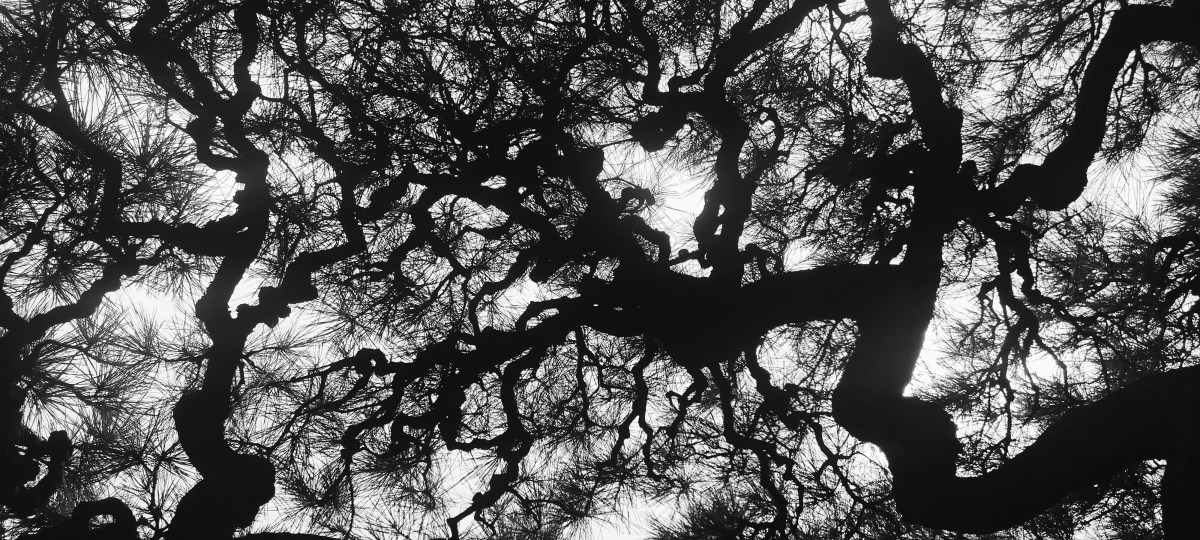
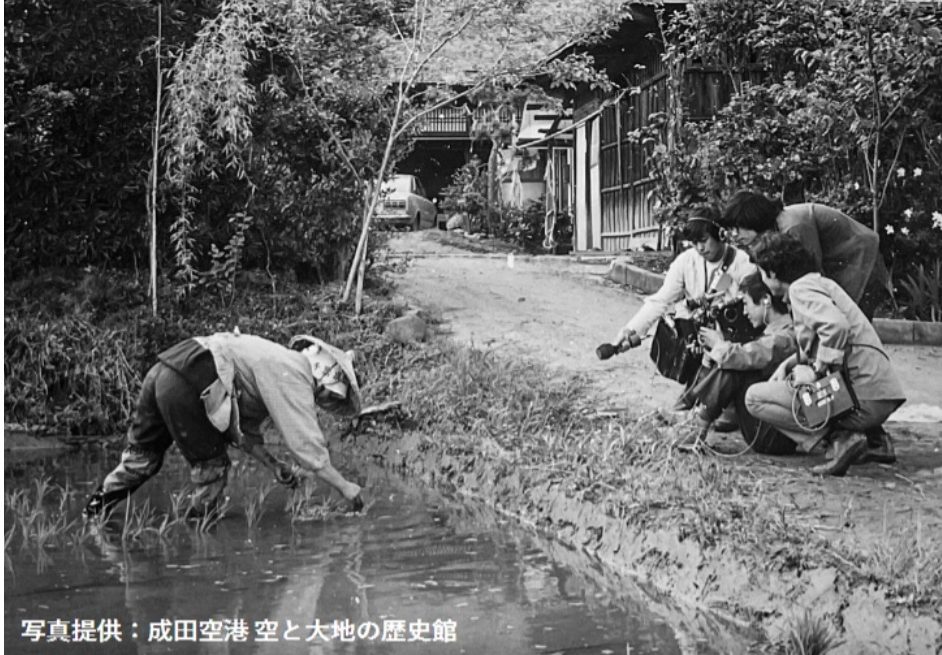
Heta village and the surrounding area, together with the people who lived there, are at the center of one of Ogawa Productions’ masterpieces—and the final work the collective shot before relocating to Yamagata—Narita: Heta Village (1973). About two decades ago, when the few remaining inhabitants were relocated, the area became a ghost of its past, a past that is threatened to be erased in the coming years with the further planned expansion of Narita Airport. This will cause the partial submersion of the zone, wiping out hundreds of years of culture, traditions, collective and personal memories, and not least, resistance.

After moving to Yamagata in the mid-1970s and after the death of Ogawa Shinsuke in 1992, the collective left behind a massive quantity of unused audiovisual material and notes—Ogawa also left a huge debt, though that is another story.
The Hokusō Regional Materials and Cultural Assets Preservation Network is a volunteer organization established in 2024 to document and preserve the buildings, communities, memories and landscapes that will be lost as a result of the large-scale expansion work currently underway at Narita Airport. One of the areas greatly affected by this expansion is Shibayama Town, where Heta Village was filmed. As part of its activities, in September 2024 the network co-organized Heta Project, a workshop for filmmakers and artists to engage with the material left by Ogawa Pro and create audiovisual works that reflect on the landscape of the area and the memories connected to it.

The results of this workshop were screened at one of the satellite events held in Yamagata on October 13, Sanrizuka: Disappearing Landscapes—The Heta Project Screening. Six short films were presented, and most of the filmmakers were also at the venue to discuss their work.

What I found particularly fascinating was the heterogeneity of the participants—not only in age and nationality, but also in their levels of knowledge about Ogawa Productions, and the history of the area. Some, like Markus Nornes, have been writing and speaking about the documentaries and the resistance of its people for decades; for others, this project served as an entry point to discover the films and to become familiar with the issues affecting the region. The following films were screened:

三里塚ー辺田部落の時間 SanrizukaVillage Time in Heta Village (Markus Nornes, 2024), 13′.

抵抗のむら The Village of Resistance (Stella Lansill, 2024), 5′.

此処に轟くThis ROAR Here…(Tanabe Yuma, 2024), 9′.

辺田部落へ To Heta Village (Watanuki Takaya, 2024), 10′.

三里塚 シャドー Sanrizuka Shadows (Wang Yijean, 2024), 6′.

辺田部落 瞑想 (祈)Heta Buraku Meditation (Prayer) (Aldo Schwartz, 2024) 12′.

The fact that Ogawa Production’s footage is freely available for artistic and historical purposes is an extraordinary achievement, and it could mark a turning point in the production of archival and compilation films in Japan. As I have already noted in a preliminary study on the subject, this form of cinema is strikingly absent from the Japanese audiovisual landscape—not only within the documentary sphere, but also in the experimental field.

One can only hope that this incredibly rich archive—there is, for instance, a great deal of vibrant color footage of natural elements and animal life, and the very fact that the collective chose not to use it says much about what they were striving for—will finally enter into circulation.
Beyond opening new artistic possibilities for filmmakers—Satō Makoto’s Memories of Agano (2004) is a shining example that pointed in this direction already two decades ago, and if I am not mistaken some of his peers are now moving along similar lines—the archive may also function as a living repository of Sanrizuka: its memories, its struggles, its history.

YIDFF 2025 – report 5: The Future of Dialogue: Yoshida Dormitory, Kyoto University

Previous reports:
YIDFF 2025: preview
report 1: SPI (Sayun Simung)
report 2: Awards
report 3: From the River to the Sea, and the Mountains: Filmmakers in Solidarity with Palestine – A Gathering
report 4: Appalachian Lenses, Hakishka

The Yoshida Dormitory at Kyoto University is the oldest student dormitory still in use in Japan. It consists of two residential buildings and a cafeteria, and residents can live there at a very affordable rate. Since the 1960s, the dormitory has been engaged in ongoing struggles with the university administration, fighting to preserve its autonomy and the political ideals it represents.

In December 2017, the university announced a new safety policy, citing concerns that the old structure could collapse in the event of an earthquake. The abrupt decision halted new resident admissions and ordered all current occupants of both the old and new buildings to vacate. The students and their supporters vehemently opposed the plan. It was around this time that director Fujikawa Keizō and his crew began filming in and around the dormitory, documenting the students’ daily lives and their fight to maintain their independence. 

This question of autonomy lies at the heart of the conflict between the dormitory residents and the university administration. As scholar and writer Andrew Williams acutely observed, “Dorms were once a vital source of income and membership for the on-campus self-governing associations that played a central role in the student movement of the 1960s by affiliating with certain New Left factions and aligning with political causes, to which they directed funds, resources, and members. Concomitant with the decline of those associations,” Williams continues, “due, inter alia, to administrative, legal, and sociocultural changes, is the atomization of the whole student movement in Japan from the 1970s onwards.” (Settlement reached in lawsuit over future of Kyoto University’s Yoshida Dormitory)

The Future of Dialogue: Yoshida Dormitory, Kyoto University is a documentary directed by Fujikawa, presented  in the Perspectives Japan program in Yamagata, that follows from the inside the life of some of the students and their struggle to keep the facility open, but at the same time depicts the delicate balance of self-governance that is at the core of the dormitory. 

The film starts very strong—both visually and structurally—but loses part of its momentum in the second half. At first, I thought this was because, by shifting its focus from a depiction of the dormitory’s activities and struggles—both past and present, conveyed through a well-integrated use of archival photos and written explanations—the film turns its gaze inward. There are many interviews and scenes centered on internal relationships, while I would have preferred more attention to the dormitory’s broader history.

However, as the documentary progressed, I found my opinion changing drastically. The issue isn’t the number of voices—in fact, the internal discussions are among the film’s most captivating elements. Through these conversations, we gain insight into how the dormitory functions as a self-governing community, providing students with affordable housing and fostering a sense of collective life. The rhythm and editing of the first twenty to thirty minutes, along with the rich color palette and tonal nuances, make the opening section a striking portrayal of a self-organized collective in struggle.

The main issue, I think, is temporal rather than thematic—and partly visual as well, somehow, the visual flair that animated the opening scenes fades away as the film progresses. The documentary should have concluded before the pandemic—since the period of filming during Covid is understandably absent. Instead, it attempts to incorporate every major update from the past two years, including one that occurred just a month or so before the Yamagata screening (the settlement reached on August 25). This leads to a series of codas that stretch the narrative and dilute the focus of the film. As a result, the work feels unfinished, or, rather, like a work in progress still awaiting completion.

As said, the documentary would have been stronger had it ended before the pandemic, or, conversely, if it had extended its scope to include the aftermath and reactions following the August 2025 settlement. However, during the post-screening talk—before a packed audience, not a single seat was empty—Fujikawa mentioned that he considers the project finished and will not continue filming. Another factor that may have affected the final result is the requirement to obtain permission from all dormitory participants before using the footage shot inside, which must have limited what could ultimately be included.

Another compelling point, raised by scholar Aaron Gerow, concerns the students’ anxiety over how television cameras—after a TV station requested permission to film their meetings—might have portrayed their dormitory council sessions, and how the presence of those cameras restricts free expression. “Yet we spectators then have to ask what this means for Fujikawa’s camera, which also attends those meetings,” Gerow observes. “Is cinema different? Is Fujikawa different? Largely shot in a vérité style, the film does not engage in explicit self-reflection on this issue.” (SPUTNIK—YIDFF Reader 2025)

Beyond the explosive opening section mentioned earlier, several evocative scenes extend beyond the direct confrontation between the students and the university administration—and I found these particularly compelling.
One such moment depicts a typhoon striking Kyoto and partially damaging the dormitory; another, especially memorable, shows the students deciding to clean up a neglected space—if I’m not mistaken, the old cafeteria. The scene immediately calls to mind From Up on Poppy Hill by Miyazaki Gorō, in which students band together to restore the Quartier Latin building. The same sense of camaraderie and shared purpose that animates Miyazaki’s film (scripted by his father Hayao) comes through vividly here.

While far from perfect, The Future of Dialogue: Yoshida Dormitory, Kyoto University —this is by the way the direct translation of the Japanese 対話のゆくえ 京都大学吉田寮, better in my opinion that the English title used at the festival, The Yoshida-ryo Dormitory—remains a fascinating work worth engaging with, and marked by several powerful and resonant moments.
One final note: director Fujikawa mentioned that the version screened at the festival was the “Yamagata cut,” suggesting that future screenings in other venues across Japan may feature a different version of the film.

YIDFF 2025 – report 4: Appalachian Lenses, Hakishka

Previous reports:
YIDFF 2025: preview
report 1: SPI (Sayun Simung)
report 2: Awards
report 3: From the River to the Sea, and the Mountains: Filmmakers in Solidarity with Palestine – A Gathering

I saw a couple of films presented in the Perspectives Japan program this year in Yamagata. I will write about The Future of Dialogue: The Yoshida Dormitory (Fujikawa Keizō) in the near future, and I had previously written about Spring, On the Shores of Aga (Komori Haruka). One of the films I’d like to focus on here today is Appalachian Lenses, a documentary shot in the U.S. by Japanese filmmaker Kasezawa Atsushi.
The film follows a workshop that has been running since 1969 in the small town of Whitesburg, Kentucky, in the Appalachian region. Usually held at Appalshop, an art and educational center in the town, the workshop offers young people a way to confront and express the memories and realities of their community through filmmaking. It is worth noting that Whitesburg is not far from where one of the milestones of American documentary cinema, Harlan County, USA (Barbara Kopple, 1975)—also screened in Yamagata, in the Direct Cinema section—was filmed.

Appalachian Lenses opens at Appalshop, with an introductory meeting between the new members of the workshop. The venue becomes a recurring and significant location throughout the film—not only as the site of the group’s activities, but also as a media archive preserving over half a century of community-made films.

The first part of the documentary, roughly its opening twenty minutes, focuses on the workshop and its role as a vital part of the town’s social fabric. However, on July 27th, 2022, a catastrophic flood devastated the region, displacing hundreds of people and destroying dozens of houses. No one was killed in Whitesburg, but forty-five people lost their lives in the surrounding area.

In the aftermath of the disaster, the tone and direction of the film shifts dramatically. Kasezawa, who had initially intended to document local protests against an anti-abortion law and the young participants’ responses to it, suddenly found himself unable to continue filming. It was only when the young people began photographing the ruined neighborhoods and the families affected by the flood, that he found the motivation to resume shooting—encouraged also by his wife and producer, Tabakotani Akiko, who appears on screen speaking with and empathizing with survivors.

From this point onward, the documentary transforms into something else: the narrative centers on one of the workshop participants, who begins taking photographs as a way to process her own loss—having lost her home—and to document the collective grief of the town.

What ultimately makes Appalachian Lenses stand out is its capacity to illuminate a lesser-known side of America while bearing witness to a community at a moment of crisis. Kasezawa’s respectful gaze captures both the sorrow and the quiet resilience that emerge in the aftermath of disaster. His film becomes not only a record of loss, but also an exploration of how images—and the act of making them—can help a community process change and reaffirm its sense of belonging.

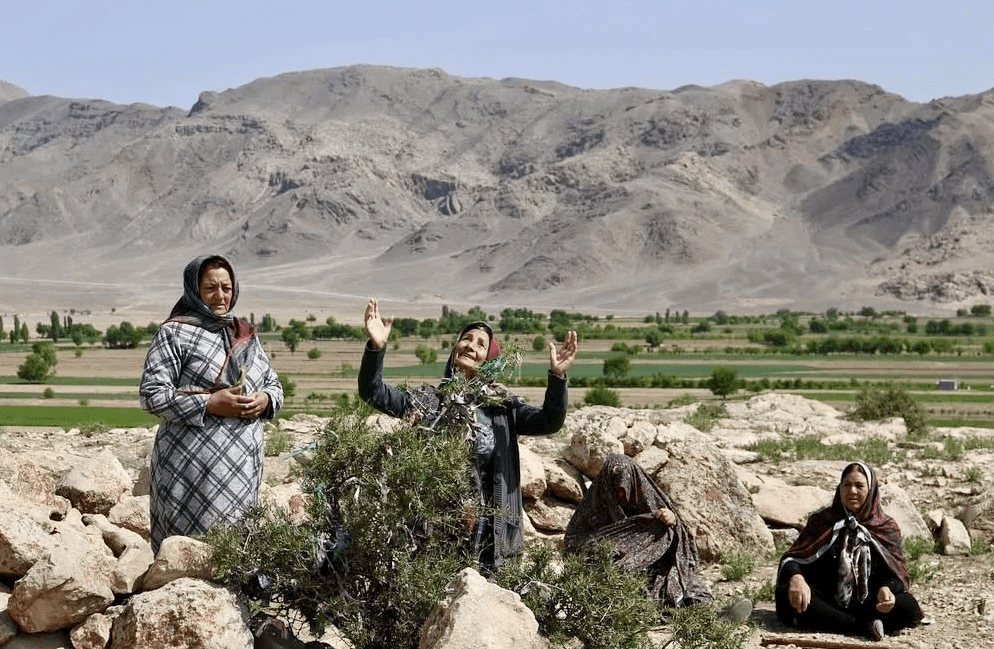
One of the last films I managed to catch at the festival was Hakishka, directed by Narges Judaki and Iman Paknahad and presented in the Asian Currents program. The documentary follows an annual traditional dance event held in Khoy County, a region in western Iran near the borders with Turkey and Armenia. The dance is performed by the Muslim women of Pir Kandi village, who organize a kind of picnic at the valley of Nana Hill. Men are not allowed—only women and their children climb the hill to dance.

The earthy colors of the land, the houses, and the women’s clothing are beautifully rendered through simple, often still, yet striking cinematography. These images—especially those of the barren landscape—convey a powerful sense of place. The film also captures the joyful vitality of the women as they gather, talk, and prepare for the songs and dances. The filmmaking, however, loses some of its strength in the final part of the documentary, when the camera follows the women during the dance itself.

YIDFF 2025 – report 3: From the River to the Sea, and the Mountains: Filmmakers in Solidarity with Palestine – A Gathering

Previous reports:
YIDFF 2025: preview
report 1: SPI (Sayun Simung)
report 2: Awards

Although this is the third report from YIDFF 2025, it stands philosophically, so to speak, at the center of what my experience at Yamagata has been this year.

One of the appeals, at least for me, of watching and writing about documentary cinema is that we are compelled—more than in fiction—to reflect on the relationship between images and “reality,” on the act of audiovisual representation, on how it all connects to what is happening in the world, and, not least, on the ethics of filming (see the Itō Shiori’s “case”).

The genocide taking place in Palestine makes us all complicit and guilty in some way, including those who work, in various capacities, within the world of cinema and audiovisual production. Writing about films and attending film festivals are, after all, part of the broader industry that revolves around cinema—documentary included.

An extra-festival initiative, though seemingly supported by YIDFF, took place in Yamagata on October 13th. Titled “From the River to the Sea, and the Mountains: Filmmakers in Solidarity with Palestine – A Gathering” the event was organized by Filmmakers in Resistance and featured special guest Razan AlSalah, director of A Stone’s Throw. It brought together directors, editors, critics, and other film industry professionals from Japan and abroad to reflect on how to dismantle complicity in the machinery and industry of the genocide. 

The event opened with a short introduction summarizing the ongoing massacre in Palestine, which continues despite the so-called “ceasefire.” This was followed by a discussion on the significance of PACBI and its crucial role within the broader movement of solidarity.
The second part of the gathering centered on Razan AlSalah, who spoke at length about her position as a Palestinian filmmaker and about strategies to resist the Israeli colonial project. She emphasized the need to make solidarity material, noting that, in many cases, images themselves have become part of the genocide—they have been weaponized. While watching people die inevitably provokes strong emotions, AlSalah insisted, it is essential that these emotions be transformed into concrete and practical forms of action.
To this end, AlSalah proposed that cinema workers concentrate particularly on two key priorities:
– Contextualize and distribute images responsibly. The circulation of images—particularly on social media—must always be accompanied by context.
Cinema, on the other hand, possesses a different kind of power: the act of watching collectively and engaging in discussion after a screening are integral parts of the viewing experience, helping to situate and deepen our understanding of what appears on screen.
– Acknowledge the role of film and audiovisual workers. It is crucial to recognize that cinema is an industry entangled, as Francesca Albanese has put it, in the “Zionist economy of genocide.”

As a poignant illustration of this entanglement, AlSalah shared a personal story. Based in Montreal, Canada, she recalled an incident involving the collective she is part of, which had planned to screen a Palestinian film at a local cinema (unfortunately, I do not recall the title of the film or the name of the venue). The theater initially agreed to host the screening, but when the collective asked to make visible the economic ties between organizations and the Israeli machinery of genocide, the cinema withdrew its support. 

This personal episode illustrates the need to implicate ourselves in the places where we live and to make solidarity material; positionality, in this sense, is fundamental. Palestine—and its erasure, which extends to people, land, animals, plants, and entire landscapes—is now often consumed as content. In this regard, AlSalah’s statement, “It is important for me that my works re not consumed as art objects, because the market will capitalize on the tragedy,” is a crucial encapsulation of both the gathering’s spirit and the importance of PACBI.
On a somewhat tangential note, this reminded me of the practices and positions against ‘art’ by Zero Jigen in Japan during the 1960s, as well as filmmaker Alberto Grifi’s belief in “moving beyond cinematographic language to embrace the language of life.”

The final part of the event turned its attention to film workers active in Japan. Several participants shared their experiences of solidarity actions carried out over the past two years and provided Japan-specific perspectives on the responses to the ongoing genocide.
In Japan, large-scale demonstrations have not taken place, but smaller protests have nonetheless occurred over the past few years. These actions were largely ignored by mainstream media, yet circulated through alternative channels, such as Discord groups.
What stood out to me was that several demonstrations were also organized in Okinawa, where the Palestinian cause was connected—albeit on a very, very, very different level—with the oppression of the Ryukyuan people. It reminded me of the 1950s and the international class solidarity that was so prominent during that decade; a shining example of this were the screenings of several short documentaries made by Noda Shinkichi and shown two years ago in Yamagata.

It was also fascinating to learn how activism and demonstrations in solidarity with the Palestinian cause are being organized by queer and LGBT groups in Tokyo, as well as in Japan’s more rural areas.
In conclusion, while there was agreement that PACBI and a material form of boycott and resistance—tied to where one lives and the work one does—are essential, what is also needed in Japan is a wider dissemination of knowledge about what is happening in Palestine and the economic networks that sustain the industry of genocide.

P.S. I have deliberately avoided naming any of the participants in the gathering, except for AlSalah, whose name appeared on the pamphlet.

YIDFF 2025 – report 2: Awards

Previous reports:
YIDFF 2025: preview
report 1: SPI (Sayun Simung)

Yesterday, the Yamagata International Documentary Film Festival announced the prize winners for this year’s edition. In the International Competition, the main award, the Robert and Frances Flaherty Prize (Grand Prize), went to Direct Action (2024) by Guillaume Cailleau and Ben Russell, a documentary about the eco-activism of the so-called ZAD (zone à défendre). I haven’t seen the film yet, but I found it fascinating that it received the top award in Yamagata. According to reviews and people I spoke to during the festival, Direct Action devotes much of its time to the group’s everyday life and self-organizing routines — qualities that seem to echo Ogawa Pro’s Heta Village. Or perhaps I’m reading too much into it.

The Mayor’s Prize went to With Hasan in Gaza (2025), directed by Kamal Aljafari, with whom I had the pleasure of having a long and fascinating conversation on my last day at the festival. Some reviewers have described the film as a work of “personal archaeology,” and I couldn’t agree more. Aljafari discovered an old videotape in his camera—footage of himself traveling through Gaza in 2001 with a friend—and decided to turn it into an archival or found-footage documentary. Perhaps less experimental and opaque than his previous work, A Fidai Film (2024), With Hasan in Gaza nonetheless manages to disorient the viewer. As the director explained after one of the screenings in Yamagata, the footage is presented exactly as it was shot, in chronological order, and in its entirety, with nothing edited out—not even the blurred, imperfect, or amateurish images.
According to Aljafari, removing the poorly filmed segments would have been equivalent to erasing the memories of the people and the places filmed —especially when viewed from today’s perspective. That’s why he chose to keep everything. The only editing and intervention, he explained, was limited to the addition of sound and text.

Park by So Yo-Hen won the Denroku Award (Award of Excellence). The documentary follows two Indonesian men conversing under the stars in a park in Tainan. Poems about fellow migrants are read, but soon the film shifts into a more self-reflective mode. Park presents many interesting ideas—as is often the case with works emerging from the Your Bros. Filmmaking Group (see Dorm or Landscape Hunter, for instance)—yet I found it perhaps a bit stretched and meandering.

The other three awards in the International Competition went to Malqueridas (2023) by Tana Gilbert (Flex International Award, Award of Excellence); L’Homme-Vertige: Tales of a City (2024), directed by Malaury Eloi Paisley (Special Mention)—a film I really wanted to see but, unfortunately, couldn’t catch—and Ignacio Agüero’s Letters to My Dead Parents (2025). This was the first film I saw in Yamagata, a documentary composed of old footage of the director’s father and family, interwoven with interviews and images suspended like fragments of a dream to evoke life under the Pinochet regime in Chile. It feels more like a dreamlike patchwork of memories than a linear recollection of the past. Parts of the film are incredibly compelling—the conversation with an elderly union leader recalling his experiences during the military coup is especially powerful.

In the New Asian Currents program, the main prize (Ogawa Shinsuke Prize) was awarded to What Did You Dream Last Night, Parajanov? (2024) by Faraz Fesharaki, which unfortunately I didn’t have the chance to see. The Yamagata Shimbun and YBC Award (Award of Excellence) went to When the Trees Sway, the Heart Stirs (2025) by Lee Jiyoon. The camera moves through Jeongneung Valley in Seoul, an area slated for urban redevelopment where residents are being asked to leave. Elegiac in tone, the film alternates still shots of the neighborhood with conversations with its inhabitants, conveying a striking sense of spatial specificity. As these elements gradually take shape, the work becomes increasingly engaging; in fact, it is one of those rare cases where I felt the documentary could have benefited from a longer running time (it’s only 40′).
In the same program, The Tales of the Tale by Song Cheng-ying and Hu Chin-ya received the Tohoku Denka Kogyo Award (Award of Excellence). It is a beautifully photographed—perhaps a bit too polished?—documentary about an old mine, evoking a ghostly atmosphere by weaving together images of ruins and the memories of miners. In its final minutes, the film reveals that the mine is slated for demolition, and a small group of former workers is opposing it. The relationship between the dead, the living, and the places they inhabit—a theme I mentioned en passant in my previous report—resurfaces here with particular force.

Lastly, the Citizen’s Prize went to Najiba Noori and Rasul (Ali) Noori for their documentary Writing Hawa (2024), which tells the story of a woman who learned to read and write later in life, only to see her dreams shattered by the return of the Taliban regime in 2021.

YIDFF 2025 – report 1: SPI (Sayun Simung)

Read the YIDFF 2025 preview here, and report 2 here

Let’s start from the end. This is a short review of the last movie I saw in Yamagata, SPI by Sayun Simung, whose Millets Back Home I saw at the festival almost exactly 10 years ago.

The film explores what it means to be part of the Tayal Indigenous people in Taiwan in the 2020s. Director Simung approaches this through a first-person documentary, turning the camera toward her own family—as she did in Millets Back Home—crafting both a tribute to her late grandfather and an intimate portrayal of everyday life in the small mountain village of Sqoyaw. 


At the center of the film lies the concept of Gaga, a term apparently difficult to translate, but that has been rendered as Tayal law and cosmology in academic papers. Simung embarks on a search for what Gaga means for her and her relatives, depicting the everyday life of her family while interspersing scenes of natural landscapes—shot in a different aspect ratio—during which she addresses the spirit of her late grandfather. The world of dreams—SPI means “dream” in the Tayal language—as well as that of the ancestors and spirits is a constant but subtle presence throughout the documentary. It unfolds as a sort of hidden dialog between the living and the dead—a theme, once again not in the foreground, that I noticed in many of the documentaries I saw in Yamagata this year.

Unlike many of the works presented in this year’s New Asian Currents, SPI avoids formal experimentation, its apparent simplicity, however, becomes a strength, allowing the film to convey on screen the small joys and struggles the director’s family has to face.

After a meandering opening, the film gains momentum, shifting gears when we discover that the director’s younger sister is pregnant at just seventeen. This development opens up one of the most fascinating sections of the work. At first, the grandmother cannot accept her granddaughter’s pregnancy—because she is too young and also because, possibly, the future husband belongs to a different indigenous group, the Paiwan. One of the most memorable sequences depicts the meeting between the two families: different languages are spoken, and Mandarin becomes the bridge of communication. They discuss how the wedding customs of each group—all of which involve the slaughter of an animal, slightly differ. During these long conversations, the camera often cuts to the faces of the young couple, silent and visibly lost.

As is often the case in documentaries about Taiwan’s indigenous peoples, it is striking to see how traditions and beliefs evolve while seemingly remaining the same. A particularly significant moment comes during a Tayal year-end ceremony, where fireworks light up the night sky. The following shot shows the village from afar, with a church and bell tower standing out—echoing an earlier scene where the grandmother visits the church.

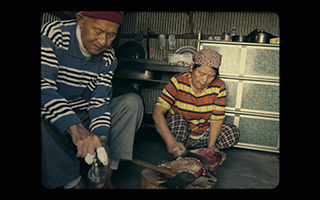
Yet this ongoing search for what defines a Tayal way of life in contemporary Taiwan is only one layer of the film. SPI concludes with a brief, tender scene filmed while the grandfather was still alive, showing him cutting pork—an emblematic choice that underscores how the documentary also serves as a heartfelt farewell from the director to her beloved grandfather, intertwining the personal loss with the broader meditation on tradition and identity.

Just a final note on the title, I would have preferred to keep a translation more faithful to the original which is, I believe, something like Dreams in the Fire Room.

Yamagata International Documentary Film Festival 2025 – preview

It’s that time of year again: autumn arrives, bringing with it a cascade of film festivals around the globe. Just to name a few of the major ones in Asia, we have Busan and Tokyo, along with the Image Forum Festival, the biggest event dedicated to experimental cinema in Japan. December will also see the debut of the newly established Aichi Nagoya International Animation Film Festival in Nagoya. But I digress.

One of the oldest and most prestigious festivals in Japan is without doubt the Yamagata International Documentary Film Festival, an event I’ve been attending for more than a decade now (and about which I’ve written various reports and reflections on this very website).

I plan to attend this year’s edition (October 9–16) as well, though life is unpredictable and you never know what might happen in the “real” world. Below are some of the screenings and programs that have caught my eye and that I’m especially looking forward to.

Being a biennial festival, YIDFF is not the place to see world premieres, but rather a chance to catch up with significant films already screened elsewhere or to discover under-the-radar documentaries, often from the Asian continent. This year’s International Competition will showcase Park by So Yo-Hen, which won the Grand Prize at the Taiwan International Documentary Festival last year, and With Hasan in Gaza by Kamal Aljafari, presented at Locarno a couple of months ago. Aljafari will also present his more experimental A Fidai Film in the program Palestine – Memory of the Land, a work I am eager to revisit on the big screen, this time with more information and conext to help decipher it.

Returning to the competition lineup, Letters to My Dead Parents by Ignacio Agüero weaves together personal stories with the history of the labor movement in Chile, while I Was, I Am, and I Will Be! by Itakura Yoshiyuki promises an exploration of Kamagasaki, a town of day laborers, at a moment when the city was preparing for Expo 2025.

New Asian Currents has usually been the section where I’ve made the most discoveries over my years of attending Yamagata. While many of these came from last-minute decisions or suggestions by friends and fellow critics on site, this time there are a couple of titles I’m especially eager to check out. Collective Dreams Stitched into December by Bappadittya Sarkar—a patchwork of interconnected stories set in the Indian city of Jaipur—promises to satiate my appetite for more documentaries from this vast country. Meanwhile, The Tales of the Tale by Song Cheng-ying and Hu Chin-ya captures the stories and dreams of an old mining town of Houtong in Taiwan.

In Perspective Japan, The Yoshida-ryo Dormitory by Fujikawa Keizō documents the ongoing battle to keep the country’s oldest student dormitory open—a struggle deeply intertwined with the social fabric of the city and the political activism of Japan at large (you can read more here). In the same section, Spring, On the Shores of Aga by Komori Haruka carries a special resonance for me, as it is connected to Satō Makoto, his cinematic legacy and the Agano area.

Every edition of the festival offers audiences a major retrospective, and this year it is Unscripted: The Art of Direct Cinema—32 works spanning five decades of a documentary mode that revolutionized the way non-fiction films are conceived, produced, and filmed. Although I have already seen most of these documentaries – but not all!- this is a perfect opportunity to revisit some “classics” and to gain deeper insights through the accompanying discussions.

Among the peripheral screenings and events, one that stands out is Feb 11, 1990 Rough Cut Screening: The Other Version—four and a half hours of material documenting the very first YIDFF in 1989, footage not included in Iizuka Toshio’s A Movie Capital (1991).
For those, like me, fascinated by Sanrizuka, the resistance against the construction of Narita Airport, and the legacy of Ogawa Pro, the special presentation Sanrizuka: Disappearing Landscapes – The Heta Project Screening is not to be missed. Another highlight is the invitation of Voices of the Silenced, this year’s closing film—a reflection on counter-archives and the suppression of minorities in Japan (particularly the Korean minority) by Park Soo-nam and Park Maeui. The documentary screened in Berlin two years ago, but YIDFF lists it as 2025, so I wonder whether the film has been reworked.

All of these films, however, feel like just planets orbiting around the central sun: Palestinian cinema, and Palestine itself—the true core of this year’s festival, even if the number of works is not overwhelming. At least, that is how I perceive it. Palestine, its culture, and the struggle of its people have always held a special place at YIDFF. This year, while the dedicated program Palestine—Memory of the Land features only eight films, additional Palestinian works will appear across other sections, and I expect that conversations at nearly every venue will inevitably turn toward the ongoing genocide of the Palestinian people.

As it is the case for the Direct Cinema section, I’ve already seen most of the films in the Palestinian program, but here more than ever I’m eager for the post-screening discussions, and for the chance to share on the big screen—together with other viewers—some true masterpieces of political cinema.

The documentary I’d like to highlight in these closing lines is Fertile Memory (1980) by Michel Khleifi. When I first encountered it, the film was a revelation. It reflects a culture and a society oppressed and dispossessed by the Israeli state from the outside, while at the same time telling the story of two women struggling to navigate the shifts and tensions within Palestinian society itself.

What is equally striking is how the film unfolds as a meditation on landscapes: the geographical terrain, where human history and geological time are layered, and the human landscape of faces—faces that reveal emotions, hopes, regrets, and anger. In this sense, the breathtaking images of the Palestinian land, with its warm colors and sinuous contours, both contrast with and converse with the more intimate shots of the two women moving and working inside their homes. Particularly moving are the images of food and its preparation, as well as those moments when one of the protagonists is framed between a door left ajar and the jamb. We should keep the door open and continue to talk and discuss about Palestine, its people and memories.

See the full line-up here

See you in Yamagata!