Report: Yamazaki Hiroshi’s special screening at the National Film Archive of Japan (October 2023)

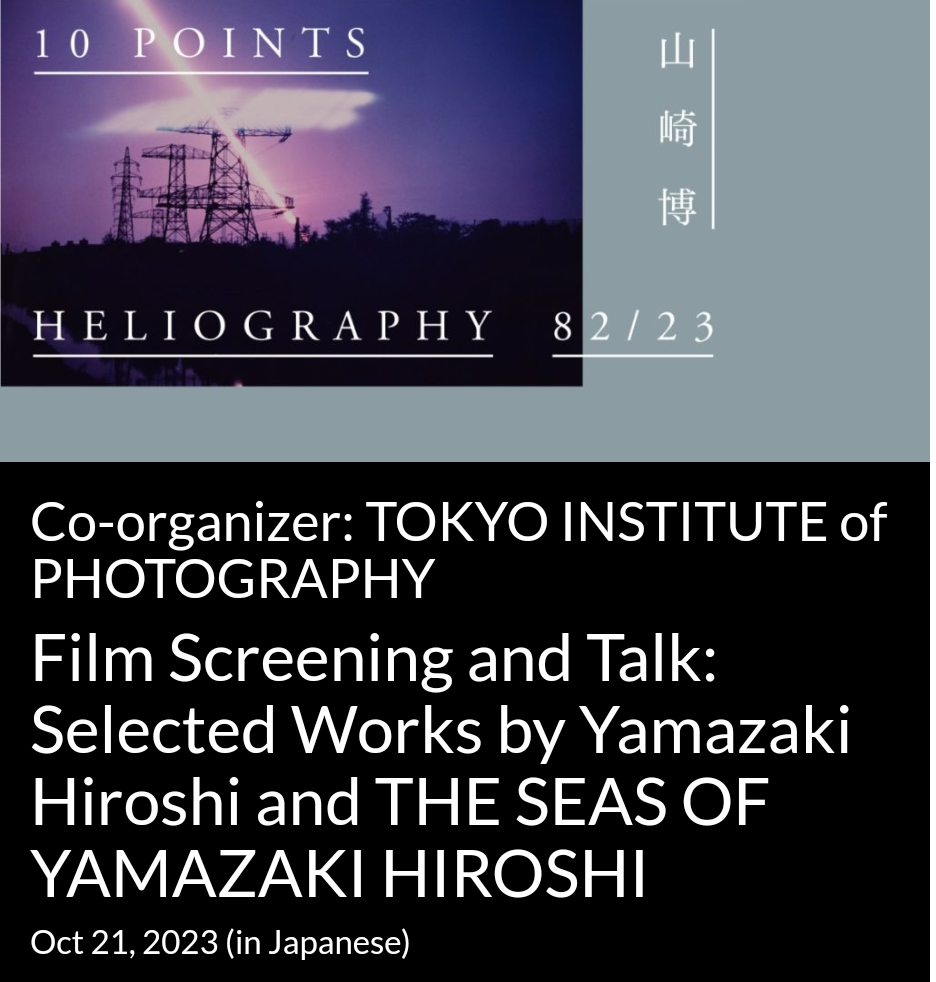
Today, October 21st, the National Film Archive of Japan organized a special screening of four films by Yamazaki Hiroshi, and 山崎博の海 The Seas of Yamazaki Hiroshi (2018), a short movie about the filmmaker and photographer, made by his friend and colleague Hagiwara Sakumi.
The screening was part of the series of exhibitions and events connected to the T3 PHOTO FESTIVAL TOKYO 2023.

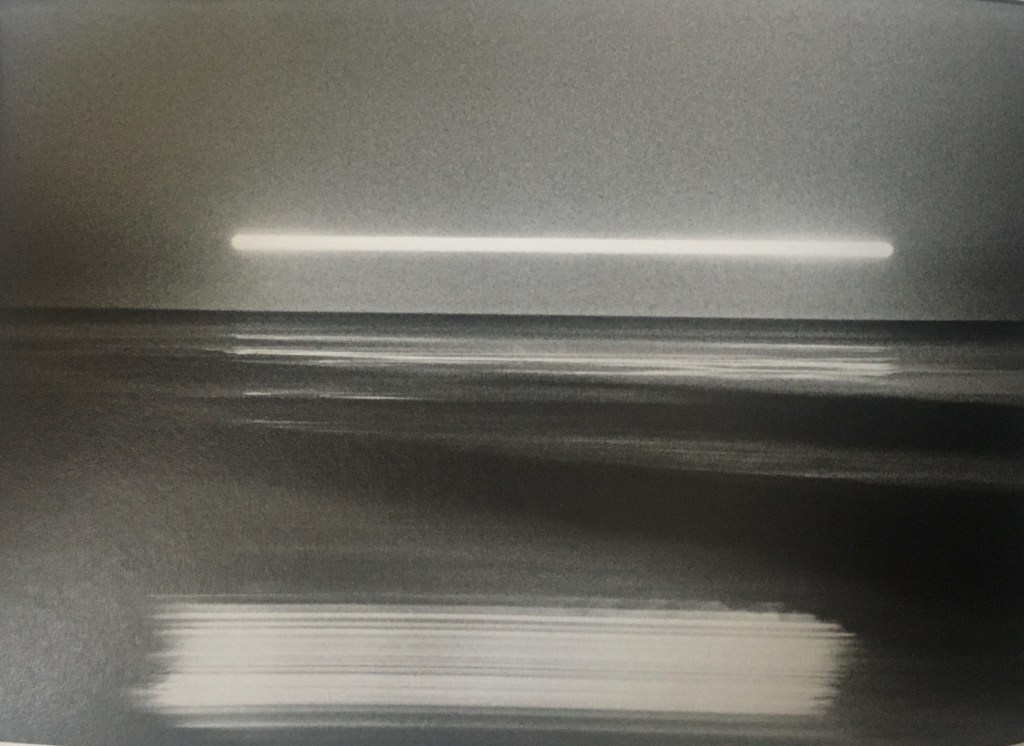
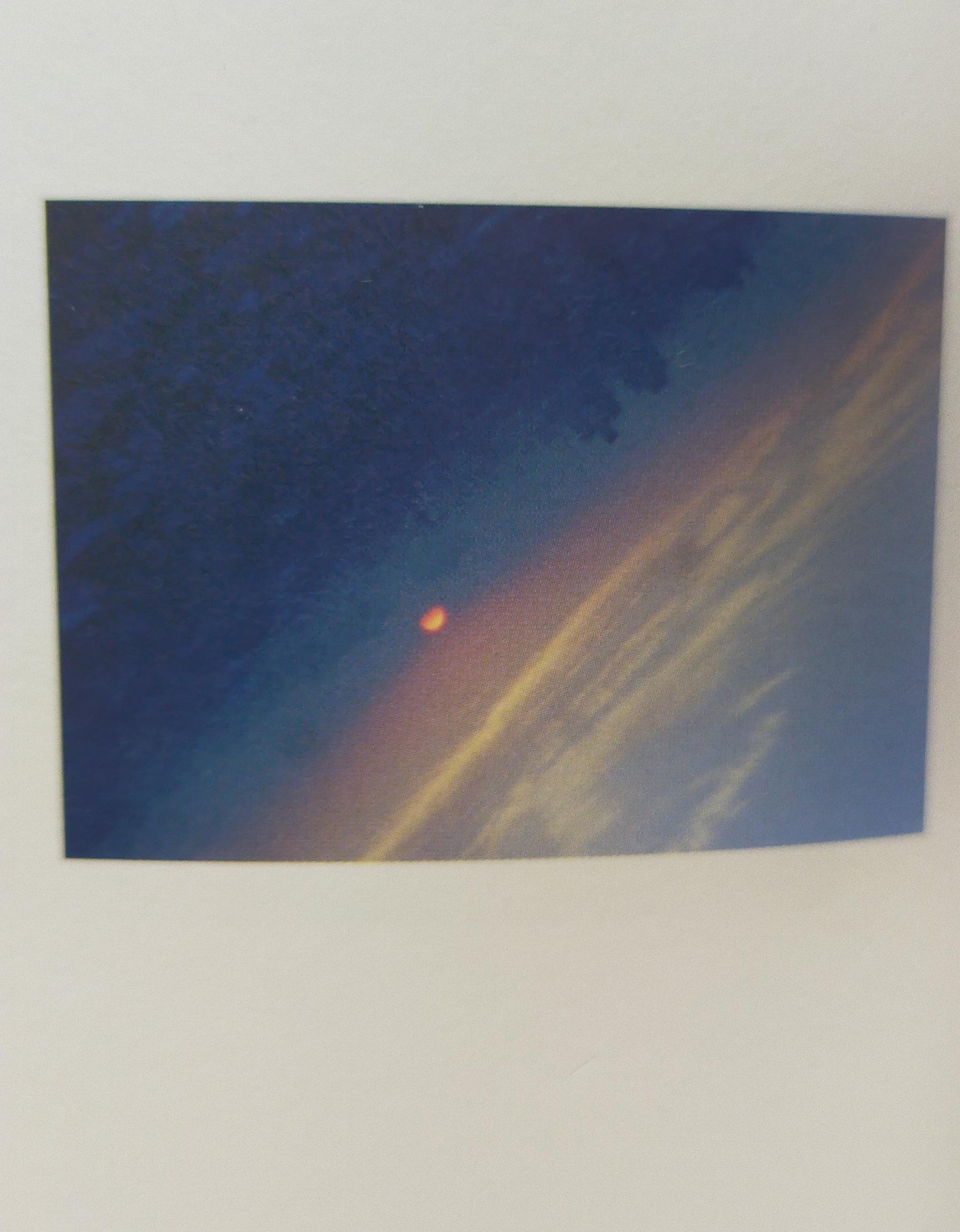
In addition to the screening, a series of panels, reproductions of Yamazaki’s photos discovered only after his death in 2017, were displayed in the Film Archive’s entrance hall.

I had already seen all of the films of the program years back, when the Image Forum Festival organized a bigger retrospective on the filmmaker. I also had the chance to write about Yamazaki’s masterpiece, Heliography (1979), and about his other experimental films he made during his career for this site. Moreover, a longer piece, where I draw connections between Heliography, Ogawa Pro’s Magino Village, and Matsumoto Toshio’s Ātman (1975), was recently published on Chute Film-Coop.

All of this to say that I went to Tokyo to revisit and rewatch Yamazaki’s films on a bigger screen, and possibly to experience them in a better quality. I had read, before attending the event, that the works would be screened digitally (ProRes), but I was a bit disappointed and sad to learn about the story of their condition and preservation.
Of the four, a print exists only of Heliography, prints or negatives of the other three, Vision Take 1, Observation, and Motion are regrettably lost. To my surprise, the digital copies screened at the event were made from VHS tapes (!) Yamazaki used to show in the university where he worked.
the event

The after talk between Ishida Tetsurō, curator for the Tokyo Photographic Art Museum, and organizer of Yamazaki’s last exhibition, and the aforementioned Hagiwara was casual, but interesting. Some anecdotes about Yamazaki’s life were shared, but most importantly for me, the two revealed some technical and conceptual aspects about Yamazaki’s filmmaking process.

Vision Take 1 (1973, 8mm, 4′) presents the viewer with the images of the sea, a constant in Yamazaki’s career, and a beach were a television stands. As soon as the landscape gets darker the TV set starts to light up with images of the same sea. This is probably the weakest of the bunch.


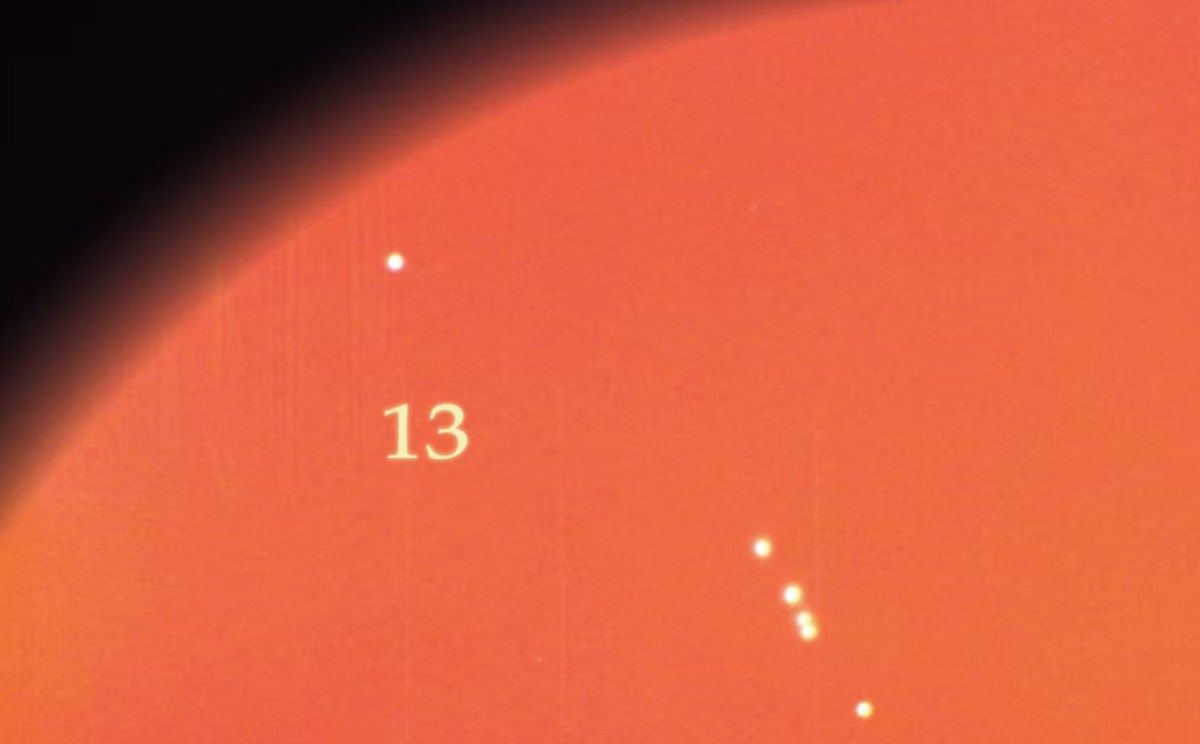
観測概念 Observation (1975, 16mm, 10′) is a film that starts with a fixed and very dark image of the filmmaker’s neighborhood. Slowly and gradually the scene, a couple of roofs, antennae and the sky, with students and a small truck passing on the street at the bottom of the frame, turns whiter and whiter. The screen turns dark again, and from the upper left side of the screen, accompanied by a pulsating sound, one after another, many small bright “suns” appear drawing an arc of sorts in the dark sky above a house. However, as emerged from the discussion, probably this is not the arc drawn by the Sun in the sky captured in time-lapse, like in Isobe Shinya’s 13 for instance, but something different that Yamazaki created to make it look like the real thing. “It’s fiction” as said by one of the two people on stage.

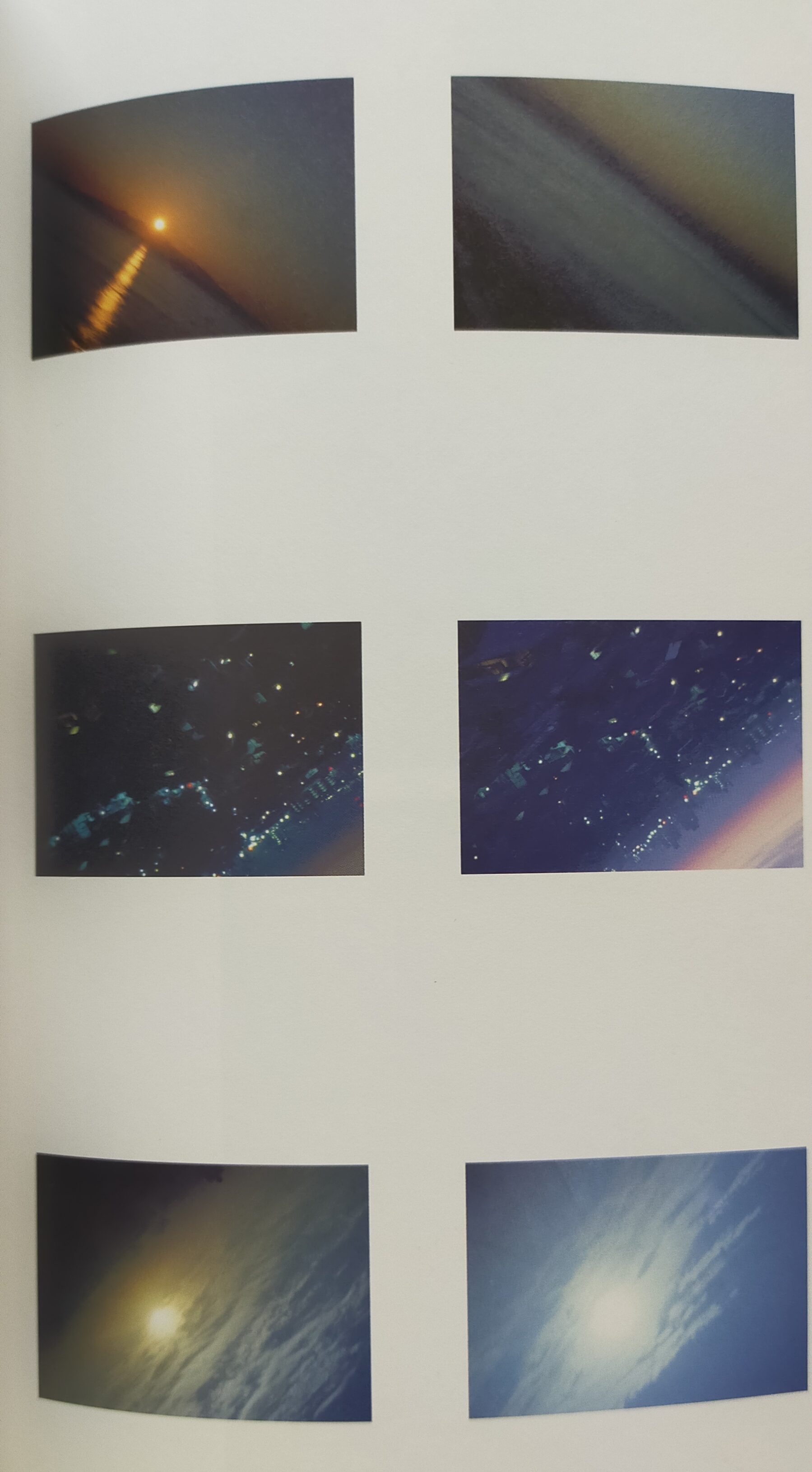
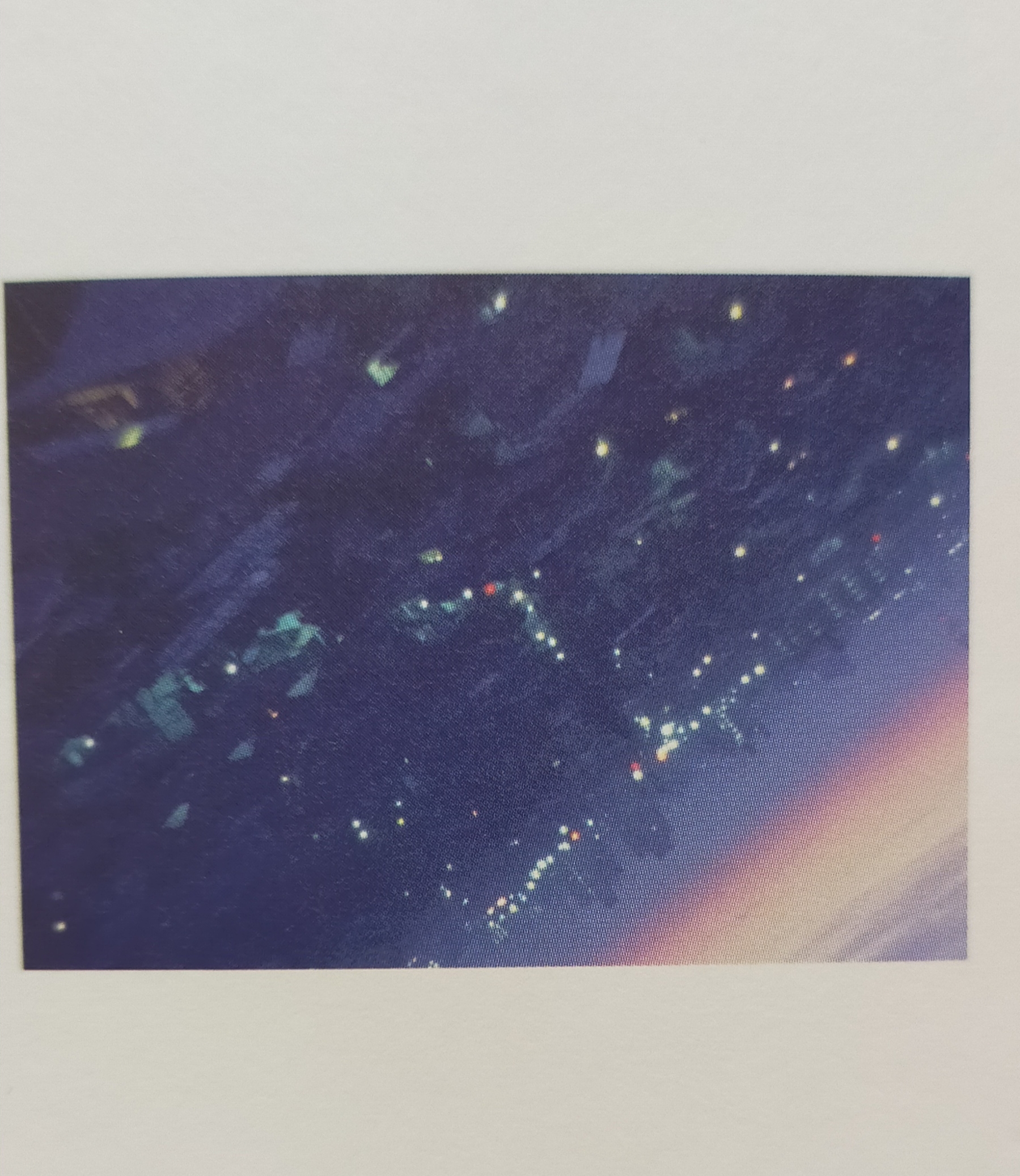
Yamazaki himself was interested in photography and filmmaking in that “the world created through media is different from what humans see with their eyes”. For instance, the two half of Heliography, first the Sun filmed in time-lapse setting over the sea, and then, after a couple of seconds of darkness, the star resurfacing from a city seen upside down, were shot from two very different locations. If we think about it from a technical point of view, it is quite obvious. However, in the film it feels like the point of view is conceptually the same.

The after talk revealed also how Motion (1980, 16mm, 10′) was made, or better, how the two speakers think it was made, because Yamazaki was quite secretive about his methodology. According to Hagiwara, the film was made by shooting in a shower with a strobe lens. Motion is a fascinating film, without sound, composed of a series of tiny specks of liquid reflecting light, superimposed with layers and layers of more lights, sometimes edited slowly, sometimes faster. Besides Heliography, this was the film that impressed me the most. For the way it is constructed, but also for its trance-inducing quality, it felt like an experiment by Makino Takashi.

The event was interesting, but I wish there were more films screened, because to understand what Yamazaki was trying to do with images and light, one needs to be immersed longer and deeper in his world, photographic or filmic (also, I’d really like to see Sakura, his film about “dark” cherry blossoms again).

On Yamazaki Hiroshi, Heliography, Magino Village, and Ātman

I’ve been fascinated and captivated by Yamazaki Hiroshi’s works, both still and moving images, since the first time I discovered them in 2018, at the Image Forum Festival.

Reading about his approach to photography in the catalogue of one of his exhibitions, and finding ‘Ugoku shashin! tomaru eiga!‘(Moving photos! Still movies!), the book where he recounts part of his life and career, made me appreciate his artistic output even more.

Moreover, it a was a revelation to discover (how did I miss it!?) that Yamazaki was behind the time-lapse sequences shot for Magino Village – A Tale / The Sundial Carved with a Thousand Years of Notches (1986) by Ogawa Production, and that he worked as a cameraman in Matsumoto Toshio’s Ātman (1975).

Chute, an experimental film cooperative based in Istanbul and The Hague, offered me the chance to gather my thoughts on Yamazaki, Heliography (1979), and what I’ve called “the solar connection”.

The piece is available here.

In the article I’ve only scratched the surface of what could, and frankly should, be written about Yamazaki. His engagement with moving images, the relation between his films and his work in photography, his method, and his position in the history of experimental cinema in Japan.

Soon after the article was posted, more thoughts started to coagulate in my head, and I was also told that Matsumoto wrote a piece on some pre-Heliography experimental films by Yamazaki. The journey has just started.

13 by Isobe Shinya

In a peripheral corner of Japanese cinema, one where experimental film, photography, and documentary film encounter, overlap, and merge, there seem to be a thread connecting some films made by different artists in different eras. Alchemy (Nakai Tsuneo, 1971) and Heliography (Yamazaki Hiroshi, 1979), but also parts of Magino Village: A Tale (Ogawa Shinsuke, 1986) and Gootariputra (Yamazaki Mikio, 1999), just to name a few, all share a common fascination for, and a total cinematic dedication to the Sun, its path, and its astral movements in the sky.

The photographer and filmmaker Yamazaki Hiroshi (1946-2017) is particularly important in this context, in the past I wrote about Heliography, here, and on his photographic works, here. After having dedicated a large part of his career to the creation of long-exposure photographs of the sun, Yamazaki in 1979 crowned this artistic path with the short film Heliography, one of the most important experimental films in the history of the genre in Japan. In the work, as the title indicates, the sun is placed at the center of the filmed universe, while everything else moves around it, horizon, sky and city. A visual and artistic vertigo that in the following years evolved and took a similar path when Yamazaki collaborated with Ogawa Production. Yamazaki went to Yamagata prefecture and for the collective filmed the time-lapse sequences of the Sun for the masterpiece Magino Village: A Tale (1986). 

This “solar community” has now a new practitioner, Isobe Shinya. In 13 the young Japanese filmmaker left his camera in exactly the same spot for five years to shoot a picture of the sunset every thirteen seconds. In a series of merged time-lapses, we see the sun(s) moving repeatedly from the left part of the screen to the right. Superimposing these images collected over half a decade, Isobe created a work where the sky, while going through a series of permutation in colours, from black to purple, from red to blue, is also being slowly populated by fluorescent dots, the sun(s), gradually clustering the screen.

13 begins with a black screen and without sound, but soon the sun(s) and other drapes of light begin to appear from the upper left corner. As the progression and arcs of the sun(s) get faster, the images are paired first with a what could be described as a sort of background noise, and as the film moves along, with a soundscape composed of accelerating instrumental music. This musical progression peaks with the arrival on screen of a C-shaped cluster of sun(s), a sensorial explosion in a screen now transformed almost into a pink canvas perforated by a multitude of blinding lights.  13 offers a vision of the cosmos and of life conceived as the alternation of solar cycles, and this passage of time – the years, the sun(s), the skies – is condensed and visualised in its 10 minutes with an intense and almost haptic quality. The travel in time that 13 represents, the creation of a different time, could be also read as a travel in space: from the deep darkness of the first images, the journey passes through different phases and different colours of the universe – the sky – to land, in the last minute or so, again on planet earth. The sun(s) turn here into a singular Sun, and the purple, red and pink skies make way to a blue one. We are now back on earth, we can finally see the horizon, the clouds passing, and the shape of a house with its antenna. The singular Sun is setting, concluding its astral path.  The film definitely belongs to the same realm of visions created by Yamazaki, and with his solar works, both cinematic and photographic, almost establishes an artistic and long-distance dialogue.

13 has won several awards around the world, and in 2021 has been shown in many festivals, online and in-presence, in the United States and Europe. If you read this in 2021, the film is made available by Isobe himself on Vimeo until December 28th: 

Movie journal (April, May 2021): 13, Youth, Ecosystem 5

Some thoughts on three interesting films I’ve seen in the last couple of months.

13 (Isobe Shinya, 2020) For me easily one of the best works of 2021 so far. Here the synopsis from IDFA:

Filmmaker Shinya Isobe left his camera in exactly the same spot for five years to shoot a picture of the sunset every thirteen seconds. In a series of merged time-lapses, we see the sun moving serenely from left to right. Over and over again. First in a neat line, in total silence. Later patterns appear, supported by a minimalist soundtrack. Isobe overlaid analogue shots from different seasons to produce clusters of shining spots.

The film reminded me of Yamazaki Hiroshi‘s Heliography, his photographs and his collaboration with Ogawa Pro for Magino Village: a Tale (the time-lapse scenes of the Sun). 13 is an incredible viewing experience that connects our human time, the 5 years of the shooting, to the cosmic time of the star(s). The apex of this sensation for me is when a bunch of luminous suns appear on screen towards the middle of the work. The overlapping images shot on film (16mm) reach here an almost haptic quality, and the bright spots are, as it were, holes in the sky that let an otherwise unbearable light filter through. The instrumental music used enhances this overwhelming sense of joy and cosmic gratitude, yet, 13 works without music as well, and like in the best examples of pure experimental cinema (Brakhage), the succession of images by itself creates a visual, and almost musical, rhythm.

Ecosystem 5: A Tremulous Stone (Koike Teruo, 1988)

The Ecosystem movies are a series of films that work with abstract patterns of extraordinary density and complexity; the series is inspired by the complex chaos systems present in nature.

A storm of materiality in flux, a very tactile visual experience, a cacophonous but smooth, almost Merzbow-like (and not because of the sound), experience. I would love to see it on a big screen.

Youth: The 50th National High School Baseball Tournament (Ichikawa Kon, 1968) Unpopular opinion maybe, but I prefer this to Tokyo Olympiad, and I don’t even particularly like baseball.
The first part is among the best examples of cinema I’ve seen this year: beautiful photography, really stunning, by Uematsu Eikichi (a cinematographer who worked for Kamei Fumio’s Record of Blood: Sunagawa, among other works), fast-paced editing like in an action movie, incredible popping colours, a moody music, inventive camera angles, a clever sound design, and an exploration of different landscapes and lives of young students practicing baseball in Japan. The most fascinating moment for me was when the movie touches on how the history of the tournament and that of the country are indelibly intermingled. There’s a cut in the first 30 minutes or so, from the smiling faces, in colours, of contemporary (at the time) fans, to the bombings of the Pacific War, that is pure cinema, and it’s worth alone the viewing. The second part, where the 50th tournament itself is the main subject on screen, loses for me, a non baseball person, some of the appeal, but it is still very well crafted and a showcase of Ichikawa’s cinematic touch, and has a very poetic ending. One of the discoveries of the year for me.

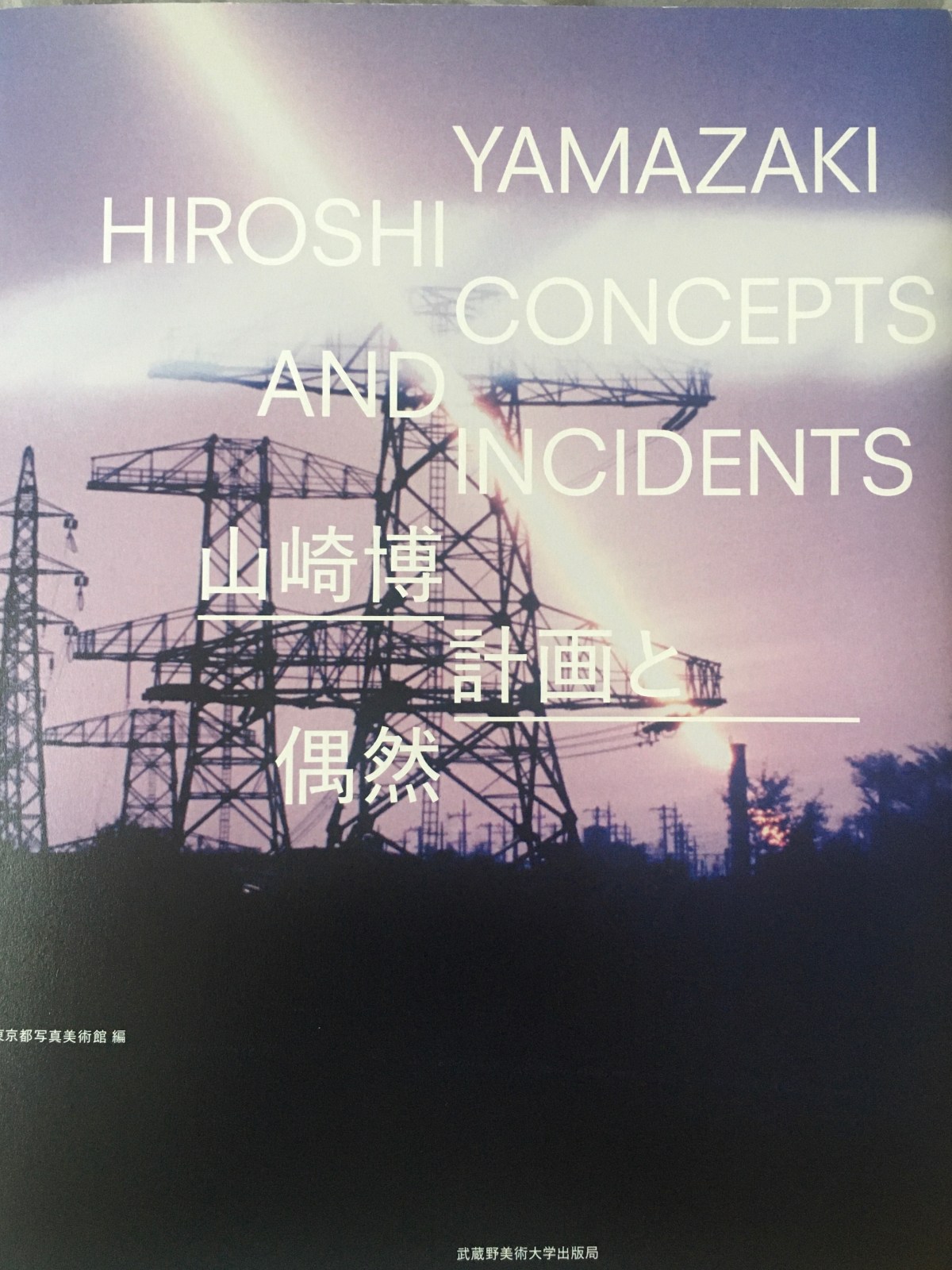
Yamazaki Hiroshi, Concepts and Incidents 山崎博 計画と偶然

A different sort of post today.

Since the cinematic works of Yamazaki Hiroshi are, to say the least, not really available ー I was lucky enough to attend a retrospective dedicated to his experiments in 16mm, organized by the Image Forum Festival a couple of years ago (you can read more here) ー I thought it would be interesting to post here some of his photographs. After all he was first and foremost a photographer, a conceptual photographer to be more precise, whose works as a filmmaker were a continuation of the path created and explored with his still images.

On s side note, it blew my mind to discover that he was the cameraman who shot the overworldy time-lapse images of the Sun in Ogawa Pro’s The Sundial Carved with a Thousand Years of Notches — The Magino Village Story (1986), a solar connection to be further explored, and another proof, if we needed any, of how the masterpiece shot in Yamagata was also the result of a collective effort, and an interwaving of influences and contributions from different artistic fields.

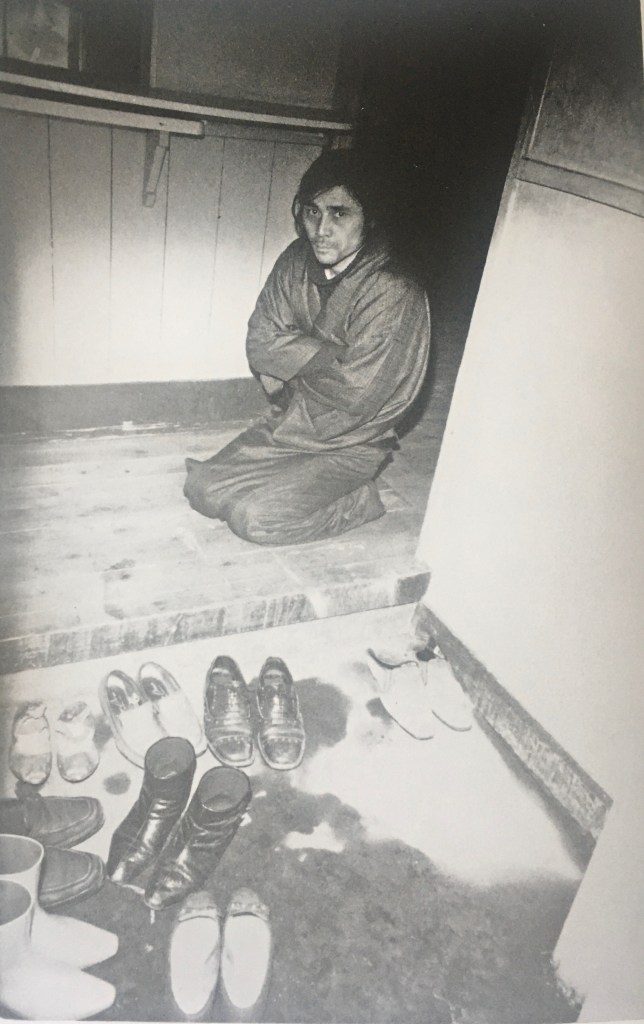
The following photos are taken from Yamazaki Hiroshi, Concepts and Incidents 山崎博 計画と偶然, an English/Japanese catalogue published on the occasion of an exhibition organized at the Tokyo Photographic Art Museum in 2017. The volume covers Yamazaki’s career from his debut, at the end of the 1960s, until his late works, and it’s divided in chapters following the different phases, approaches and interests in photography and film throughout his life, he passed away in June 2017, less than a month after the end of the exhibition.

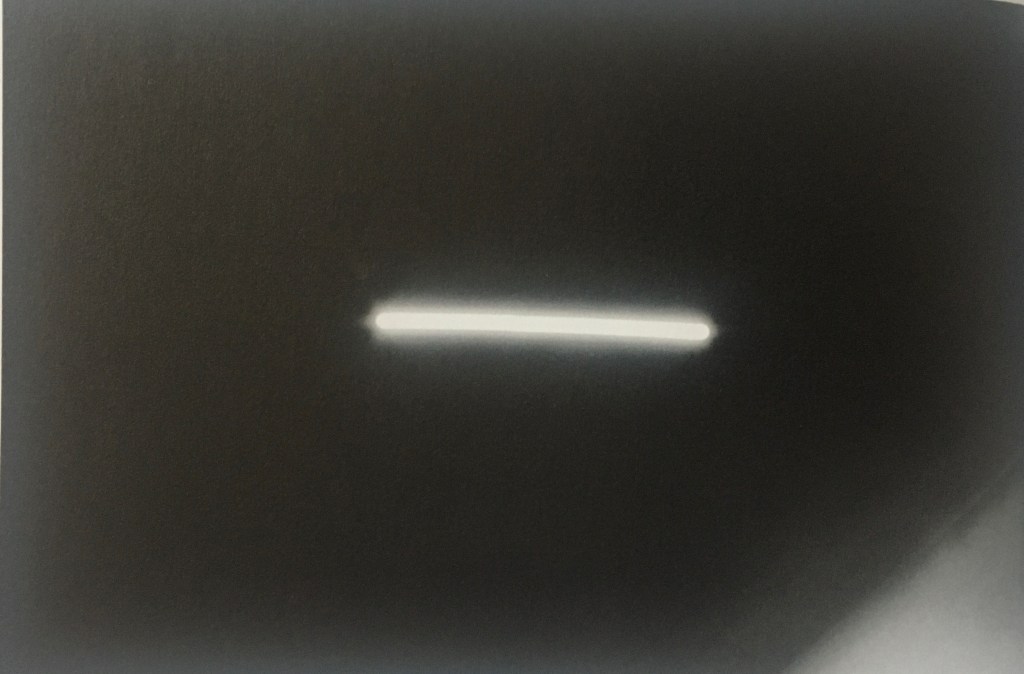
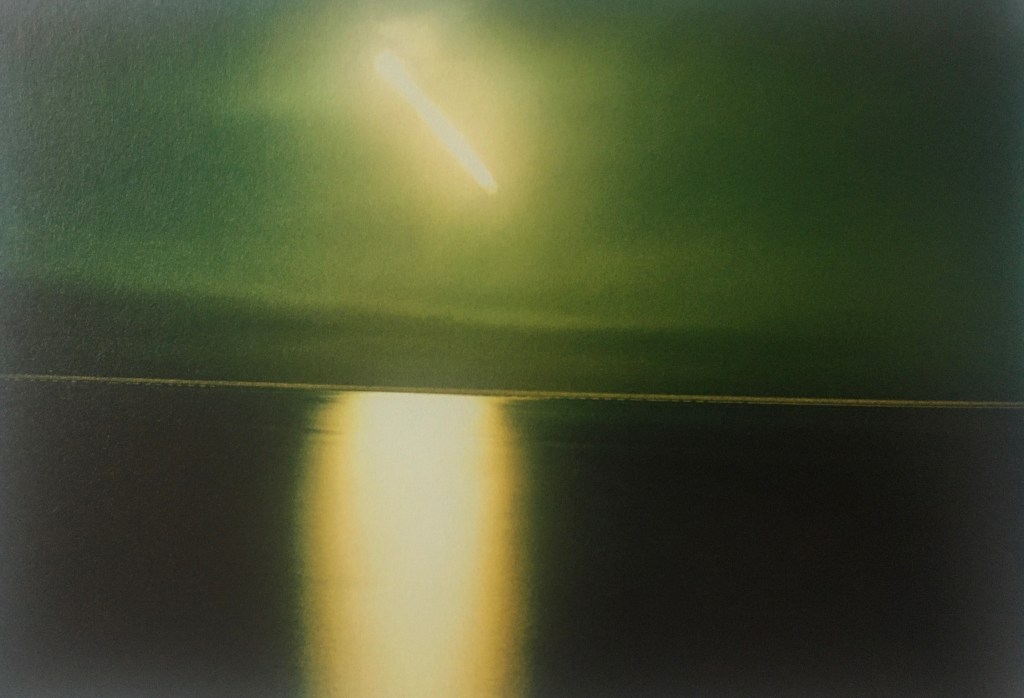
Stills from Heliography (1979), in my opinion Yamasaki’s masterpiece
Stills from a video experiment, Flower in the Space (1989)

Best documentaries of 2018

2018 has been an intense and fruitful year for documentary, especially on the margins, between works released theatrically, those made available directly on streaming platforms, and those screened almost exclusively at festivals, the offer has become as diversified as ever. As usual on this blog I have tried to direct my attention to some of the most significant works of nonfiction produced in East and Southeast Asia, and in doing so (time is limited I’m afraid) I have neglected many others made in other parts of the world, and living in Japan also didn’t help. For instance I was not able to see Dead Souls by Wang Bing, a movie I’m looking forward to seeing.
If last year my main focus was Taiwan and its dynamic contemporary documentary scene, a research that culminated with this essay I wrote for Cinergie in July, 2018 was more varied. The screening of NDU‘s To the Japs: South Korean A-Bomb Survivors Speak Out (1971) at the Kobe Planet Film Archive, part of my ongoing exploration of the works of the collective, was one of the highlights of the year, unfortunately I didn’t have the time to write about it, but hopefully I will be able to scribble down something next year.
It goes without saying that the list below is a reflection of my taste, interests and viewing habits, and thus it is mainly composed of documentaries made in the Asian continent (but there are few exceptions of course), and works that push the boundaries of what is usually considered nonfiction cinema.

This slideshow requires JavaScript.

Outstanding works

Toward a Common Tenderness (Oda Kaori, 2017)
After Aragane, Oda confirms herself as one of the most original voices in contemporary nonfiction with another excellent work, this time mixing the diaristic and the poetic. Mesmerizing, as usual, the sound design.

Miasma, Plants, Export Paintings (Wang Bo, Pan Lu, 2018)
I discovered the movie a month or so ago, but it was a revelation: history, art, geography and colonialism mixed in an aesthetically challenging piece of work.

A Room with a Coconut View (Tulapop Saenjaroen, 2018)
The most overtly experimental work in this list, not for everyone taste for sure, but I found it refreshingly good.

Inland Sea (Soda Kazuhiro, 2018)
Probably my favorite by Soda, one that resonates more with me and my experience of living in Japan. You can read more here.

Everyday Is Alzheimer’s the Final: Death Becomes Us (Sekiguchi Yuka, 2018)
A really important documentary, not stylistically daring, nonetheless a film that delivers a strong punch in the stomach of the viewer with its matter-of-factness exposure of the disintegration of memory, aging and death.

MATA-The Island’s Gaze (Cheng Li-Ming, 2017)
An elliptical work that focuses its attention on the gaze of Scottish photographer John Thomson, who visited Taiwan in 1871 , and on his relationship with some members of the Siraya tribe – one of the several that inhabited Taiwan before the arrival of the Dutch and the Han. (here more)

The Hymns of Muscovy (Dimitri Venkov, 2017)
“…the sky itself appeared to me like an abyss, something which I had never felt before ー the vertigo above and the vertigo below” Goerge Bataille

Slow Motion, Stop Motion (Kurihara Mie, 2018)
A poetic and witty personal film, documenting the filmmaker’s wanderings and meetings in Laos, Myanmar and Thailand. I’ve written more here.

This slideshow requires JavaScript.

Special (re)discoveries:

What Do You Think About the War Responsibility of Emperor Hirohito (Tsuchiya Yutaka, 1997)
A video experiment and an important time capsule inside a time capsule: the Pacific War and the emperor’s responsibility as perceived by certain strata of the Japanese population during the 1990s.

Jakub (Jana Ševčicová, 1992)
A film of faces, the ancient faces of the Ruthenians people, “painted” in a black and white so dense, grainy and gritty that is almost painful to watch.

Cambodia Lost Rock & Roll (John Pirozzi, 2014)
Incredibly sad, but at the same time incredibly fun to watch and listen to.


This slideshow requires JavaScript.

Best cinematic experience

Heliography
By far the best viewing experience I had in 2018. You can read my excitement here.


This slideshow requires JavaScript.

Honorable mentions:

78/52 (Alexandre O. Philippe, 2017)
A guilty pleasure.

Matangi/ Maya/ M.I.A. (Stephen Loveridge, 2018)
I did not like many things in the movie, but the last 30-40 minutes offer an interesting take on complex topics such as being an artist in the contemporary world, fame, social awareness, and immigration and art.

A Man Who Became Cinema
A documentary about Hara Masato and his struggles to keep making movies, one day I need to write something on Hara, a fascinating and “cinematic” figure.

Yamazaki Hiroshi and light

When last August I attended the Image Forum Festival in Tokyo, one of my regrets was not having the time to be at a special focus dedicated to photographer and filmmaker Yamazaki Hiroshi. As I wrote in my report, one of the good points of the festival is that it is touring, although with a downsized program, in other parts of the country. When I saw the schedule of the screenings in Nagoya in September, I seized the opportunity and spend an afternoon immersing myself in the experimental films of Yamazaki.

Born in Nagano Prefecture in 1946 Yamazaki Hiroshi became a freelancer photographer after dropping out from Nihon University where he studied at the Department of Arts. Parallel with his career in photography, for which he is known in Japan and at an international level, some of his works are displayed at MoMa, Yamazaki developed a passion for the moving image and in 1972 started to shoot short movies in 8mm and 16mm. His experimental short films are a natural continuation of his work in photography, albeit there’s an obvious difference in tone between the two. Moving freely back and forth from still photography to moving images, Yamazaki’s central preoccupation throughout his career has remained the same: the role light and time play in creating images through the mechanical apparatus. His photos are thus not about depicting human beings, situations or even landscapes, they’re more on the verge of creating and conveying something new, something that is dormant in the everyday reality and must be brought to the surface to be seen. Almost like an artist playing with the relativity theory, by distorting time Yamazaki is modifying the shape of light and thus the reality he presents in his works. Often, and rightly so, defined as conceptual photographer, his works are more akin to the paintings of Klee, Pollock or other artists who were shifting the limits between natural representation and abstract art, that to the works made by his contemporary colleagues.
Yamazaki got his first big recognition in 1983 for a series of time-exposed photographs of the sun over the sea, one of the themes that he has been pursuing and investigating throughout his entire career, and a theme very present in all the works screened at the event.

Eighteen works were screened, some in their original format (8mm, 16mm), some others digitally, and they were divided into two sections. The last film screened, The Seas of Yamazki Hiroshi, was an homage to Yamazaki as an artist, friend and peer by photographer Hagiwara Sakumi. Planned and organised by the festival as a special screening to honour and remember an important Japanese photographer and filmmaker, it was for me a special occasion to experience, in one sitting, the attempts and experiments of an artist I didn’t know in a new medium. Here the works screened:

FIX YAMAZAKI Hiroshi / 16mm / 5min. / 1972 / Japan
FIXED-NIGHT YAMAZAKI Hiroshi / 16mm / 6min. / 1972 / Japan
FIXED STAR YAMAZAKI Hiroshi / 16mm / 7min. / 1973 / Japan
A STORY YAMAZAKI Hiroshi / 16mm / 6min. / 1973 / Japan
60 YAMAZAKI Hiroshi / 16mm / 1 min. / 1973 / Japan
NOON YAMAZAKI Hiroshi / 16mm / 3min. / 1976 / Japan
Observation YAMAZAKI Hiroshi / 16mm / 10min. / 1975 / Japan
epilogue YAMAZAKI Hiroshi / 16mm / 1 min. / 1976 / Japan
MOTION YAMAZAKI Hiroshi / 16mm / 10min. / 1980 / Japan
GEOGRAPHY YAMAZAKI Hiroshi / 16mm / 7min. / 1981 / Japan
[kei] 1991 YAMAZAKI Hiroshi / video / 13min. / 1991 / Japan

VISION TAKE 1 YAMAZAKI Hiroshi / 8mm / 3min. / 1973 / Japan
VISION TAKE 3 YAMAZAKI Hiroshi / 16mm / 3min. / 1978 / Japan
HELIOGRAPHY YAMAZAKI Hiroshi / 16mm / 6min. / 1979 / Japan
WALKING WORKS YAMAZAKI Hiroshi / 16mm / 5min. / 1983 / Japan
3・・・ YAMAZAKI Hiroshi / 16mm / 5min. / 1984 / Japan
WINDS YAMAZAKI Hiroshi / 16mm / 6min. / 1985 / Japan
Sakura YAMAZAKI Hiroshi / video / 19min. / 1989 / Japan
The Seas of YAMAZAKI Hiroshi HAGIWARA Sakumi / digital / 20min. / 2018 / Japan.

Among these works, three stood out for me. Observation (1975) is a ten-minute film, shot in 16mm, in which he created the illusion of twenty-eight suns arching over the sky in his neighborhood, and Sakura/Flowers in Space, shot on video in 1989, is a reflection on film of the ideas he captured in a series of photos towards the end of his career. Cherry blossoms are here depicted against the Sun, thus losing all the color and beauty they are usually associated with, and mutating instead into black shapeless figure of almost phantasmatic solitude.

But the absolute highlight was Heliography, a continuation but also a variation of what Yamazaki had being doing for more than 10 years with his photos, resulting in one of his most well known series, Heliography, released in 1974. In this series of photos of stunning visual impact Yamazaki subtracts all the unnecessary elements that usually are linked to a beautiful costal landscape, focusing primarily on the sun and the sea, captured here through very long exposures.
Seeing Heliography was for me almost a transcendental experience, and for a variety of different reasons. First of all because it came after an hour of seeing his short experiments in 8mm and 16mm, most of them interesting from a photographic point of view and in tracing a path in his oeuvre, but almost forgettable as stand alone works. Heliography arrived also as a natural progression of his experiments on film, but at the same time as a deviation and something completely new as well. It is visually and conceptually one of the most compelling films I have seen this year, six minutes of pure bliss. Like in La Région centrale, the oblique images of the Sun over the sea and the eye of the camera fixed and fixated on the star with everything else moving around, unanchor the viewers from the Earth, liberating and disengaging the vision from the human eye and re-centering it around the drifting Sun in what becomes in the end an astral landscape.

To add one more layer to the experience, I really believe that had I watched all the works at home on a TV, non matter how big, Heliography would not have retained the same majestic power, I know I’m stating the obvious here for most cinephiles, but certain type of experimental cinema should be absolutely seen in theater.