Anthropology and cinema: The Song of Akamata (Kitamura Minao, 1973)

I’m reposting something I wrote almost 4 years ago about Kitamura Minao and visual anthropology in Japan

Visual anthropology, ethnographic cinema, visual folklore and ethnographic film are all definitions floating around the same concept, a point of intersection between cinema, film or the visual arts on the one side and ethnology, anthropology or ethnographic field work on the other. Although all these definitions don’t exactly signify the same thing, I personally like the term “visual anthropology” the best, for no special reason.

I came to be interested in visual anthropology through the works of Jean Rouch, author and co-author of some of the most outstanding works in the history of documentary (Chronicle of a Summer, Moi, un noir, etc.) who was also a very well respected anthropologist who spend most of his life working in the African continent. Driven by this interest a couple of years ago I started to look for something or someone similar in Japan, and by pure chance one morning at Nagoya Cinemaskhole, I came across and discovered the works of Kitamura Minao.
Kitamura is one of the most respected visual anthropologist (I don’t know if he’d agree to be called so) working today in Japan, the founder of Visual Folkrore Inc. and, besides his works for TV (mainly for NHK), he’s also the author of some very compelling and inspiring theatrical documentaries. For instance, Kitamura is the director of one of my favourite films of 2012,

ほかいびと 伊那の井月 Hokaibito: Ina no Seigetsu (2012) about the life of Inoue Seigetsu, a poet and wanderer who lived the last part of his life (he died in 1887) shifting through the land of Ina, now located in Nagano prefecture, between the Edo and Meiji period, a time of dramatic changes that transformed and shaped Japan as a modern nation.

seigetsu_no_ina

Hokaibito: Ina no Seigetsu is a very unique documentary constructed by merging poems, written by Seigetsu himself and visualized on screen by nice handwritten strokes, with reconstructions of the life of the poet, played here by the legendary dancer Tanaka Min.
I haven’t seen so many of Kitamura’s works, especially those commissioned by museums or NHK, but a couple of years ago at the Kobe Planet Film Archive I had the chance to see two of his works made around 30 years ago: The Horse of Kaberu (1969) and The Song Of Akamata:
Life Histories of the Islanders of Iriomote Okinawa (1971).
The former in particular impressed me for its compelling topic: the failed attempt to film a sacred festival in Komi (filming the rituals in the remote island remains a taboo) that nonetheless turned out into a meaningful portrait of the people living or returning to the small land, and a revealing study of their deep relationship with traditions and religion practices of the island.
What follows is an introduction to the movie by Kitamura himself, given on the occasion of a symposium, “Expanding the horizon of Area Studies through film presentation The New Generation of Anthropological Cinema” held in Kyoto in 2006:

akamata

THE SONG OF AKAMATA:
LIFE HISTORIES OF THE ISLANDERS, IRIOMOTE, OKINAWA

KITAMURA Minao

There are two sacred festivals in the Okinawan Islands that, although they continue today, have not yet been filmed or documented: Uyagan-Sai of Ogami Island, Miyako; and Akamata of the Yaeyama Islands, which I attempted, on one notable occasion, to film with an Arriflex camera. The result is this rather peculiar work that did not actually achieve its main objective.
Once a year, during June of the lunar calendar, wearing a wild red wooden mask and covered in leaves and vines, Akamata appears from the sacred cave known as Nabindo. He visits the village founder’s house in Komi to bless the villagers and promise a good harvest for the coming season.
In July of 1972, I arrived at Komi with my filming crew, having traveled by Sabani, a kind of small fishing boat. Although 73 families had occupied the village in 1960, only 17 families remained. Most of the young people had left for Tokyo or Kawasaki, and each year an additional few families had also emigrated to Ishigaki Island or Naha. With such a small village population, I was doubtful that Akamata would be held.
At midnight of the first day of the festival, I was called outside, where I was surrounded by several young men with sickles. They returned to me a bottle of sake I had presented them with in honor of the festival, and then threatened me, shouting, “We never gonna let you shoot Akamata. Never! If you do, you’ll be found murdered.” Their parting shot, “If we ever allow your filming, it’s the end of the village,” made me even more curious about why Akamata made them so excited and energetic. What magnetic force made people come back to the island to join Akamata?
Due to these developments, instead of filming Akamata, I decided to document the life histories of the villagers and the ways of life of the people who had emigrated from Komi. I rallied my frightened crew and began a daytime visit to a family by asking them to let us take a souvenir photo. They liked our request, even though the camera was my 16mm Arriflex. We also voluntarily joined in the work of the village community, drank together, and sang together, with the camera and recorder turned on.
Before completing souvenir photos of all 17 families, I began to understand the fairly complicated relationships among the villagers. For instance, there were conflicts between native and newly introduced religions. After the photos had all been taken, we visited ex-islanders live in Ishigaki and Naha in order to ask why they had left their native island. I found that these ex-islanders living in the cities maintained the same values they had cherished in their native village. It seems that Akamata still lives in their minds.
The sacred masked Akamata, covered by leaves and vines, does not appear at all in “The Song of Akamata.” Nonetheless, this film succeeded in documenting and unmasking the real lives of the islanders.
Duration: 82 mins, Medium: DV, Year: 1973, 2006 (revised), Production: Yugyoki Location: Komi, Iriomote, Okinawa, Japan

Here the original

Slow Motion, Stop Motion スローモーション、ストップモーション (Kurihara Mie, 2018)

Slow Motion, Stop Motion スローモーション、ストップモーション by Kurihara Mie was awarded with the Grand Prize and the Audience Award at the 32nd edition of the Image Forum Festival. Shot in Laos, Myanmar and Thailand in the course of 4 years, as far as I know the director usually stays in the regions for at least a couple of months a year, the movie is a funny and poetic telling, through the mode of the personal documentary, of her experiences and encounters in those countries. On the surface thus Slow Motion, Stop Motion is a diary film and a record of her meetings and interactions with the people she meets and befriends, but on a different level it’s also a glimpse into their life and daily struggle to survive. Avoiding shots of turistic places, beautiful postcard-like landscapes, and disengaging completely from a moralistic and exploitative use of the poorest areas of the countries, the film excels in creating a vivid and vital potrait of the people Kurihara meets. The images captured by the Japanese, but often she gives the camera to children and other people to freely film whatever and however they want, feel thus very authentic. Moreover the home movie-quality that permeates the entire work is functional to what seems to be one of Kurihara goals, that is capturing glances of ordinary life in South East Asia.

An important element of the film is the narration. Done by Kurihara herself it’s infused with a dry sense of humor, the words spoke n not only are funny and represent a commentary a posteriori on what is depicted on screen, but they often reflect and indirectly criticize the act of filming itself and the fetishism towards technology that visual artists very often succumb to. In one of the funniest parts, the director buys a cheap version of a Go-pro and tries to film underwater scenes and pigeons, there were no seagulls on the beach, like in the beloved Leviathan by Lucien Castaing-Taylor and Verena Paravel.

The humorous parts are intertwined with few poetic and melancholic scenes, when Kurihara reflects on the sad mood that permeated the day of her departure for instance, or in a long scene without comment or narration, almost ethnographic in style, where an old man kills, plucks, cleans and cooks a rooster for his family.

The film has neither the stylish and polished aesthetics so in demand in the current international festival circuit, nor the political and activist approach that often drives people to documentaries. I really hope that despite the lack of these qualities the movie won’t fall under the radar, because as a hybrid experiment that uses the diary and personal documentary style as a point of departure, it subtly touches very crucial themes such as post-colonial representation and representation of marginal areas in contemporary visual culture.

Image Forum Festival 2018 イメージフォーラムフェスティバル 2018

The 32nd Image Forum Festival ended last Sunday in Tokyo. The nine-day-long event, hosted at two different locations in the Japanese capital, the Theatre Image Forum and the Spiral Hall, screened in total more than 80 films, including 23 in the East Asian Experimental Film Competition, the main section. Established in its present form in 1987, the festival succeeded and replaced an experimental film festival that was held, in various phases and different shapes, in the capital from 1973 to 1986.

To this day the festival continue to embody the mission and the legacy of its predecessors. Primarily dedicated to experimental cinema and video, the event provides a special opportunity for the viewers to experience on a big screen a mix of feature films, home cinema, documentary and experimental animation.
After Tokyo, the festival will move to Kyoto, Yokohama and Nagoya, with slightly different contents, there will be special sections dedicated to artists of each city. This is a right and welcomed decision, since too often Tokyo ends up cannibalizing the cultural and artistic events taking place in the archipelago.

This slideshow requires JavaScript.

This year’s special retrospectives were dedicated to the provocative films of Christoph Schlingensief, German director who expanded his works beyond cinema to touch theater, television and public happenings, Kurt Kren, Austrian artist associated with Viennese Actionism, but also author of structural films, and the experiments on celluloid by Japanese photographer Yamazaki Hiroshi. I wasn’t aware of the films of Schlingensief, and I have to say that it was at the same time a discovery and a delusion. While I really liked 100 Years of Adolf Hitler (1989), claustrophobic and parodic reconstruction of the last hours of the dictator and comrades in his bunker, I couldn’t digest the other two movies of the so called German Trilogy. German Chainsaw Massacre (1990) and especially Terror 2000 (1992) are too much of a mess and stylistically all over the place , and probably too bound to the events of the time, the Fall of the Berlin Wall and the consequent unification of the two Germanies, for me to decipher them.

Unfortunately I wasn’t able to check the works of Yamazaki, but I’m planning to see them at the end of September, when the festival will come to Nagoya. As with his conceptual photos, the shorts made during his entire life explore the relationship between time and light, a topic I’m very attracted to.
I also missed the screening of Caniba (2017) by Lucien Castaing-Taylor and Véréna Paravel, about the “cannibal” Sagawa Issei, if I’m not wrong, this was the Japanese premiere of the film, and the special focus Experimenta India, a collection of visual art from the Asian country.
Interesting was to catch Matangi/Maya/M.I.A. (Steve Loveridge, 2018), about the famous ex-refugee of Tamil origin, now a pop icon and singer, an artist I was completely unaware of. The documentary is based on more than 20 years of footage filmed by herself and her friends in Sr Lanka and London. While I didn’t connect with the first part of the movie, too self-indulgent for my taste, the film gets much better in the last 30-40 minutes when, albeit briefly, touches on complex and fascinating topics such as immigration and art, fame, and social awareness in the show business.

The East Asia Experimental competition was pretty solid, besides several short films coming from a variety of areas like South Korea, China, Hong Kong, Taiwan and naturally Japan, two were the long documentaries screened. A Yangtze Landscape (Xu Xin, 2017), a visual exploration of the social and geographical landscape along the longest river in Asia (you can read my review here), and Slow Motion, Stop Motion (Kurihara Mie, 2018) a movie that positively surprised me and won both the Grand Prize and the Audience Award. A review is coming soon, stay tuned.

Asia is One アジアはひとつ (NDU, 1973) edited

I’m reposting an edited version of my piece on NDU’s Asia is One, an article I wrote two years ago.

NDU (Nihon Documentary Union) was a Japanese collective founded in 1968 by a group of Waseda University students who would eventually drop out to dedicate their lives to filmmaking and political struggle. From 1968 to 1973, when the group disbanded, this group of activists, who saw themselves first and foremost as a collective of activists, made four documentaries, moving from the streets of Tokyo – the first work was Onikko – A Record of the Struggle of Youth Labourers – to the distant islands of Micronesia, passing through Okinawa, the archipelago where they made two of their most important documentaries.

Motoshinkakarannu (1971) was made in and about Okinawa, before the archipelago was ‘returned’ to Japan. The group went to the island in 1971 and captured on film a society in transition. The film shows and focuses on the fringes of society, with illegal prostitution and life in the red districts, while also highlighting the historical and social fractures that have run through the area: anti-establishment and anti-American riots, the Black Panthers’ visit to Okinawa, water pollution and much more. I voted Motoshinkakarannu one of my favourite Japanese documentaries in a poll I organised a year ago, but today I’d like to turn my attention to the second film made by the collective in Okinawa (and beyond): Asia is One アジアはひとつ (1973, 16mm, 96′), a work that I hadn’t seen at the time of the poll and that would have certainly made my list along with Motoshinkakarannu.

Asia is One was screened on June 26th at Kyoto Kambaikan, as part of the AAS in Asia, and it was screen with English subtitles for the first time, the movie was shelved for many many years, forgotten, and was (re)discovered only in 2005 when was screened at the Yamagata International Documentary Film Festival. The screening in Kyoto was followed by a fascinating Q&A with the only surviving member of NDU, Inoue Osamu. Nunokawa Tetsurō, who after the dismantling of the collective made other interesting solo documentaries in Palestine and US, passed away in 2012. As described by Roland Domenig (1), with Asia is One

NDU further explored the margins of Okinawan society and continued to break through borders by focusing on the Taiwanese minority. The film portrays Taiwanese migrant workers on the main island of Okinawa who substitute the Okinawa laborers who in turn are employed as migrant workers on Japan’s main islands. It traces the history of Taiwanese coal miners on Iriomote Island, follows legal and illegal workers to the westernmost island of Yonaguni and finally lands in Taiwan in a village of he Atayal tribe of Taiwanese aborigines, where still the Japanese naval anthem is played every noon.

Formally the documentary is composed of landscapes and interviews, all of them out of sync, possibly due to the equipment used or maybe the lack of it. The uncanny space created by this displacement, but also by the use of music from radio broadcasts and kids voices, thrown here and there during the movie, gives the work a peculiar aesthetic tone, a type of non-fiction cinema that I like to call “chaos cinema”. (2)
To explain and understand the “chaotic” trait of Asia is One, and Motoshinkakarannu as well, we have to delve deeper in the philosophy that laid at the core of NDU’s approach. What the collective has tried to convey through their cinema is extremely fascinating, in their writings (3), mainly published in the magazine Eiga Hihyo, the group was explicitly pushing towards a cinema/activism of anonymity, trying to reach an “impersonal space” and rejecting even the term “work” (sakuhin) because it was seen as the product of a single person in command and as a result of a dominating power structure. In this regard famous was their criticism of Ogawa Production, a collective that bore the name of a single person and that was basically structured hierarchically (4). To this kind of collectivism NDU tried to oppose a more fluid idea of group activism, where the structure was a flat and horizontal one, and in doing so, promoting a cinema made by amateurs (5) and not by professionals. “Everybody can push the button and shoot with a 16mm camera” said Inoue, and this is even more true today since the advent of the digital revolution. Whether this approach was successful or not, and more importantly, whether this horizontal structure and “amateur cinema” is possible at all, are questions without answers that are haunting scholars to this day.
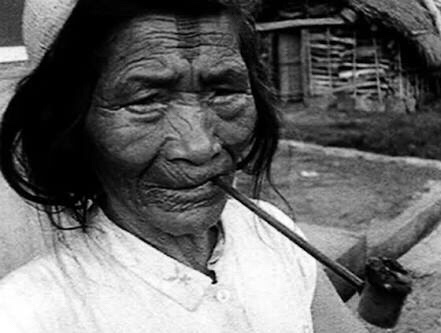
Going back to Asia is One, the part of the movie the resonated more with me was the last one, when the film moves to the Atayal village in Taiwan. There’s a quality in the close-ups of the tribe people, beautiful and ancient faces, that is extremely fascinating, also because it is in these scenes that the political discourse on identity, or the negation of it, reach its peak. From the 17th Century onward The Atayal people, like the rest of the tribes inhabiting the island, were forced to face the colonization of the Dutch first, the Spanish and the Chinese later, and eventually that of the Japanese Empire (1895 – 1945), which called them “barbarians” and tried to assimilate and annihilate their culture (6). That being said, the words spoken by the member of the tribe provide more context and add layers of complexity to the situation. “Japan conquered us and abolished many of our ancient traditions and customs”, but at the same time “we were drafted and went to war with pride and ready to die” and also “luckily the Japanese abolished some of our ancestral traditions like beheading”. Asia is One ends with the militaristic song If I Go to Sea against an everyday scene with the aboriginal Taiwanese people isolated in the mountains singing “We want to go to war again.”

Of course there is oppression and violence, physical and cultural, in every colonization, but things here are deeper than what they seem. In the process of cultural and historical coring that the movie conveys with its images and words, from Okinawa to Taiwan, I believe that two significant elements emerge. The first is the crisis of the identity concept, often a forced cultural and national superstructure imposed by the stronger and more powerful part on a “highly fluid space of human life” (6), as Inoue explained “identity was one of the most hated words inside the NDU, identity is a choking concept”. The second point that struck me is the recurrence of a power and social structure that exploits the margins, the outsiders and the weakest people. In mainland Okinawa the illegal prostitutes and worst jobs are done by people from Miyako island, and in Miyako and other small islands the lower part of society is occupied by Koreans, Taiwanese and aboriginal people. This perpetuating exploitation is possible only as long as a certain part of society is described as different and inferior, and only when and where the concept of border is a monolitic divide used to create the “other”, the “foreigner” and the “stranger”. NDU’s documentaries are an antidote against all this poisonous discourse, and an invitation to break through the borders, those in the world outside us, but also those inside ourselves.
A final note on the title, the movie as a product of a collective that was thriving towards anonymity, has not film credits, nor it had originally a title, Asia is One was attached to it only later, and it’s a kind of a joke because as Inoue himself said “we all know that Asia is not one!”

notes:

1 Faraway, yet so close by Roland Domenig, in The Legendary Filmmaking Collective NDU and Nunokawa Tetsurō ed. Yasui Yoshio, Tanaka Noriko, Kobe Documentary Film Festival Committee, 2012.

2 This might not be the best way to describe the movie, but aesthetically it reminded me, maybe because of the out of sync, of Imamura Shōhei’s documentaries shot in South East Asia during the 70s.

3 Some of the writings are translated in The Legendary Filmmaking Collective NDU and Nunokawa Tetsurō, op. cit.

4 You can find more in Forest of Pressure: Ogawa Shinsuke and Postwar Japanese Documentary, Abé Markus Nornes, Visible Evidence 2007.

5 Some interesting insights on amateurism in cinema can be found in The Flash of Capital: Film and Geopolitics in Japan, Eric Cazdyn, Duke University Press 2002.

6 In 1930 the village was the site of an anti-Japanese uprising, the so called Musha Incident, an event portrayed in Warriors of the Rainbow: Seediq Bale (Wei Te-Sheng, 2011)

7 Nunokawa Tetsurō in YIDFF 2005 Special Program, Borders Within – What it means to live in Japan.

“Contemporary documentary in Taiwan: memory, identity, flux”

I’m very pleased to announce that a paper I’ve been working on in the past several months, has finally been published. It’s been included in the latest number of Cinergie (2018, n. 13), an open-access, peer-reviewed journal about cinema and cinema related studies.

Titled “Contemporary documentary in Taiwan: Memory, Identity, Flux“, the article is an expansion and re-elaboration of some of the short takes on documentary in contemporary Taiwan I’ve been posting on this blog in the past two years.

The movies I’ve wrote about are: Le Moulin (Huang Ya-li, 2015), Wansei Painter – Tetsuomi Tateishi (Kuo Liang-yin and Fujita Shūhei,2016), Letter #69 (Lin Hsin-i, 2016) and 3 Islands (Lin Hsin-i, 2015).

You can read the paper here

P.S. Another movie that would have fit perfecty in the discourse I’ve tried to articulate in the essay is MATA-The island’s Gaze (2017, Cheng Li-Ming), but unfortunately I watched too late.

MATA-The island’s Gaze (2017, Cheng Li-Ming)

Taiwan experimental-documentary scene, whatever meaning you want to attach to the term, is one of the most intriguing and vibrant in contemporary cinema, particularly when the themes tackled are going deep into decolonisation, negotiating identity, and the complex history of the island. I’ve written on the subject here, here and here, and a longer and deeper analysis is coming soon.

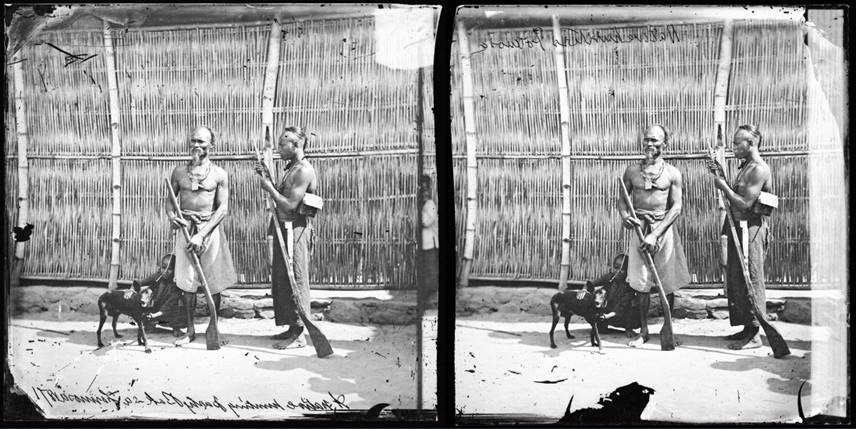
In MATA-The island’s Gaze filmmaker Cheng Li-Ming focuses his attention on the gaze of Scottish photographer John Thomson, who visited Taiwan in 1871, and his relationship with some members of the Siraya tribe – one of the several that inhabited Taiwan before the arrival of the Dutch and the Han— originally settled in the southern part of the island, near Tainan. Here the synopsis:

Scottish photographer John Thomson’s trip to Taiwan in 1871 is an important historical event. In this film we selected a hunter photo to re-interpret that event and visit the Siraya tribe to find an Elder, who talks and sings well, bringing us back to the past through his plucking of strings.

Then we saw the vigorous hunters holding their breath, staying very still in front of that weird machine for a long time, with a boy and a dog squatted at their feet. The director grabbed the view of this moment and invites the audience to watch with curious eyes.

On both sides of the river of time, he repeatedly speculates and watches the past, the future, and the influence of images on this island.

Elliptical in its constructon, the work is centered around the concept of gazing: the mechanical gaze of the camera of the outsider/colonizer on the one hand, and that of the two Siraya people captured in a photo by the Scottish himself, on the other. As the director himself explains “I created a pair of characters out of a photo with a boy and a dog squatted at the corner, through their curious stare at the vigorous tribal hunters and their encounter with the ‘image hunter’, witnessing a duel of old and new world”.

Words of a descendant of the Siraya and his reflections on language and the importance of words in creating a common history and reality are intertwined with an imaginative reconstruction of the encounter between the photographer and the two hunters. Here again the director’s own words:

This film is a sequel to “Looking for Siraya”, and this time starts with a photo of hunters holding shotguns to continue the act of taking back our souls. The stereo camera that John Thomson carried happened to inspire me creating a stereo composition. Through dramatic imitation of John Thomson’s journey as well as recording of Siraya who stays beautifully in primary image in photos yet actually is fading at present, we try to imagine how our Formosa’s “Mata(s)” treat this “mechanical eye” that intruded into the island.

You can watch MATA-The island’s Gaze on Vimeo:

MATA-The island’s Gaze from Li-Ming Cheng on Vimeo.

Ogawa Production retrospective at Cinéma du réel (March 23-April 28)

This year Cinéma du réel, one of the most prestigious documentary film festivals, will kick off its 40th edition this coming Friday, among the more anticipated events of the Parisian festival there will be a special focus on Ogawa Shinsuke and Ogawa Production, a huge retrospective dedicated to the documentary collective that from the 1960s onward changed and impacted the landscape of non-fiction cinema in Japan and Asia. Part of the events celebrating and reflecting on the civil unrest and protests that shook the world in 1968, from March 23rd to April 28th, the festival and the city of Paris will showcase seven movies made by the group in the 1960s:

Sea of Youth – Four Correspondence Course Students (1966)

Forest of Oppression – A Record of the Struggle at Takasaki City University of Economics (1967)

Report from Haneda (1967)

The Battle Front for the Liberation of Japan – Summer in Sanrizuka (1968)

Prehistory of the Partisans (1969, directed by Tsuchimoto Noriaki)

At the end of Cinéma du réel, the retrospective will then move to the Galerie nationale du Jeu de Paume where will continue its focus on the Sanrizuka Series, movies documenting the struggle and resistance of the peasants and the students, united against the land expropriation perpetrated by the government in order to build Narita airport. The retrospective will last until April 27th presenting also the movies made by Ogawa Pro in its third phase, when the group moved to Magino village in Yamagata prefecture. The collective disbanded in 1992 with the untimely death of its founder Ogawa Shinsuke, a passing that also revealed the dark side of such a unique cinematic endeavor, Ogawa himself left a huge debt made during the years to support the collective and their films.

One member of the collective, Iizuka Toshio, will be in Paris to introduce the Magino films, and discuss his own movies and his relationship with Ogawa Shinsuke and the group. Curated by Ricardo Matos Cabo, whom I had the pleasure of meeting last October in Yamagata, the retrospective will also include other documentaries about the group, Devotion: A Film About Ogawa Productions (2000) by Barbara Hammer, A Visit to Ogawa Productions (1981) with Oshima Nagisa, Filmmaking and the Way to the Village (1973) by Fukuda Katsuhiko, and Kashima Paradise (1973) a French documentary about the struggle in Narita. An important part of the event will be the presence of scholar Abè Markus Nornes who will give a master class on Ogawa and lectures on militant film in Japan and Sanrizuka: Heta Village (1973).

If you’re in Paris, don’t miss this opportunity, experiencing Ogawa Pro’s documentaries on a big screen, in the proper contest and with proper introductions, is one of the best cinematic experiences I had in my life. Here the schedule of the screenings and lectures at Jeu de Paume :

April 3 (Tue), 18:30 Sanrizuka – Heta Village (1973)

April 4 (Wed), 18:00 Winter in Sanrizuka (1970)

April 6 (Fri) 16:30 Sanrizuka — the Three Day War (1970)
18:00 Sanrizuka – Peasants of the Second Fortress (1971)

April 7 (Sat) 11:30 Sanrizuka – The Construction of Iwayama Tower (1971)
14:30 Sanrizuka – Heta Village (1973)
18:00  Filmmaking and the Way to the Village (1973)

April 10 (Tue) 18:30 Dokkoi! Songs from the Bottom (1975)

April 17 (Tue) 16:00 Devotion: A Film About Ogawa Productions (2000)
18:00 The Magino Village Story – Pass (1977)
The Magino Village Story – Raising Silkworms (1977)

April 20 (Fri) 18:00 « Nippon » : Furuyashiki Village (1982)

April 21 (Sat) 11:30 Encounter with Toshio Iizuka
14:30 The Sundial Carved with a Thousand Years of Notches – The Magino Village Tale (1986)

April 24 (Tue) 19:00 The Magino Village Story – Pass (1977)
A Visit to Ogawa Productions (1981, directed by Oshige Jun’ichiro)

April 28 (Sat) 14:30 Kashima Paradise (1973, directed by Yann
Le Masson and Bénie Deswarte)
17:00 Sanrizuka – The Construction of Iwayama Tower (1971)

Inland Sea 港町 (Sōda Kazuhiro, 2018)

Screen at this year edition of the Berlinale (Forum), Inland Sea is the latest documentary by one of the most interesting and original voice working in Japanese non-fiction today, Sōda Kazuhiro.  Based in New York, Soda in the last 10 years or so has built an impressive body of work, Inland Sea is the seventh documentary in his ongoing observational series, among my favorite Theatre 1 and 2, a diptych about playwright Oriza Hirata and his theatrical company, and Oyster Factory, a documentary premiered at the Locarno International Film Festival in 2015. Inland Sea was filmed soon after Oyster Factory, in fact the town is the same, Ushimado, a small village facing the Seto Inland Sea in Okayama prefecture. While in the previous film Soda focused his gaze on a small oyster factory and the problems of surviving in a globalized world (you can read more here), in Inland Sea he follows three elderly people living in the village and their daily activities. Here the synopsis:

Wai-chan is one of the last remaining fishermen in Ushimado, a small village in Seto Inland Sea, Japan. At the age of 86, he still fishes alone on a small boat to make a living, dreaming about his retirement. Kumi-san is an 84 year old villager who wanders around the shore everyday. She believes a social welfare facility “stole” her disabled son to receive subsidy from the government. A “late – stage elderly” Koso-san runs a small seafood store left by her deceased husband. She sells fish to local villagers and provides leftovers to stray cats. Foresaken by the modernization of post-war Japan, the town Ushimado’s rich, ancient culture and tight-knit community are on on the verge of disappearing.

While, as mentioned above, the film is part of his observational series, from the very first scene is clear how Soda with his camera and his voice is an important and catalytic presence in the relational texture that is Inland Sea. As Nichols would put it, while Sōda is filming and representing a certain reality, the documentary and the act of filming itself becomes also an important part of that reality. More than in his other works, his voice and that of his wife and their presence is here a fundamental part of the movie, often the people filmed converse with Sōda and we, as spectators, are always aware of the relationship between the camera and its environment. Naturally all documentaries are works of fiction, to one degree or another, but to my eyes acknowledging the presence of the camera and its effects in a documentary shot in an observational style, is one of the main qualities of the movie. It’s a honest and ethic filmic approach that I really value as important, especially in the contemporary documentary landscape, an approach that stems also from the style and methodology adopted by Sōda:

I spontaneously roll my camera, watching and listening closely to the reality in front of me, banning myself from doing research or prescribing themes or writing a script before shooting. I impose certain rules (‘The Ten Commandments’) on myself to avoid preconceptions and to discover something beyond my expectation.

The movie is shot in its entirety in black and white, the only case in Sōda’s filmography, just the very last scene, a boat floating, is in colour. I haven’t read so much about the movie, I wanted to experience it without preconceptions, so I don’t know the reason behind not shooting in colour, but certainly this choice gives a very distinctive elegiac tone to the movie, and a flavour of obsolescence and marginality to the places and the people depicted in it. Compared to Sōda ’s previous movies there is, at least in the first hour or so —  the last 30 minutes are basically a very long and touching monologue of one of the old ladies, Kumi-chan — less talking and more insistence on the daily routine of Wai-chan and Koso-san, long periods of time are spent with the old man on the boat, fishing, and with the old lady, selling the fish.

By focusing on a place on a relatively far corner of Japan, far away from the metropolitan excitement that too often is associated with Japan, a place not yet forgotten, but on the edge of disappearing, and where the population is shrinking — the akiya (empty houses) seen in a sequence are becoming part of the present and near future of the archipelago — Sōda is also hinting, consciously or not, to one of the crucial issues of contemporary Japan and its geopolitical construction as a nation. That is, the parasitic relationship between sprawling urban centers and countryside, often forgotten, exploited (as highlighted by the situation in Fukushima or the Rokkasho Reprocessing Plant), or reduced to the folkloric image and touristic destination of Japan National Railway’s posters. In a post on his blog last year commenting on the Ogawa Pro’s Sanrizuka series, Soda wrote that, I’m paraphrasing, the struggle and resistance to the construction of the airport, because of the thick dialect spoken by the farmers at the time, almost incomprehensible to a person born and raised in Tokyo, felt like an act of exploitation perpetrated by the central state towards its colonies.

Another aspect of Sōda’s style that really stands out in Inland Sea and a direct consequence of his methodological approach, is the absence of any explanation on the historical background and context of the subject filmed. His films do not offer any extra information about the people he meets and the places he shoots, but the camera and his documentaries are, in a certain way, an extension of his gaze. It is up to us the viewers to decipher and image what stories lie behind the landscapes and the people captured on screen, for instance we don’t know if the stories told by the very talkative Kumi-san, to whom the movie in dedicated (she passed away in 2015),  are completely true or to what degree they’re even truthful, yet this is life and it is here presented in all its complexity, sadness and beauty.

https://player.vimeo.com/video/250935060

Inland Sea – Trailer from Laboratory X on Vimeo.

Record of Blood: Sunagawa 流血の記録・砂川 (Kamei Fumio, 1956)

Before the battle of Sanrizuka to halt the building of Narita airport, and before the massive revolts of 1968-69, there was Sunagawa and the resistance against the expansion of the American base in Tachikawa (Tokyo). In the third installment dedicated to the struggle, Kamei Fumio, the grandfather of Japanese documentary, captures the clashes and fights of the farmers, labor unions and students groups (Zengakuren among others) with the police. The always useful YIDFF, a festival that held a huge Kamei retrospective in 2001, gives us more background:

This is the third film in the Sunagawa series following The People of Sunagawa (1955) and Wheat Will Never Die(1955). Making use of the second film in the series, it explains the progress made during last year’s struggle and then documents the state of this year’s efforts. On October 12, 1956, 53 surveyors and 1,300 armed police rushed the gathered union and Zen Gaku Ren (the All Japan Federation of Self-Governing Students Associations) members who then formed a scrum to protect themselves. 278 people from both sides were injured. On the 13th, at the protest’s peak, 5,000 workers and Zen Gaku Ren members had been mobilized when the police attacked the demonstrators’ picket lines. 844 protesters and 80 police were injured. Public opinion erupted against the the violence of the armed police and the government’s lack of a policy, and on the 14th, the radio suddenly announced that the government would stop its survey. Sunagawa overflowed with joy and excitement, and a victory demo was held. On the 15th, a National People’s Rally was held to celebrate the victory of Sunagawa’s fight against the base, and protesters who had sustained grave injuries came from the hospital to address the meeting.

Stylistically the movie has many of the elements that would be used by Ogawa and his group in their Narita/Sanrizuka series: hand-held camera scenes of pure chaos shot in the midst of the fights, but also moments of peace when traditional songs are sung and meals are communally eaten by farmers, students and labor union members.
Here is a short but impactful scene of one of the first clashes between the protesters and the police in the Autumn of 1956:

It is interesting to notice that two points of view are here used to depict the situation: one that shows the fight from the outside, from a certain distance that is, and the other where the camera is engulfed by the bodies of the participants and is actively part of them. The gaze of the movie is without any doubts on the side of the inhabitants of Sunagawa, an aesthetic statement that reflects and results from the choice by the cameraman and the crew to live together with the farmers and students for several months.

Here, like in many other of his documentaries, Kamei also uses narration, but the voice explaining the timeline of the facts and commenting on what is going on on screen, sometimes with emphasis, is that of a female. In the film and in the struggle, Women, mainly middle-aged or old farmers, are always on the front-line and a vital part of the resistance, like in the documentaries about Sanrizuka (although infamously they were not an active part of the Ogawa collective itself).

It is also worth noting how the Sunagawa struggle is one of the few battles against the state/power in Japan that in the end was won by the people. If it is true that in 1959 the Supreme Court overturned the previous decision of the Tokyo District Court that found all the U.S. bases on Japanese land unconstitutional, in 1968 the plan for the extension of the base was cancelled, and finally in 1977 the base was given back to Japan. As pointed out by Dustin Wright “Without the farmers of Sunagawa, the Anpo (Japan-U.S. security treaty) protests of 1960 would have been something else entirely”, equally I think it is not too far fetched to say that without Kamei Fumio and his works on the Sunagawa struggle, the Sanrizuka/Narita series and consequently the post-war Japanese documentary landscape would have been something completely different.

Record of Blood: Sunagawa is available on DVD in Japan (no English subtitles) as a part of this box set released by Iwanami Shoten.

On Kamei’s Fighting Soldiers (戦ふ兵隊 1939)

Record of a Marathon Runner あるマラソンランナーの記録 (Kuroki Kazuo, 1964)

The Winter Olympics in Pyeongchang, the next edition of the Summer Olympics in Tokyo on the horizon, and the massive 100 Years of Olympic Films box set released last year by the Criterion Collection, revived and rekindled my interest in sport documentaries. I decided to revisit one of my favourite non-fiction films dedicated to sport, Record of a Marathon Runner, a movie made by Kuroki Kazuo between 1963 and 1964 about Kimihara Kenji, a Japanese marathon runner active during the 1960s and 1970s. Kuroki was a director who, long before establishing himself as an author somehow associated with the Japanese New Wave (Silence Has No Wing and Ryōma Assassination are two of his best work of the period), was a respected and innovative documentary filmmaker at the Iwanami Production, where he and other friends, Tsuchimoto Noriaki and Ogaka Shinsuke among others, formed the Ao no Kai (Blue Society), a group that tried to experiment and find new ways of expression through non-fiction cinema.

Record of a Marathon Runner is a PR movie (a sponsored movie) founded by Fuji Film, but paradoxically shot almost entirely on a Eastman Kodak film. If you want to know more about the movie’s troubled production and have more insights on Kuroki career, this interview is a must read.

It is possible to watch the relatively short documentary (only 62 minutes) on The Science Film Museum’s Yutube official page, unfortunately it’s without English subtitles.

For some scholars, and I couldn’t agree more, Record of a Marathon Runner represents the other side of the official discourse about the Olympics, the one exemplified, with great artistic results I have to admit, by Ichikawa Kon’s Tokyo Olympiad (1965). In Record of a Marathon Runner the connections with the big event are very thin if not completely absent, in fact someone could argue that the movie is not even about the Olympics at all, we don’t see the marathon or the games themselves, the camera “just” follows Kimihara Kenji, who would eventually finish in eighth place at the competition in Tokyo, throughout his training and running in the winter and spring of 1963-64, as he prepares for the big event.

Although originally the documentary was conceived by Kuroki without narration, the movie uses a traditional narration alternating with the words spoken by the marathon runner himself and his coach. However, the tone of the words is so flat and has an almost matter-of-fact quality in it, that there’s no glamour nor pathos, on the contrary, everything, from the endless and solitary training, to the foot injury and the recovery, is displayed like some sort of natural phenomenon. Drained of any passion, the style of the movie reflects the act of running as felt by Kimihara himself, or at least as it is presented in the film, mechanical and without a real purpose, but it is also a way of transferring on screen the gray skies and the dull landscapes depicted, Kitakyūshū city with its industrial suburbs often drenched in rain, or the very ordinary countryside roads in Kagoshima prefecture.

This sense of necessity and that of the loneliness of the runner is amplified by the use of an eerie, dissonant and minimalist music, and by a cinematography that often uses long shots when depicting the athlete while training on the track, on the beach or on the streets. Even in the only scene when Kimihara is shot on a close-up while running, the monotonous sound design and the circularity of his movements form a hypnotic run that seem to lead nowhere. Another scene towards the end is also exemplary about this aesthetic approach: Kimihara after recovering from his injury participate in a competition- the Asahi road relay as the last runner – the only proper race we see on screen. After he wins and crosses the finish line though, he goes on running for a couple of minutes among people and trees like in a state of trance and without goal.

Focusing on the experience of running in preparation for a competition, highlighting its harshness and solitude, Kuroki also depicts indirectly the social background which Kimihara belongs to, the working class of a highly industrialized Kita Kyushu, and the life of an athlete before the brief and ephemeral light cast by the Olympic event.