Yamagata 2017 – day 3

October 8th

In the morning I attended the screening of my favorite documentaries by Satō Makoto, Self and Others and Memories of Agano, the latter just confirmed its powerful impact it has every time on me and its endless rewatchability. In the afternoon the panel with Mark Nornes and Akiyama Tamako, Satō Makoto Seen from Abroad, was very enriching from many different points of view and it cemented my belief that Satō, especially at the end of his career, was more in tune with the international context that the Japanese one.

I also had the chance to catch up with Ex Libris—The New York Public Library by Frederick Wiseman, not my favorite of his works perhaps, but still a compelling documentary masterfully constructed. I feel it’s a very American film, all his works are “very American” of course, but this one, just my opinion, can be appreciated more by people who live or have lived in the U.S.

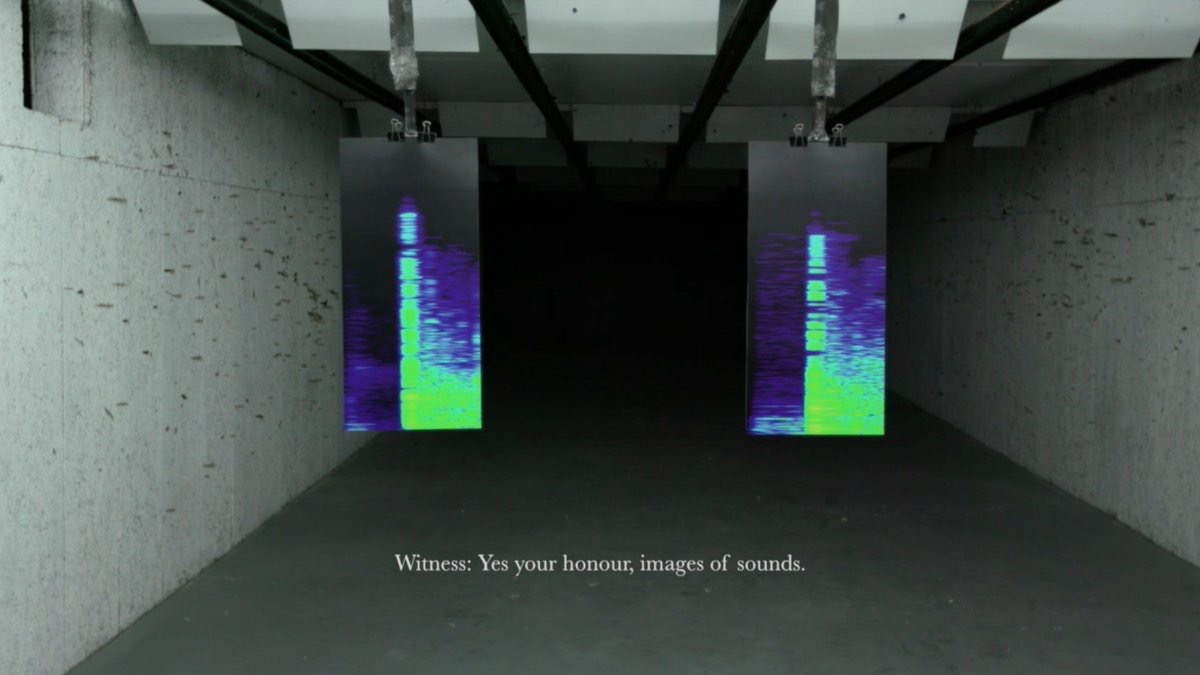
The two night screenings were really different, both experimental, but one a complete let down (Hurrahh! by Jung Jae-hoon) and the other a small and unexpected jewel of a movie. Rubber Coated Steel by Lawrence Abu Hamdan mixes video art, documentary and a strong political stance like few other works have been able to do recently. Time permitting, I’ll write something in the near future.

Yamagata 2017 – day 2

October 7th

Yamagata is a special film event not only because is a filmfest devoted to documentary, but also because is a place where you can meet and talk with a variety of different people. One of the highlights of the first two days for me was the nice and eye-opening conversation I had with Matsumoto Masamichi, Athénée Français Cultural Center’s director, about Carmelo Bene, his cinema and his Terayama Shuji-like status in Italy and France.

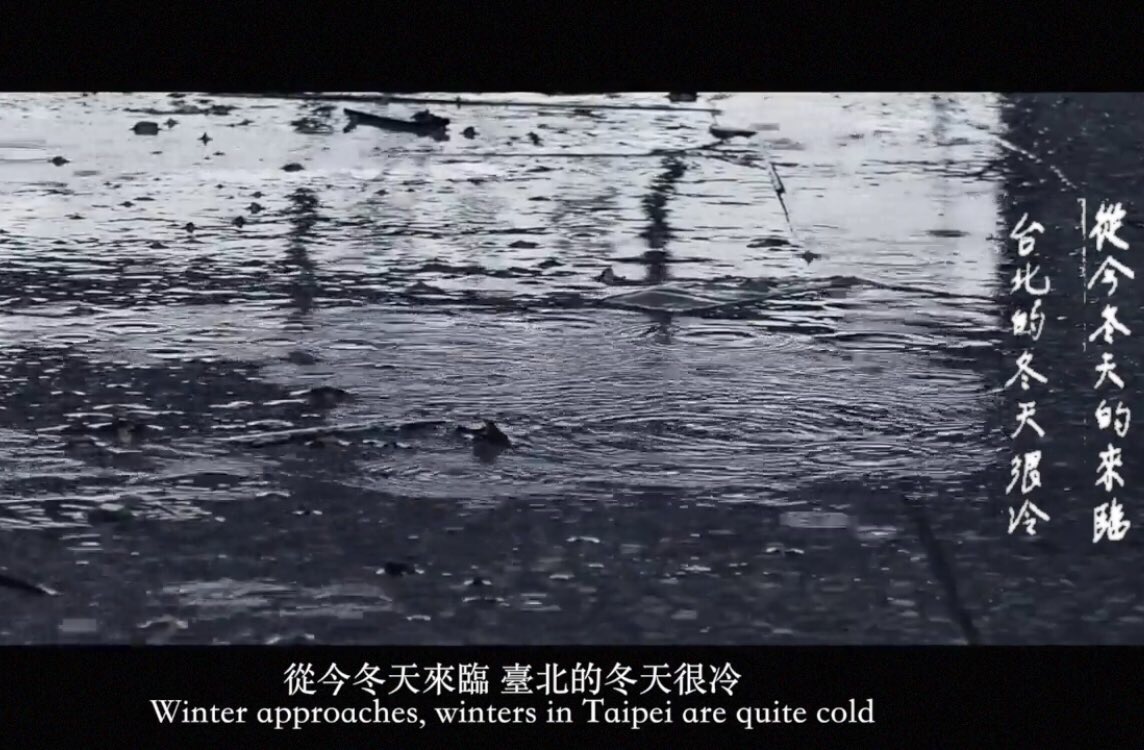
For the morning screening of my second day at the festival, I chose In Memory of the Chinatown by Chen Chun-Tien, a movie that confirmed my idea that the Taiwanese documentary scene is at the moment one of the most intriguing and alive in Asia, particularly for its tendency to hybridizing genres and experimenting with form.

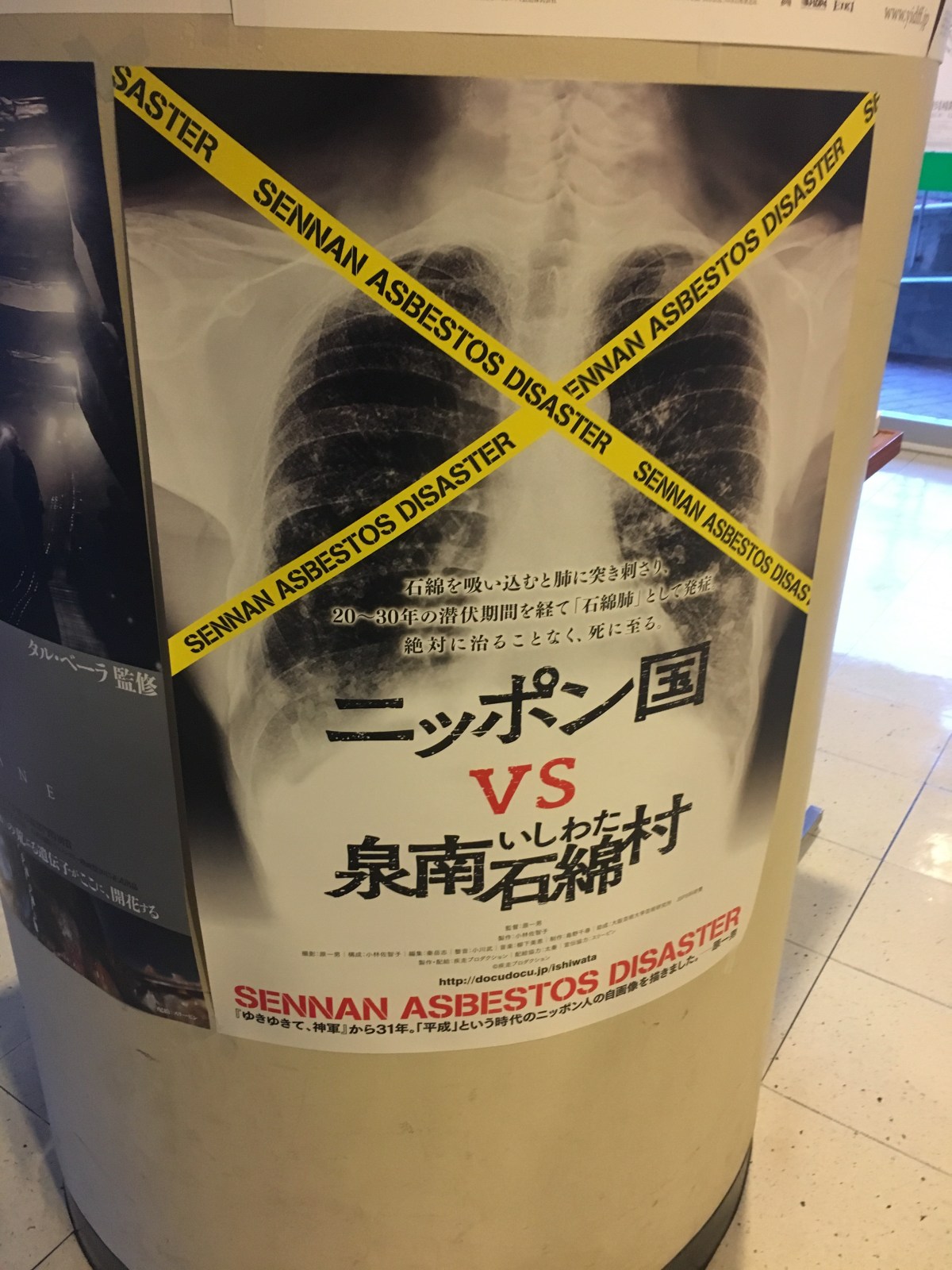
My afternoon screening was Sennan Asbestos Disaster, the latest movie by Hara Kazuo and the first one he shot, for a theatrical released at least, in a very long time. The viewing experience was one of the best I had so far in Yamagata, because I was sitting among the people appearing in the film, those affected by the asbestos pollution. Their comments and laughing aloud during the screening made it a really touching experience.

The last screening of the day I attended was dedicated to the short experimental films made by the late Matsumoto Toshio. The selection included

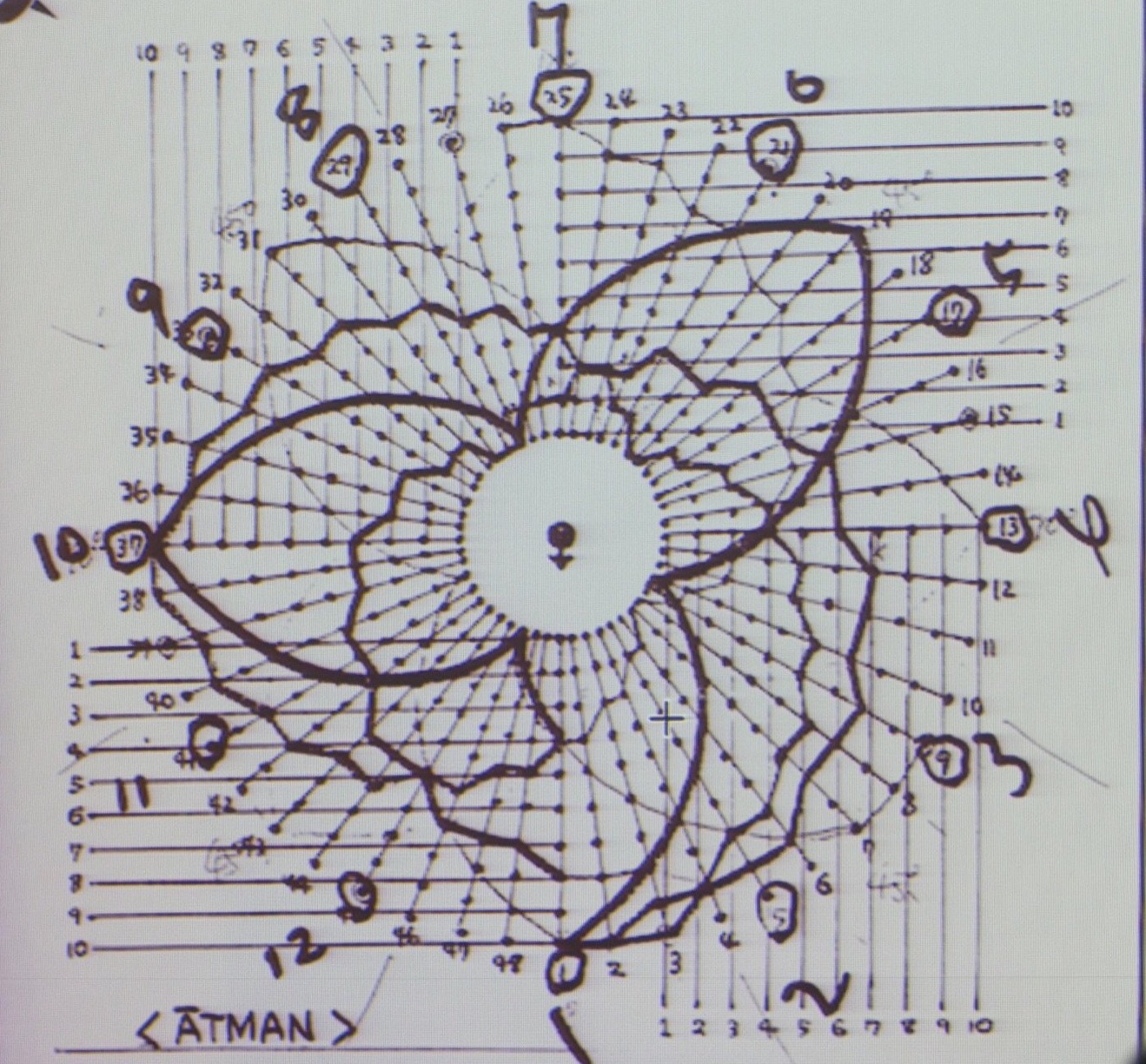
Mona Lisa, Atman, Everything Visible Is Empty, White Hole, Relation and Sway. Seeing them on the big screen and in 16mm was amazing, especially Atman was a hallucinatory trip. The screening was followed by a talk by Takashi Ito, who explain his relationship with Matsumoto and revealed some interesting and unknown fact about Atman (the diagram for shooting the movie designed by Matsumoto looked like a mandala, the person wearing the hannya mask was in fact a mannequin and the movie was shot using infrared film).

Yamagata 2017 – day 1

October 6th

Arrived this morning in a gray, cloudy and a bit chilly, but not too much, Yamagata. My first day at the festival was welcomed by the screening of Funeral Parade of Roses, and it could not have been otherwise, this is the first edition of the festival without Toshio Matsumoto and attending the screening of a movie I’ve seen so many times, but never on the big screen, was almost a duty and my way of paying respect to the great director.

Funeral Parade of Roses was followed by Cats, Dogs, Farm Animals and Sashimi, the story of Dondon, a boy “trapped” in a rural area of the Philippines from one dead-end job to another. The movie is directed by Perry Dizon a member of Lav Diaz group, for which he often works as an actor.

For the afternoon/evening slot I’ve opted for the documentaries made by Jocelyne Saab during the 1970s about Lebanon and Beiruit instead of Ex Libris, the latest from Wiseman that I’ll catch the day after tomorrow, and the decision turned out to be a bliss. The early works by the Lebanese director and former journalist are a rarity, unfortunately Saab wasn’t able to attend the festival, some health issues kept her in Paris, but the movies were an absolute revelation. Part essay-films and part a personal view of the horrors perpetrated to Beirut and Lebanon between from the breaking of the civil war in 1975, the three movies, Beirut Never More (’76), Letter from Beirut (’78) and Beirut My City (’82) are also a deep reflection on identity, memory, and the meaning(less) of images in war. Saab, especially in the first and third documentaries, tries, I am here paraphrasing the words spoken in the last film, to capture the reality of war, its horror and tragedy, paradoxally before it could cristyllize in images, consequently becoming something different and detached. I’m still elaborating the impact that these works had, and are still having, on me; once the festival is finished, I’ll try to write something.

Yamagata International Documentary Film Festival 2017

The Yamagata International Documentary Film Festival, one of the most awaited film-related events of the Japanese archipelago, will kick off its fifteenth edition next week on October 5th. For eight days the city of Yamagata will be the capital of documentary cinema, hosting not only an international competition with movies from all over the globe, but also a plethora of  more or less known documentaries presented in other sections, special screenings and retrospectives. For the cinephiles and the film lovers visiting the northern Japanese city, the festival will be an occasion to discover hidden gems of historical importance and an unmissable chance to meet directors, scholars and documentary-obsessed people.
Festival opens on the 5th with a special screening commemorating the passing of Matsumoto Toshio, one of the true giants of Japanese cinema. Two of his best known documentaries, Nishijin (1961) and Ginrin / Bicycle in Dreams (1955) will be presented for the occasion in their original format (35mm), while For My Crushed Right Eye (1968) will be screened as it was originally conceived, that is in 16mm and with 3 projectors. Funeral Parade of Roses (1969) and other experimental works made by Matsumoto during the 1970s and 1980s will also be shown during the festival, including one of my favourite, Atman (1975), a kaleidoscopic trip to the philosophical source of movement and image.
Among the titles presented in the International Competition a must-see for me is Ex Libris—The New York Public Library, the latest work by Frederick Wiseman, but I’m also looking forward to I Am Not Your Negro by Raoul Peck and the long-awaited new work by Hara Kazuo, Sennan Asbestos Disaster, the first feature documentary the director of The Emperor’s Naked Army Marches On made in more than a decade. The movie follows the victims who suffered asbestos-related damages in the city of Sennan in Osaka, during their eight years fight for compensation.
Also in competition the beautiful Machines by Rahul Jain (I wrote about it here), Donkeyote, a subtle reflection on dreams and hopes through the eyes of a donkey and its ageing owner, directed by Chico Pereira, and Another Year by Zhu Shengze, a movie that has received much praise in the international festival circuit. Wake (Subic) by John Gianvito, about the pollution afflicting the residents of a former US naval base in Luzon Island, the Philippines, looks interesting and so does Tremoring of Hope, the difficult recovery of the people of Hadenya in Miyagi, six years after the Great East Japan Earthquake.
Here the complete line-up.
A promising section that will probably sparkle heated post-screening debates is Politics and Film: Palestine and Lebanon 70s–80s, a selection of films made in Palestine and Lebanon during the Lebanon civil war (1975-1990) and in recent years, movies that show and reflect on the struggles and politics of the area. Among them the (in)famous Red Army / PFLP: Declaration of World War, filmed by Wakamatsu Koji and Adachi Masao in 1971, and Genet in Shatila (1999), about the French writer and his relation with the Palestinian revolution as he witnessed the aftermath of the Shatila’s massacre in September of 1982.

Introducing Asian documentary filmmakers, New Asian Currents is usually one of my favorite section for its scope and the variety of films shown, this year 21 works from the continent will be presented, giving us a glimpse of the life, difficulties and struggles the people inhabiting the huge and diversified area have to cope with in their daily life. A Yangtze Landscape by Xu Xin is an interesting movie (more here) that deserves to be seen on the big screen, exploring the geographical and social landscape surrounding the Yangtze River in its long course of more than thousands kilometers. While the works of Yamashiro Chikako are a rare example, rare in Japan at least, of how to tackle a series of thorny historical issues, Okinawa and its relation with mainland Japan and with its past, merging documentary with the experimental.
Here the section’s complete line-up.
I’m ashamed to admit, but I know almost nothing of African documentary. Africa Views will thus be my entrance gate to it, “a program that introduces over 20 films created since the year 2000—with a particular focus on the Sub-Saharan region—depicting a contemporary Africa that lets off a considerable racket as it creaks toward progress, and introducing us to the people who live there.” What caught my attention in Perspective Japan are the new films by Murakami Kenji and Onishi Kenji, two short experiments in 8mm whose screening promises to be, like two years ago, a real cinema-event.
The Festival will also hold a retrospective on Fredi M. Murer, a Swiss director that the program describes as “a leader of the internationally-acclaimed Swiss Nouveau Cinema movement that was active from the late 1960s through the 1980s, together with Daniel Schmid and Alain Tanner. (…) Depending on the period in which they were made, Murer’s works may be classified variously as experimental film, documentary, or narrative film.” The retrospective that interest me the most though is Ten Trips Around the Sun: Sato Makoto’s Documentary Horizon Today, a tribute to Sato Makoto on the 10th anniversary of his death, that will include screenings of his major works accompanied by discussions and panels.

North Korean missiles permitting, I’ll be in Yamagata from October 6 to 11, and, as I did two years ago, I will try to keep a diary of my viewings experiences, here or more likely on my Twitter account.

P.S. I’ve also created a list on Letterboxd with most of the movies that will be in Yamagata.

This slideshow requires JavaScript.

Machines (Rahul Jain, 2016)

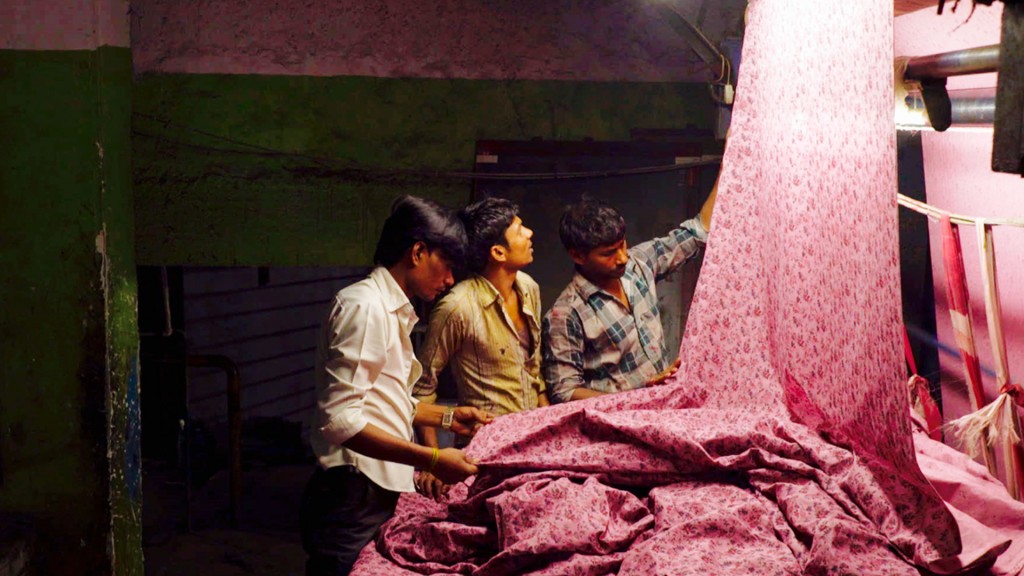
Prompted by several online comments describing it as a cinematic experience close to the works by The Sensory Ethnography Lab or Aragane, I finally had the chance to watch Machines, the debut documentary directed by Rahul Jain and set in a textile factory in Gujarat, India.
It’s not a documentary made or about East or Southeast Asia, thus strictly speaking it is out of the areas usually covered in this blog, nonetheless I found it so compelling that I made an exception. Here the description of the movie from FestivalScope:

To the south of the Indian metropolis of Surat in Gujarat province lies a vast industrial zone that has been growing ever since the 1960s. Director Rahul Jain filmed the grueling daily routine in just one of the many textile factories there. In the factory, man and machine seem to have fused into one being. It is dark and dank, and barely any daylight penetrates the space. The labor is heavy and mind-numbing, and the work days seem endless. We are drawn into a gloomy world where the cacophonous beat of machinery sets the rhythm of toil. Jain is as interested in the mysterious connection between worker and product (the fabrics are treated mechanically, but also with love) as he is in the degrading conditions. Each shift lasts 12 hours, for adults and children alike, and wages are extremely low. Short interviews are interspersed throughout the observational sequences, some of which are captivating in their beauty while others are painful to watch – such as when we see a boy nodding violently in his struggle to stay awake.

Formally one of the focal points of the movie is the cacophonous sounds of the factory as experienced every day by the workers, here as in many contemporary documentaries similar in style and scope to Machines, works that stress the sensory experiences captured on video/film, the sound design plays a key role in the construction of the movie. The use of light and the color palette are also two aesthetic elements that stand out from the very first scenes. The neon lights inside the factory resonate with the cold tonality of the gray walls and the metallic machines, making the milky white of the textiles stand out as if ethereal rags. Particularly compelling is also the contrast between the warm and thick colors of some textiles, red, yellow and purple, and the darkness and coldness of the working environment,  formally one the best qualities of the documentary because it symbolizes the gulf between the beautiful and refined textile produced and the inhuman labour conditions inside the factory.

Machines2

The reason the movie is one of the best non-fiction pics I’ve seen this year however is the shift from a documentary purely focused on the sensory and the visual, to a more socially charged work. It is around 20-25 minutes into the movie that we see some workers been interviewed, a man who made debts to travel to the factory and support his family, but who has almost accepted the fate of being poor, a young boy revealing how everyday at the gate he’s so exhausted he wants to go back, and another man more critical of the system and particularly of the absence and weakness of unions.
Towards to end, the movie introduces also the owner of the company, a figure speaking empty words and lamenting how the workers want more money just to spend it in tobacco, alcohol and leisure he comes out as the epitome of the capitalist.
Machines however does not offer a simple and Manichean picture of the exploited workers against the evil owners, but a problematized and more complex depiction of the situation. A worker for instance, candidly admits he likes his job even if it is very hard, “God gave us hands, so we have to work”, after all they are still workers proud of their manual skills, and others, while criticizing the harsh conditions, state how this is the destiny of the poor and something almost unavoidable. I’m not an expert on India, but this could be directly linked to the class division of society that still permeates and shapes the country, or more probably to the production of subjectivity that characterizes this late phase of capitalism, especially in the new emerging superpowers. While these could be honest statements, and they probably are, we shouldn’t forget that the workers know this is a movie that eventually will be seen by the owners, thus forcing them to hold back part of the truth. To add a further layer of complexity, towards the end the documentary has an interesting meta-filmic shift when a large group of workers addresses directly the camera and Rahul Jain behind it, essentially criticizing him for exploiting them by making a movie and not helping them improving their working conditions instead.
One final not on the title. The machines of the title are of course those seen and heard during the whole movie, and the workers reduced to the status of a machine. The machine however is also the bigger picture and the given state of affairs, the capitalistic machinery that permeates society and shapes its people. As Deleuze wrote, I’m paraphrasing, you cannot escape the machine, out of the factory/office, the machine is everywhere, in the school, in the family, in everyday relations, in yourself, everywhere.

From the archives: Kamei Fumio, Hani Susumu, and Ogawa Production in two Italian publications (1967, 1970)

The Centro sperimentale di cinematografia (Experimental film centre) in Rome is one of the oldest cinema schools in the world and the oldest in Europe. Founded in 1935, the centre nourished and helped establishing, in different degrees, the career of many important filmmakers, photographers and actors. Japanese director Masumura Yasuzō famously studied at the school for about two years at the beginning of the 1950s under luminaries such as Michelangelo Antonioni, Federico Fellini and Luchino Visconti, an experience that without doubt helped shaping his approach to cinema and his views as a filmmaker.
In 1937 the centre started to publish its own film journal, Bianco e Nero, a monthly magazine that is still been published to this day. A couple of years back I bought a copy from 1967 (February) that has an article, penned by film critic Claudio Bertieri, on the documentaries of Hani Susumu and Kamei Fumio. In November of the previous year the Festival dei Popoli in Florence, an event dedicated to non-fiction still running today, presented a mini-retrospective on Japanese documentary, and Bertieri discusses in the short article, titled Susumu Hani, Fumio Kamei ed il documentario giapponese (Susumu Hani, Fumio Kamei and Japanese documentary), the movies he was able to see at the festival. He devotes most of the article on Hani, Yuki Matsuri (1953), Children in the Classroom (1954), Children Who Draw (1955), Twins in the Class (1956) and Hōryū-ji (1958) are the documentaries here analysed, while the rest of the piece is spent examining Kamei’s It’s Good to Live (1956) and The World of Yukara (1964), a trilogy about Ainu’s traditions. Although written in 1967 — a period when Japanese documentaries certainly were not known or available to watch as they are today (well, they are not that discussed even today…)— and with few dated observations here and there, most of the analysis remain solid to this day. Documentary as opposed to mainstream cinema ‘the man in the street here [in Europe] has not seen Louisiana Story, in Japan he does not know Hani or Kamei’, Hani’s ability to capture moments of pure innocence in children, or Kamei sensibility when portraying human suffering are spot-on insights.

Even more interesting, but for different reasons, is Cinema: Giappone e Zengakuren (Cinema: Japan and Zengakuren) a short book published in 1970 by Samonà e Savelli, later Savelli – La Nuova Sinistra, a publisher established in 1963 and the first to directly represent the extra-parliamentary left-wing in the Italian publishing world. Over the next decade the books printed by Savelli – La Nuova Sinistra, also fueled by political and social unrest in the peninsula, would gain momentum and become a cultural reference point for left-wing groups such as Potere Operaio and Lotta Continua , and for the newspaper Il Manifesto.

The book is devoted to Ogawa Shinsuke’s The Battle Front for the Liberation of Japan – Summer in Narita (1968), the first movie in the Narita/Sanrizuka Series. A brief introduction that outlines the Japanese political situation and the fierce resistance by the peasants and the students, is followed by a translation of some writings by members of Ogawa Production, just a couple of paragraphs nothing more, while the main part of the volume is a transcription of the dialogues spoken in the film. It was a period where revolutionary cinema(s) of the globe were connecting to each other and were trying to build a common front against capitalism, the people in power and the establishment. The back cover is in this regard illuminating: Comitato di Cinema e Rivoluzione: Baldelli, Filippi, Ivens, Ogawa, Rocha, Solanas, Straub (Cinema and Revolution’s committee: Baldelli, Filippi, Ivens, Ogawa, Rocha, Solanas, Straub).

Reading these two publications after almost 50 years since they were originally printed was a very fascinating discovery, Ogawa and Kamei are two of the most important documentarists in the history of world cinema and essentially the reason this blog exists. Cinema: Japan and Zengakuren in particular is revelatory not as much for the information it contains, there are some mistakes of course—in the pre-internet age Japan was still a land far away and often misrepresented—but more as an artifact of an era long gone but still able to resonate with our present. An era when the arts were explicitly politicized, in a state of never-ending struggle and ready to change the world.

This slideshow requires JavaScript.

Letter #69 (Lin Hsin-i, 2016) 

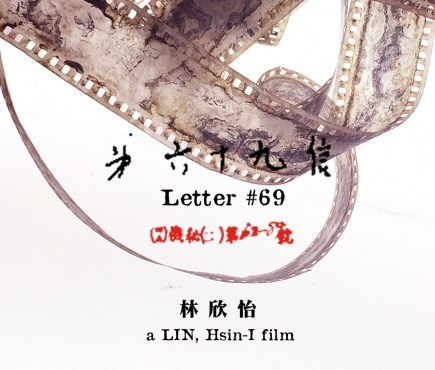
I’ve written at length, here and elsewhere, about 3 Islands, an experimental documentary by Taiwanese female filmmaker and artist Lin Hsin-i, one of my favorite nonfiction movies of last year. Yesterday I had the chance to watch another of her works, Letter #69, a short film (19 min) that was screened at this year Visions du Réel and in 2016 at the Women Make Waves Film Festival where it received the Excellence Award.

Here is the synopsis from Visions du Réel:

In the White Terror period in Taiwan, Shui-Huan SHI was imprisoned for hiding her brother, and was soon executed later. In the prison, she wrote 69 letters for her family. Simulating the life in the prison, this film silently criticizes the history. The “photographic film image” in the video, Letter #69, is an old photographic film from an abandoned old Taiwanese theater. After cleaning the film, Shi Shui-Huan’s letters were printed on it to construct a stop motion. The reproduction of old film serves as a response to the esoteric, dark history of Shi Shui-Huan and her brother Shi Zhi-Cheng in their last escape where they hid in the ceiling. It is also a response to the historical violence of Taiwan that cannot be cleared and is difficult to look back at.

In 1954 Shi Sui Huan was imprisoned for hiding her brother who was resisting the regime of Chiang Kai-shek. During the period spent in prison, she will eventually be executed, she wrote letters to her family and her last one, the letter number 69, was left blank.
The blankness of the last letter is the canvas from which the director starts her investigation into the so called White Terror, a period of purges when political dissidents who were protesting or resisting against the Kuomintang-led Republic of China government, were persecuted, incarcerated and killed. While the period started in 1947 and ended in 1987 when the martial law was officially lifted, I think the director is referring here to a more specific time and place, the first years of the White Terror and a corner of the Liuzhangli Cemetery in Taipei where Shi Sui Huan and other 201 people are buried. Most of them were leftist thinkers or activists but also, like Shi Sui herself, people who just protected their relatives. The graves were forgotten and basically untouched in fear of repercussions till the end of the martial law, when slowly the country started to breath again, a “rebirth” that is well reflected in cinema (the so called Taiwanese new wave of Hou Hsiao-hsien,  Edward Yang, Tsai Ming-liang, etc.)

The absence of written words in the last letter embodies the impossibility of directly connecting with the tragic period and its remnants, yet the blankness also represents the white noise resulting from the accumulation of all the phantasmic memories that in one way or another, while denied for so many years, are still alive and present. Sowing together all these fragments of scattered memories in an heterogeneous piece of cinematic patchwork, Lin Hsin-i’s short movie is an attempt to discover and create images and sounds of a lost and tragic period. The letters of Shi Sui Huan are juxtaposed with the narration in the present (done by family members of the victims), and images of ruins are overlapped with performative actions that recreate some of the gestures that the prisoner might have done.
Not only Letter #69 brings to the surface an obliviated past and directs its gaze towards a crucial spot in Taiwanese history, but the filmmaking style that made 3 Islands so powerful and fascinating for me is here in full display again. Aesthetically Letter #69 is a fragmented and kaleidoscopic work that blends the beauty and clearness of the digital image with the grain and the roughness of overused celluloid film ー an old strip of film where the director printed the woman’s letters ー sound manipulation and voice distortion with reenactment, and read and written passages from letters with the constant sound of a running film projector.

I might be partial because my cinematic taste tends definitely towards hybrid documentaries, but 3 Islands and now this Letter #69 are so fascinating and challenging that make Lin Hsin-i one of the most interesting filmmakers working in experimental nonfiction today.

A Yangtze Landscape (Xu Xin, 2017)

Festivalscope is giving access, till mid April,  to some of the documentaries screened at this year edition of Cinéma du réel, one of the most prestigious festivals dedicated to non-fiction cinema. (You can learn more here)
I grabbed the chance and last night I watched A Yangtze Landscape, a movie directed, photographed and edited by Xu Xin. IMDB describes it as follows:

A Yangtze Landscape utilizes a non-narrative style, setting off from the Yangtze’s marine port Shanghai, filming all the way to the Yangtze River’s source, Qinghai/Tibet – filming a total distance of thousands of kilometers. Experimental music and noise recorded live on scene are used in post-production, painstakingly paired with relatively independent visuals, creating a magically realistic atmosphere contrasted with people seeming to be ‘decorative figures’ right out of traditional Chinese landscape scrolls.

The documentary is composed of stunning scenary rendered in beautiful digital black & white, particularly the night landscapes are of almost pictorial quality, punctuated by scenes of people inhabiting the areas along the river, mostly areas ruined or emptied by the industrial and urban changes of the last decades. These parts with people are, in my opinion, performative, in a sense that the people seen, most of them poors, with mental problems or homeless, are performing themselves and their daily routine in front and for the camera. A Yangtze Landscape is for this reason a very partial film that focuses its attention on certain edges of Chinese society, I’m pretty sure that most of the comunities living near or on the banks of the Yangtze river are very different from the few exceptional individuals shown in the movie. Yet this is not a demerit of the film, a certain quality of artificiality so to speak, or performance as I have called it above, is very obviously present from the first minutes of the documentary, and the fact that it’s shot in its entirety in black & white is after all the biggest hint of its poetic aspiration and quality. Also on a technical side, it is worth noticing how in more than 2 hours and half there’s never a camera movement and a zoom in or out, the frame never moves, everything is crystallized and done by a very crafted editing, we have the camera “moving” only in the scenes where it is positioned on a ship floating on the river.
The movie has some similarity in its basic concept and structure to P. J. Sniadecki’s The Iron Ministry, if I’m not wrong, the american director is among the people thanked at the end of the documentary. There the camera followed the lives of Chinese people commuting by train from one part of the country to the other, from the lower to the upper class, here Xu Xin directs his gaze from the port of Shanghai to its source in Tibet.
We see and learn through intertitles, there’s no narration, about abandoned old villages, a bridge where every year many people commit suicide and other disasters and accidents that have happened near or on the river in the last 5 or 10 years.
The only witness of all these happenings seems to be the landscape, it is almost useless to say it, but the real protagonist of the movie is the landscape, a space where natural, human and industrial histories/stories intermingle and merge.

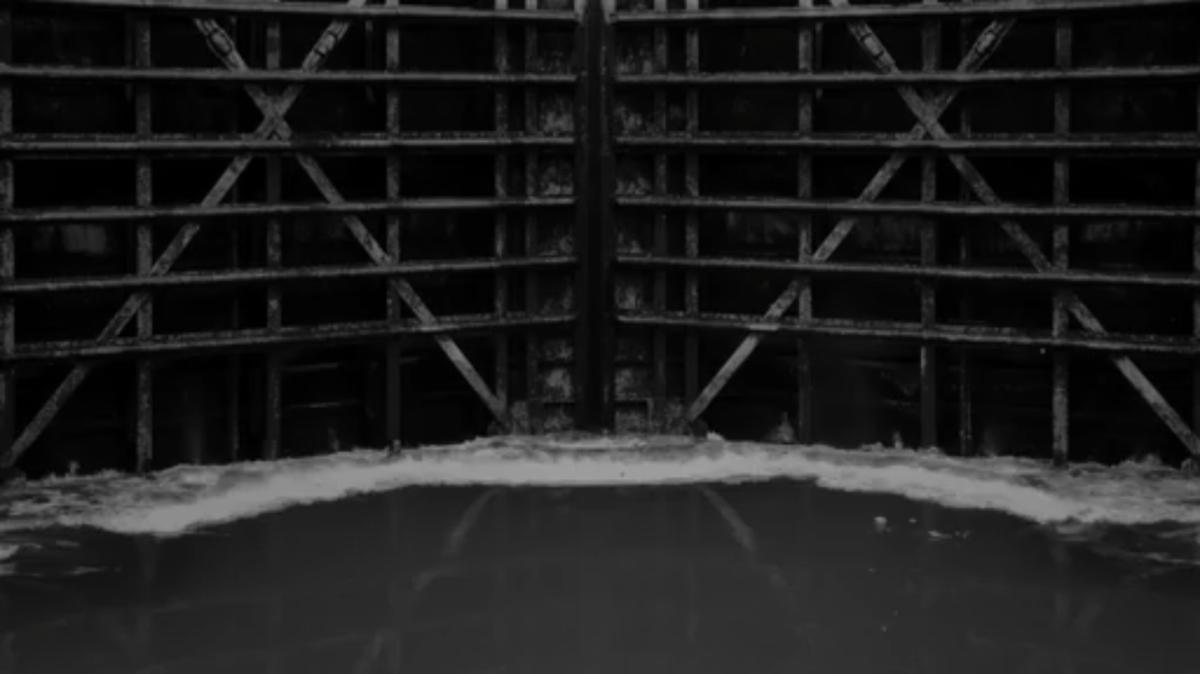
Interesting and well crafted as it is, I nonetheless feel that something is missing from it, to denounce and criticize certain aspects of contemporary Chinese society, and not only China, is something that absolutely must be done, but now that the country is in the spotlight internationally the risk is to look too redundant. For instance, towards the end of the movie there’s a long part all dedicated to a couple of homeless, their shacks and their dogs, we can see them on the foreground sitting in an old sofa or wandering among ruins with the ultramodern city and its skyscrapers on the background. The image is beautiful in its contrast, and even if it possesses a degree of truth, it ends up being trite and obvious, weakening the potential of the movie. While I like the general style, again the black & white is pictorial and the editing is perfect, it must be said that sometimes the film looks too “beautiful” and the image too “clean” without being subversive. The parts that resonate with me the most are those where Xu Xin explores the aesthetics of documentary to its limits. The aforementioned night scenes of the cities lights along the river, shiny but empty jewel boxes, or those at the river locks, slow and almost endless images of the water level, the ships raising and the gates opening, paired with a cacophonous soundscape made of squeaking noises and experimental music.

My favourite documentaries of 2016

2016 has been a busy year and unfortunately, and for various reasons (one of them being the place where I live, Japan), I haven’t had the chance to see as many new documentaries as I wanted to. On the other hand though, having had access to many documentaries produced in Taiwan through Taiwan Docs, for a couple of months I binge-watched the non-fiction movies produced in the island in 2016 (and 2015), and it was a revelation. Not only it allowed me to discover and explore the complex sociopolitical situation of the area and its recent history, but luckily I also stumbled upon a couple of formally challenging films.

That being said, I can’t really miss what recently has become a sort of yearly custom, so here is my list of the best documentaries I’ve seen in 2016, some of them are from 2015, but released internationally, or at least in Japan, only this year. At the end I’ve also compiled a short list of the best (re)discoveries of 2016. (disclaimer: best should here be understood as “favourite” of course)

8. Quemoy (Chiu Yu-nan)
quemoy_doc

“Quemoy, the islands adjacent to Mainland, used to be the frontier between Taiwan and China. However, it opens its border for the cross-strait exchanges. The film shows traces of Quemoy people in different generations and builds up a picture of complicated national identity in the boundary island.”
A relatively short movie (just 45′) whose main appealing point is its depiction of the complex geopolitical situation of the area.

7. Into the Inferno  (Werner Herzog)
6. Lo and Behold, Reveries of the Connected World (Werner Herzog)

“This boiling mass is just monumentally indifferent to scurrying roaches, retarded reptiles and vapid humans alike.”
Both movies are pure Herzog, for better or for worse, I personally adore the man, but the risk the great German director is running in his recent documentaries – especially now in an era when the social media is so pervasive and his persona in the mediascape is sort of overexposed – is that of becoming prisoner of the image forged in almost 50 years of incredible career.
Be that as it may, if you like Herzog, these two documentaries released in 2016 are very enjoyable, Lo and Behold is a better work in my opinion, or at least more appealing to me, and not necessarily for its subject, more for its rhythm and editing. Into the Inferno in some points wanders a bit too much, the segment set in North Korea for instance, albeit fascinating for the unique insights on the country, felt too much like a long digression.

5. Further Beyond

An interesting experiment in meta-documentary and a non banal reflection of what identity and its construction through images and storytelling is. The movie is maybe a bit excessive in its meandering here and there, but 
some passages are pure digital beauty.

4. A Room of Her Own: Rei Naito and Light (Yuko Nakamura)
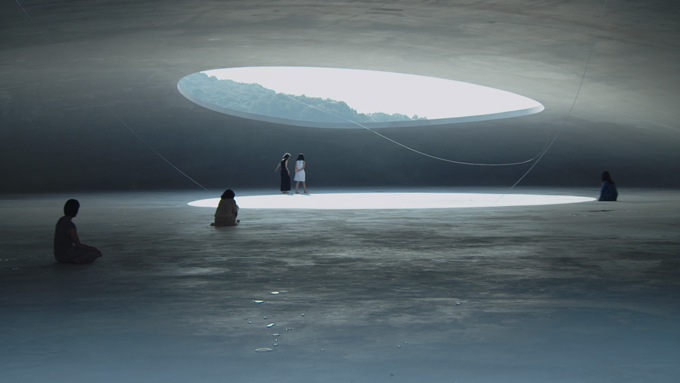
a_room_of_her_own_rei_naito

Graced by outstanding sound design and soundtrack, the movie captures and beautifully embodies the sense of fragility and ephemerality of life seen through the art of Naito Rei. But A Room of her Own is interesting on many other different levels, partly experiment in non-fiction, partly personal documentary – what brought Nakamura to approach Naito was the severe illness of her mother – and partly a work that explores the intangibility of life, the movie is a very refreshing work of non-fiction, especially when considered in the context of Japanese contemporary documentary. I wish the last part, when four women are gathered on Teshima island, would have been longer. 
One last note on the photography, in tone with the themes explored by the movie, is really one of the most accomplished aspects of it.

3. 15 Corners of the World (Zuzanna Solakiewicz)

15_corners_of_the_world

I cheated, I know it’s a movie from 2014, but I watched it this year and it made a big impression on me, so I decided to include it in my list anyway.
15 Corners of the World is a mesmerizing and hypnotic documentary about the Polish electronic-music pioneer Eugeniusz Rudnik and, more importantly, about the visualisazion of sound and its materiality. An incredible visual and auditory experience.

2. Forgetting Vietnam

forgetting_vietnam

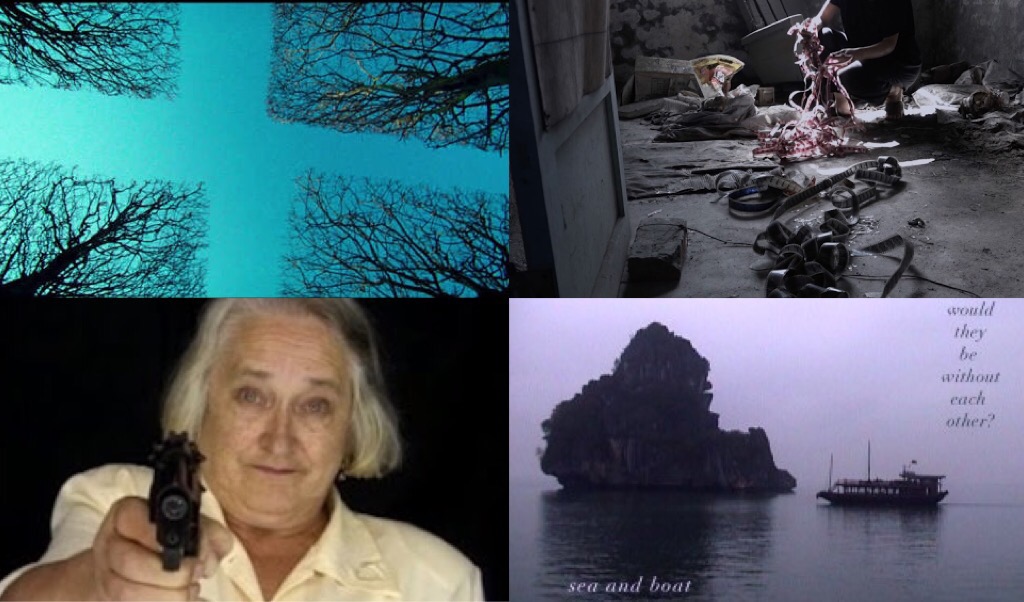
The latest visual work from Trinh Minh-ha, I’ve written more about the movie here.

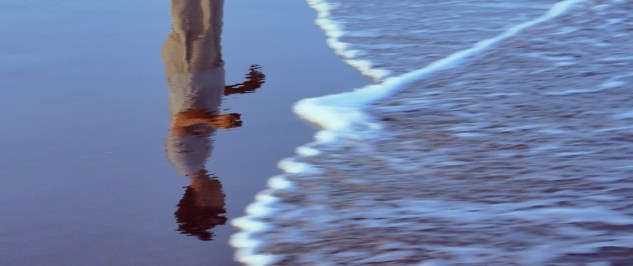
1. 3 Island (Lin Hsin-i)
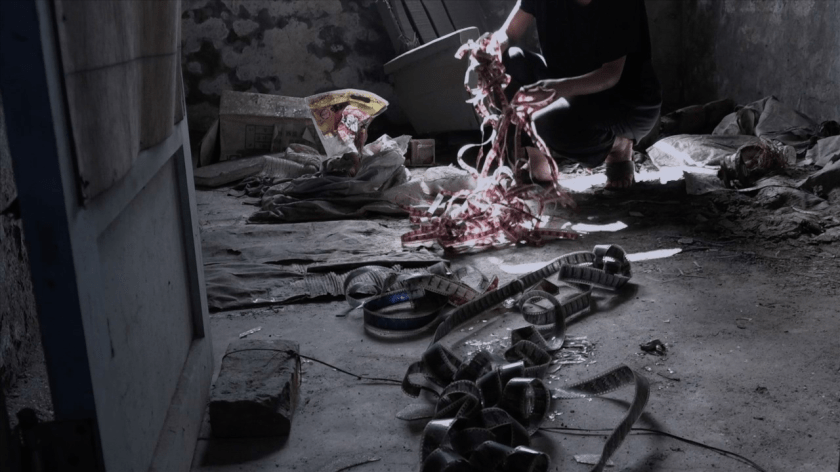
img_2531

A work that creates a complex and experimental mapping of three distinct geographical Asian areas, interweaving poetry, abstract imagining, historical data and archival footage. If you want, you can read more here.


(re)discoveries (in no particular order)


Asia is One (NDU), read more here.

On the Road: A Document (Tsuchimoto Noriaki, 1964), read more here.

Hospital ( Frederick Wiseman, 1970)

Broadway by Light (William Klein, 19589

The Festival Pan-African of Algiers (William Klein, 1969)
Forgetting Vietnam ( Trinh T. Minh-ha, 2015)

Writing about Trinh T. Minh-ha, one of the most significant filmmakers, cultural theorists and artists active today, was something I meant to do for a long time, and the occasion finally came a couple of weeks ago when I had the chance to watch her newest movie, Forgetting Vietnam (2015).
For everyone interested in documentary also as a way of questioning the ontological status of cinema and the nature of filmic representation, Trinh T. Minh-ha is a familiar name. Born in Vietnam and raised in Hanoi during the Vietnam War, she migrated to the U.S. in 1970, where she now resides and is active as a filmmaker, writer, composer, and professor of rhetoric and of gender and women’s studies at the University of California, Berkeley. Among her most important films are the seminal Reassemblage (1982), Surname Viet Given Name Nam (1989) and The Fourth Dimension (2001).

Forgetting Vietnam was screened at this year Cinéma du Réel in Paris and at various sites throughout U.S., here the movie’s description:

Vietnam in ancient times was named đất nứớc vạn xuân – the land of ten thousand springs. One of the myths surrounding the creation of Vietnam involves a fight between two dragons whose intertwined bodies fell into the South China Sea and formed Vietnam’s curving ‘S’ shaped coastline. Legend also has it that Vietnam’s ancestors were born from the union of a Dragon King, Lạc Long Quân and a fairy, Âu Cơ. Âu Cơ was a mythical bird that swallowed a handful of earthly soil and consequently lost the power to return to the 36th Heaven. Her tears formed Vietnam’s myriad rivers and the country’s recurring floods are the land’s way of remembering her. In her geo-political situation, Vietnam thrives on a fragile equilibrium between land and water management. A life-sustaining power, water is evoked in every aspect of the culture.
Shot in Hi-8 video in 1995 and in HD and SD in 2012, the images unfold spatially as a dialogue between the two elements—land and water—that underlie the formation of the term “country” (đất nứớc). Carrying the histories of both visual technology and Vietnam’s political reality, these images are also meant to feature the encounter between the ancient as related to the solid earth, and the new as related to the liquid changes in a time of rapid globalization. In conversation with these two parts is a third space, that of historical and cultural re-memory – or what local inhabitants, immigrants and veterans remember of yesterday’s stories to comment on today’s events. Through the insights of these witnesses to one of America’s most divisive wars, Vietnam’s specter and her contributions to world history remain both present and all too easy to forget. Touching on a trauma of international scale, Forgetting Vietnam is made in commemoration of the 40th anniversary of the end of the war and of its survivors.

“The image, a singular experience of blindness”

With Forgetting Vietnam Minh-ha revisits her native land forty years after the war, an event that touched her personally, and depicts the Vietnamese landscape and its evolving culture – exploring the daily life of women and the importance of the binary interplay between water and land in Vietnamese history – but at the same time the movie is a deconstruction of the documentary as a direct mode of representation and subtle exposure of the constraining power of the image.
Minh-ha is trying to break, or at least to weaken, the spell of the image and the univocity through which it’s usually perceived and consumed, as she writes “The question is not so much to produce a new image as to provoke, to facilitate, and to solicit a new seeing” (The Digital Film Event, Routledge, 2005). To sparkle a new seeing Minh-ha is placing hurdles and barriers to complicate the simple fruition of images and the easy formation of meanings. Written words, quotes, poetic lines, superimposition, screen wipes, music and montage are used to create a fluid, disorienting and ever-escaping cinematic experience, a work whose speed and continuous progressing don’t allow us to get too much attached to the images and stories we are fed. There’s no time and space for the viewer to reflect or engage on what she or he sees on screen, although the hinted events are of the largest scale such as the infamous Huế Massacre, the “forgetting” in the title is thus not only the oblivion of the tragedies the country and its people had to endure, but also a way of experiencing the movie as an impermanent event, or, as someone has beautifully pointed out “the diaspora of the film is thus not only cultural, but formal, in the sense that we never find any sort of grounding here. We are always on the move, always distanced from the images of Vietnam, never given time to sit with any given frame.”


“The bigger the grain, the better the politics?”*

An important subtext present throughout the movie is the dialectic between Hi-8 video and SD/HD, a dichotomy that sparkled from a purely coincidental and fortuitous event, Minh-ha started filming in the mid 90s, but had to stop for lack of funding and went on shooting again only in 2012, when the digital techonology had already made a huge leap forward. A difference that on the one hand highlights the the particular quality of the image in HD, a quality of tangibility and immediacy making the places and the people in it very present, “real”, while on the other hand the image in super Hi-8 seems to pose a distance with the viewer, a temporal but also aesthetic gap with the “present”, a sense of history and of things past captured on film,”a difference of memory systems” as  written on screen in one scene of the movie. This formal discrepancy is also reflected, amplified and complicated in the polyphony of voices used to tell the big and small stories that compose Vietnam, historical facts are interwoven on the same plane with comments from bus drivers, popular songs and much more with an almost Pynchonean touch.
Forgetting Vietnam is a work conceived by Minh-ha as a maze, a smooth place (in the sense used by Deleuze and Guattari) where the viewer can wander, think and ask herself questions. As stated by the artist in a recent interview “How to open onto infinity within the finite has always been at the core of my work motivation. This then means that there’s also room to wander and err in my films, since they offer more than one entry or one exit, and the viewers who miss one could always catch another entry as they stay on with the work.”

*quote from the film