Report from the Yamagata International Documentary Film Festival 2019

The 30th edition of the Yamagata International Documentary Film Festival has ended more than a week ago. I was fortunate enough to be there, it was my fourth time, and for almost the entirety of the festival. What follows is a short report about things I’ve seen and my general impressions of the event. Please bear in mind that every film festival is experienced differently by each people attending it, depending on age, expectations, interests and the path each of us carve in the forest of movies screened.

As usual I didn’t see many of the films in competition, most of them are by big names, and, hopefully, will be screened in theaters o streamed on platforms in the near future. That being said, I really wanted to see Wang Bing’s Dead Souls, but its length deterred me, not the actual length in itself, but the fact that it would have eaten up a whole day of movies. Anyway I ended up not seeing it and I’m not sure I made the right decision, Dead Souls won the main prize, the Robert and Frances Flaherty Prize, and surprisingly to me, the citizen price as well. The other major award, the Special Jury Prize, was given to Indiana, Monrovia by Frederick Wiseman, a solid work, but not the best documentary by the American director, in my opinion, the main problem I had with the movie was the “fast” editing of certain scenes, the landscape scenes to be precise.

AM/NESIA: Forgotten “Archipelagos” of Oceania is the program I was most excited about, and it turned out I was right. The first work I saw at the festival was Lifeline of the Sea, a propaganda documentary made in 1933 with the support of the Navy Ministry of Imperial Japan, a film depicting the colonization and militarization of several islands in Oceania. It’s an extremely important document, almost ethnographic in its first part, when it depicts the various traditions and beliefs of the people inhabiting the islands, and overtly propagandist in the second part. It does that in such a bluntly way, it does not sweeten the pill so to speak, that it doesn’t hide the the fact that colonization is first and foremost about using other territories resources and exploiting people. A chillingly matter-of-fact documentary that found its perfect counterpart in the work screened soon after, Senso Daughter. Directed by Sakiguchi Yuko in 1990, the movie focuses on the legacy of the Japanese occupation of Papua New Guinea during the Second World War. A sad legacy that arises from rape, starvation and terror. It is an unflinching gaze at the horrors perpetuated by Japanese military towards women, the so called “comfort women”, in Papua New Guinea, told through interviews with ex-soldiers. While admitting the violence of war, almost all these veterans deny any violence or forced prostitution of women, on the other hand the director researches and presents us a very different reality when she interviews women who survived that period and painfully recollect those times. It is interesting to note that the documentary was released just a couple of years after Hara Kazuo’s The Emperor’s Naked Army Marches On, a movie that covers a different but related topic in the same area. Imamura Shohei also explored the topic of comfort women, sent from Japan in his film, in Karayuki-san, the Making of a Prostitute, a made-for-TV documentary aired in 1975.
A big surprise for me was to find out that Sakiguchi Yuko is the same person who directed from 2012 to 2108 Everyday is Alzheimer, a series of three personal documentaries about her mother’s dementia. A trilogy of films that had a relative success in the indie scene and in the mini-theater circuit.
AM/NESIA was a real discovery for me, unfortunately I saw only one more film, Kumu Hima (Dean Hamer, Joe Wilson, 2014) about a transgender person in contemporary Hawaii and how colonialism has affected and continues to affect people’s bodies as well, not only lands and territories. I bought the catalog, a beautiful book with which, hopefully, I will try to continue the exploration of the films produced in the continent. A forgotten cinema.

This slideshow requires JavaScript.

The other program that I followed somehow closely was The Creative Treatment of Grierson in Wartime Japan. While some of the movies screened are “classics” of documentary cinema, Night Mail, Coal Face, or Housing Problems, the screenings were often packed, typhoon notwithstanding. When Night Mail was shown for instance, during the scenes when it is shown how the postal mail is delivered around the country without the train stopping, the audience was cheering and clapping enthusiastically like at a Marvel movie. I was really impressed, and this made me ponder about who these kind of festivals and screenings events are made for. They’re definitely not only for “experts” and professionals, and I was glad to notice that many people in the audience were young, well younger than me at least.
In the same section I saw Kobayashi Issa (1941), a film commissioned by the Nagano Prefectural Department of Tourism and directed by Kamei Fumio. I had high expectations for this, if you read this blog you know my love for Kamei, and this short movie completely blew me away. Told in a poetic and subtle way, using the haiku of poet Kobayashi Issa, the documentary goes against all the idyllic depiction of countryside and mountain life that one would expect from a work commissioned by such an institution. Instead Kamei sets his gaze on the poverty and on the conditions of the people living in the area, presenting also a witty deconstruction of a frame of thought that wants to consider countryside like an “other” or furusato, a ”home” where to go back, an origin. One scene in particular stayed with me because it summarizes the tone of the movie perfectly. An old man’s face in close-up (remember Fighting Soldiers?) is accompanied by a narration that solemnly says something like, I’m paraphrasing of course, “what is this man gazing at?”. When the camera zooms out and cut to the bigger picture though, we see him urinating against the mountain landscape. Definitely one of the best discoveries of the festival, still very fresh and relevant today, both for its thematic approach and its style.

I couldn’t see many of the documentaries screened in the New Asian Currents program, usually one of the most interesting of the festival, but I was able to catch a couple, among these, worth mentioning are Cenote (2019) by Oda Kaori and Temporary (2017) by Hsu Hui-ju. I had already seen Cenote in Nagoya a few month ago, but this was too good of a chance to re-watch it with better sound and on a bigger screen. The movie confirms Oda as one of the most original and interesting voices working in documentary today, if Aragane was a revelation (I wrote about it here, and interviewed her 4 or so years ago about the movie), her next project, Toward a Common Tenderness (2017), was conceptually different, but kept the aesthetic touch present in Aragane, adding to it a poetic and essayistic element. With this work Oda continues on the same path started with those two movies, the long take aesthetic is here translated underwater and intertwined with stories and legends told by the people of the area, Cenote(s) are natural sinkholes in Mexico, sources of water that in ancient Mayan civilization were said to connect the real world and the afterlife. If Aragane was a movie that revolved formally around darkness, slow movement and repetition, Cenote is a work about water and light. Images and soundscape are, as usual in Oda’s films, impressive and deeply interconnected, particularly in the scenes shot underwater inside the the sinkholes. Swimming in these Cenotes, the camera is enveloped in a reality that is perceived and created through water and light, going deep back the to womb of the earth, to the origin of life, as it were. When I saw the movie in Yamagata, I felt it worked less than the first time, maybe it was festival fatigue on my part, but I think the movie in its final part loses some of its power. Perhaps the words and faces of the Mexican people, shot in a beautiful and grainy 8mm, could have been used differently. That being said, the intensity I got from some of the scenes was almost overwhelming, Oda is aiming here higher than in her previous works, she’s trying to convey deeper and even religious meanings, and although not always successfully, there are moments when I felt that the underwater images (filmed with an iPhone!) combined with the sound/noise, reached almost a sort of spiritual materiality. I definitely need to re-watch it.
Temporary is an interesting documentary, albeit not completely successful, that experiments with reenactment “in the ruins of an abandoned factory, three temporary workers—a young man, an older man and an older woman—behave like a choreographed family, as they clean up, construct a table, and eat together.” It felt more like a draft for a future feature film than a proper work, and indeed director Hsu Hui-ju after the screening said that she’s now filming and making a new work about one of the men who appeared in the short movie. More interesting for me was to see another documentary by the same director (she had 3 movies in Yamagata!), Out of Place (2012), shown in the Cinema with Us program, this year dedicated to the depiction of disasters in Japanese and Taiwanese documentary. Out of Place It’s a personal documentary in which Hsu films the town of Xiaoling, after Typhoon Morakot completely swept it away in 2009. The grieving process of the people is intertwined with a quest for an identity by the director herself, her family and the people who lived in the village, most of them said to belong to the Pingpu ethnic minority. Besides the value of the documentary itself as a visual piece, there’s nothing really exceptional about it, the work excels at conveying a complex multi-layered picture of a group of people whose origins are very shifting and hazy. Instead of giving us simple solutions in easy and stereotypical sentences like “going back to our ancestral roots” or “find who we really are” and so on, Hsu expresses in images all her doubts about the importance of belonging to a certain group, and, this is my personal reading of it, in the end, the uselessness of finding a solid origin or a fixed identity. It was a very moving screening experience for me because, by pure chance, I sat next to the director and her young daughter, whose birth was filmed and shown on screen, and it was very sweet seeing them exchanging glances and smiles.
Not to insist too much on the subject, but this, after all, small movie, consolidated my opinion that contemporary documentary in Taiwan, or at least a certain portion of it, is in a really good and healthy stage, not only from a purely artistic point of view (read more here), but also as an example of an effervescent culture not afraid of exploring, and even moving away from, its multi-layered and complex origins.

In competition, besides the above-mentioned Monrovia, Indiana, I saw Memento Stella (2018) by Makino Takashi, an experimental movie in line with Makino’s previous works, a visual feast and experience like no others, and a film that I haven’t completely digested or absorbed yet. Interesting was also taking a glance at two other special programs, Rustle of Spring, Whiff of Gunpowder: Documentaries from Northeast India and Reality and Realism: Iran 60s–80s, where I had the chance to see for the first time A Simple Event (1973) by Sohrab Shahid Saless, passionately introduced by Amir Naderi, a beautiful discovery.

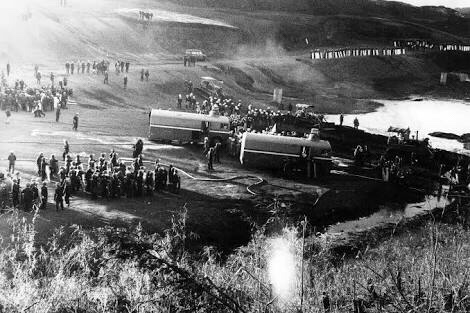
Among the festival’s satellite events that were organized in the city, I was lucky and brave enough, on the day the big typhoon hit Japan, to venture to the Yamagata University and attend a very special event. The use of Gentou (magic lanterns) in the social and grass-roots movements of the 1950s, with a special focus on the revolts and strikes in the Miike mine. The topic is so deep and rich of implications to understand the development of documentary in Japan, that I should write a separate article. The 1950s is a period often forgotten or neglected when discussing representation of social protests in postwar Japan, the priority is usually given, and in certain cases deservedly so, to the more cool or stylish production of the 1960s. For now, if you want to know more about Gentou, there are these two excellent pieces: On the Relationship between Documentary Films and Magic Lanterns in 1950s Japan by Toba Koji, and The Revival of “Gentou” (magic lantern, filmstrips, slides) in Showa Period Japan: Focusing on Its Developments in the Media of Post-war Social Movements by Washitani Hana

The festival was, as usual, an extremely exhausting but exciting experience, I would say it is a unique event, but I don’t really go to many other festival around the world. What I can certainly say is that it is a celebration of film culture, where everybody meets everybody else, directors, film professionals, cinema lovers, students or professors alike. As someone has rightly pointed out on-line, the YIDFF is more akin to a rock festival than a film festival. I couldn’t agree more.
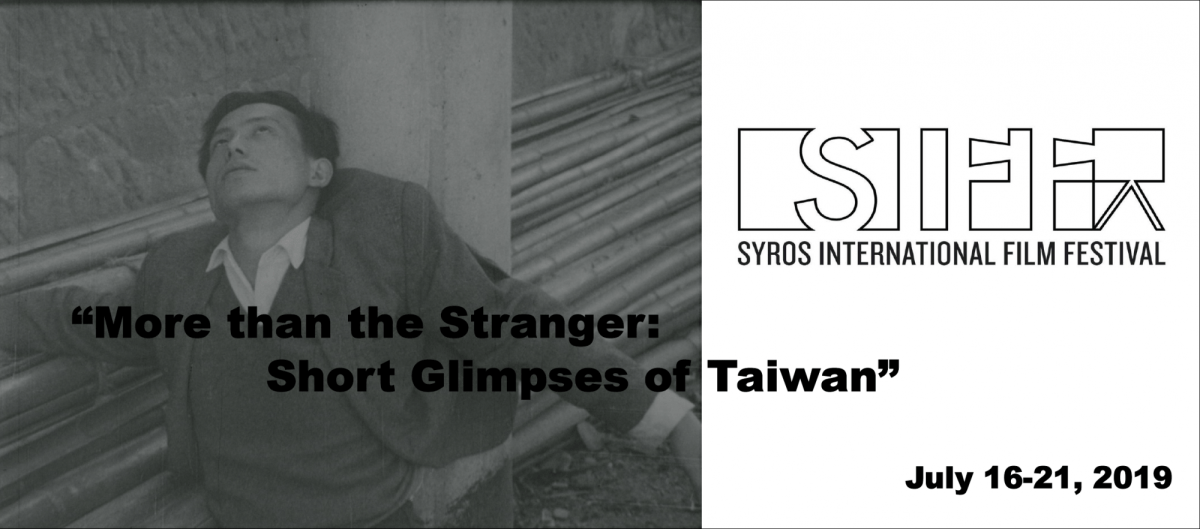
Taiwanese Documentaries at the Syros International Film Festival

This year’s edition of the Syros International Film Festival (July 16-21) will dedicate a special program to Taiwanese documentary, More than the Stranger: Short Glimpses of Taiwan. The section includes 13 short films, from 1930 to the present, of distinguished Taiwanese artists, divided into two parts, Stranger#1 and Stranger#2. The experimental non-fiction presented in the small Greek island, will offer a glimpse of the historical and political landscape of Taiwan during the last 80 years, and its connection with a sense of “national” identity always complex and in flux. The program is made possible by the collaboration between the Syros festival, the Taiwan International Documentary Festival, and Taiwan Docs, a platform very actively promoting Taiwanese documentary films abroad.
Among the films screened, A Man Who Has a Camera – Parade (Llu na-ou, 1933), one of the earliest accounts on film of a religious event in the island, and Fisherwomen, a series of home movies shot between 1935 and 1941 by photographer Deng Nan-guang. There are also two more recent works that I had the chance to see in the last couple of years, Spectrum of Nostalgia (Chen Yi-chu, 2017), and Nostalgia of the Chinatown (Chen Chun-tien, 2016), an interesting  meditation on memories and the disappearance of a special communal space in the city of Tainan. You can download the SIFF catalog here. 

In related news, The 16th EXiS (July 24-31), held at the Korean Film Archive in Seoul, will screen 9 experimental films made in Taiwan during the 1960s, a program presented last year in California and this year in Thailand, and probably other countries as well.


Asian documentaries on streaming platforms, 2: Doc Alliance/DaFilms

This is the second installment of an ongoing series of posts where I highlight some of the documentaries from East and Southeast Asia, offered on the most popular streaming platforms around the globe.

Read part 1, The Criterion Channel

DaFilms/Doc Alliance

Founded in 2008, Doc Alliance is a partnership of seven European documentary film festivals: CPH:DOX, Doclisboa, Docs Against Gravity FF, DOK Leipzig, Marseille Festival of Documentary Film, Jihlava International Documentary Film Festival, and Visions du Réel. The streaming platform is called DAfilms and if you are interested in discovering the broad spectrum of documentaries made in all parts of the globe, this is by far the best streaming service available.
As the name indicates, the platform is dedicated exclusively to non-fiction, here to be understood on its broader sense, and although the service is mainly focused on European cinema, the East and Southeast Asian section is well represented.
The list is long, I’ve divided the movies by country, adding here and there few lines of comment.

West of the Tracks (Wang Bing, 2003) China

One of the most important and influential documentaries of this century, and a mesmerizing masterpiece. Revolutionary.

Double Happiness (Ella Raidel, 2014) China, Austria

Double Happiness (Otsuka Ryuji, 2014) China

P. J. Sniadecki is one of the most interesting directors working between documentary and experimental cinema today. Watch all of his movies if you can, my personal favourites are Demolition, Yumen, People’s Park and The Iron Ministry.

Songhua (P. J. Sniadecki, 2007) China, United States

The Yellow Bank (P. J. Sniadecki, 2010) China, United States

Bailu Dream (Nicolas Boone, 2012) China, France

Demolition (P. J. Sniadecki, 2008) China, United States

Yumen (Xiang Huang, Xu Ruotao, P. J. Sniadecki, 2013) China, United States

People’s Park (Libbie D. Cohn, P. J. Sniadecki, 2012) China, United States

The Iron Ministry (P. J. Sniadecki, 2014) China, United States

Open 24 Hours (Xavi Camprecios, 2004) Spain, China.

A Hundred Patients of Dr Jia (Wang Hongjun, 2014) China

Disorder (Huang Weikai, 2009) China

731: Two Versions of Hell (James T. Hong) China, Taiwan, United States.

Ta’ang (Wang Bing 2016) Hong Kong SAR China, France

Alone (Wang Bing, 2012) France, Hong Kong SAR China
Few years back I wrote a short post on the movie

Silent Visitors (Jeroen Van Der Stock, 2012) Belgium, Japan.

August (Mieko Azuma, 2011) Japan, Germany.

Peace (Soda Kazuhiro, 2010)Japan, South Korea, United States.

Sofa Rockers (Timo Novotny, 2000) Austria, Japan.

Haiku (Naomi Kawase, 2009) Japan.

Most of the works from the Philippines are from the past decade and by Khavn De La Cruz, once called “the most prominent member of Philippine independent cinema”.

The Muzzled Horse of an Engineer in Search of Mechanical Saddles (Khavn De La Cruz,2008) Philippines.

Philippine New Wave: This Is Not a Film Movement (Khavn De La Cruz, 2010) Philippines.

Can and Slippers (Khavn De La Cruz, 2005) Philippines.

Son of God (Khavn De La Cruz, Michael Noer, 2010) Denmark, Philippines.

Squatterpunk (Khavn De La Cruz, 2007) Philippines.

Kamias: Memory of Forgetting (Khavn De La Cruz, 2006) Philippines.

Our Daily Bread (Khavn De La Cruz, 2006) Philippines.

Rugby Boyz (Khavn De La Cruz, 2006) Philippines.

Bahag Kings (Khavn De La Cruz, 2006) Philippines.

Ex Press (Jet Leyco, 2012) Philippines.

State of Play (Steven Dhoedt, 2013) Belgium, South Korea.

Tour of Duty (Dong-ryung Kim Kyoung-tae Park, 2012) South Korea.

img_4261.jpg

I’ve written a in-depth analysis on contemporary Taiwanese documentary a couple of years ago, and Letter #69 is to this day one of the best and more satisfying blend between experimental cinema and political non-fiction, I’ve had the chance to watch in recent years.

Letter #69 (Hsin-I Lin, 2016) Taiwan

In Memory of the Chinatown (Chun-tien Chen, 2015) Taiwan.

Face to Face (Chuan Chung, 2013) Taiwan.

Trace of the future according to Khoa Lê (Khoa Le, 2014) Taiwan.

Temperature at Nights (Yin-Yu Huang, 2103) Taiwan.

Temperature at Nights (Yin-Yu Huang, 2014) Taiwan.

Asian documentaries on streaming platforms, 1: The Criterion Channel

One of the factors keeping non-fiction movies made in East and Southeast Asia from becoming a more substantial part of the contemporary cinematic discourse is, besides their quality of course, availability. Last year I made a list of those which are, or have been, out on home media (DVD or Blu-ray), but nowadays streaming platforms seem to be the most used option for exploring non-fiction movies, Asian or not.
A few problems arise when writing or discussing about streaming platforms. One is that each platform has, with few exceptions, different movies available in each country, the second is that while one movie can be available today, in a couple of months it can be gone. The last and most problematic issue is that we, and I mean critics, film writers and cinephiles, usually tend to focus on streaming platforms which are available for English speakers or in English-speaking countries. While the topic is indeed fascinating, English as a global dominant language across cultures and one that somehow shapes the way people think and confront each other, this is not the right place for such as discussion.

Now that being said, starting from today I will write a series of short posts to highlight some of the documentaries from East and Southeast Asia offered on the most popular streaming platforms around the globe.

The Criterion Channel

The channel, rose from the ashes of Film Struck last spring, is impressive for its curation and selection, and a must own for North American film-lovers. Unfortunately there are not so many documentaries made in Asia available on the platform, and a big part of the bunch is about the Olympics Games.
The most famous film is of course Ichikawa Kon’s Tokyo Olympiad, but I’m also really intrigued by Sapporo Winter Olympics by Shinoda Masahiro, and by Kinoshita Keisuke’s The Young Rebels, a movie I was not aware of till today.
Anyway, here’s the list of East and Southeast Asian documentaries available on The Criterion Channel (as June 10th 2019):

Tokyo Olympiad (Ichikawa Kon, 1965) Japan

Sensation of the Century (Suketaro Taguchi and Kawamoto Nobumasa, 1966) Japan

Sapporo Winter Olympics (Shinoda Masahiro, 1972) Japan

The Young Rebels (Kinoshita Keisuke, 1980) Japan

Antonio Gaudí (Teshigahara Hiroshi, 1984) Japan

Seoul 1988 (Lee Kwang-soo, 1989) South Korea

Beyond All Barriers (Lee Ji-won, 1989) South Korea

Hand in Hand (Im Kwon-taek, 1989) South Korea

The Everlasting Flame (Gu Jun, 2010) China


Kinema Junpo Best Japanese Documentaries of 2018

A couple of weeks ago the film magazine Kinema Junpo announced its 2018 Best Ten Lists. Launched in 1924 with only non-Japanese films, and from 1926 including Japanese movies as well, the poll includes, in its present form, four categories: Japanese movies, non-Japanese movies, bunka eiga and a section awarding individual prizes such as best director, best actor, best actress, best screenplay, etc.
You can check the results for all the categories here.

The best 10 Japanese bunka eiga — a term that, more or less, could be translated into culture movies, in orher words documentary — according to the magazine are:

1 Boy Soldiers: The Secret War in Okinawa  沖縄スパイ戦史 (Chie Mikami, Hanayo Oya)

2 Sennan Asbestos Disaster ニッポン国VS泉南石綿村 (Kazuo Hara)

3 ぼけますから、よろしくお願いします (Naoko Nobutomo)

4 奇跡の子どもたち (Hidetaka Inazuka)

5 Gokutomo 獄友 (Sung Woong Kim)

6 武蔵野 江戸の循環農業が息づく (Masaki Haramura)

7 春画と日本人(Ōgaki Atsushi)

8 蒔絵 中野孝一のわざ

9 夜明け前 呉秀三と無名の精神障害者の100年 (Tomoki Imai)

10 まだ見ぬまちへ〜石巻 小さなコミュニティの物語 (Kenji Aoike)

Not all of them have an official English title, since most were not, and probably will not be, released internationally.

I haven’t seen all of them, but the list seems to reflect certain general and for me disappointing aspects of contemporary documentary in Japan, or at least, a certain way of doing and conceptualizing documentary in the archipelago. Documentary seems to be viewed more as a vehicle to present a certain subject or a certain theme to the viewers and less as a form of visual expression. In other words, no much effort and time is spent on how to stylistically construct the film, and I think part of the “problem”, at least regarding the list in question, is connected to the meaning of term bunka eiga and thus to the by-the-fault approach from the magazine that seems to prioritize the subject matter over cinematic style.
The list is also a reflection of what is happening at the moment in the Japanese documentary scene. I haven’t watched every single non-fiction movie made in the archipelago in recent years, but I see a good number of Japanese documentaries every year, and not only there are almost no trace of documentaries that successfully blur the boundaries between non-fiction, avant-garde and fiction — with few glorious exceptions of course — but there’s hardly space even for works that try to present and tackle themes in different ways.

This slideshow requires JavaScript.

With that out of the way, I can now move to the positive notes. It was nice to see at the first two places Boy Soldiers: The Secret War in Okinawa and Sennan Asbestos Disaster. The former is the third “installment” of the ongoing exploration, by journalist and documentarist Chie Mikami, of the resistance and fight of the Okinwan people against the American “occupation” of the islands. This time Mikami’s movie (co-directed with Hanayo Oya) focuses more on the past, documenting with old photos, footage and interviews, how in the closing stages of the Battle of Okinawa, a unit called “Gokyotai” was used to wage guerrilla behind enemy lines.
Sennan Asbestos Disaster is the latest work by Hara Kazuo (Extreme Private Eros: Love Song 1974, The Emperor’s Naked Army Marches On), about former workers and the relatives of workers at asbestos factories in Osaka’s Sennan district. Hara with his camera follows their legal battle against the Japanese government while seeking compensation for the damage done to their health by asbestos. I had the chance to see the movie in Yamagata in 2017, with four of the victims sitting and chatting in the row in front of me, a very impactful viewing experience that I still treasure.

A final point worth noting is that many of the documentaries in the list are about, to different degrees, the third age. In Sennan Asbestos Disaster the victims are almost all over 60, and so are the five men wrongly convicted in Gokutomo, and the couple depicted in Bokemasukara, yoroshiku onegaishimasu (ぼけますから、よろしくお願いします), a movie about senile dementia,  is well over 90. The disease is also the central theme explored in the triptych of documentaries Everyday is Alzheimer (毎日がアルツハイマー 2012-2018) by Yuka Sekiguchi, the third and latest was released last year, an underrated series in my opinion. I am not discovering anything new, but this heavy focus on the elderly is another signal of the increasingly aging population In Japan, a demographic shift that is shaping, and in fact has already started to shape, the country in several ways, not least its film and visual production.

Best documentaries of 2018

2018 has been an intense and fruitful year for documentary, especially on the margins, between works released theatrically, those made available directly on streaming platforms, and those screened almost exclusively at festivals, the offer has become as diversified as ever. As usual on this blog I have tried to direct my attention to some of the most significant works of nonfiction produced in East and Southeast Asia, and in doing so (time is limited I’m afraid) I have neglected many others made in other parts of the world, and living in Japan also didn’t help. For instance I was not able to see Dead Souls by Wang Bing, a movie I’m looking forward to seeing.
If last year my main focus was Taiwan and its dynamic contemporary documentary scene, a research that culminated with this essay I wrote for Cinergie in July, 2018 was more varied. The screening of NDU‘s To the Japs: South Korean A-Bomb Survivors Speak Out (1971) at the Kobe Planet Film Archive, part of my ongoing exploration of the works of the collective, was one of the highlights of the year, unfortunately I didn’t have the time to write about it, but hopefully I will be able to scribble down something next year.
It goes without saying that the list below is a reflection of my taste, interests and viewing habits, and thus it is mainly composed of documentaries made in the Asian continent (but there are few exceptions of course), and works that push the boundaries of what is usually considered nonfiction cinema.

This slideshow requires JavaScript.

Outstanding works

Toward a Common Tenderness (Oda Kaori, 2017)
After Aragane, Oda confirms herself as one of the most original voices in contemporary nonfiction with another excellent work, this time mixing the diaristic and the poetic. Mesmerizing, as usual, the sound design.

Miasma, Plants, Export Paintings (Wang Bo, Pan Lu, 2018)
I discovered the movie a month or so ago, but it was a revelation: history, art, geography and colonialism mixed in an aesthetically challenging piece of work.

A Room with a Coconut View (Tulapop Saenjaroen, 2018)
The most overtly experimental work in this list, not for everyone taste for sure, but I found it refreshingly good.

Inland Sea (Soda Kazuhiro, 2018)
Probably my favorite by Soda, one that resonates more with me and my experience of living in Japan. You can read more here.

Everyday Is Alzheimer’s the Final: Death Becomes Us (Sekiguchi Yuka, 2018)
A really important documentary, not stylistically daring, nonetheless a film that delivers a strong punch in the stomach of the viewer with its matter-of-factness exposure of the disintegration of memory, aging and death.

MATA-The Island’s Gaze (Cheng Li-Ming, 2017)
An elliptical work that focuses its attention on the gaze of Scottish photographer John Thomson, who visited Taiwan in 1871 , and on his relationship with some members of the Siraya tribe – one of the several that inhabited Taiwan before the arrival of the Dutch and the Han. (here more)

The Hymns of Muscovy (Dimitri Venkov, 2017)
“…the sky itself appeared to me like an abyss, something which I had never felt before ー the vertigo above and the vertigo below” Goerge Bataille

Slow Motion, Stop Motion (Kurihara Mie, 2018)
A poetic and witty personal film, documenting the filmmaker’s wanderings and meetings in Laos, Myanmar and Thailand. I’ve written more here.

This slideshow requires JavaScript.

Special (re)discoveries:

What Do You Think About the War Responsibility of Emperor Hirohito (Tsuchiya Yutaka, 1997)
A video experiment and an important time capsule inside a time capsule: the Pacific War and the emperor’s responsibility as perceived by certain strata of the Japanese population during the 1990s.

Jakub (Jana Ševčicová, 1992)
A film of faces, the ancient faces of the Ruthenians people, “painted” in a black and white so dense, grainy and gritty that is almost painful to watch.

Cambodia Lost Rock & Roll (John Pirozzi, 2014)
Incredibly sad, but at the same time incredibly fun to watch and listen to.


This slideshow requires JavaScript.

Best cinematic experience

Heliography
By far the best viewing experience I had in 2018. You can read my excitement here.


This slideshow requires JavaScript.

Honorable mentions:

78/52 (Alexandre O. Philippe, 2017)
A guilty pleasure.

Matangi/ Maya/ M.I.A. (Stephen Loveridge, 2018)
I did not like many things in the movie, but the last 30-40 minutes offer an interesting take on complex topics such as being an artist in the contemporary world, fame, social awareness, and immigration and art.

A Man Who Became Cinema
A documentary about Hara Masato and his struggles to keep making movies, one day I need to write something on Hara, a fascinating and “cinematic” figure.

Yamazaki Hiroshi and light

When last August I attended the Image Forum Festival in Tokyo, one of my regrets was not having the time to be at a special focus dedicated to photographer and filmmaker Yamazaki Hiroshi. As I wrote in my report, one of the good points of the festival is that it is touring, although with a downsized program, in other parts of the country. When I saw the schedule of the screenings in Nagoya in September, I seized the opportunity and spend an afternoon immersing myself in the experimental films of Yamazaki.

Born in Nagano Prefecture in 1946 Yamazaki Hiroshi became a freelancer photographer after dropping out from Nihon University where he studied at the Department of Arts. Parallel with his career in photography, for which he is known in Japan and at an international level, some of his works are displayed at MoMa, Yamazaki developed a passion for the moving image and in 1972 started to shoot short movies in 8mm and 16mm. His experimental short films are a natural continuation of his work in photography, albeit there’s an obvious difference in tone between the two. Moving freely back and forth from still photography to moving images, Yamazaki’s central preoccupation throughout his career has remained the same: the role light and time play in creating images through the mechanical apparatus. His photos are thus not about depicting human beings, situations or even landscapes, they’re more on the verge of creating and conveying something new, something that is dormant in the everyday reality and must be brought to the surface to be seen. Almost like an artist playing with the relativity theory, by distorting time Yamazaki is modifying the shape of light and thus the reality he presents in his works. Often, and rightly so, defined as conceptual photographer, his works are more akin to the paintings of Klee, Pollock or other artists who were shifting the limits between natural representation and abstract art, that to the works made by his contemporary colleagues.
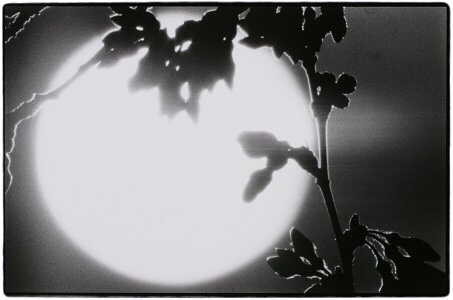
Yamazaki got his first big recognition in 1983 for a series of time-exposed photographs of the sun over the sea, one of the themes that he has been pursuing and investigating throughout his entire career, and a theme very present in all the works screened at the event.

Eighteen works were screened, some in their original format (8mm, 16mm), some others digitally, and they were divided into two sections. The last film screened, The Seas of Yamazki Hiroshi, was an homage to Yamazaki as an artist, friend and peer by photographer Hagiwara Sakumi. Planned and organised by the festival as a special screening to honour and remember an important Japanese photographer and filmmaker, it was for me a special occasion to experience, in one sitting, the attempts and experiments of an artist I didn’t know in a new medium. Here the works screened:

FIX YAMAZAKI Hiroshi / 16mm / 5min. / 1972 / Japan
FIXED-NIGHT YAMAZAKI Hiroshi / 16mm / 6min. / 1972 / Japan
FIXED STAR YAMAZAKI Hiroshi / 16mm / 7min. / 1973 / Japan
A STORY YAMAZAKI Hiroshi / 16mm / 6min. / 1973 / Japan
60 YAMAZAKI Hiroshi / 16mm / 1 min. / 1973 / Japan
NOON YAMAZAKI Hiroshi / 16mm / 3min. / 1976 / Japan
Observation YAMAZAKI Hiroshi / 16mm / 10min. / 1975 / Japan
epilogue YAMAZAKI Hiroshi / 16mm / 1 min. / 1976 / Japan
MOTION YAMAZAKI Hiroshi / 16mm / 10min. / 1980 / Japan
GEOGRAPHY YAMAZAKI Hiroshi / 16mm / 7min. / 1981 / Japan
[kei] 1991 YAMAZAKI Hiroshi / video / 13min. / 1991 / Japan

VISION TAKE 1 YAMAZAKI Hiroshi / 8mm / 3min. / 1973 / Japan
VISION TAKE 3 YAMAZAKI Hiroshi / 16mm / 3min. / 1978 / Japan
HELIOGRAPHY YAMAZAKI Hiroshi / 16mm / 6min. / 1979 / Japan
WALKING WORKS YAMAZAKI Hiroshi / 16mm / 5min. / 1983 / Japan
3・・・ YAMAZAKI Hiroshi / 16mm / 5min. / 1984 / Japan
WINDS YAMAZAKI Hiroshi / 16mm / 6min. / 1985 / Japan
Sakura YAMAZAKI Hiroshi / video / 19min. / 1989 / Japan
The Seas of YAMAZAKI Hiroshi HAGIWARA Sakumi / digital / 20min. / 2018 / Japan.

Among these works, three stood out for me. Observation (1975) is a ten-minute film, shot in 16mm, in which he created the illusion of twenty-eight suns arching over the sky in his neighborhood, and Sakura/Flowers in Space, shot on video in 1989, is a reflection on film of the ideas he captured in a series of photos towards the end of his career. Cherry blossoms are here depicted against the Sun, thus losing all the color and beauty they are usually associated with, and mutating instead into black shapeless figure of almost phantasmatic solitude.

But the absolute highlight was Heliography, a continuation but also a variation of what Yamazaki had being doing for more than 10 years with his photos, resulting in one of his most well known series, Heliography, released in 1974. In this series of photos of stunning visual impact Yamazaki subtracts all the unnecessary elements that usually are linked to a beautiful costal landscape, focusing primarily on the sun and the sea, captured here through very long exposures.
Seeing Heliography was for me almost a transcendental experience, and for a variety of different reasons. First of all because it came after an hour of seeing his short experiments in 8mm and 16mm, most of them interesting from a photographic point of view and in tracing a path in his oeuvre, but almost forgettable as stand alone works. Heliography arrived also as a natural progression of his experiments on film, but at the same time as a deviation and something completely new as well. It is visually and conceptually one of the most compelling films I have seen this year, six minutes of pure bliss. Like in La Région centrale, the oblique images of the Sun over the sea and the eye of the camera fixed and fixated on the star with everything else moving around, unanchor the viewers from the Earth, liberating and disengaging the vision from the human eye and re-centering it around the drifting Sun in what becomes in the end an astral landscape.

To add one more layer to the experience, I really believe that had I watched all the works at home on a TV, non matter how big, Heliography would not have retained the same majestic power, I know I’m stating the obvious here for most cinephiles, but certain type of experimental cinema should be absolutely seen in theater.

Image Forum Festival 2018 イメージフォーラムフェスティバル 2018

The 32nd Image Forum Festival ended last Sunday in Tokyo. The nine-day-long event, hosted at two different locations in the Japanese capital, the Theatre Image Forum and the Spiral Hall, screened in total more than 80 films, including 23 in the East Asian Experimental Film Competition, the main section. Established in its present form in 1987, the festival succeeded and replaced an experimental film festival that was held, in various phases and different shapes, in the capital from 1973 to 1986.

To this day the festival continue to embody the mission and the legacy of its predecessors. Primarily dedicated to experimental cinema and video, the event provides a special opportunity for the viewers to experience on a big screen a mix of feature films, home cinema, documentary and experimental animation.
After Tokyo, the festival will move to Kyoto, Yokohama and Nagoya, with slightly different contents, there will be special sections dedicated to artists of each city. This is a right and welcomed decision, since too often Tokyo ends up cannibalizing the cultural and artistic events taking place in the archipelago.

This slideshow requires JavaScript.

This year’s special retrospectives were dedicated to the provocative films of Christoph Schlingensief, German director who expanded his works beyond cinema to touch theater, television and public happenings, Kurt Kren, Austrian artist associated with Viennese Actionism, but also author of structural films, and the experiments on celluloid by Japanese photographer Yamazaki Hiroshi. I wasn’t aware of the films of Schlingensief, and I have to say that it was at the same time a discovery and a delusion. While I really liked 100 Years of Adolf Hitler (1989), claustrophobic and parodic reconstruction of the last hours of the dictator and comrades in his bunker, I couldn’t digest the other two movies of the so called German Trilogy. German Chainsaw Massacre (1990) and especially Terror 2000 (1992) are too much of a mess and stylistically all over the place , and probably too bound to the events of the time, the Fall of the Berlin Wall and the consequent unification of the two Germanies, for me to decipher them.

Unfortunately I wasn’t able to check the works of Yamazaki, but I’m planning to see them at the end of September, when the festival will come to Nagoya. As with his conceptual photos, the shorts made during his entire life explore the relationship between time and light, a topic I’m very attracted to.
I also missed the screening of Caniba (2017) by Lucien Castaing-Taylor and Véréna Paravel, about the “cannibal” Sagawa Issei, if I’m not wrong, this was the Japanese premiere of the film, and the special focus Experimenta India, a collection of visual art from the Asian country.
Interesting was to catch Matangi/Maya/M.I.A. (Steve Loveridge, 2018), about the famous ex-refugee of Tamil origin, now a pop icon and singer, an artist I was completely unaware of. The documentary is based on more than 20 years of footage filmed by herself and her friends in Sr Lanka and London. While I didn’t connect with the first part of the movie, too self-indulgent for my taste, the film gets much better in the last 30-40 minutes when, albeit briefly, touches on complex and fascinating topics such as immigration and art, fame, and social awareness in the show business.

The East Asia Experimental competition was pretty solid, besides several short films coming from a variety of areas like South Korea, China, Hong Kong, Taiwan and naturally Japan, two were the long documentaries screened. A Yangtze Landscape (Xu Xin, 2017), a visual exploration of the social and geographical landscape along the longest river in Asia (you can read my review here), and Slow Motion, Stop Motion (Kurihara Mie, 2018) a movie that positively surprised me and won both the Grand Prize and the Audience Award. A review is coming soon, stay tuned.

Ogawa Production retrospective at Cinéma du réel (March 23-April 28)

This year Cinéma du réel, one of the most prestigious documentary film festivals, will kick off its 40th edition this coming Friday, among the more anticipated events of the Parisian festival there will be a special focus on Ogawa Shinsuke and Ogawa Production, a huge retrospective dedicated to the documentary collective that from the 1960s onward changed and impacted the landscape of non-fiction cinema in Japan and Asia. Part of the events celebrating and reflecting on the civil unrest and protests that shook the world in 1968, from March 23rd to April 28th, the festival and the city of Paris will showcase seven movies made by the group in the 1960s:

Sea of Youth – Four Correspondence Course Students (1966)

Forest of Oppression – A Record of the Struggle at Takasaki City University of Economics (1967)

Report from Haneda (1967)

The Battle Front for the Liberation of Japan – Summer in Sanrizuka (1968)

Prehistory of the Partisans (1969, directed by Tsuchimoto Noriaki)

At the end of Cinéma du réel, the retrospective will then move to the Galerie nationale du Jeu de Paume where will continue its focus on the Sanrizuka Series, movies documenting the struggle and resistance of the peasants and the students, united against the land expropriation perpetrated by the government in order to build Narita airport. The retrospective will last until April 27th presenting also the movies made by Ogawa Pro in its third phase, when the group moved to Magino village in Yamagata prefecture. The collective disbanded in 1992 with the untimely death of its founder Ogawa Shinsuke, a passing that also revealed the dark side of such a unique cinematic endeavor, Ogawa himself left a huge debt made during the years to support the collective and their films.

One member of the collective, Iizuka Toshio, will be in Paris to introduce the Magino films, and discuss his own movies and his relationship with Ogawa Shinsuke and the group. Curated by Ricardo Matos Cabo, whom I had the pleasure of meeting last October in Yamagata, the retrospective will also include other documentaries about the group, Devotion: A Film About Ogawa Productions (2000) by Barbara Hammer, A Visit to Ogawa Productions (1981) with Oshima Nagisa, Filmmaking and the Way to the Village (1973) by Fukuda Katsuhiko, and Kashima Paradise (1973) a French documentary about the struggle in Narita. An important part of the event will be the presence of scholar Abè Markus Nornes who will give a master class on Ogawa and lectures on militant film in Japan and Sanrizuka: Heta Village (1973).

If you’re in Paris, don’t miss this opportunity, experiencing Ogawa Pro’s documentaries on a big screen, in the proper contest and with proper introductions, is one of the best cinematic experiences I had in my life. Here the schedule of the screenings and lectures at Jeu de Paume :

April 3 (Tue), 18:30 Sanrizuka – Heta Village (1973)

April 4 (Wed), 18:00 Winter in Sanrizuka (1970)

April 6 (Fri) 16:30 Sanrizuka — the Three Day War (1970)
18:00 Sanrizuka – Peasants of the Second Fortress (1971)

April 7 (Sat) 11:30 Sanrizuka – The Construction of Iwayama Tower (1971)
14:30 Sanrizuka – Heta Village (1973)
18:00  Filmmaking and the Way to the Village (1973)

April 10 (Tue) 18:30 Dokkoi! Songs from the Bottom (1975)

April 17 (Tue) 16:00 Devotion: A Film About Ogawa Productions (2000)
18:00 The Magino Village Story – Pass (1977)
The Magino Village Story – Raising Silkworms (1977)

April 20 (Fri) 18:00 « Nippon » : Furuyashiki Village (1982)

April 21 (Sat) 11:30 Encounter with Toshio Iizuka
14:30 The Sundial Carved with a Thousand Years of Notches – The Magino Village Tale (1986)

April 24 (Tue) 19:00 The Magino Village Story – Pass (1977)
A Visit to Ogawa Productions (1981, directed by Oshige Jun’ichiro)

April 28 (Sat) 14:30 Kashima Paradise (1973, directed by Yann
Le Masson and Bénie Deswarte)
17:00 Sanrizuka – The Construction of Iwayama Tower (1971)

2017: Kinema Junpo Best 10 – documentary

Awaited every year with trepidation by cinephiles and the community of Japanese film-lovers, and a perfect occasion for discussing the state of the art in the archipelago and agree or disagree with it, last month the prestigious film magazine Kinema Junpo announced its 2017 Best Ten Lists . Launched in 1924 with only non-Japanese films, and from 1926 including Japanese movies as well, the poll includes, in its present form, four categories: Japanese movies, non-Japanese movies, bunka eiga and a section awarding individual prizes such as best director, best actor, best actress, best screenplay, etc.
You can check the results for all the categories here. Given the nature of this space, I want to focus my attention (with the slowness that characterizes this blog, apologies) on the bunka eiga list, that is to say, the best 10 Japanese documentaries released in 2017 according to Kinema Junpo (as far as I know only three have been released outside of Japan and thus have international titles):

1 人生フルーツ Life is Fruity

2 標的の島 風(かじ)かたか The Targeted Island: A Shield Against Storms

3 やさしくなあに 奈緒ちゃんと家族の35年

4 ウォーナーの謎のリスト

5 谺雄二 ハンセン病とともに生きる

6 沈黙 立ち上がる慰安婦 The Silence

7 米軍が最も恐れた男 その名は、カメジロー

8 笑う101歳×2 笹本恒子 むのたけじ

9 まなぶ 通信制中学 60年の空白を越えて

10 廻り神楽

With the term bunka eiga (cultural film), for a comprehensive analysis of the word and its usage in relation with other definitions, read here, the magazine awards non-fiction movies that explore social, cultural and political themes, often focusing more on the subjects tackled than on the formal aspects of the films themselves.
It is almost a fact that we’re living in a new golden age for documentaries, an era when every year, in theaters or on streaming platforms alike, there’s at least one film that push the boundaries of non-fiction cinema towards new territories. Unfortunately Japan, with all the exceptions of the case, seems to have stayed or have left behind. This is not the right place to discuss and deep dive into the reasons for this impasse, suffice to say that it is a problem affecting Japanese cinema in general and not only nonfiction movies.

That being said, it is nice to see at the top of the list Life is Fruity, a movie directed by Fushihara Kenshi and produced by Tokai TV, a production company based in Nagoya that in the last twenty years or so has been releasing a bunch of interesting and insightful documentaries. Again, all of them have quasi-TV aesthetics, nonetheless the topics explored and, in the best cases, the touch used, make them worth watching. Of the 21 documentaries produced by Tokai TV I’ve had the chance to watch five, among these my favorite is 青空どろぼう (Sky’s Thieves, 2010), a movie on the Yokkaichi Asthma, one of Japan’s four major diseases caused by pollution.
Life is Fruity tells the story of 90-years-old architect Shuichi Tsubata and his wife Hideko living in Aichi prefecture in a house surrounded by vegetables and fruits. Almost half a century ago Tsubata was asked to plan a new town in the area, but his idea of building houses that could coexist with woods and blend with the natural environment was rejected, and a project more in tune with the fast growing Japanese economy of the time was chosen. Tsubata left his job, purchased a piece of land and built his dream-house in a manner of his master,  Czech-American architect Antonin Raymond.

You can see an English subtitled trailer by clicking on the Vimeo button:

Number two in the list is A targeted Village, the second documentary directed by Mikami Chie about the ongoing protests and resistance of Okinawa people against the American military presence and expansion in the island.
In 1983 director Ise Shinichi started to record the daily life of his 8-year-old niece Nao, a girl with intellectual disability who also suffers epilepsy, and her interaction with her family and society. After 12 years of shooting he edited the material into Nao-chan, a movie released in theaters in 1995, followed by 「ぴぐれっと」in 2002 and ありがとう 『奈緒ちゃん』自立への25 in 2006. やさしくなあに 奈緒ちゃんと家族の35年, number 3 in the Kinema Junpo list, is the fourth installment in this ongoing series and documents the ups and downs in the daily life of Nao and his family. I haven’t seen the movie yet, but it seems to perfectly continue the tradition of Japanese documentaries dealing with disability, from Tsuchimoto Noriaki to Yanagisawa Hisao (a retrospective of his works is happening now in Tokyo) and, in more recent years, Soda Kazuhiro with Mental.

Nao_chan.jpg

ウォーナーの謎のリスト is a documentary about American archeologist Langdon Warner and his list of culturally valuable Japanese sites that, allegedly, saved the most important temples and monuments from destruction during the American bombing of Japan in World War II. 谺雄二 ハンセン病とともに生きる tells the story of poet, activist and writer Kodama Yōji, who suffered from leprosy and fought against isolation and discrimination during his entire life, while with The Silence, second generation Japanese-Korean Park Soonam, records the struggle carried on by the victims of sexual slavery during the invasion of Korea by imperial Japan. In 米軍が最も恐れた男 その名は、カメジロー, his debut behind the camera, newscaster Sako Tadahiko explores the life of Senaga Kamejirō, an outspoken politician and communist who fought the American occupation of Okinawa until his death in 2001.
The list does not represent Japanese documentary landscape in its variety and complexity of course, by design the more experimental works are ruled out, nonetheless besides few titles, the films here selected don’t seem to hold any particular appeal to an international audience, again at the risk of becoming trite, it’s not because of the themes explored, but more because of what to me appears to be the lack of a distinctive style and vision.