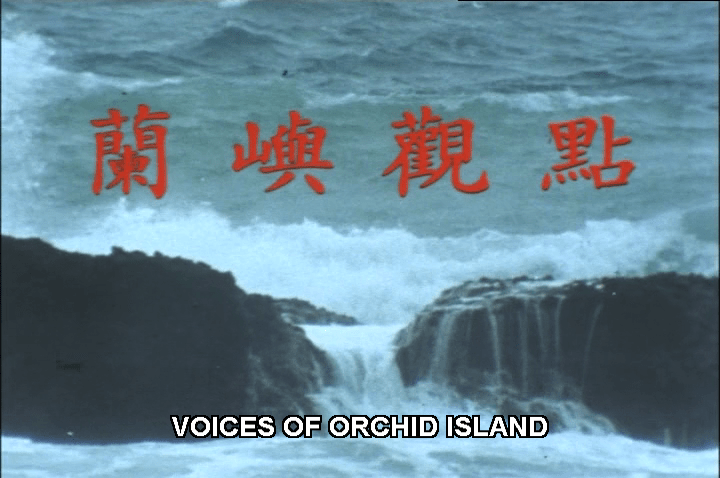
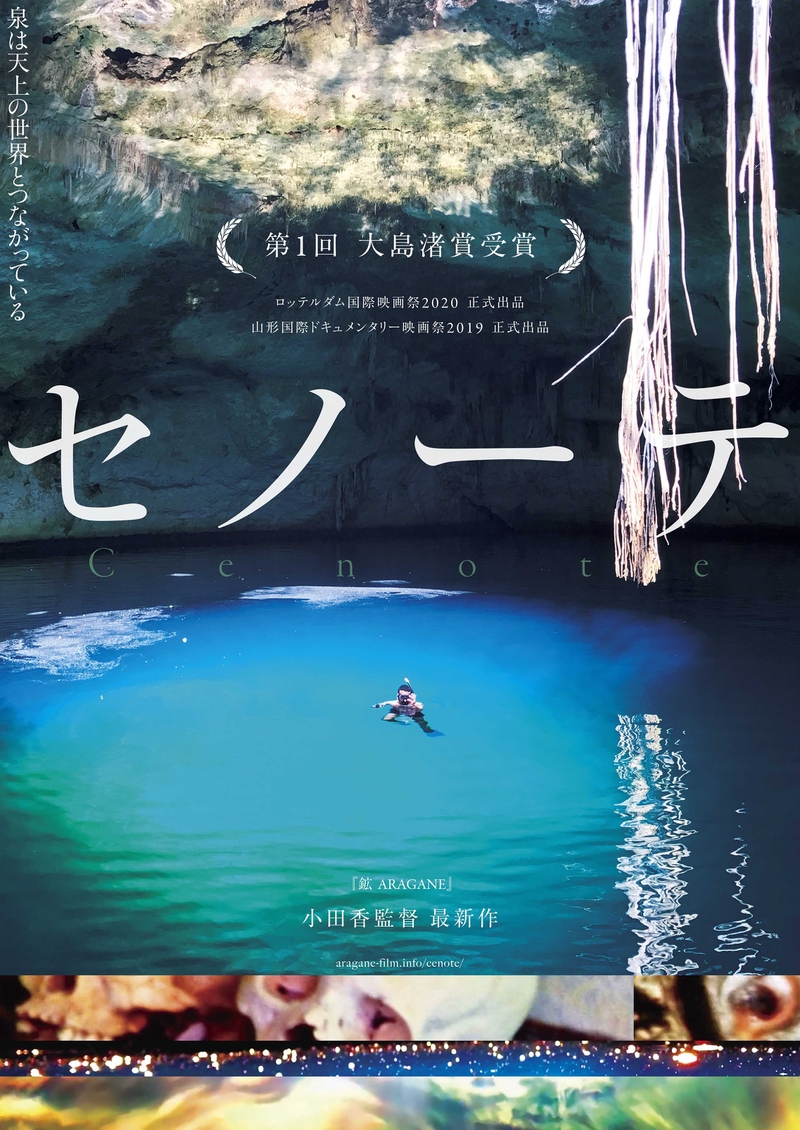
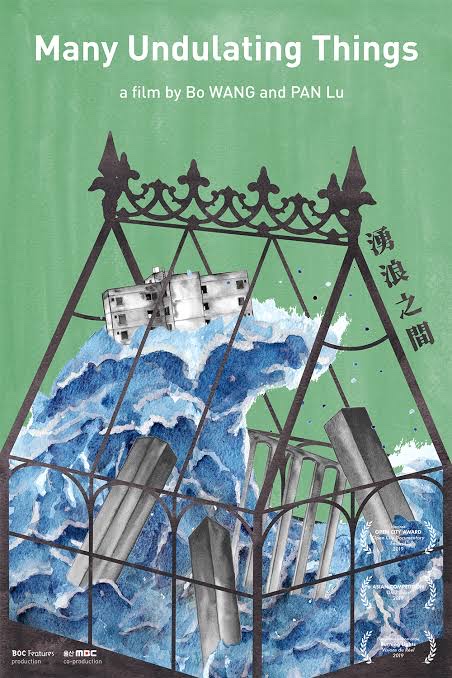
Slow Motion, Stop Motion スローモーション、ストップモーション (Kurihara Mie, 2018)

Slow Motion, Stop Motion スローモーション、ストップモーション by Kurihara Mie was awarded with the Grand Prize and the Audience Award at the 32nd edition of the Image Forum Festival. Shot in Laos, Myanmar and Thailand in the course of 4 years, as far as I know the director usually stays in the regions for at least a couple of months a year, the movie is a funny and poetic telling, through the mode of the personal documentary, of her experiences and encounters in those countries. On the surface thus Slow Motion, Stop Motion is a diary film and a record of her meetings and interactions with the people she meets and befriends, but on a different level it’s also a glimpse into their life and daily struggle to survive. Avoiding shots of turistic places, beautiful postcard-like landscapes, and disengaging completely from a moralistic and exploitative use of the poorest areas of the countries, the film excels in creating a vivid and vital potrait of the people Kurihara meets. The images captured by the Japanese, but often she gives the camera to children and other people to freely film whatever and however they want, feel thus very authentic. Moreover the home movie-quality that permeates the entire work is functional to what seems to be one of Kurihara goals, that is capturing glances of ordinary life in South East Asia.

An important element of the film is the narration. Done by Kurihara herself it’s infused with a dry sense of humor, the words spoke n not only are funny and represent a commentary a posteriori on what is depicted on screen, but they often reflect and indirectly criticize the act of filming itself and the fetishism towards technology that visual artists very often succumb to. In one of the funniest parts, the director buys a cheap version of a Go-pro and tries to film underwater scenes and pigeons, there were no seagulls on the beach, like in the beloved Leviathan by Lucien Castaing-Taylor and Verena Paravel.

The humorous parts are intertwined with few poetic and melancholic scenes, when Kurihara reflects on the sad mood that permeated the day of her departure for instance, or in a long scene without comment or narration, almost ethnographic in style, where an old man kills, plucks, cleans and cooks a rooster for his family.

The film has neither the stylish and polished aesthetics so in demand in the current international festival circuit, nor the political and activist approach that often drives people to documentaries. I really hope that despite the lack of these qualities the movie won’t fall under the radar, because as a hybrid experiment that uses the diary and personal documentary style as a point of departure, it subtly touches very crucial themes such as post-colonial representation and representation of marginal areas in contemporary visual culture.

Asia is One アジアはひとつ (NDU, 1973) edited

I’m reposting an edited version of my piece on NDU’s Asia is One, an article I wrote two years ago.

NDU (Nihon Documentary Union) was a Japanese collective founded in 1968 by a group of Waseda University students who would eventually drop out to dedicate their lives to filmmaking and political struggle. From 1968 to 1973, when the group disbanded, this group of activists, who saw themselves first and foremost as a collective of activists, made four documentaries, moving from the streets of Tokyo – the first work was Onikko – A Record of the Struggle of Youth Labourers – to the distant islands of Micronesia, passing through Okinawa, the archipelago where they made two of their most important documentaries.

Motoshinkakarannu (1971) was made in and about Okinawa, before the archipelago was ‘returned’ to Japan. The group went to the island in 1971 and captured on film a society in transition. The film shows and focuses on the fringes of society, with illegal prostitution and life in the red districts, while also highlighting the historical and social fractures that have run through the area: anti-establishment and anti-American riots, the Black Panthers’ visit to Okinawa, water pollution and much more. I voted Motoshinkakarannu one of my favourite Japanese documentaries in a poll I organised a year ago, but today I’d like to turn my attention to the second film made by the collective in Okinawa (and beyond): Asia is One アジアはひとつ (1973, 16mm, 96′), a work that I hadn’t seen at the time of the poll and that would have certainly made my list along with Motoshinkakarannu.

Asia is One was screened on June 26th at Kyoto Kambaikan, as part of the AAS in Asia, and it was screen with English subtitles for the first time, the movie was shelved for many many years, forgotten, and was (re)discovered only in 2005 when was screened at the Yamagata International Documentary Film Festival. The screening in Kyoto was followed by a fascinating Q&A with the only surviving member of NDU, Inoue Osamu. Nunokawa Tetsurō, who after the dismantling of the collective made other interesting solo documentaries in Palestine and US, passed away in 2012. As described by Roland Domenig (1), with Asia is One

NDU further explored the margins of Okinawan society and continued to break through borders by focusing on the Taiwanese minority. The film portrays Taiwanese migrant workers on the main island of Okinawa who substitute the Okinawa laborers who in turn are employed as migrant workers on Japan’s main islands. It traces the history of Taiwanese coal miners on Iriomote Island, follows legal and illegal workers to the westernmost island of Yonaguni and finally lands in Taiwan in a village of he Atayal tribe of Taiwanese aborigines, where still the Japanese naval anthem is played every noon.

Formally the documentary is composed of landscapes and interviews, all of them out of sync, possibly due to the equipment used or maybe the lack of it. The uncanny space created by this displacement, but also by the use of music from radio broadcasts and kids voices, thrown here and there during the movie, gives the work a peculiar aesthetic tone, a type of non-fiction cinema that I like to call “chaos cinema”. (2)
To explain and understand the “chaotic” trait of Asia is One, and Motoshinkakarannu as well, we have to delve deeper in the philosophy that laid at the core of NDU’s approach. What the collective has tried to convey through their cinema is extremely fascinating, in their writings (3), mainly published in the magazine Eiga Hihyo, the group was explicitly pushing towards a cinema/activism of anonymity, trying to reach an “impersonal space” and rejecting even the term “work” (sakuhin) because it was seen as the product of a single person in command and as a result of a dominating power structure. In this regard famous was their criticism of Ogawa Production, a collective that bore the name of a single person and that was basically structured hierarchically (4). To this kind of collectivism NDU tried to oppose a more fluid idea of group activism, where the structure was a flat and horizontal one, and in doing so, promoting a cinema made by amateurs (5) and not by professionals. “Everybody can push the button and shoot with a 16mm camera” said Inoue, and this is even more true today since the advent of the digital revolution. Whether this approach was successful or not, and more importantly, whether this horizontal structure and “amateur cinema” is possible at all, are questions without answers that are haunting scholars to this day.
Going back to Asia is One, the part of the movie the resonated more with me was the last one, when the film moves to the Atayal village in Taiwan. There’s a quality in the close-ups of the tribe people, beautiful and ancient faces, that is extremely fascinating, also because it is in these scenes that the political discourse on identity, or the negation of it, reach its peak. From the 17th Century onward The Atayal people, like the rest of the tribes inhabiting the island, were forced to face the colonization of the Dutch first, the Spanish and the Chinese later, and eventually that of the Japanese Empire (1895 – 1945), which called them “barbarians” and tried to assimilate and annihilate their culture (6). That being said, the words spoken by the member of the tribe provide more context and add layers of complexity to the situation. “Japan conquered us and abolished many of our ancient traditions and customs”, but at the same time “we were drafted and went to war with pride and ready to die” and also “luckily the Japanese abolished some of our ancestral traditions like beheading”. Asia is One ends with the militaristic song If I Go to Sea against an everyday scene with the aboriginal Taiwanese people isolated in the mountains singing “We want to go to war again.”

Of course there is oppression and violence, physical and cultural, in every colonization, but things here are deeper than what they seem. In the process of cultural and historical coring that the movie conveys with its images and words, from Okinawa to Taiwan, I believe that two significant elements emerge. The first is the crisis of the identity concept, often a forced cultural and national superstructure imposed by the stronger and more powerful part on a “highly fluid space of human life” (6), as Inoue explained “identity was one of the most hated words inside the NDU, identity is a choking concept”. The second point that struck me is the recurrence of a power and social structure that exploits the margins, the outsiders and the weakest people. In mainland Okinawa the illegal prostitutes and worst jobs are done by people from Miyako island, and in Miyako and other small islands the lower part of society is occupied by Koreans, Taiwanese and aboriginal people. This perpetuating exploitation is possible only as long as a certain part of society is described as different and inferior, and only when and where the concept of border is a monolitic divide used to create the “other”, the “foreigner” and the “stranger”. NDU’s documentaries are an antidote against all this poisonous discourse, and an invitation to break through the borders, those in the world outside us, but also those inside ourselves.
A final note on the title, the movie as a product of a collective that was thriving towards anonymity, has not film credits, nor it had originally a title, Asia is One was attached to it only later, and it’s a kind of a joke because as Inoue himself said “we all know that Asia is not one!”

notes:

1 Faraway, yet so close by Roland Domenig, in The Legendary Filmmaking Collective NDU and Nunokawa Tetsurō ed. Yasui Yoshio, Tanaka Noriko, Kobe Documentary Film Festival Committee, 2012.

2 This might not be the best way to describe the movie, but aesthetically it reminded me, maybe because of the out of sync, of Imamura Shōhei’s documentaries shot in South East Asia during the 70s.

3 Some of the writings are translated in The Legendary Filmmaking Collective NDU and Nunokawa Tetsurō, op. cit.

4 You can find more in Forest of Pressure: Ogawa Shinsuke and Postwar Japanese Documentary, Abé Markus Nornes, Visible Evidence 2007.

5 Some interesting insights on amateurism in cinema can be found in The Flash of Capital: Film and Geopolitics in Japan, Eric Cazdyn, Duke University Press 2002.

6 In 1930 the village was the site of an anti-Japanese uprising, the so called Musha Incident, an event portrayed in Warriors of the Rainbow: Seediq Bale (Wei Te-Sheng, 2011)

7 Nunokawa Tetsurō in YIDFF 2005 Special Program, Borders Within – What it means to live in Japan.

MATA-The island’s Gaze (2017, Cheng Li-Ming)

Taiwan experimental-documentary scene, whatever meaning you want to attach to the term, is one of the most intriguing and vibrant in contemporary cinema, particularly when the themes tackled are going deep into decolonisation, negotiating identity, and the complex history of the island. I’ve written on the subject here, here and here, and a longer and deeper analysis is coming soon.

In MATA-The island’s Gaze filmmaker Cheng Li-Ming focuses his attention on the gaze of Scottish photographer John Thomson, who visited Taiwan in 1871, and his relationship with some members of the Siraya tribe – one of the several that inhabited Taiwan before the arrival of the Dutch and the Han— originally settled in the southern part of the island, near Tainan. Here the synopsis:

Scottish photographer John Thomson’s trip to Taiwan in 1871 is an important historical event. In this film we selected a hunter photo to re-interpret that event and visit the Siraya tribe to find an Elder, who talks and sings well, bringing us back to the past through his plucking of strings.

Then we saw the vigorous hunters holding their breath, staying very still in front of that weird machine for a long time, with a boy and a dog squatted at their feet. The director grabbed the view of this moment and invites the audience to watch with curious eyes.

On both sides of the river of time, he repeatedly speculates and watches the past, the future, and the influence of images on this island.

Elliptical in its constructon, the work is centered around the concept of gazing: the mechanical gaze of the camera of the outsider/colonizer on the one hand, and that of the two Siraya people captured in a photo by the Scottish himself, on the other. As the director himself explains “I created a pair of characters out of a photo with a boy and a dog squatted at the corner, through their curious stare at the vigorous tribal hunters and their encounter with the ‘image hunter’, witnessing a duel of old and new world”.

Words of a descendant of the Siraya and his reflections on language and the importance of words in creating a common history and reality are intertwined with an imaginative reconstruction of the encounter between the photographer and the two hunters. Here again the director’s own words:

This film is a sequel to “Looking for Siraya”, and this time starts with a photo of hunters holding shotguns to continue the act of taking back our souls. The stereo camera that John Thomson carried happened to inspire me creating a stereo composition. Through dramatic imitation of John Thomson’s journey as well as recording of Siraya who stays beautifully in primary image in photos yet actually is fading at present, we try to imagine how our Formosa’s “Mata(s)” treat this “mechanical eye” that intruded into the island.

You can watch MATA-The island’s Gaze on Vimeo:

MATA-The island’s Gaze from Li-Ming Cheng on Vimeo.

Inland Sea 港町 (Sōda Kazuhiro, 2018)

Screen at this year edition of the Berlinale (Forum), Inland Sea is the latest documentary by one of the most interesting and original voice working in Japanese non-fiction today, Sōda Kazuhiro.  Based in New York, Soda in the last 10 years or so has built an impressive body of work, Inland Sea is the seventh documentary in his ongoing observational series, among my favorite Theatre 1 and 2, a diptych about playwright Oriza Hirata and his theatrical company, and Oyster Factory, a documentary premiered at the Locarno International Film Festival in 2015. Inland Sea was filmed soon after Oyster Factory, in fact the town is the same, Ushimado, a small village facing the Seto Inland Sea in Okayama prefecture. While in the previous film Soda focused his gaze on a small oyster factory and the problems of surviving in a globalized world (you can read more here), in Inland Sea he follows three elderly people living in the village and their daily activities. Here the synopsis:

Wai-chan is one of the last remaining fishermen in Ushimado, a small village in Seto Inland Sea, Japan. At the age of 86, he still fishes alone on a small boat to make a living, dreaming about his retirement. Kumi-san is an 84 year old villager who wanders around the shore everyday. She believes a social welfare facility “stole” her disabled son to receive subsidy from the government. A “late – stage elderly” Koso-san runs a small seafood store left by her deceased husband. She sells fish to local villagers and provides leftovers to stray cats. Foresaken by the modernization of post-war Japan, the town Ushimado’s rich, ancient culture and tight-knit community are on on the verge of disappearing.

While, as mentioned above, the film is part of his observational series, from the very first scene is clear how Soda with his camera and his voice is an important and catalytic presence in the relational texture that is Inland Sea. As Nichols would put it, while Sōda is filming and representing a certain reality, the documentary and the act of filming itself becomes also an important part of that reality. More than in his other works, his voice and that of his wife and their presence is here a fundamental part of the movie, often the people filmed converse with Sōda and we, as spectators, are always aware of the relationship between the camera and its environment. Naturally all documentaries are works of fiction, to one degree or another, but to my eyes acknowledging the presence of the camera and its effects in a documentary shot in an observational style, is one of the main qualities of the movie. It’s a honest and ethic filmic approach that I really value as important, especially in the contemporary documentary landscape, an approach that stems also from the style and methodology adopted by Sōda:

I spontaneously roll my camera, watching and listening closely to the reality in front of me, banning myself from doing research or prescribing themes or writing a script before shooting. I impose certain rules (‘The Ten Commandments’) on myself to avoid preconceptions and to discover something beyond my expectation.

The movie is shot in its entirety in black and white, the only case in Sōda’s filmography, just the very last scene, a boat floating, is in colour. I haven’t read so much about the movie, I wanted to experience it without preconceptions, so I don’t know the reason behind not shooting in colour, but certainly this choice gives a very distinctive elegiac tone to the movie, and a flavour of obsolescence and marginality to the places and the people depicted in it. Compared to Sōda ’s previous movies there is, at least in the first hour or so —  the last 30 minutes are basically a very long and touching monologue of one of the old ladies, Kumi-chan — less talking and more insistence on the daily routine of Wai-chan and Koso-san, long periods of time are spent with the old man on the boat, fishing, and with the old lady, selling the fish.

By focusing on a place on a relatively far corner of Japan, far away from the metropolitan excitement that too often is associated with Japan, a place not yet forgotten, but on the edge of disappearing, and where the population is shrinking — the akiya (empty houses) seen in a sequence are becoming part of the present and near future of the archipelago — Sōda is also hinting, consciously or not, to one of the crucial issues of contemporary Japan and its geopolitical construction as a nation. That is, the parasitic relationship between sprawling urban centers and countryside, often forgotten, exploited (as highlighted by the situation in Fukushima or the Rokkasho Reprocessing Plant), or reduced to the folkloric image and touristic destination of Japan National Railway’s posters. In a post on his blog last year commenting on the Ogawa Pro’s Sanrizuka series, Soda wrote that, I’m paraphrasing, the struggle and resistance to the construction of the airport, because of the thick dialect spoken by the farmers at the time, almost incomprehensible to a person born and raised in Tokyo, felt like an act of exploitation perpetrated by the central state towards its colonies.

Another aspect of Sōda’s style that really stands out in Inland Sea and a direct consequence of his methodological approach, is the absence of any explanation on the historical background and context of the subject filmed. His films do not offer any extra information about the people he meets and the places he shoots, but the camera and his documentaries are, in a certain way, an extension of his gaze. It is up to us the viewers to decipher and image what stories lie behind the landscapes and the people captured on screen, for instance we don’t know if the stories told by the very talkative Kumi-san, to whom the movie in dedicated (she passed away in 2015),  are completely true or to what degree they’re even truthful, yet this is life and it is here presented in all its complexity, sadness and beauty.

https://player.vimeo.com/video/250935060

Inland Sea – Trailer from Laboratory X on Vimeo.

Record of Blood: Sunagawa 流血の記録・砂川 (Kamei Fumio, 1956)

Before the battle of Sanrizuka to halt the building of Narita airport, and before the massive revolts of 1968-69, there was Sunagawa and the resistance against the expansion of the American base in Tachikawa (Tokyo). In the third installment dedicated to the struggle, Kamei Fumio, the grandfather of Japanese documentary, captures the clashes and fights of the farmers, labor unions and students groups (Zengakuren among others) with the police. The always useful YIDFF, a festival that held a huge Kamei retrospective in 2001, gives us more background:

This is the third film in the Sunagawa series following The People of Sunagawa (1955) and Wheat Will Never Die(1955). Making use of the second film in the series, it explains the progress made during last year’s struggle and then documents the state of this year’s efforts. On October 12, 1956, 53 surveyors and 1,300 armed police rushed the gathered union and Zen Gaku Ren (the All Japan Federation of Self-Governing Students Associations) members who then formed a scrum to protect themselves. 278 people from both sides were injured. On the 13th, at the protest’s peak, 5,000 workers and Zen Gaku Ren members had been mobilized when the police attacked the demonstrators’ picket lines. 844 protesters and 80 police were injured. Public opinion erupted against the the violence of the armed police and the government’s lack of a policy, and on the 14th, the radio suddenly announced that the government would stop its survey. Sunagawa overflowed with joy and excitement, and a victory demo was held. On the 15th, a National People’s Rally was held to celebrate the victory of Sunagawa’s fight against the base, and protesters who had sustained grave injuries came from the hospital to address the meeting.

Stylistically the movie has many of the elements that would be used by Ogawa and his group in their Narita/Sanrizuka series: hand-held camera scenes of pure chaos shot in the midst of the fights, but also moments of peace when traditional songs are sung and meals are communally eaten by farmers, students and labor union members.
Here is a short but impactful scene of one of the first clashes between the protesters and the police in the Autumn of 1956:

It is interesting to notice that two points of view are here used to depict the situation: one that shows the fight from the outside, from a certain distance that is, and the other where the camera is engulfed by the bodies of the participants and is actively part of them. The gaze of the movie is without any doubts on the side of the inhabitants of Sunagawa, an aesthetic statement that reflects and results from the choice by the cameraman and the crew to live together with the farmers and students for several months.

Here, like in many other of his documentaries, Kamei also uses narration, but the voice explaining the timeline of the facts and commenting on what is going on on screen, sometimes with emphasis, is that of a female. In the film and in the struggle, Women, mainly middle-aged or old farmers, are always on the front-line and a vital part of the resistance, like in the documentaries about Sanrizuka (although infamously they were not an active part of the Ogawa collective itself).

It is also worth noting how the Sunagawa struggle is one of the few battles against the state/power in Japan that in the end was won by the people. If it is true that in 1959 the Supreme Court overturned the previous decision of the Tokyo District Court that found all the U.S. bases on Japanese land unconstitutional, in 1968 the plan for the extension of the base was cancelled, and finally in 1977 the base was given back to Japan. As pointed out by Dustin Wright “Without the farmers of Sunagawa, the Anpo (Japan-U.S. security treaty) protests of 1960 would have been something else entirely”, equally I think it is not too far fetched to say that without Kamei Fumio and his works on the Sunagawa struggle, the Sanrizuka/Narita series and consequently the post-war Japanese documentary landscape would have been something completely different.

Record of Blood: Sunagawa is available on DVD in Japan (no English subtitles) as a part of this box set released by Iwanami Shoten.

On Kamei’s Fighting Soldiers (戦ふ兵隊 1939)

Record of a Marathon Runner あるマラソンランナーの記録 (Kuroki Kazuo, 1964)

The Winter Olympics in Pyeongchang, the next edition of the Summer Olympics in Tokyo on the horizon, and the massive 100 Years of Olympic Films box set released last year by the Criterion Collection, revived and rekindled my interest in sport documentaries. I decided to revisit one of my favourite non-fiction films dedicated to sport, Record of a Marathon Runner, a movie made by Kuroki Kazuo between 1963 and 1964 about Kimihara Kenji, a Japanese marathon runner active during the 1960s and 1970s. Kuroki was a director who, long before establishing himself as an author somehow associated with the Japanese New Wave (Silence Has No Wing and Ryōma Assassination are two of his best work of the period), was a respected and innovative documentary filmmaker at the Iwanami Production, where he and other friends, Tsuchimoto Noriaki and Ogaka Shinsuke among others, formed the Ao no Kai (Blue Society), a group that tried to experiment and find new ways of expression through non-fiction cinema.

Record of a Marathon Runner is a PR movie (a sponsored movie) founded by Fuji Film, but paradoxically shot almost entirely on a Eastman Kodak film. If you want to know more about the movie’s troubled production and have more insights on Kuroki career, this interview is a must read.

It is possible to watch the relatively short documentary (only 62 minutes) on The Science Film Museum’s Yutube official page, unfortunately it’s without English subtitles.

For some scholars, and I couldn’t agree more, Record of a Marathon Runner represents the other side of the official discourse about the Olympics, the one exemplified, with great artistic results I have to admit, by Ichikawa Kon’s Tokyo Olympiad (1965). In Record of a Marathon Runner the connections with the big event are very thin if not completely absent, in fact someone could argue that the movie is not even about the Olympics at all, we don’t see the marathon or the games themselves, the camera “just” follows Kimihara Kenji, who would eventually finish in eighth place at the competition in Tokyo, throughout his training and running in the winter and spring of 1963-64, as he prepares for the big event.

Although originally the documentary was conceived by Kuroki without narration, the movie uses a traditional narration alternating with the words spoken by the marathon runner himself and his coach. However, the tone of the words is so flat and has an almost matter-of-fact quality in it, that there’s no glamour nor pathos, on the contrary, everything, from the endless and solitary training, to the foot injury and the recovery, is displayed like some sort of natural phenomenon. Drained of any passion, the style of the movie reflects the act of running as felt by Kimihara himself, or at least as it is presented in the film, mechanical and without a real purpose, but it is also a way of transferring on screen the gray skies and the dull landscapes depicted, Kitakyūshū city with its industrial suburbs often drenched in rain, or the very ordinary countryside roads in Kagoshima prefecture.

This sense of necessity and that of the loneliness of the runner is amplified by the use of an eerie, dissonant and minimalist music, and by a cinematography that often uses long shots when depicting the athlete while training on the track, on the beach or on the streets. Even in the only scene when Kimihara is shot on a close-up while running, the monotonous sound design and the circularity of his movements form a hypnotic run that seem to lead nowhere. Another scene towards the end is also exemplary about this aesthetic approach: Kimihara after recovering from his injury participate in a competition- the Asahi road relay as the last runner – the only proper race we see on screen. After he wins and crosses the finish line though, he goes on running for a couple of minutes among people and trees like in a state of trance and without goal.

Focusing on the experience of running in preparation for a competition, highlighting its harshness and solitude, Kuroki also depicts indirectly the social background which Kimihara belongs to, the working class of a highly industrialized Kita Kyushu, and the life of an athlete before the brief and ephemeral light cast by the Olympic event.

A House in Ninh Hoa

Recently I’ve been trying to catch up with some of the movies I missed at the Yamagata International Documentary Film Festival, it’s basically impossible to see all the works screened, and so two weeks ago or so I had the chance to watch A House in Ninh Hoa by Philip Widmann and Nguyễn Phương-Đan, a documentary shot in Vietnam and described as follows on the movie’s official page:

The old paternal house of the Le family, set in a rural scenery at the fringes of the small town of Ninh Hoa, close to the southern coast of Vietnam: A household dominated by women, neither rich nor poor, with chicken behind the kitchen and ‘rice paddies bordering the plot.
Through the everyday life of the inhabitants of the house, the constellation of the extended family becomes visible. A constellation that is fundamentally marked by the course that history took in the second half of the 20th century, and that has made Germany a substantial reference point in the life of the Le family.
One part of the family has been living close to the former West German capital of Bonn for more than 40 years while the other part still resides in Ninh Hoa. The community of the Les includes both relatives that are present and absent, and extends into the realm of the spirit world.
Three brothers embody the trajectories that history has taken: One brother was assigned as a diplomat to the embassy of the Republic of Vietnam in Bonn in the early 1970s. He took his wife and children with him. At the end of the war in 1975, the nation that had employed him ceased to exist, and they stayed in West Germany. Another brother who was a soldier disappeared in the last days of the war. His remains have never been found. The third one was sent into a re-education camp after the end of the war. Today, he is the only male family member left in the house in Ninh Hoa.

A House in Ninh Hoa is the kind of documentary I can easily connect with and relate to, challenging in its form, the movie questions the limits and the ontological foundation of the “genre”, even if it might look just as an “ordinary” documentary, at first glance.
Composed only by static shots, as far as I know there are no camera movements (no even one!), everything in the movie is told in tableaux, sort of Ozu-esque pillow shots, that reveal, fragment after fragment, the family story and the landscape where the movie takes place, and the movie is, to some extent, the very landscapes it depicts. The slow pace of the movie and its insistence on these spaces, domestic and external, build a very specific sense of duration, a cinematic tide that eventually envelopes the viewer in its own rhythm and its own time. This is achieved primarily through the editing, the shot compositions and the use of natural light, all stylistic elements that enhance the digital image, used here its full potential.
The title appears on screen only after 20 minutes or so and while the first fragments of the family stories are hinted here and there, it is only after an hour into the movie that everything becomes clearer, and the complete story of the family is explained in the last scene of the movie, when we see the only male family member left in the house reading from a piece of paper. Widmann and Phương-Đan thus construct the movie by removing information and data, and focusing instead on those elements usually considered secondary or peripheral such as anodyne landscapes and daily activities, presenting the family stories through an elliptical and fragmented narrative.
The afterlife, the connection with the departed and the spiritual world, in particular the brother never found at the end of the Vietnam war, is one of the central elements around which everything evolves for the family and consequently for the movie itself. Not only is the documentary imbued with an ethereal and contemplative aesthetic, but also everyone in the family speaks and moves around like they are themselves ghostly presences hovering around the house, thus evoking in the movie a sense of distance and absence, a metaphysical absence, and becoming in the end a reflection of the ephemerality of life.

Another point of interest of the movie, a major and more problematic one for me, is the position of the camera and the director/cameraman in relation to the people seen in the documentary. In the whole movie the camera is always an absent gaze, that is to say, there is never a look at the camera by the family members and never the person behind it is addressed directly by them. This raises a few questions, while there are no doubts that the story told in the documentary is true (Nguyễn Phương-Đan is a member of the family), A House in Ninh Hoa gives the idea of being composed also of reenacted and staged scenes. Exploring what the documentary form is and how much truth is conveyable through a certain cinematic style and approach, A House in Ninh Hoa is not only an eye pleasing piece of work — the stillness and beauty of the locations, and the shot compositions are outstanding — but also a fascinating dive into the limits of representation and the meaning of “truth” in relation to moving images. A beautiful and thought-provoking film that goes hand in hand with some of my favourite non-fiction works and that reminded me of a line spoken in Jocelyn Saab’s Beirut, My City (1982), a movie and a filmmaker I’ve also discovered in Yamagata. Reacting to a bombed landscape after buildings have been erased and reduced to ruins, the narrator/voice says that, I’m paraphrasing, a filmmaker/artist should try to capture reality, paradoxically, before it crystallizes into an image. A House in Ninh Hoa inhabits this paradox.

Director Philip Widmann was kind enough to reply to some of my questions and observations about the movie, and allowed me to use some of his words in the article.

P.S. The review of the movie was written before we exchanged our opinions and I decided not to modify it.

What is happening on the screen is maybe not entirely true but it is truthful, and personally I consider this more important. Truthfulness unites non-fiction and fiction as both need their inner logic, and unless you deal with public (historical) knowledge, it doesn’t matter if what you speak about is true as long as it is truthful. For the family members of course their truth is more important. But for the viewers of the film it isn’t.

The film is a staging of elements of the family’s everyday life that are punctuated by several discourses (biographical, historical, relating to identity, community, partnership etc.). In the eyes of the writers of the film these discourses are virulent but are rarely played out in the family life. Through the script we tried to infuse traces of these discourses into the scenes of the film. In order to work together, we explained the scenes and their supposed meaning to the family and discussed them. This exchange created a transparency that together with the static camera work relatively clearly delineated what would be part of the film and what wouldn’t, both in terms of framing and in terms of dialogue. Compared to forms that give preference to a mobile camera that follows people around and a way of speaking through interviews, this gave both the people in front and behind the camera a stronger sense of understanding and control.


Machines (Rahul Jain, 2016)

Prompted by several online comments describing it as a cinematic experience close to the works by The Sensory Ethnography Lab or Aragane, I finally had the chance to watch Machines, the debut documentary directed by Rahul Jain and set in a textile factory in Gujarat, India.
It’s not a documentary made or about East or Southeast Asia, thus strictly speaking it is out of the areas usually covered in this blog, nonetheless I found it so compelling that I made an exception. Here the description of the movie from FestivalScope:

To the south of the Indian metropolis of Surat in Gujarat province lies a vast industrial zone that has been growing ever since the 1960s. Director Rahul Jain filmed the grueling daily routine in just one of the many textile factories there. In the factory, man and machine seem to have fused into one being. It is dark and dank, and barely any daylight penetrates the space. The labor is heavy and mind-numbing, and the work days seem endless. We are drawn into a gloomy world where the cacophonous beat of machinery sets the rhythm of toil. Jain is as interested in the mysterious connection between worker and product (the fabrics are treated mechanically, but also with love) as he is in the degrading conditions. Each shift lasts 12 hours, for adults and children alike, and wages are extremely low. Short interviews are interspersed throughout the observational sequences, some of which are captivating in their beauty while others are painful to watch – such as when we see a boy nodding violently in his struggle to stay awake.

Formally one of the focal points of the movie is the cacophonous sounds of the factory as experienced every day by the workers, here as in many contemporary documentaries similar in style and scope to Machines, works that stress the sensory experiences captured on video/film, the sound design plays a key role in the construction of the movie. The use of light and the color palette are also two aesthetic elements that stand out from the very first scenes. The neon lights inside the factory resonate with the cold tonality of the gray walls and the metallic machines, making the milky white of the textiles stand out as if ethereal rags. Particularly compelling is also the contrast between the warm and thick colors of some textiles, red, yellow and purple, and the darkness and coldness of the working environment,  formally one the best qualities of the documentary because it symbolizes the gulf between the beautiful and refined textile produced and the inhuman labour conditions inside the factory.

Machines2

The reason the movie is one of the best non-fiction pics I’ve seen this year however is the shift from a documentary purely focused on the sensory and the visual, to a more socially charged work. It is around 20-25 minutes into the movie that we see some workers been interviewed, a man who made debts to travel to the factory and support his family, but who has almost accepted the fate of being poor, a young boy revealing how everyday at the gate he’s so exhausted he wants to go back, and another man more critical of the system and particularly of the absence and weakness of unions.
Towards to end, the movie introduces also the owner of the company, a figure speaking empty words and lamenting how the workers want more money just to spend it in tobacco, alcohol and leisure he comes out as the epitome of the capitalist.
Machines however does not offer a simple and Manichean picture of the exploited workers against the evil owners, but a problematized and more complex depiction of the situation. A worker for instance, candidly admits he likes his job even if it is very hard, “God gave us hands, so we have to work”, after all they are still workers proud of their manual skills, and others, while criticizing the harsh conditions, state how this is the destiny of the poor and something almost unavoidable. I’m not an expert on India, but this could be directly linked to the class division of society that still permeates and shapes the country, or more probably to the production of subjectivity that characterizes this late phase of capitalism, especially in the new emerging superpowers. While these could be honest statements, and they probably are, we shouldn’t forget that the workers know this is a movie that eventually will be seen by the owners, thus forcing them to hold back part of the truth. To add a further layer of complexity, towards the end the documentary has an interesting meta-filmic shift when a large group of workers addresses directly the camera and Rahul Jain behind it, essentially criticizing him for exploiting them by making a movie and not helping them improving their working conditions instead.
One final not on the title. The machines of the title are of course those seen and heard during the whole movie, and the workers reduced to the status of a machine. The machine however is also the bigger picture and the given state of affairs, the capitalistic machinery that permeates society and shapes its people. As Deleuze wrote, I’m paraphrasing, you cannot escape the machine, out of the factory/office, the machine is everywhere, in the school, in the family, in everyday relations, in yourself, everywhere.

Letter #69 (Lin Hsin-i, 2016) 

I’ve written at length, here and elsewhere, about 3 Islands, an experimental documentary by Taiwanese female filmmaker and artist Lin Hsin-i, one of my favorite nonfiction movies of last year. Yesterday I had the chance to watch another of her works, Letter #69, a short film (19 min) that was screened at this year Visions du Réel and in 2016 at the Women Make Waves Film Festival where it received the Excellence Award.

Here is the synopsis from Visions du Réel:

In the White Terror period in Taiwan, Shui-Huan SHI was imprisoned for hiding her brother, and was soon executed later. In the prison, she wrote 69 letters for her family. Simulating the life in the prison, this film silently criticizes the history. The “photographic film image” in the video, Letter #69, is an old photographic film from an abandoned old Taiwanese theater. After cleaning the film, Shi Shui-Huan’s letters were printed on it to construct a stop motion. The reproduction of old film serves as a response to the esoteric, dark history of Shi Shui-Huan and her brother Shi Zhi-Cheng in their last escape where they hid in the ceiling. It is also a response to the historical violence of Taiwan that cannot be cleared and is difficult to look back at.

In 1954 Shi Sui Huan was imprisoned for hiding her brother who was resisting the regime of Chiang Kai-shek. During the period spent in prison, she will eventually be executed, she wrote letters to her family and her last one, the letter number 69, was left blank.
The blankness of the last letter is the canvas from which the director starts her investigation into the so called White Terror, a period of purges when political dissidents who were protesting or resisting against the Kuomintang-led Republic of China government, were persecuted, incarcerated and killed. While the period started in 1947 and ended in 1987 when the martial law was officially lifted, I think the director is referring here to a more specific time and place, the first years of the White Terror and a corner of the Liuzhangli Cemetery in Taipei where Shi Sui Huan and other 201 people are buried. Most of them were leftist thinkers or activists but also, like Shi Sui herself, people who just protected their relatives. The graves were forgotten and basically untouched in fear of repercussions till the end of the martial law, when slowly the country started to breath again, a “rebirth” that is well reflected in cinema (the so called Taiwanese new wave of Hou Hsiao-hsien,  Edward Yang, Tsai Ming-liang, etc.)

The absence of written words in the last letter embodies the impossibility of directly connecting with the tragic period and its remnants, yet the blankness also represents the white noise resulting from the accumulation of all the phantasmic memories that in one way or another, while denied for so many years, are still alive and present. Sowing together all these fragments of scattered memories in an heterogeneous piece of cinematic patchwork, Lin Hsin-i’s short movie is an attempt to discover and create images and sounds of a lost and tragic period. The letters of Shi Sui Huan are juxtaposed with the narration in the present (done by family members of the victims), and images of ruins are overlapped with performative actions that recreate some of the gestures that the prisoner might have done.
Not only Letter #69 brings to the surface an obliviated past and directs its gaze towards a crucial spot in Taiwanese history, but the filmmaking style that made 3 Islands so powerful and fascinating for me is here in full display again. Aesthetically Letter #69 is a fragmented and kaleidoscopic work that blends the beauty and clearness of the digital image with the grain and the roughness of overused celluloid film ー an old strip of film where the director printed the woman’s letters ー sound manipulation and voice distortion with reenactment, and read and written passages from letters with the constant sound of a running film projector.

I might be partial because my cinematic taste tends definitely towards hybrid documentaries, but 3 Islands and now this Letter #69 are so fascinating and challenging that make Lin Hsin-i one of the most interesting filmmakers working in experimental nonfiction today.

A Yangtze Landscape (Xu Xin, 2017)

Festivalscope is giving access, till mid April,  to some of the documentaries screened at this year edition of Cinéma du réel, one of the most prestigious festivals dedicated to non-fiction cinema. (You can learn more here)
I grabbed the chance and last night I watched A Yangtze Landscape, a movie directed, photographed and edited by Xu Xin. IMDB describes it as follows:

A Yangtze Landscape utilizes a non-narrative style, setting off from the Yangtze’s marine port Shanghai, filming all the way to the Yangtze River’s source, Qinghai/Tibet – filming a total distance of thousands of kilometers. Experimental music and noise recorded live on scene are used in post-production, painstakingly paired with relatively independent visuals, creating a magically realistic atmosphere contrasted with people seeming to be ‘decorative figures’ right out of traditional Chinese landscape scrolls.

The documentary is composed of stunning scenary rendered in beautiful digital black & white, particularly the night landscapes are of almost pictorial quality, punctuated by scenes of people inhabiting the areas along the river, mostly areas ruined or emptied by the industrial and urban changes of the last decades. These parts with people are, in my opinion, performative, in a sense that the people seen, most of them poors, with mental problems or homeless, are performing themselves and their daily routine in front and for the camera. A Yangtze Landscape is for this reason a very partial film that focuses its attention on certain edges of Chinese society, I’m pretty sure that most of the comunities living near or on the banks of the Yangtze river are very different from the few exceptional individuals shown in the movie. Yet this is not a demerit of the film, a certain quality of artificiality so to speak, or performance as I have called it above, is very obviously present from the first minutes of the documentary, and the fact that it’s shot in its entirety in black & white is after all the biggest hint of its poetic aspiration and quality. Also on a technical side, it is worth noticing how in more than 2 hours and half there’s never a camera movement and a zoom in or out, the frame never moves, everything is crystallized and done by a very crafted editing, we have the camera “moving” only in the scenes where it is positioned on a ship floating on the river.
The movie has some similarity in its basic concept and structure to P. J. Sniadecki’s The Iron Ministry, if I’m not wrong, the american director is among the people thanked at the end of the documentary. There the camera followed the lives of Chinese people commuting by train from one part of the country to the other, from the lower to the upper class, here Xu Xin directs his gaze from the port of Shanghai to its source in Tibet.
We see and learn through intertitles, there’s no narration, about abandoned old villages, a bridge where every year many people commit suicide and other disasters and accidents that have happened near or on the river in the last 5 or 10 years.
The only witness of all these happenings seems to be the landscape, it is almost useless to say it, but the real protagonist of the movie is the landscape, a space where natural, human and industrial histories/stories intermingle and merge.

Interesting and well crafted as it is, I nonetheless feel that something is missing from it, to denounce and criticize certain aspects of contemporary Chinese society, and not only China, is something that absolutely must be done, but now that the country is in the spotlight internationally the risk is to look too redundant. For instance, towards the end of the movie there’s a long part all dedicated to a couple of homeless, their shacks and their dogs, we can see them on the foreground sitting in an old sofa or wandering among ruins with the ultramodern city and its skyscrapers on the background. The image is beautiful in its contrast, and even if it possesses a degree of truth, it ends up being trite and obvious, weakening the potential of the movie. While I like the general style, again the black & white is pictorial and the editing is perfect, it must be said that sometimes the film looks too “beautiful” and the image too “clean” without being subversive. The parts that resonate with me the most are those where Xu Xin explores the aesthetics of documentary to its limits. The aforementioned night scenes of the cities lights along the river, shiny but empty jewel boxes, or those at the river locks, slow and almost endless images of the water level, the ships raising and the gates opening, paired with a cacophonous soundscape made of squeaking noises and experimental music.