2017: Kinema Junpo Best 10 – documentary

Awaited every year with trepidation by cinephiles and the community of Japanese film-lovers, and a perfect occasion for discussing the state of the art in the archipelago and agree or disagree with it, last month the prestigious film magazine Kinema Junpo announced its 2017 Best Ten Lists . Launched in 1924 with only non-Japanese films, and from 1926 including Japanese movies as well, the poll includes, in its present form, four categories: Japanese movies, non-Japanese movies, bunka eiga and a section awarding individual prizes such as best director, best actor, best actress, best screenplay, etc.
You can check the results for all the categories here. Given the nature of this space, I want to focus my attention (with the slowness that characterizes this blog, apologies) on the bunka eiga list, that is to say, the best 10 Japanese documentaries released in 2017 according to Kinema Junpo (as far as I know only three have been released outside of Japan and thus have international titles):

1 人生フルーツ Life is Fruity

2 標的の島 風(かじ)かたか The Targeted Island: A Shield Against Storms

3 やさしくなあに 奈緒ちゃんと家族の35年

4 ウォーナーの謎のリスト

5 谺雄二 ハンセン病とともに生きる

6 沈黙 立ち上がる慰安婦 The Silence

7 米軍が最も恐れた男 その名は、カメジロー

8 笑う101歳×2 笹本恒子 むのたけじ

9 まなぶ 通信制中学 60年の空白を越えて

10 廻り神楽

With the term bunka eiga (cultural film), for a comprehensive analysis of the word and its usage in relation with other definitions, read here, the magazine awards non-fiction movies that explore social, cultural and political themes, often focusing more on the subjects tackled than on the formal aspects of the films themselves.
It is almost a fact that we’re living in a new golden age for documentaries, an era when every year, in theaters or on streaming platforms alike, there’s at least one film that push the boundaries of non-fiction cinema towards new territories. Unfortunately Japan, with all the exceptions of the case, seems to have stayed or have left behind. This is not the right place to discuss and deep dive into the reasons for this impasse, suffice to say that it is a problem affecting Japanese cinema in general and not only nonfiction movies.

That being said, it is nice to see at the top of the list Life is Fruity, a movie directed by Fushihara Kenshi and produced by Tokai TV, a production company based in Nagoya that in the last twenty years or so has been releasing a bunch of interesting and insightful documentaries. Again, all of them have quasi-TV aesthetics, nonetheless the topics explored and, in the best cases, the touch used, make them worth watching. Of the 21 documentaries produced by Tokai TV I’ve had the chance to watch five, among these my favorite is 青空どろぼう (Sky’s Thieves, 2010), a movie on the Yokkaichi Asthma, one of Japan’s four major diseases caused by pollution.
Life is Fruity tells the story of 90-years-old architect Shuichi Tsubata and his wife Hideko living in Aichi prefecture in a house surrounded by vegetables and fruits. Almost half a century ago Tsubata was asked to plan a new town in the area, but his idea of building houses that could coexist with woods and blend with the natural environment was rejected, and a project more in tune with the fast growing Japanese economy of the time was chosen. Tsubata left his job, purchased a piece of land and built his dream-house in a manner of his master,  Czech-American architect Antonin Raymond.

You can see an English subtitled trailer by clicking on the Vimeo button:

Number two in the list is A targeted Village, the second documentary directed by Mikami Chie about the ongoing protests and resistance of Okinawa people against the American military presence and expansion in the island.
In 1983 director Ise Shinichi started to record the daily life of his 8-year-old niece Nao, a girl with intellectual disability who also suffers epilepsy, and her interaction with her family and society. After 12 years of shooting he edited the material into Nao-chan, a movie released in theaters in 1995, followed by 「ぴぐれっと」in 2002 and ありがとう 『奈緒ちゃん』自立への25 in 2006. やさしくなあに 奈緒ちゃんと家族の35年, number 3 in the Kinema Junpo list, is the fourth installment in this ongoing series and documents the ups and downs in the daily life of Nao and his family. I haven’t seen the movie yet, but it seems to perfectly continue the tradition of Japanese documentaries dealing with disability, from Tsuchimoto Noriaki to Yanagisawa Hisao (a retrospective of his works is happening now in Tokyo) and, in more recent years, Soda Kazuhiro with Mental.

Nao_chan.jpg

ウォーナーの謎のリスト is a documentary about American archeologist Langdon Warner and his list of culturally valuable Japanese sites that, allegedly, saved the most important temples and monuments from destruction during the American bombing of Japan in World War II. 谺雄二 ハンセン病とともに生きる tells the story of poet, activist and writer Kodama Yōji, who suffered from leprosy and fought against isolation and discrimination during his entire life, while with The Silence, second generation Japanese-Korean Park Soonam, records the struggle carried on by the victims of sexual slavery during the invasion of Korea by imperial Japan. In 米軍が最も恐れた男 その名は、カメジロー, his debut behind the camera, newscaster Sako Tadahiko explores the life of Senaga Kamejirō, an outspoken politician and communist who fought the American occupation of Okinawa until his death in 2001.
The list does not represent Japanese documentary landscape in its variety and complexity of course, by design the more experimental works are ruled out, nonetheless besides few titles, the films here selected don’t seem to hold any particular appeal to an international audience, again at the risk of becoming trite, it’s not because of the themes explored, but more because of what to me appears to be the lack of a distinctive style and vision.
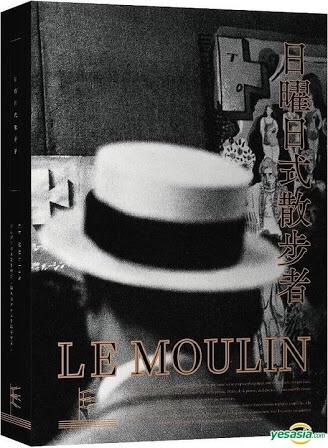
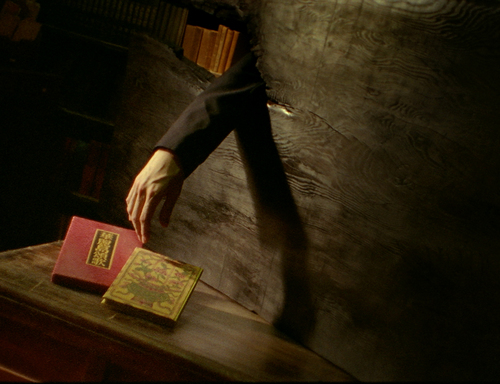
Le Moulin (Huang Ya-Li, 2016) out on Blu-ray and DVD

Just a quick post to share my excitement for a new home video release. I found out only a few days ago that from last June Le Moulin, one of the best documentaries I’ve seen in recent years, is available for on DVD and Blu-ray. The movie, directed by Huang Ya-Li, is a complex and fascinating exploration of the first Taiwan’s modern poetry group, Le Moulin Poetry Society, active in the island during the 1930s, when Taiwan was under Japanese colonial rule. You can read my piece on the movie here.

Le Moulin was made available in Taiwan by Fisfisa Media, but it comes with English, Traditional Chinese and Japanese subtitles, for more details on the technical aspects of the DVD and Blu-ray, please check the YesAsia page, where you can also order the movie.

I haven’t had the chance to check the DVD/Blu-ray yet, but it is nice to see that it also comes with a booklet of essays written by relatives of the Le Moulin poets and literary figures.

I will update this post once I get the release.

Remembering Matsumoto Toshio

…good starting point for this (re)discovery could be the recent release (by Cinelicious Pics) of Funeral Parade of Roses on Blu-ray and DVD, Matsumoto Toshio’s masterpiece newly restored in 4K, released in Japan in 1969 and recently screened in selected theaters around the U.S.A. The release is significant not only for the film itself, a unique movie experience indeed, but also because included in the package are eight extra works that Matsumoto made between 1961 and 1975: Nishijin, The Song of Stones, Ecstasis, Metastasis, Expansion, Mona Lisa, Siki Soku Ze Ku and Atman.
More than ten months have passed since the death of Matsumoto, and this release is a good and timely opportunity for me to collect my thoughts, trying to position his oeuvre in the context of post-war Japanese cinema, and to draw connections between Matsumoto and others filmmakers and the cultural milieu he grew up in as a filmmaker and artist.
In a career spanning more than fifty years Matsumoto made short and feature movies and moved freely from documentary to art-house films, and from pure experimental cinema to expanded cinema and video installations, in a very unique process of hybridization and genre overlapping that has few parallels in the world of cinema and image making.
In the seven months since his passing, prompted by the tragic event, I decided to

Continue reading “Remembering Matsumoto Toshio”

Yamagata City designated UNESCO Creative City of Film

The city of Yamagata has just been designated as member of the UNESCO Creative Cities Network for the field of Film, the first in Japan, joining other 116 existing member cities around the world.

As the readers of this blog have heard and read ad nauseam, the city is the place of the oldest, and arguably the most important, documentary film festival in the Asian continent, a place I had the pleasure of visiting several times in the last decade.

It goes without saying that this is great news for the festival and the city itself, and, as many commentators have pointed out, the congratulations should go first and foremost to the people of Yamagata, the volunteers and all the people involved, to one degree or another, in the organization of the festival.

Knowing how much Japanese people
Continue reading “Yamagata City designated UNESCO Creative City of Film”

Documentaries at the London Korean Film Festival 2017

The London Korean Film Festival has opened its 12th edition last Thursday and will run in the capital for two weeks, from November 10th through the 19th the festival will then go on tour around the UK, touching Sheffield, Manchester, Nottingham, Glasgow and Belfast.
In addition to showcasing a wide-range of titles produced in the Asian country, there will also be masterclasses, talks and collateral events, a special occasion for the British audience to get a glimpse of South Korean cinema and film culture in general. This year line-up includes not only UK and European premieres, animations, classics, shorts and indies, but also a fascinating focus on Korean Noir, “Illuminating the Dark Side of Society”, and, of particular interest for this blog, a program dedicated to documentary.

The first movie presented will be Two Doors (2012) directed by Kim Il-rhan and Hong Ji-you, a documentary investigating the the Yongsan Disaster, when in January of 2009 a sit-in rally in central Seoul resulted in the deaths of five protesters and one police officer. While Two Doors focuses more on the legal aspects of the tragedy, amassing documents against the violence used to prohibit the demonstration and the sit-in, The Remnants  (2017) is about the personal tribulations and the legal problems that some the people who took part in the demonstration had to go through in the seven years after the tragedy. The movie was directed by Lee Hyuk-sang, who was also creative director behind Two Doors, and the festival has organised a special conversation with the director on November 2.
Goodbye my Hero (2017) by Han Younghee, a movie addressing labour relations and workers’ rights in contemporary South Korea, and Park Kyung-hyun’s Dream of Iron (2017), a film essay about the development of the steel industry in the country during the 1960s, will complete the section.
The ‘Women’s Voices’ s section includes also a documentary, Candle Wave Feminists (2017) by Kangyu Garam, a movie that delves into the revolution that led to former prime minister Park’s impeachment and her spiritual mentor Choi Soon-Sil’s arrest.

All the documentaries will be screened this week starting from tomorrow, October 31st.

LKFF17-Screening-Schedule-1.jpg

Kobe Discovery Film Festival 神戸発掘映画祭 2017

A new beginning for the Kobe Documentary Film Festival. From this year the annual event held at the Kobe Planet Film Archive since 2009 will change its name and concept into Kobe Discovery Film Festival (神戸発掘映画祭). The renaming reflects a shift of the festival’s focus from documentary to film and moving image preservation and restoration, and the (re)discovery of less known movies from the past, something on the lines of what, with great success, Il Cinema Ritrovato in Bologna has been able to become in recent years. I really like the idea, because I think that in an era like the one we live in, when digital images are produced, consumed and binged frenetically every day, going back to the dawn of cinema and exploring the fringes of film culture is a refreshing and re-balancing practice, especially in Japan.

The festival, although it is more a cinematic event organized in four days than an actual film festival, is also an opportunity to reflect on the importance of cinema archives in the contemporary mediascape, it may sounds tautological, but Kobe Planet Film Archive before being a theater is first of all, well, an important film archive.

The first edition of the Discovery Film Festival will take place from November 23 to 26 and is divided in six sections.
Amateur cinema discovered: home movie day, with screening of 13 Japanese short movies made in prewar Japan during the 1930s (there’s even a colour film, 兵隊と花), is an interesting occasion to get a glimpse of the everyday life in Japan in a period when the country was rapidly changing (mainly for the worst).
100 years of animation in Japan is dedicated to celebrate the early animations made in the country, divided in three sub-sections the program will present early examples of amateur experimental animation and silhouette animation, and some early works from the 1920s, including  An Old Fool (のろまな爺, 1924) by Ōfuji Noburō, rediscovered by the Planet Film Archive itself few years back. In the program also a couple of works recently discovered (sorry I don’t have the English titles): HOT CHINA 聖林(ハリウッド)見物, マンガ 空中凸凹拳闘 (1941),  カテイ石鹸 (an advertisement made in 1921) and 小人の電話 (1953).
The latest digitized films is a program that will showcase an interesting selection of movies recently digitized from 35mm prints, otherwise impossible to screen, by the Kobe Design University, while Selected by Planet will present a bunch of movies from its archives, including The Peerless Patriot (国士無双, 1932) directed by Itami Mansaku (father of Itami Jūzō), and the 1950’s 海魔陸をいく (no English title) by Igayama Masamitsu, a film between documentary and narrative cinema similar, as far as I know, to the works of Jean Painlevé.
A special screening of the color (Konikolor) version of A Jazz Girl is Born (ジャズ娘誕生, 1957) by Sunohara Masahisa, shown last year at Il Cinema Ritrovato, and a series of 8mm experiments by musician and filmmaker Mori Ari will conclude the festival. You can find the entire program (in Japanese) here.

The idea and the concept behind the Kobe Discovery Film Festival are really promising, also considering the important position of Planet Archive in preservation and restoration in Japan, and I whish the organizers the best of luck.

Yamagata 2017 – day 2

October 7th

Yamagata is a special film event not only because is a filmfest devoted to documentary, but also because is a place where you can meet and talk with a variety of different people. One of the highlights of the first two days for me was the nice and eye-opening conversation I had with Matsumoto Masamichi, Athénée Français Cultural Center’s director, about Carmelo Bene, his cinema and his Terayama Shuji-like status in Italy and France.

For the morning screening of my second day at the festival, I chose In Memory of the Chinatown by Chen Chun-Tien, a movie that confirmed my idea that the Taiwanese documentary scene is at the moment one of the most intriguing and alive in Asia, particularly for its tendency to hybridizing genres and experimenting with form.

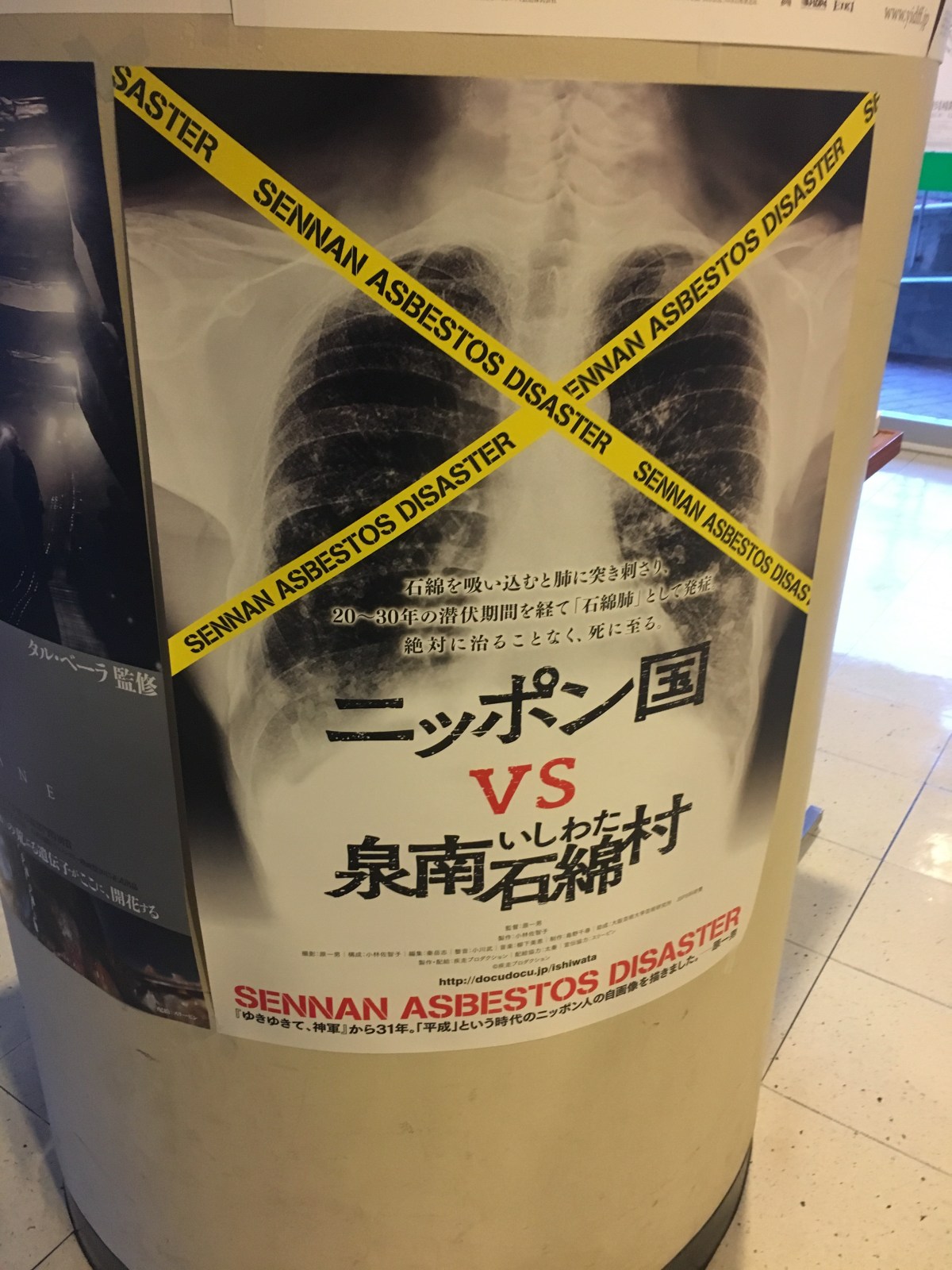
My afternoon screening was Sennan Asbestos Disaster, the latest movie by Hara Kazuo and the first one he shot, for a theatrical released at least, in a very long time. The viewing experience was one of the best I had so far in Yamagata, because I was sitting among the people appearing in the film, those affected by the asbestos pollution. Their comments and laughing aloud during the screening made it a really touching experience.

The last screening of the day I attended was dedicated to the short experimental films made by the late Matsumoto Toshio. The selection included

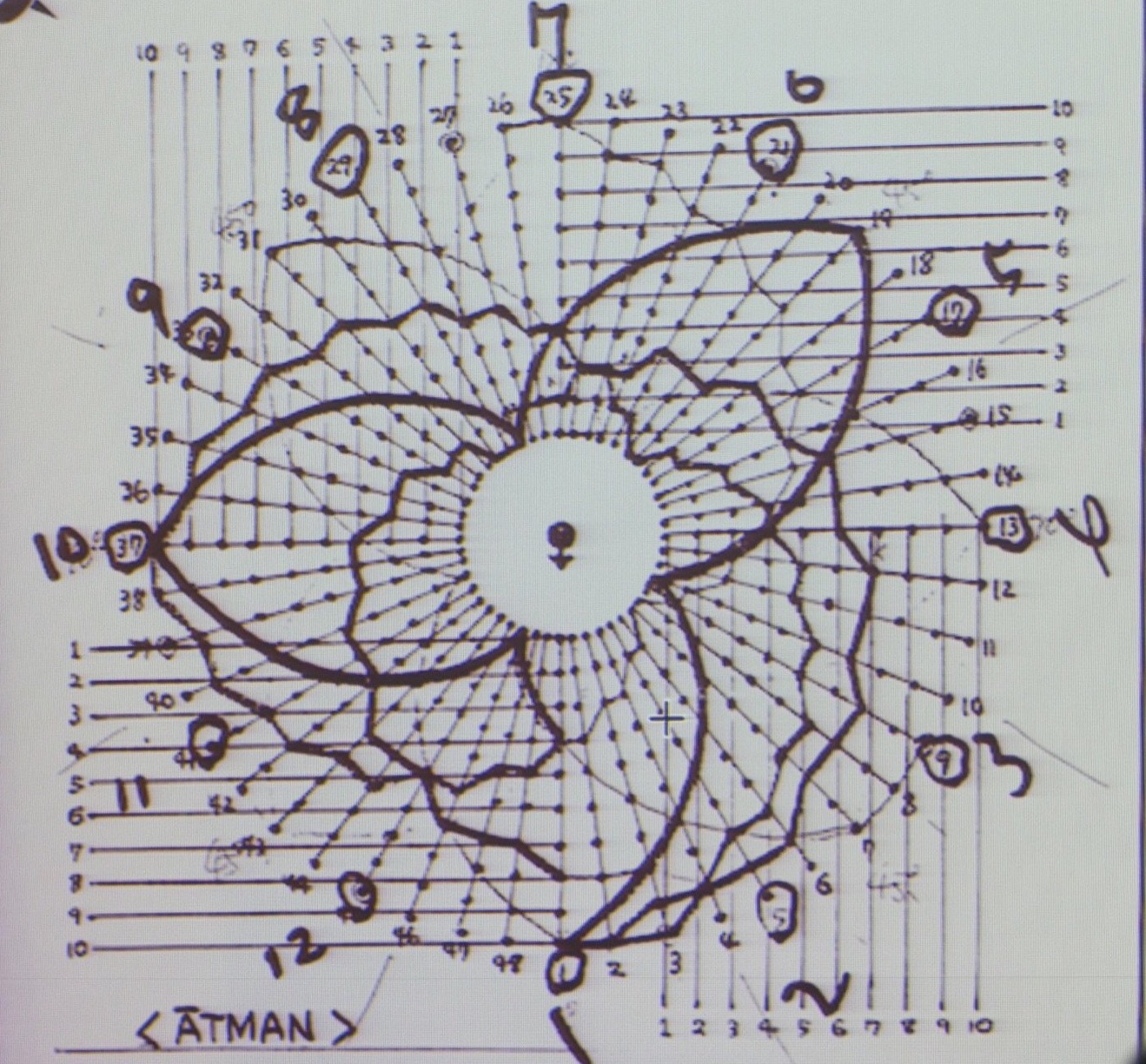
Mona Lisa, Atman, Everything Visible Is Empty, White Hole, Relation and Sway. Seeing them on the big screen and in 16mm was amazing, especially Atman was a hallucinatory trip. The screening was followed by a talk by Takashi Ito, who explain his relationship with Matsumoto and revealed some interesting and unknown fact about Atman (the diagram for shooting the movie designed by Matsumoto looked like a mandala, the person wearing the hannya mask was in fact a mannequin and the movie was shot using infrared film).

Yamagata International Documentary Film Festival 2017

The Yamagata International Documentary Film Festival, one of the most awaited film-related events of the Japanese archipelago, will kick off its fifteenth edition next week on October 5th. For eight days the city of Yamagata will be the capital of documentary cinema, hosting not only an international competition with movies from all over the globe, but also a plethora of  more or less known documentaries presented in other sections, special screenings and retrospectives. For the cinephiles and the film lovers visiting the northern Japanese city, the festival will be an occasion to discover hidden gems of historical importance and an unmissable chance to meet directors, scholars and documentary-obsessed people.
Festival opens on the 5th with a special screening commemorating the passing of Matsumoto Toshio, one of the true giants of Japanese cinema. Two of his best known documentaries, Nishijin (1961) and Ginrin / Bicycle in Dreams (1955) will be presented for the occasion in their original format (35mm), while For My Crushed Right Eye (1968) will be screened as it was originally conceived, that is in 16mm and with 3 projectors. Funeral Parade of Roses (1969) and other experimental works made by Matsumoto during the 1970s and 1980s will also be shown during the festival, including one of my favourite, Atman (1975), a kaleidoscopic trip to the philosophical source of movement and image.
Among the titles presented in the International Competition a must-see for me is Ex Libris—The New York Public Library, the latest work by Frederick Wiseman, but I’m also looking forward to I Am Not Your Negro by Raoul Peck and the long-awaited new work by Hara Kazuo, Sennan Asbestos Disaster, the first feature documentary the director of The Emperor’s Naked Army Marches On made in more than a decade. The movie follows the victims who suffered asbestos-related damages in the city of Sennan in Osaka, during their eight years fight for compensation.
Also in competition the beautiful Machines by Rahul Jain (I wrote about it here), Donkeyote, a subtle reflection on dreams and hopes through the eyes of a donkey and its ageing owner, directed by Chico Pereira, and Another Year by Zhu Shengze, a movie that has received much praise in the international festival circuit. Wake (Subic) by John Gianvito, about the pollution afflicting the residents of a former US naval base in Luzon Island, the Philippines, looks interesting and so does Tremoring of Hope, the difficult recovery of the people of Hadenya in Miyagi, six years after the Great East Japan Earthquake.
Here the complete line-up.
A promising section that will probably sparkle heated post-screening debates is Politics and Film: Palestine and Lebanon 70s–80s, a selection of films made in Palestine and Lebanon during the Lebanon civil war (1975-1990) and in recent years, movies that show and reflect on the struggles and politics of the area. Among them the (in)famous Red Army / PFLP: Declaration of World War, filmed by Wakamatsu Koji and Adachi Masao in 1971, and Genet in Shatila (1999), about the French writer and his relation with the Palestinian revolution as he witnessed the aftermath of the Shatila’s massacre in September of 1982.

Introducing Asian documentary filmmakers, New Asian Currents is usually one of my favorite section for its scope and the variety of films shown, this year 21 works from the continent will be presented, giving us a glimpse of the life, difficulties and struggles the people inhabiting the huge and diversified area have to cope with in their daily life. A Yangtze Landscape by Xu Xin is an interesting movie (more here) that deserves to be seen on the big screen, exploring the geographical and social landscape surrounding the Yangtze River in its long course of more than thousands kilometers. While the works of Yamashiro Chikako are a rare example, rare in Japan at least, of how to tackle a series of thorny historical issues, Okinawa and its relation with mainland Japan and with its past, merging documentary with the experimental.
Here the section’s complete line-up.
I’m ashamed to admit, but I know almost nothing of African documentary. Africa Views will thus be my entrance gate to it, “a program that introduces over 20 films created since the year 2000—with a particular focus on the Sub-Saharan region—depicting a contemporary Africa that lets off a considerable racket as it creaks toward progress, and introducing us to the people who live there.” What caught my attention in Perspective Japan are the new films by Murakami Kenji and Onishi Kenji, two short experiments in 8mm whose screening promises to be, like two years ago, a real cinema-event.
The Festival will also hold a retrospective on Fredi M. Murer, a Swiss director that the program describes as “a leader of the internationally-acclaimed Swiss Nouveau Cinema movement that was active from the late 1960s through the 1980s, together with Daniel Schmid and Alain Tanner. (…) Depending on the period in which they were made, Murer’s works may be classified variously as experimental film, documentary, or narrative film.” The retrospective that interest me the most though is Ten Trips Around the Sun: Sato Makoto’s Documentary Horizon Today, a tribute to Sato Makoto on the 10th anniversary of his death, that will include screenings of his major works accompanied by discussions and panels.

North Korean missiles permitting, I’ll be in Yamagata from October 6 to 11, and, as I did two years ago, I will try to keep a diary of my viewings experiences, here or more likely on my Twitter account.

P.S. I’ve also created a list on Letterboxd with most of the movies that will be in Yamagata.

This slideshow requires JavaScript.

Machines (Rahul Jain, 2016)

Prompted by several online comments describing it as a cinematic experience close to the works by The Sensory Ethnography Lab or Aragane, I finally had the chance to watch Machines, the debut documentary directed by Rahul Jain and set in a textile factory in Gujarat, India.
It’s not a documentary made or about East or Southeast Asia, thus strictly speaking it is out of the areas usually covered in this blog, nonetheless I found it so compelling that I made an exception. Here the description of the movie from FestivalScope:

To the south of the Indian metropolis of Surat in Gujarat province lies a vast industrial zone that has been growing ever since the 1960s. Director Rahul Jain filmed the grueling daily routine in just one of the many textile factories there. In the factory, man and machine seem to have fused into one being. It is dark and dank, and barely any daylight penetrates the space. The labor is heavy and mind-numbing, and the work days seem endless. We are drawn into a gloomy world where the cacophonous beat of machinery sets the rhythm of toil. Jain is as interested in the mysterious connection between worker and product (the fabrics are treated mechanically, but also with love) as he is in the degrading conditions. Each shift lasts 12 hours, for adults and children alike, and wages are extremely low. Short interviews are interspersed throughout the observational sequences, some of which are captivating in their beauty while others are painful to watch – such as when we see a boy nodding violently in his struggle to stay awake.

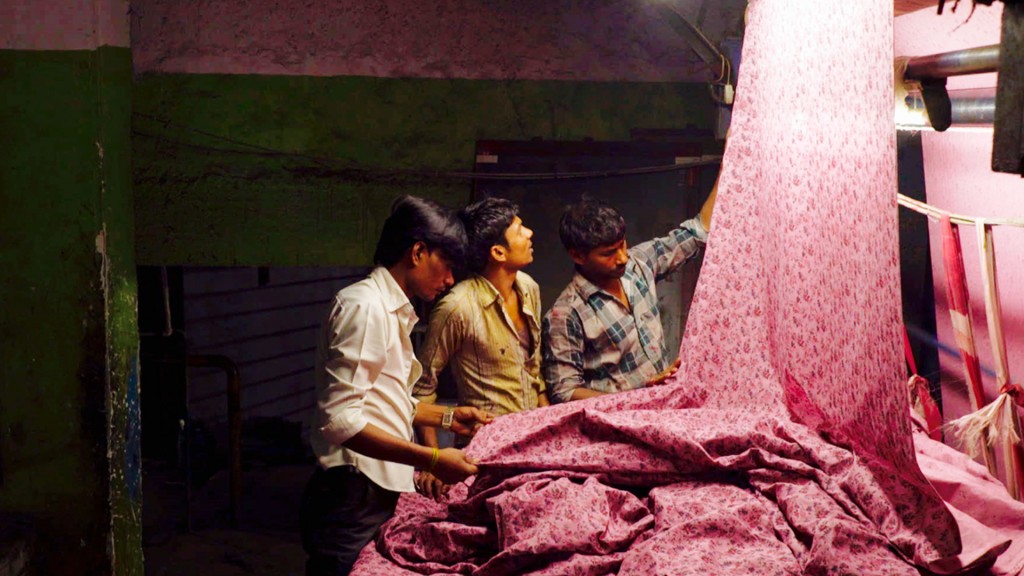
Formally one of the focal points of the movie is the cacophonous sounds of the factory as experienced every day by the workers, here as in many contemporary documentaries similar in style and scope to Machines, works that stress the sensory experiences captured on video/film, the sound design plays a key role in the construction of the movie. The use of light and the color palette are also two aesthetic elements that stand out from the very first scenes. The neon lights inside the factory resonate with the cold tonality of the gray walls and the metallic machines, making the milky white of the textiles stand out as if ethereal rags. Particularly compelling is also the contrast between the warm and thick colors of some textiles, red, yellow and purple, and the darkness and coldness of the working environment,  formally one the best qualities of the documentary because it symbolizes the gulf between the beautiful and refined textile produced and the inhuman labour conditions inside the factory.

Machines2

The reason the movie is one of the best non-fiction pics I’ve seen this year however is the shift from a documentary purely focused on the sensory and the visual, to a more socially charged work. It is around 20-25 minutes into the movie that we see some workers been interviewed, a man who made debts to travel to the factory and support his family, but who has almost accepted the fate of being poor, a young boy revealing how everyday at the gate he’s so exhausted he wants to go back, and another man more critical of the system and particularly of the absence and weakness of unions.
Towards to end, the movie introduces also the owner of the company, a figure speaking empty words and lamenting how the workers want more money just to spend it in tobacco, alcohol and leisure he comes out as the epitome of the capitalist.
Machines however does not offer a simple and Manichean picture of the exploited workers against the evil owners, but a problematized and more complex depiction of the situation. A worker for instance, candidly admits he likes his job even if it is very hard, “God gave us hands, so we have to work”, after all they are still workers proud of their manual skills, and others, while criticizing the harsh conditions, state how this is the destiny of the poor and something almost unavoidable. I’m not an expert on India, but this could be directly linked to the class division of society that still permeates and shapes the country, or more probably to the production of subjectivity that characterizes this late phase of capitalism, especially in the new emerging superpowers. While these could be honest statements, and they probably are, we shouldn’t forget that the workers know this is a movie that eventually will be seen by the owners, thus forcing them to hold back part of the truth. To add a further layer of complexity, towards the end the documentary has an interesting meta-filmic shift when a large group of workers addresses directly the camera and Rahul Jain behind it, essentially criticizing him for exploiting them by making a movie and not helping them improving their working conditions instead.
One final not on the title. The machines of the title are of course those seen and heard during the whole movie, and the workers reduced to the status of a machine. The machine however is also the bigger picture and the given state of affairs, the capitalistic machinery that permeates society and shapes its people. As Deleuze wrote, I’m paraphrasing, you cannot escape the machine, out of the factory/office, the machine is everywhere, in the school, in the family, in everyday relations, in yourself, everywhere.

Letter #69 (Lin Hsin-i, 2016) 

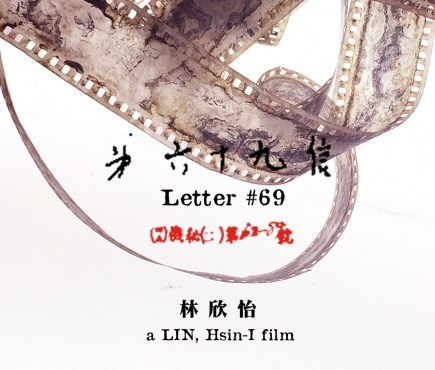
I’ve written at length, here and elsewhere, about 3 Islands, an experimental documentary by Taiwanese female filmmaker and artist Lin Hsin-i, one of my favorite nonfiction movies of last year. Yesterday I had the chance to watch another of her works, Letter #69, a short film (19 min) that was screened at this year Visions du Réel and in 2016 at the Women Make Waves Film Festival where it received the Excellence Award.

Here is the synopsis from Visions du Réel:

In the White Terror period in Taiwan, Shui-Huan SHI was imprisoned for hiding her brother, and was soon executed later. In the prison, she wrote 69 letters for her family. Simulating the life in the prison, this film silently criticizes the history. The “photographic film image” in the video, Letter #69, is an old photographic film from an abandoned old Taiwanese theater. After cleaning the film, Shi Shui-Huan’s letters were printed on it to construct a stop motion. The reproduction of old film serves as a response to the esoteric, dark history of Shi Shui-Huan and her brother Shi Zhi-Cheng in their last escape where they hid in the ceiling. It is also a response to the historical violence of Taiwan that cannot be cleared and is difficult to look back at.

In 1954 Shi Sui Huan was imprisoned for hiding her brother who was resisting the regime of Chiang Kai-shek. During the period spent in prison, she will eventually be executed, she wrote letters to her family and her last one, the letter number 69, was left blank.
The blankness of the last letter is the canvas from which the director starts her investigation into the so called White Terror, a period of purges when political dissidents who were protesting or resisting against the Kuomintang-led Republic of China government, were persecuted, incarcerated and killed. While the period started in 1947 and ended in 1987 when the martial law was officially lifted, I think the director is referring here to a more specific time and place, the first years of the White Terror and a corner of the Liuzhangli Cemetery in Taipei where Shi Sui Huan and other 201 people are buried. Most of them were leftist thinkers or activists but also, like Shi Sui herself, people who just protected their relatives. The graves were forgotten and basically untouched in fear of repercussions till the end of the martial law, when slowly the country started to breath again, a “rebirth” that is well reflected in cinema (the so called Taiwanese new wave of Hou Hsiao-hsien,  Edward Yang, Tsai Ming-liang, etc.)

The absence of written words in the last letter embodies the impossibility of directly connecting with the tragic period and its remnants, yet the blankness also represents the white noise resulting from the accumulation of all the phantasmic memories that in one way or another, while denied for so many years, are still alive and present. Sowing together all these fragments of scattered memories in an heterogeneous piece of cinematic patchwork, Lin Hsin-i’s short movie is an attempt to discover and create images and sounds of a lost and tragic period. The letters of Shi Sui Huan are juxtaposed with the narration in the present (done by family members of the victims), and images of ruins are overlapped with performative actions that recreate some of the gestures that the prisoner might have done.
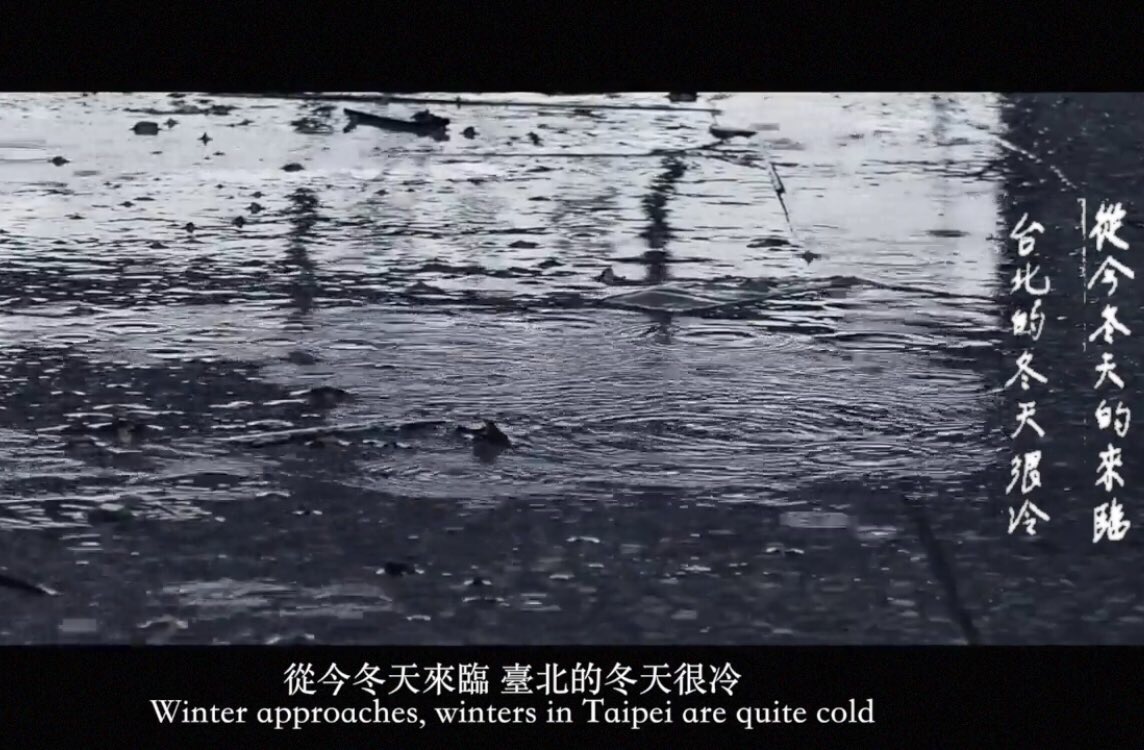
Not only Letter #69 brings to the surface an obliviated past and directs its gaze towards a crucial spot in Taiwanese history, but the filmmaking style that made 3 Islands so powerful and fascinating for me is here in full display again. Aesthetically Letter #69 is a fragmented and kaleidoscopic work that blends the beauty and clearness of the digital image with the grain and the roughness of overused celluloid film ー an old strip of film where the director printed the woman’s letters ー sound manipulation and voice distortion with reenactment, and read and written passages from letters with the constant sound of a running film projector.

I might be partial because my cinematic taste tends definitely towards hybrid documentaries, but 3 Islands and now this Letter #69 are so fascinating and challenging that make Lin Hsin-i one of the most interesting filmmakers working in experimental nonfiction today.