Movie journal (Dec. 2019): Man Who Has a Camera, Many Undulating Things, Nuclear Power Plants Now

Three short takes on some of the most interesting documentaries I’ve seen recently.

The Man Who Has a Camera (Liu Na’ou, 1935)

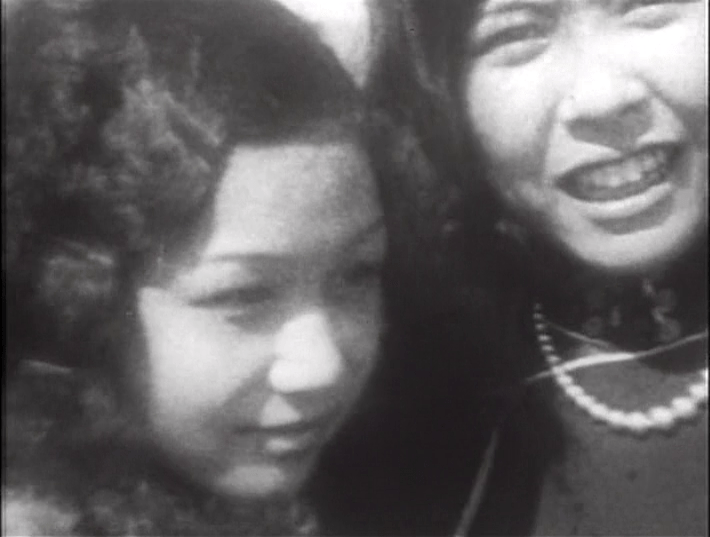
One the the discoveries of the year for me. Clearly inspired by Dziga Vertov, filmmaker, poet and writer Liu Na’ou shot this movie in four cities across national boundaries: Tainan, Canton, Shenyang, and Tokyo. A beautiful film that is in equal part amateur cinema, a city symphony film, and an experiment in poetic filmmaking, less a work about landscapes of certain areas, and more an actuality film depicting faces and people’ feelings across and beyond borders. Incredibly charming, fresh and well constructed, a feverish dream of transculturality that is much deeper and complex than its simplicity on the surface level might suggest. I’m planning to write a longer piece about the fascinating figure that was Lui Na’ou and this film in the near future.

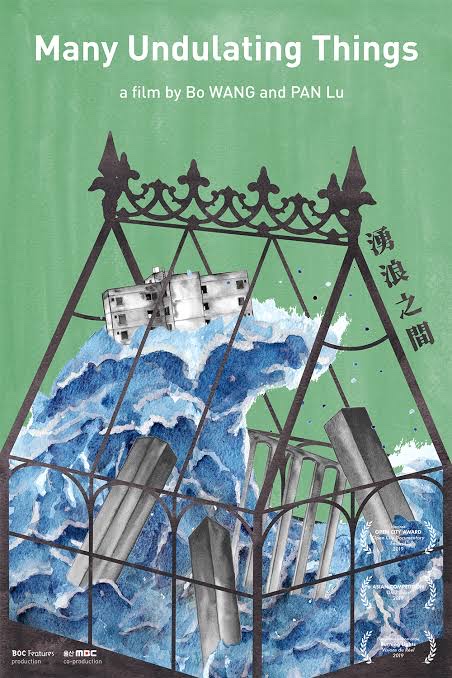
Many Undulating Things (Wang Bo, Lu Pan, 2019)

The film begins and ends in a shopping centre in Hong Kong. We carefully observe the smooth movement of the escalators, the constant flow of people that never stops, the musical fountain that presides over the centre of the internal courtyard, as if this gigantic complex could concentrate the circulation of the entire city, or even, the entire country. From there, it will be more a tale about concrete, enormous port warehouses, glazed galleries built for the 2010 universal exhibition, overpopulated tower blocks, the fragments of still recent colonialism… Through the history of urban changes, we witness the profound social transformation of this territory that is constantly swinging between the East and the West. Hong Kong thus emerges, like an archetypal space of many other cities of globalised capitalism. MANY UNDULATING THINGS offers a complex reflection on the relationships between landscape, nature, urbanisation and society. Thanks to its exhaustive approach, the film questions the function of cities in the development of the capitalist system. A political poem.

I almost despised the first part, the visuals are fascinating, but the narration and the philosophical frame used didn’t really work for me. From the second chapter onward, the work elevates itself and gets definitely more interestingly nuanced and complex, exploring the historical layers that constitute contemporary Hong Kong, analyzed through cinema, photography and paintings. When it moves to the third chapter, the documentary also explores how colonization in the past centuries worked and was deeply linked to the alteration of the botanical realm, “the reorganization of ecosystems under imperial order (…) was actualised through the glass boxes” an important invention and crucial part of the conquering process pushed by imperialism. The glass box would later mutate and evolve into greenhouses, exhibitions, arcades, spectacles and finally into shopping malls. This section, and especially the second chapter of the movie, is an expansion of Miasma, Plants, Export Paintings, a short made in 2018 by Wang Bo, and definitely forms the strongest part of Many Undulating Things, in my opinion. When the movie moves from the historical perspective back to contemporary Hong Kong, moving also from a visual and hybrid approach that uses old movies and photos to convey its meaning, it loses its power, trying to be too many things at once and meandering in too many directions.
That being said and even though Many Undulating Things feels at times too randomly constructed, and a sort of patchwork of three or four short documentaries, it’s still a fascinating piece of work worth revisiting.

Nuclear Power Plants Now いま原子力発電は (Sumiko Haneda, 1976)

This is an obscure and short documentary made for TV by Haneda Sumiko in 1976, shortly before establishing her own company and releasing The Cherry Tree with Gray Blossoms, if I’m not mistaken. Haneda and her troupe visit the Fukushima Daiichi Nuclear Power Plant to explore the state of atomic energy in Japan, and its lights and shadows. The short is mainly composed of interviews, but the most fascinating part is when doubts about safety concerns start to emerge in the talks. While some people from the Tokyo Electric Power Company, the company that owns the plant, compare the possibility of an incident at the power plant to that of a meteor hitting the earth, there’s a professor from Waseda, if I remember correctly, who says that there have not been enough cases to delineate or guess the consequences, or even to calculate the possibility, of a nuclear incident. The style is that of a TV documentary, and there’s a lot of explanation about how nuclear energy is produced, however, the doubts that the film raises, especially knowing what would happen 35 years later, are chillingly prescient and make it an interesting viewing. Even essential if you consider Haneda, like I do, one of the most important female directors in the history of Japanese cinema.

Report from the Yamagata International Documentary Film Festival 2019

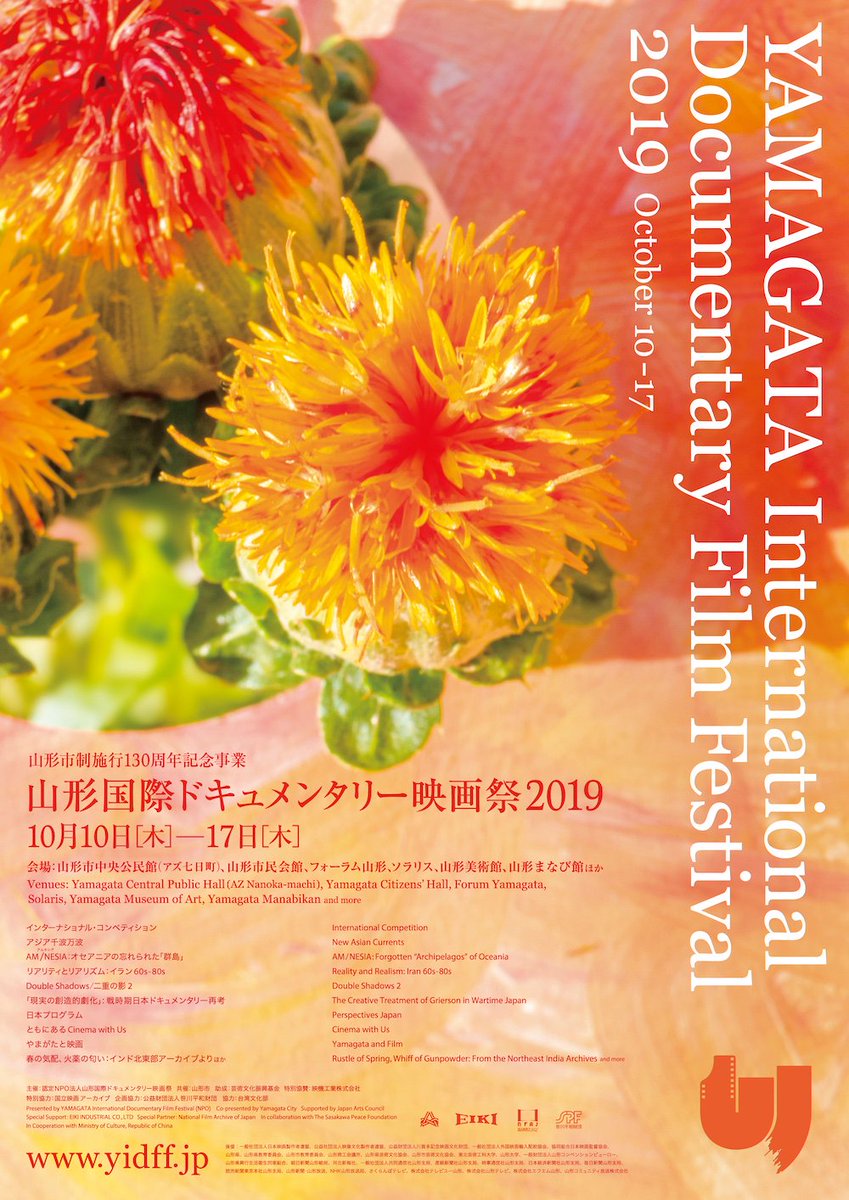
The 30th edition of the Yamagata International Documentary Film Festival has ended more than a week ago. I was fortunate enough to be there, it was my fourth time, and for almost the entirety of the festival. What follows is a short report about things I’ve seen and my general impressions of the event. Please bear in mind that every film festival is experienced differently by each people attending it, depending on age, expectations, interests and the path each of us carve in the forest of movies screened.

As usual I didn’t see many of the films in competition, most of them are by big names, and, hopefully, will be screened in theaters o streamed on platforms in the near future. That being said, I really wanted to see Wang Bing’s Dead Souls, but its length deterred me, not the actual length in itself, but the fact that it would have eaten up a whole day of movies. Anyway I ended up not seeing it and I’m not sure I made the right decision, Dead Souls won the main prize, the Robert and Frances Flaherty Prize, and surprisingly to me, the citizen price as well. The other major award, the Special Jury Prize, was given to Indiana, Monrovia by Frederick Wiseman, a solid work, but not the best documentary by the American director, in my opinion, the main problem I had with the movie was the “fast” editing of certain scenes, the landscape scenes to be precise.

AM/NESIA: Forgotten “Archipelagos” of Oceania is the program I was most excited about, and it turned out I was right. The first work I saw at the festival was Lifeline of the Sea, a propaganda documentary made in 1933 with the support of the Navy Ministry of Imperial Japan, a film depicting the colonization and militarization of several islands in Oceania. It’s an extremely important document, almost ethnographic in its first part, when it depicts the various traditions and beliefs of the people inhabiting the islands, and overtly propagandist in the second part. It does that in such a bluntly way, it does not sweeten the pill so to speak, that it doesn’t hide the the fact that colonization is first and foremost about using other territories resources and exploiting people. A chillingly matter-of-fact documentary that found its perfect counterpart in the work screened soon after, Senso Daughter. Directed by Sakiguchi Yuko in 1990, the movie focuses on the legacy of the Japanese occupation of Papua New Guinea during the Second World War. A sad legacy that arises from rape, starvation and terror. It is an unflinching gaze at the horrors perpetuated by Japanese military towards women, the so called “comfort women”, in Papua New Guinea, told through interviews with ex-soldiers. While admitting the violence of war, almost all these veterans deny any violence or forced prostitution of women, on the other hand the director researches and presents us a very different reality when she interviews women who survived that period and painfully recollect those times. It is interesting to note that the documentary was released just a couple of years after Hara Kazuo’s The Emperor’s Naked Army Marches On, a movie that covers a different but related topic in the same area. Imamura Shohei also explored the topic of comfort women, sent from Japan in his film, in Karayuki-san, the Making of a Prostitute, a made-for-TV documentary aired in 1975.
A big surprise for me was to find out that Sakiguchi Yuko is the same person who directed from 2012 to 2108 Everyday is Alzheimer, a series of three personal documentaries about her mother’s dementia. A trilogy of films that had a relative success in the indie scene and in the mini-theater circuit.
AM/NESIA was a real discovery for me, unfortunately I saw only one more film, Kumu Hima (Dean Hamer, Joe Wilson, 2014) about a transgender person in contemporary Hawaii and how colonialism has affected and continues to affect people’s bodies as well, not only lands and territories. I bought the catalog, a beautiful book with which, hopefully, I will try to continue the exploration of the films produced in the continent. A forgotten cinema.

This slideshow requires JavaScript.

The other program that I followed somehow closely was The Creative Treatment of Grierson in Wartime Japan. While some of the movies screened are “classics” of documentary cinema, Night Mail, Coal Face, or Housing Problems, the screenings were often packed, typhoon notwithstanding. When Night Mail was shown for instance, during the scenes when it is shown how the postal mail is delivered around the country without the train stopping, the audience was cheering and clapping enthusiastically like at a Marvel movie. I was really impressed, and this made me ponder about who these kind of festivals and screenings events are made for. They’re definitely not only for “experts” and professionals, and I was glad to notice that many people in the audience were young, well younger than me at least.
In the same section I saw Kobayashi Issa (1941), a film commissioned by the Nagano Prefectural Department of Tourism and directed by Kamei Fumio. I had high expectations for this, if you read this blog you know my love for Kamei, and this short movie completely blew me away. Told in a poetic and subtle way, using the haiku of poet Kobayashi Issa, the documentary goes against all the idyllic depiction of countryside and mountain life that one would expect from a work commissioned by such an institution. Instead Kamei sets his gaze on the poverty and on the conditions of the people living in the area, presenting also a witty deconstruction of a frame of thought that wants to consider countryside like an “other” or furusato, a ”home” where to go back, an origin. One scene in particular stayed with me because it summarizes the tone of the movie perfectly. An old man’s face in close-up (remember Fighting Soldiers?) is accompanied by a narration that solemnly says something like, I’m paraphrasing of course, “what is this man gazing at?”. When the camera zooms out and cut to the bigger picture though, we see him urinating against the mountain landscape. Definitely one of the best discoveries of the festival, still very fresh and relevant today, both for its thematic approach and its style.

I couldn’t see many of the documentaries screened in the New Asian Currents program, usually one of the most interesting of the festival, but I was able to catch a couple, among these, worth mentioning are Cenote (2019) by Oda Kaori and Temporary (2017) by Hsu Hui-ju. I had already seen Cenote in Nagoya a few month ago, but this was too good of a chance to re-watch it with better sound and on a bigger screen. The movie confirms Oda as one of the most original and interesting voices working in documentary today, if Aragane was a revelation (I wrote about it here, and interviewed her 4 or so years ago about the movie), her next project, Toward a Common Tenderness (2017), was conceptually different, but kept the aesthetic touch present in Aragane, adding to it a poetic and essayistic element. With this work Oda continues on the same path started with those two movies, the long take aesthetic is here translated underwater and intertwined with stories and legends told by the people of the area, Cenote(s) are natural sinkholes in Mexico, sources of water that in ancient Mayan civilization were said to connect the real world and the afterlife. If Aragane was a movie that revolved formally around darkness, slow movement and repetition, Cenote is a work about water and light. Images and soundscape are, as usual in Oda’s films, impressive and deeply interconnected, particularly in the scenes shot underwater inside the the sinkholes. Swimming in these Cenotes, the camera is enveloped in a reality that is perceived and created through water and light, going deep back the to womb of the earth, to the origin of life, as it were. When I saw the movie in Yamagata, I felt it worked less than the first time, maybe it was festival fatigue on my part, but I think the movie in its final part loses some of its power. Perhaps the words and faces of the Mexican people, shot in a beautiful and grainy 8mm, could have been used differently. That being said, the intensity I got from some of the scenes was almost overwhelming, Oda is aiming here higher than in her previous works, she’s trying to convey deeper and even religious meanings, and although not always successfully, there are moments when I felt that the underwater images (filmed with an iPhone!) combined with the sound/noise, reached almost a sort of spiritual materiality. I definitely need to re-watch it.
Temporary is an interesting documentary, albeit not completely successful, that experiments with reenactment “in the ruins of an abandoned factory, three temporary workers—a young man, an older man and an older woman—behave like a choreographed family, as they clean up, construct a table, and eat together.” It felt more like a draft for a future feature film than a proper work, and indeed director Hsu Hui-ju after the screening said that she’s now filming and making a new work about one of the men who appeared in the short movie. More interesting for me was to see another documentary by the same director (she had 3 movies in Yamagata!), Out of Place (2012), shown in the Cinema with Us program, this year dedicated to the depiction of disasters in Japanese and Taiwanese documentary. Out of Place It’s a personal documentary in which Hsu films the town of Xiaoling, after Typhoon Morakot completely swept it away in 2009. The grieving process of the people is intertwined with a quest for an identity by the director herself, her family and the people who lived in the village, most of them said to belong to the Pingpu ethnic minority. Besides the value of the documentary itself as a visual piece, there’s nothing really exceptional about it, the work excels at conveying a complex multi-layered picture of a group of people whose origins are very shifting and hazy. Instead of giving us simple solutions in easy and stereotypical sentences like “going back to our ancestral roots” or “find who we really are” and so on, Hsu expresses in images all her doubts about the importance of belonging to a certain group, and, this is my personal reading of it, in the end, the uselessness of finding a solid origin or a fixed identity. It was a very moving screening experience for me because, by pure chance, I sat next to the director and her young daughter, whose birth was filmed and shown on screen, and it was very sweet seeing them exchanging glances and smiles.
Not to insist too much on the subject, but this, after all, small movie, consolidated my opinion that contemporary documentary in Taiwan, or at least a certain portion of it, is in a really good and healthy stage, not only from a purely artistic point of view (read more here), but also as an example of an effervescent culture not afraid of exploring, and even moving away from, its multi-layered and complex origins.

In competition, besides the above-mentioned Monrovia, Indiana, I saw Memento Stella (2018) by Makino Takashi, an experimental movie in line with Makino’s previous works, a visual feast and experience like no others, and a film that I haven’t completely digested or absorbed yet. Interesting was also taking a glance at two other special programs, Rustle of Spring, Whiff of Gunpowder: Documentaries from Northeast India and Reality and Realism: Iran 60s–80s, where I had the chance to see for the first time A Simple Event (1973) by Sohrab Shahid Saless, passionately introduced by Amir Naderi, a beautiful discovery.

Among the festival’s satellite events that were organized in the city, I was lucky and brave enough, on the day the big typhoon hit Japan, to venture to the Yamagata University and attend a very special event. The use of Gentou (magic lanterns) in the social and grass-roots movements of the 1950s, with a special focus on the revolts and strikes in the Miike mine. The topic is so deep and rich of implications to understand the development of documentary in Japan, that I should write a separate article. The 1950s is a period often forgotten or neglected when discussing representation of social protests in postwar Japan, the priority is usually given, and in certain cases deservedly so, to the more cool or stylish production of the 1960s. For now, if you want to know more about Gentou, there are these two excellent pieces: On the Relationship between Documentary Films and Magic Lanterns in 1950s Japan by Toba Koji, and The Revival of “Gentou” (magic lantern, filmstrips, slides) in Showa Period Japan: Focusing on Its Developments in the Media of Post-war Social Movements by Washitani Hana

The festival was, as usual, an extremely exhausting but exciting experience, I would say it is a unique event, but I don’t really go to many other festival around the world. What I can certainly say is that it is a celebration of film culture, where everybody meets everybody else, directors, film professionals, cinema lovers, students or professors alike. As someone has rightly pointed out on-line, the YIDFF is more akin to a rock festival than a film festival. I couldn’t agree more.
To the Japs: South Korean A-Bomb Survivors Speak Out (NDU, 1971)

Last autumn (10 months ago!) I was lucky enough to attend a special screening event dedicated to the Japanese collective Nihon Documentary Union (NDU), at the Kobe Planet Film Archive. I’ve written elsewhere about NDU and the movies of Nunokawa Tetsurō, specifically about Asia is One (1973), and if you’d like to take a deeper and more academic dive into the subject, there’s this excellent essay by Alexander Zahlten on the Journal of Japanese and Korean Cinema.

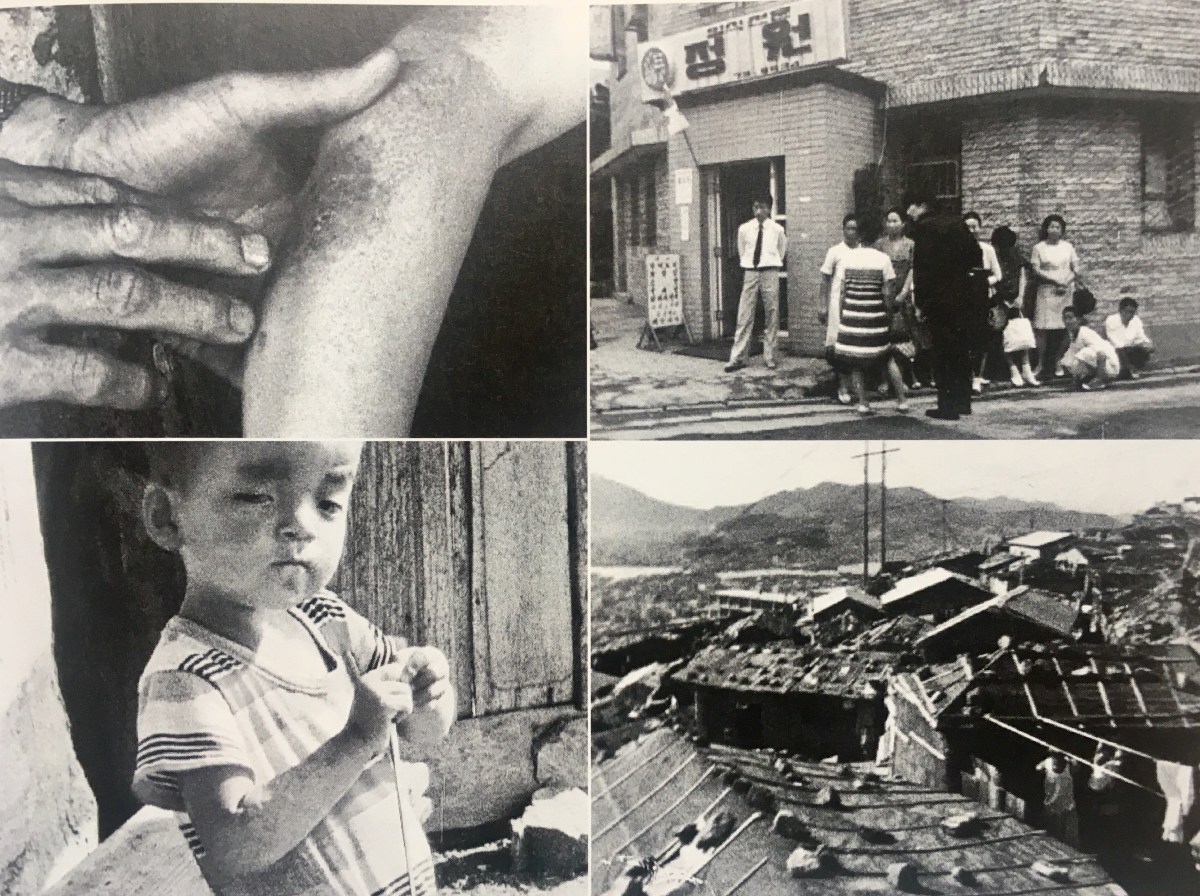
Titled From NDU to NDS, the program was organised by the archive’s director Yasui Yoshio and included the screening of To the Japs: South Korean A-Bomb Survivors Speak Out (NDU, 1971) followed by a short documentary/visual report by Kim Imman shot in 2008 (but I’m not really sure about the date), when Nunokawa Tetsurō and Kim himself went to Korea to meet the women portrayed more than 30 years before in the NDU’s movie. The last movie screened was Kim Imman’s Give Back Kama’s Rights! (2011), produced by NDS (Nakazaki-cho Documentary Space) and shot with the help of Nunokawa himself in Kamagasaki, Osaka’s largest dosshouse, a powerful example of video-activism/documentary of the new century. It is interesting to note that one of the members of NDS was Satō Leo, director of the surprisingly good Kamagasaki Cauldron War, one of the best movies of 2019 in my opinion.

The day ended with a short talk between Inoue Osamu, the only surviving member of NDU, Imman and a young Japanese scholar who specializes on NDU and 1960s/1970s Japanese cinema. The small theater was, with my surprise, packed, and extra chairs had to be added to fit everybody in.
One of the reasons for this relatively wide audience was that ー and I got a confirmation in the after talk, but more on this later ー the interest in the post war relations between Korea and Japan is still an open wound (at the moment I’m posting this report, July 2019, the tensions seem to have reached new hights).

This is the synopsis of the movie (from YIDFF) :

In 1971, while the Japanese prime minister Sato Eisaku was visiting South Korea to attend a party for President Park Chung-hee, a group of eight South Korean hibakusha(atomic bomb survivors) took a direct petition to the Japanese embassy. The South Korean hibakusha were detained by South Korean authorities for the duration of the prime minister’s visit. This film follows the lives of these eight people. That same year, Son Chin-tu, a hibakusha who had entered Japan illegally and was being held at the Omura Detention Center, filed his so-called “Hibakusha Certificate Lawsuit” demanding Japanese residency and medical treatment.

To the Jap was made in 1971, just after Motoshinkakarannu and before Asia is One (1973). The film opens with what looks to me like a parody of a TV commercial, but could just as easily be a real one, advertising the city of Busan and its tourist attractions, one of the main locations where the film was shot. From the first scenes, it’s clear that although the film is a documentary, it continues the arc started by Motoshinkakarannu, but differs from it in its style, reminding me more of the anarchic and pop finale of Onikko: A Record of the Struggle of Youth Laborers (1970), the first documentary made by the collective, when the film goes from black and white to colour and Nunokawa himself writes big red letters on a wall.

The vibrant colours of the early scenes are contrasted with the stark, almost blue quality of the black and white used to depict the women on the train as they travel to Seoul, and the more ‘traditional’ black and white used in some other parts of the film. This sense of formal non-linearity is accentuated and amplified by the off-sync audio – as in many of the collective’s other works, more a necessity than an aesthetic choice, I think – but also by the background noise of the city and the various and composite soundscapes through which the film is constructed. Once again, and this is a common trait that formally unites all the NDU’s films, especially Motoshinkakarannu and Asia is One, I would say, To the Japs proves that the documentaries made by the collective were first and foremost what I’d like to call a “cinema of chaos”, a complex and mosaic representation of reality, without seeking a resolution of conflicts and without searching for a clarity that isn’t there.

The after talk was too short and mainly focused on the absence of Japanese subtitles in some scenes in Imman’s short work, and on other language related problems in To the Japs, mainly why the women were called by their Japanese name and not by their Korean one. There are no doubts that these are very significant political topics worth discussing, however nothing was said on the formal elements of the film, and I think it was a missed opportunity.

In conclusion, To the Japs cemented my opinion of the importance of NDU and its place in the history of Asian cinema. Its insistence on liminal spaces and geographical thresholds continues to function today as a kind of cinematic alchemical ‘solution’, placing Japanese national identity in flux and pointing to a possible and desirable Caribbeanisation of the archipelago yet to come.

Movie journal (July 2019): six short documentaries from Taiwan

From today I will also use this blog as a sort of ongoing diary to briefly comment on the non-fiction movies I watch, those worth writing about. For more important works, I will still keep writing single and longer reviews, as I’ve been doing for the last couple of years.
I’m also on Letterboxd, but often the Asian documentaries I watch are not listed there, in addition, here I can ponder a bit more before writing down my thoughts.

In recent months I’ve been focusing again on documentaries made Taiwan, here you can read an essay I wrote for the journal Cinergie, about contemporary documentary in the island. In the piece I’ve touched on how hybridity is a feature that surfaces in Taiwanese cinema throughout all its history and evolution. Crossing borders, a sense of displacement, and a national identity always shifting and in flux, are often preoccupations at the center of movies produced in Taiwan, and the non-fiction landscape is, in this sense, no exception. Although far from being masterpieces, the five films I’ve recently watched, most of them shorts, continue along this path. An additional fascinating point for me is that some of them are also works made or produced in Taiwan, but not necessarily about Taiwan.


Crazy Calligraphy streaming Taiwan (Adiong Lu, 2012)

Kesan is a self-taught calligrapher, but also a poet who has spent almost his whole life “performing” the ancient art of calligraphy in a small town in southern Taiwan. Seen by his wife and his daughter more like a weirdo than an artist, the man has nonetheless kept doing what he thinks is his mission, teaching calligraphy and Chinese culture to the common people, for free. An interesting, but not completely successful portrait of a singular man and his obsession.

A Summer Afternoon  (Chia-ho Tai, 2018)

Phnom Penh before the national general election, images and sounds of the apparently unimportant moments of Cambodian daily life, before an important political and social event. Very short, definitely too short (a missed opportunity?), reminded me of certain landscape films.

Flow streaming (Ming-Yen Su, 2018)

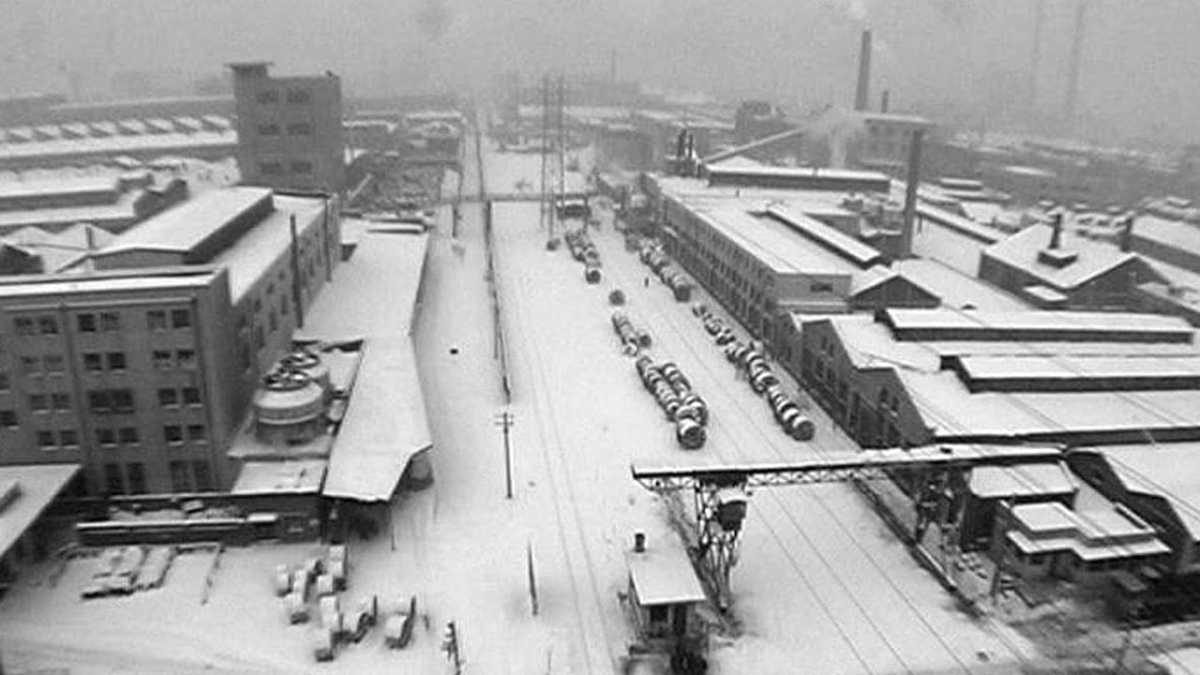
Shot beautifully in black and white, this film follows a vendor to Toad Mountain, an old residential area in the suburbs of Taipei, in search of his lost memories and something that is probably forever gone. Something disappeared like the changed landscape of the area, now just a collections of ruins. A short work that moves between the waking and the dream state, the present and the past, the real and the imaginary.

Burma Monk Life (Yong-chao Lee, 2016)

Nine minutes in the apparently peaceful life of a group of monks in northern Myanmar, the offerings, the walking, the sound of sutras, the bare landscape, and the poverty of the villages they inhabit. Almost a counterpart of Midi Z‘s 14 Apples.

Gold (Yong-chao Lee, 2018)

Shot on an iPhone, the short film follows the daily activities of a young worker on a rusty boat, mining incessantly for gold in a river in Myanmar while thinking about Lily, his far away love.  While I liked the aesthetic touch of Burma Monk Life, I could not really connect with this one.

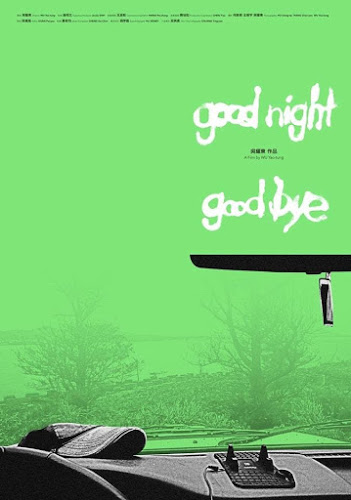
Goodnight and Goodbye (Adon Wu, 2018)

The longest of the bunch, and definitely the most seen in the festival circuit around the globe, Goodnight and Goodbye is a personal documentary through which Adon Wu searches and eventually reunites with his old friend Tom, after almost 20 years. The movie works as a sequel to Swimming on the Highway (1998), his thesis film as a student of art, a documentary screened at the Yamagata International Film Festival the following year, where it won the Ogawa Shinsuke Prize. Swimming on the Highway was about the turbulent relationship between the two friends, especially Tom’s self-destructive attitude towards life and his battle against AIDS.
Goodnight and Goodbye tries to close the circle, functioning as a sort of revisitation and remembrance of their, old, relationship, tracking down Tom, meeting him and together recollecting the time spent in front of the camera twenty years before.
Two decades without seeing each other is a long time, in the meantime Wu got married and moved forward in life, but the first movie and its often-criticized exploration of the personal matters described in it, must have haunted the director for all this time. In making his new documentary, Wu was probably moved by an intense feeling to meet again with his old friend, but also by a selfish and understandable attempt to find an interior peace for himself. On a pure aesthetic level and as a work in itself, I didn’t really latch with and particularly enjoy Goodnight and Goodbye, however I think the movie works on other levels. As an attempt to express an apology in images for instance, and also as a primal example of the myriad of implications, moral above all, that personal documentary as a sub-genre brings along with it.

good_night_goodbye_poster

Asian documentaries on streaming platforms, 2: Doc Alliance/DaFilms

This is the second installment of an ongoing series of posts where I highlight some of the documentaries from East and Southeast Asia, offered on the most popular streaming platforms around the globe.

Read part 1, The Criterion Channel

DaFilms/Doc Alliance

Founded in 2008, Doc Alliance is a partnership of seven European documentary film festivals: CPH:DOX, Doclisboa, Docs Against Gravity FF, DOK Leipzig, Marseille Festival of Documentary Film, Jihlava International Documentary Film Festival, and Visions du Réel. The streaming platform is called DAfilms and if you are interested in discovering the broad spectrum of documentaries made in all parts of the globe, this is by far the best streaming service available.
As the name indicates, the platform is dedicated exclusively to non-fiction, here to be understood on its broader sense, and although the service is mainly focused on European cinema, the East and Southeast Asian section is well represented.
The list is long, I’ve divided the movies by country, adding here and there few lines of comment.

West of the Tracks (Wang Bing, 2003) China

One of the most important and influential documentaries of this century, and a mesmerizing masterpiece. Revolutionary.

Double Happiness (Ella Raidel, 2014) China, Austria

Double Happiness (Otsuka Ryuji, 2014) China

P. J. Sniadecki is one of the most interesting directors working between documentary and experimental cinema today. Watch all of his movies if you can, my personal favourites are Demolition, Yumen, People’s Park and The Iron Ministry.

Songhua (P. J. Sniadecki, 2007) China, United States

The Yellow Bank (P. J. Sniadecki, 2010) China, United States

Bailu Dream (Nicolas Boone, 2012) China, France

Demolition (P. J. Sniadecki, 2008) China, United States

Yumen (Xiang Huang, Xu Ruotao, P. J. Sniadecki, 2013) China, United States

People’s Park (Libbie D. Cohn, P. J. Sniadecki, 2012) China, United States

The Iron Ministry (P. J. Sniadecki, 2014) China, United States

Open 24 Hours (Xavi Camprecios, 2004) Spain, China.

A Hundred Patients of Dr Jia (Wang Hongjun, 2014) China

Disorder (Huang Weikai, 2009) China

731: Two Versions of Hell (James T. Hong) China, Taiwan, United States.

Ta’ang (Wang Bing 2016) Hong Kong SAR China, France

Alone (Wang Bing, 2012) France, Hong Kong SAR China
Few years back I wrote a short post on the movie

Silent Visitors (Jeroen Van Der Stock, 2012) Belgium, Japan.

August (Mieko Azuma, 2011) Japan, Germany.

Peace (Soda Kazuhiro, 2010)Japan, South Korea, United States.

Sofa Rockers (Timo Novotny, 2000) Austria, Japan.

Haiku (Naomi Kawase, 2009) Japan.

Most of the works from the Philippines are from the past decade and by Khavn De La Cruz, once called “the most prominent member of Philippine independent cinema”.

The Muzzled Horse of an Engineer in Search of Mechanical Saddles (Khavn De La Cruz,2008) Philippines.

Philippine New Wave: This Is Not a Film Movement (Khavn De La Cruz, 2010) Philippines.

Can and Slippers (Khavn De La Cruz, 2005) Philippines.

Son of God (Khavn De La Cruz, Michael Noer, 2010) Denmark, Philippines.

Squatterpunk (Khavn De La Cruz, 2007) Philippines.

Kamias: Memory of Forgetting (Khavn De La Cruz, 2006) Philippines.

Our Daily Bread (Khavn De La Cruz, 2006) Philippines.

Rugby Boyz (Khavn De La Cruz, 2006) Philippines.

Bahag Kings (Khavn De La Cruz, 2006) Philippines.

Ex Press (Jet Leyco, 2012) Philippines.

State of Play (Steven Dhoedt, 2013) Belgium, South Korea.

Tour of Duty (Dong-ryung Kim Kyoung-tae Park, 2012) South Korea.

img_4261.jpg

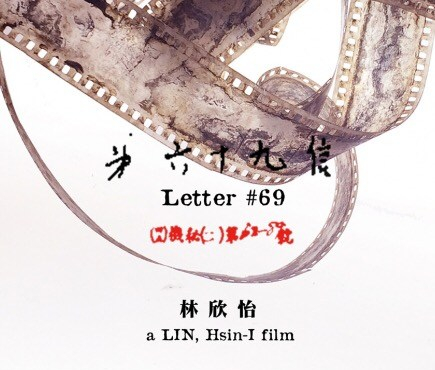
I’ve written a in-depth analysis on contemporary Taiwanese documentary a couple of years ago, and Letter #69 is to this day one of the best and more satisfying blend between experimental cinema and political non-fiction, I’ve had the chance to watch in recent years.

Letter #69 (Hsin-I Lin, 2016) Taiwan

In Memory of the Chinatown (Chun-tien Chen, 2015) Taiwan.

Face to Face (Chuan Chung, 2013) Taiwan.

Trace of the future according to Khoa Lê (Khoa Le, 2014) Taiwan.

Temperature at Nights (Yin-Yu Huang, 2103) Taiwan.

Temperature at Nights (Yin-Yu Huang, 2014) Taiwan.

Asian documentaries on streaming platforms, 1: The Criterion Channel

One of the factors keeping non-fiction movies made in East and Southeast Asia from becoming a more substantial part of the contemporary cinematic discourse is, besides their quality of course, availability. Last year I made a list of those which are, or have been, out on home media (DVD or Blu-ray), but nowadays streaming platforms seem to be the most used option for exploring non-fiction movies, Asian or not.
A few problems arise when writing or discussing about streaming platforms. One is that each platform has, with few exceptions, different movies available in each country, the second is that while one movie can be available today, in a couple of months it can be gone. The last and most problematic issue is that we, and I mean critics, film writers and cinephiles, usually tend to focus on streaming platforms which are available for English speakers or in English-speaking countries. While the topic is indeed fascinating, English as a global dominant language across cultures and one that somehow shapes the way people think and confront each other, this is not the right place for such as discussion.

Now that being said, starting from today I will write a series of short posts to highlight some of the documentaries from East and Southeast Asia offered on the most popular streaming platforms around the globe.

The Criterion Channel

The channel, rose from the ashes of Film Struck last spring, is impressive for its curation and selection, and a must own for North American film-lovers. Unfortunately there are not so many documentaries made in Asia available on the platform, and a big part of the bunch is about the Olympics Games.
The most famous film is of course Ichikawa Kon’s Tokyo Olympiad, but I’m also really intrigued by Sapporo Winter Olympics by Shinoda Masahiro, and by Kinoshita Keisuke’s The Young Rebels, a movie I was not aware of till today.
Anyway, here’s the list of East and Southeast Asian documentaries available on The Criterion Channel (as June 10th 2019):

Tokyo Olympiad (Ichikawa Kon, 1965) Japan

Sensation of the Century (Suketaro Taguchi and Kawamoto Nobumasa, 1966) Japan

Sapporo Winter Olympics (Shinoda Masahiro, 1972) Japan

The Young Rebels (Kinoshita Keisuke, 1980) Japan

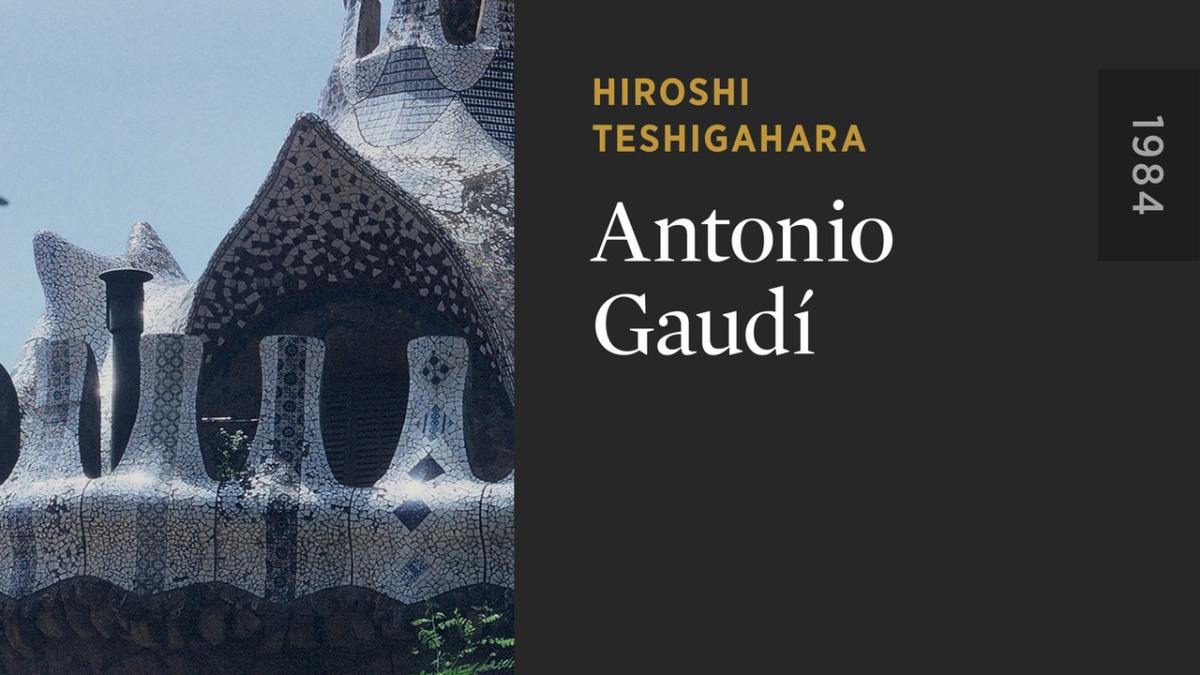
Antonio Gaudí (Teshigahara Hiroshi, 1984) Japan

Seoul 1988 (Lee Kwang-soo, 1989) South Korea

Beyond All Barriers (Lee Ji-won, 1989) South Korea

Hand in Hand (Im Kwon-taek, 1989) South Korea

The Everlasting Flame (Gu Jun, 2010) China


Best documentaries of 2018

2018 has been an intense and fruitful year for documentary, especially on the margins, between works released theatrically, those made available directly on streaming platforms, and those screened almost exclusively at festivals, the offer has become as diversified as ever. As usual on this blog I have tried to direct my attention to some of the most significant works of nonfiction produced in East and Southeast Asia, and in doing so (time is limited I’m afraid) I have neglected many others made in other parts of the world, and living in Japan also didn’t help. For instance I was not able to see Dead Souls by Wang Bing, a movie I’m looking forward to seeing.
If last year my main focus was Taiwan and its dynamic contemporary documentary scene, a research that culminated with this essay I wrote for Cinergie in July, 2018 was more varied. The screening of NDU‘s To the Japs: South Korean A-Bomb Survivors Speak Out (1971) at the Kobe Planet Film Archive, part of my ongoing exploration of the works of the collective, was one of the highlights of the year, unfortunately I didn’t have the time to write about it, but hopefully I will be able to scribble down something next year.
It goes without saying that the list below is a reflection of my taste, interests and viewing habits, and thus it is mainly composed of documentaries made in the Asian continent (but there are few exceptions of course), and works that push the boundaries of what is usually considered nonfiction cinema.

This slideshow requires JavaScript.

Outstanding works

Toward a Common Tenderness (Oda Kaori, 2017)
After Aragane, Oda confirms herself as one of the most original voices in contemporary nonfiction with another excellent work, this time mixing the diaristic and the poetic. Mesmerizing, as usual, the sound design.

Miasma, Plants, Export Paintings (Wang Bo, Pan Lu, 2018)
I discovered the movie a month or so ago, but it was a revelation: history, art, geography and colonialism mixed in an aesthetically challenging piece of work.

A Room with a Coconut View (Tulapop Saenjaroen, 2018)
The most overtly experimental work in this list, not for everyone taste for sure, but I found it refreshingly good.

Inland Sea (Soda Kazuhiro, 2018)
Probably my favorite by Soda, one that resonates more with me and my experience of living in Japan. You can read more here.

Everyday Is Alzheimer’s the Final: Death Becomes Us (Sekiguchi Yuka, 2018)
A really important documentary, not stylistically daring, nonetheless a film that delivers a strong punch in the stomach of the viewer with its matter-of-factness exposure of the disintegration of memory, aging and death.

MATA-The Island’s Gaze (Cheng Li-Ming, 2017)
An elliptical work that focuses its attention on the gaze of Scottish photographer John Thomson, who visited Taiwan in 1871 , and on his relationship with some members of the Siraya tribe – one of the several that inhabited Taiwan before the arrival of the Dutch and the Han. (here more)

The Hymns of Muscovy (Dimitri Venkov, 2017)
“…the sky itself appeared to me like an abyss, something which I had never felt before ー the vertigo above and the vertigo below” Goerge Bataille

Slow Motion, Stop Motion (Kurihara Mie, 2018)
A poetic and witty personal film, documenting the filmmaker’s wanderings and meetings in Laos, Myanmar and Thailand. I’ve written more here.

This slideshow requires JavaScript.

Special (re)discoveries:

What Do You Think About the War Responsibility of Emperor Hirohito (Tsuchiya Yutaka, 1997)
A video experiment and an important time capsule inside a time capsule: the Pacific War and the emperor’s responsibility as perceived by certain strata of the Japanese population during the 1990s.

Jakub (Jana Ševčicová, 1992)
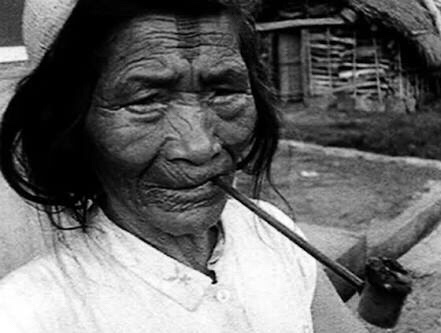
A film of faces, the ancient faces of the Ruthenians people, “painted” in a black and white so dense, grainy and gritty that is almost painful to watch.

Cambodia Lost Rock & Roll (John Pirozzi, 2014)
Incredibly sad, but at the same time incredibly fun to watch and listen to.


This slideshow requires JavaScript.

Best cinematic experience

Heliography
By far the best viewing experience I had in 2018. You can read my excitement here.


This slideshow requires JavaScript.

Honorable mentions:

78/52 (Alexandre O. Philippe, 2017)
A guilty pleasure.

Matangi/ Maya/ M.I.A. (Stephen Loveridge, 2018)
I did not like many things in the movie, but the last 30-40 minutes offer an interesting take on complex topics such as being an artist in the contemporary world, fame, social awareness, and immigration and art.

A Man Who Became Cinema
A documentary about Hara Masato and his struggles to keep making movies, one day I need to write something on Hara, a fascinating and “cinematic” figure.

Yamazaki Hiroshi and light

When last August I attended the Image Forum Festival in Tokyo, one of my regrets was not having the time to be at a special focus dedicated to photographer and filmmaker Yamazaki Hiroshi. As I wrote in my report, one of the good points of the festival is that it is touring, although with a downsized program, in other parts of the country. When I saw the schedule of the screenings in Nagoya in September, I seized the opportunity and spend an afternoon immersing myself in the experimental films of Yamazaki.

Born in Nagano Prefecture in 1946 Yamazaki Hiroshi became a freelancer photographer after dropping out from Nihon University where he studied at the Department of Arts. Parallel with his career in photography, for which he is known in Japan and at an international level, some of his works are displayed at MoMa, Yamazaki developed a passion for the moving image and in 1972 started to shoot short movies in 8mm and 16mm. His experimental short films are a natural continuation of his work in photography, albeit there’s an obvious difference in tone between the two. Moving freely back and forth from still photography to moving images, Yamazaki’s central preoccupation throughout his career has remained the same: the role light and time play in creating images through the mechanical apparatus. His photos are thus not about depicting human beings, situations or even landscapes, they’re more on the verge of creating and conveying something new, something that is dormant in the everyday reality and must be brought to the surface to be seen. Almost like an artist playing with the relativity theory, by distorting time Yamazaki is modifying the shape of light and thus the reality he presents in his works. Often, and rightly so, defined as conceptual photographer, his works are more akin to the paintings of Klee, Pollock or other artists who were shifting the limits between natural representation and abstract art, that to the works made by his contemporary colleagues.
Yamazaki got his first big recognition in 1983 for a series of time-exposed photographs of the sun over the sea, one of the themes that he has been pursuing and investigating throughout his entire career, and a theme very present in all the works screened at the event.

Eighteen works were screened, some in their original format (8mm, 16mm), some others digitally, and they were divided into two sections. The last film screened, The Seas of Yamazki Hiroshi, was an homage to Yamazaki as an artist, friend and peer by photographer Hagiwara Sakumi. Planned and organised by the festival as a special screening to honour and remember an important Japanese photographer and filmmaker, it was for me a special occasion to experience, in one sitting, the attempts and experiments of an artist I didn’t know in a new medium. Here the works screened:

FIX YAMAZAKI Hiroshi / 16mm / 5min. / 1972 / Japan
FIXED-NIGHT YAMAZAKI Hiroshi / 16mm / 6min. / 1972 / Japan
FIXED STAR YAMAZAKI Hiroshi / 16mm / 7min. / 1973 / Japan
A STORY YAMAZAKI Hiroshi / 16mm / 6min. / 1973 / Japan
60 YAMAZAKI Hiroshi / 16mm / 1 min. / 1973 / Japan
NOON YAMAZAKI Hiroshi / 16mm / 3min. / 1976 / Japan
Observation YAMAZAKI Hiroshi / 16mm / 10min. / 1975 / Japan
epilogue YAMAZAKI Hiroshi / 16mm / 1 min. / 1976 / Japan
MOTION YAMAZAKI Hiroshi / 16mm / 10min. / 1980 / Japan
GEOGRAPHY YAMAZAKI Hiroshi / 16mm / 7min. / 1981 / Japan
[kei] 1991 YAMAZAKI Hiroshi / video / 13min. / 1991 / Japan

VISION TAKE 1 YAMAZAKI Hiroshi / 8mm / 3min. / 1973 / Japan
VISION TAKE 3 YAMAZAKI Hiroshi / 16mm / 3min. / 1978 / Japan
HELIOGRAPHY YAMAZAKI Hiroshi / 16mm / 6min. / 1979 / Japan
WALKING WORKS YAMAZAKI Hiroshi / 16mm / 5min. / 1983 / Japan
3・・・ YAMAZAKI Hiroshi / 16mm / 5min. / 1984 / Japan
WINDS YAMAZAKI Hiroshi / 16mm / 6min. / 1985 / Japan
Sakura YAMAZAKI Hiroshi / video / 19min. / 1989 / Japan
The Seas of YAMAZAKI Hiroshi HAGIWARA Sakumi / digital / 20min. / 2018 / Japan.

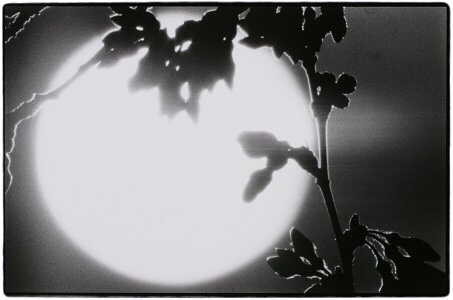
Among these works, three stood out for me. Observation (1975) is a ten-minute film, shot in 16mm, in which he created the illusion of twenty-eight suns arching over the sky in his neighborhood, and Sakura/Flowers in Space, shot on video in 1989, is a reflection on film of the ideas he captured in a series of photos towards the end of his career. Cherry blossoms are here depicted against the Sun, thus losing all the color and beauty they are usually associated with, and mutating instead into black shapeless figure of almost phantasmatic solitude.

But the absolute highlight was Heliography, a continuation but also a variation of what Yamazaki had being doing for more than 10 years with his photos, resulting in one of his most well known series, Heliography, released in 1974. In this series of photos of stunning visual impact Yamazaki subtracts all the unnecessary elements that usually are linked to a beautiful costal landscape, focusing primarily on the sun and the sea, captured here through very long exposures.
Seeing Heliography was for me almost a transcendental experience, and for a variety of different reasons. First of all because it came after an hour of seeing his short experiments in 8mm and 16mm, most of them interesting from a photographic point of view and in tracing a path in his oeuvre, but almost forgettable as stand alone works. Heliography arrived also as a natural progression of his experiments on film, but at the same time as a deviation and something completely new as well. It is visually and conceptually one of the most compelling films I have seen this year, six minutes of pure bliss. Like in La Région centrale, the oblique images of the Sun over the sea and the eye of the camera fixed and fixated on the star with everything else moving around, unanchor the viewers from the Earth, liberating and disengaging the vision from the human eye and re-centering it around the drifting Sun in what becomes in the end an astral landscape.

To add one more layer to the experience, I really believe that had I watched all the works at home on a TV, non matter how big, Heliography would not have retained the same majestic power, I know I’m stating the obvious here for most cinephiles, but certain type of experimental cinema should be absolutely seen in theater.

Image Forum Festival 2018 イメージフォーラムフェスティバル 2018

The 32nd Image Forum Festival ended last Sunday in Tokyo. The nine-day-long event, hosted at two different locations in the Japanese capital, the Theatre Image Forum and the Spiral Hall, screened in total more than 80 films, including 23 in the East Asian Experimental Film Competition, the main section. Established in its present form in 1987, the festival succeeded and replaced an experimental film festival that was held, in various phases and different shapes, in the capital from 1973 to 1986.

To this day the festival continue to embody the mission and the legacy of its predecessors. Primarily dedicated to experimental cinema and video, the event provides a special opportunity for the viewers to experience on a big screen a mix of feature films, home cinema, documentary and experimental animation.
After Tokyo, the festival will move to Kyoto, Yokohama and Nagoya, with slightly different contents, there will be special sections dedicated to artists of each city. This is a right and welcomed decision, since too often Tokyo ends up cannibalizing the cultural and artistic events taking place in the archipelago.

This slideshow requires JavaScript.

This year’s special retrospectives were dedicated to the provocative films of Christoph Schlingensief, German director who expanded his works beyond cinema to touch theater, television and public happenings, Kurt Kren, Austrian artist associated with Viennese Actionism, but also author of structural films, and the experiments on celluloid by Japanese photographer Yamazaki Hiroshi. I wasn’t aware of the films of Schlingensief, and I have to say that it was at the same time a discovery and a delusion. While I really liked 100 Years of Adolf Hitler (1989), claustrophobic and parodic reconstruction of the last hours of the dictator and comrades in his bunker, I couldn’t digest the other two movies of the so called German Trilogy. German Chainsaw Massacre (1990) and especially Terror 2000 (1992) are too much of a mess and stylistically all over the place , and probably too bound to the events of the time, the Fall of the Berlin Wall and the consequent unification of the two Germanies, for me to decipher them.

Unfortunately I wasn’t able to check the works of Yamazaki, but I’m planning to see them at the end of September, when the festival will come to Nagoya. As with his conceptual photos, the shorts made during his entire life explore the relationship between time and light, a topic I’m very attracted to.
I also missed the screening of Caniba (2017) by Lucien Castaing-Taylor and Véréna Paravel, about the “cannibal” Sagawa Issei, if I’m not wrong, this was the Japanese premiere of the film, and the special focus Experimenta India, a collection of visual art from the Asian country.
Interesting was to catch Matangi/Maya/M.I.A. (Steve Loveridge, 2018), about the famous ex-refugee of Tamil origin, now a pop icon and singer, an artist I was completely unaware of. The documentary is based on more than 20 years of footage filmed by herself and her friends in Sr Lanka and London. While I didn’t connect with the first part of the movie, too self-indulgent for my taste, the film gets much better in the last 30-40 minutes when, albeit briefly, touches on complex and fascinating topics such as immigration and art, fame, and social awareness in the show business.

The East Asia Experimental competition was pretty solid, besides several short films coming from a variety of areas like South Korea, China, Hong Kong, Taiwan and naturally Japan, two were the long documentaries screened. A Yangtze Landscape (Xu Xin, 2017), a visual exploration of the social and geographical landscape along the longest river in Asia (you can read my review here), and Slow Motion, Stop Motion (Kurihara Mie, 2018) a movie that positively surprised me and won both the Grand Prize and the Audience Award. A review is coming soon, stay tuned.

Asia is One アジアはひとつ (NDU, 1973) edited

I’m reposting an edited version of my piece on NDU’s Asia is One, an article I wrote two years ago.

NDU (Nihon Documentary Union) was a Japanese collective founded in 1968 by a group of Waseda University students who would eventually drop out to dedicate their lives to filmmaking and political struggle. From 1968 to 1973, when the group disbanded, this group of activists, who saw themselves first and foremost as a collective of activists, made four documentaries, moving from the streets of Tokyo – the first work was Onikko – A Record of the Struggle of Youth Labourers – to the distant islands of Micronesia, passing through Okinawa, the archipelago where they made two of their most important documentaries.

Motoshinkakarannu (1971) was made in and about Okinawa, before the archipelago was ‘returned’ to Japan. The group went to the island in 1971 and captured on film a society in transition. The film shows and focuses on the fringes of society, with illegal prostitution and life in the red districts, while also highlighting the historical and social fractures that have run through the area: anti-establishment and anti-American riots, the Black Panthers’ visit to Okinawa, water pollution and much more. I voted Motoshinkakarannu one of my favourite Japanese documentaries in a poll I organised a year ago, but today I’d like to turn my attention to the second film made by the collective in Okinawa (and beyond): Asia is One アジアはひとつ (1973, 16mm, 96′), a work that I hadn’t seen at the time of the poll and that would have certainly made my list along with Motoshinkakarannu.

Asia is One was screened on June 26th at Kyoto Kambaikan, as part of the AAS in Asia, and it was screen with English subtitles for the first time, the movie was shelved for many many years, forgotten, and was (re)discovered only in 2005 when was screened at the Yamagata International Documentary Film Festival. The screening in Kyoto was followed by a fascinating Q&A with the only surviving member of NDU, Inoue Osamu. Nunokawa Tetsurō, who after the dismantling of the collective made other interesting solo documentaries in Palestine and US, passed away in 2012. As described by Roland Domenig (1), with Asia is One

NDU further explored the margins of Okinawan society and continued to break through borders by focusing on the Taiwanese minority. The film portrays Taiwanese migrant workers on the main island of Okinawa who substitute the Okinawa laborers who in turn are employed as migrant workers on Japan’s main islands. It traces the history of Taiwanese coal miners on Iriomote Island, follows legal and illegal workers to the westernmost island of Yonaguni and finally lands in Taiwan in a village of he Atayal tribe of Taiwanese aborigines, where still the Japanese naval anthem is played every noon.

Formally the documentary is composed of landscapes and interviews, all of them out of sync, possibly due to the equipment used or maybe the lack of it. The uncanny space created by this displacement, but also by the use of music from radio broadcasts and kids voices, thrown here and there during the movie, gives the work a peculiar aesthetic tone, a type of non-fiction cinema that I like to call “chaos cinema”. (2)
To explain and understand the “chaotic” trait of Asia is One, and Motoshinkakarannu as well, we have to delve deeper in the philosophy that laid at the core of NDU’s approach. What the collective has tried to convey through their cinema is extremely fascinating, in their writings (3), mainly published in the magazine Eiga Hihyo, the group was explicitly pushing towards a cinema/activism of anonymity, trying to reach an “impersonal space” and rejecting even the term “work” (sakuhin) because it was seen as the product of a single person in command and as a result of a dominating power structure. In this regard famous was their criticism of Ogawa Production, a collective that bore the name of a single person and that was basically structured hierarchically (4). To this kind of collectivism NDU tried to oppose a more fluid idea of group activism, where the structure was a flat and horizontal one, and in doing so, promoting a cinema made by amateurs (5) and not by professionals. “Everybody can push the button and shoot with a 16mm camera” said Inoue, and this is even more true today since the advent of the digital revolution. Whether this approach was successful or not, and more importantly, whether this horizontal structure and “amateur cinema” is possible at all, are questions without answers that are haunting scholars to this day.
Going back to Asia is One, the part of the movie the resonated more with me was the last one, when the film moves to the Atayal village in Taiwan. There’s a quality in the close-ups of the tribe people, beautiful and ancient faces, that is extremely fascinating, also because it is in these scenes that the political discourse on identity, or the negation of it, reach its peak. From the 17th Century onward The Atayal people, like the rest of the tribes inhabiting the island, were forced to face the colonization of the Dutch first, the Spanish and the Chinese later, and eventually that of the Japanese Empire (1895 – 1945), which called them “barbarians” and tried to assimilate and annihilate their culture (6). That being said, the words spoken by the member of the tribe provide more context and add layers of complexity to the situation. “Japan conquered us and abolished many of our ancient traditions and customs”, but at the same time “we were drafted and went to war with pride and ready to die” and also “luckily the Japanese abolished some of our ancestral traditions like beheading”. Asia is One ends with the militaristic song If I Go to Sea against an everyday scene with the aboriginal Taiwanese people isolated in the mountains singing “We want to go to war again.”

Of course there is oppression and violence, physical and cultural, in every colonization, but things here are deeper than what they seem. In the process of cultural and historical coring that the movie conveys with its images and words, from Okinawa to Taiwan, I believe that two significant elements emerge. The first is the crisis of the identity concept, often a forced cultural and national superstructure imposed by the stronger and more powerful part on a “highly fluid space of human life” (6), as Inoue explained “identity was one of the most hated words inside the NDU, identity is a choking concept”. The second point that struck me is the recurrence of a power and social structure that exploits the margins, the outsiders and the weakest people. In mainland Okinawa the illegal prostitutes and worst jobs are done by people from Miyako island, and in Miyako and other small islands the lower part of society is occupied by Koreans, Taiwanese and aboriginal people. This perpetuating exploitation is possible only as long as a certain part of society is described as different and inferior, and only when and where the concept of border is a monolitic divide used to create the “other”, the “foreigner” and the “stranger”. NDU’s documentaries are an antidote against all this poisonous discourse, and an invitation to break through the borders, those in the world outside us, but also those inside ourselves.
A final note on the title, the movie as a product of a collective that was thriving towards anonymity, has not film credits, nor it had originally a title, Asia is One was attached to it only later, and it’s a kind of a joke because as Inoue himself said “we all know that Asia is not one!”

notes:

1 Faraway, yet so close by Roland Domenig, in The Legendary Filmmaking Collective NDU and Nunokawa Tetsurō ed. Yasui Yoshio, Tanaka Noriko, Kobe Documentary Film Festival Committee, 2012.

2 This might not be the best way to describe the movie, but aesthetically it reminded me, maybe because of the out of sync, of Imamura Shōhei’s documentaries shot in South East Asia during the 70s.

3 Some of the writings are translated in The Legendary Filmmaking Collective NDU and Nunokawa Tetsurō, op. cit.

4 You can find more in Forest of Pressure: Ogawa Shinsuke and Postwar Japanese Documentary, Abé Markus Nornes, Visible Evidence 2007.

5 Some interesting insights on amateurism in cinema can be found in The Flash of Capital: Film and Geopolitics in Japan, Eric Cazdyn, Duke University Press 2002.

6 In 1930 the village was the site of an anti-Japanese uprising, the so called Musha Incident, an event portrayed in Warriors of the Rainbow: Seediq Bale (Wei Te-Sheng, 2011)

7 Nunokawa Tetsurō in YIDFF 2005 Special Program, Borders Within – What it means to live in Japan.