Haneda Sumiko’s writings /5: from “Ode to Mt. Hayachine 早池峰の賦”

Fifth part of an ongoing series of translations dedicated to the writings of Haneda Sumiko (4th here, 3rd here, first and second here and here)

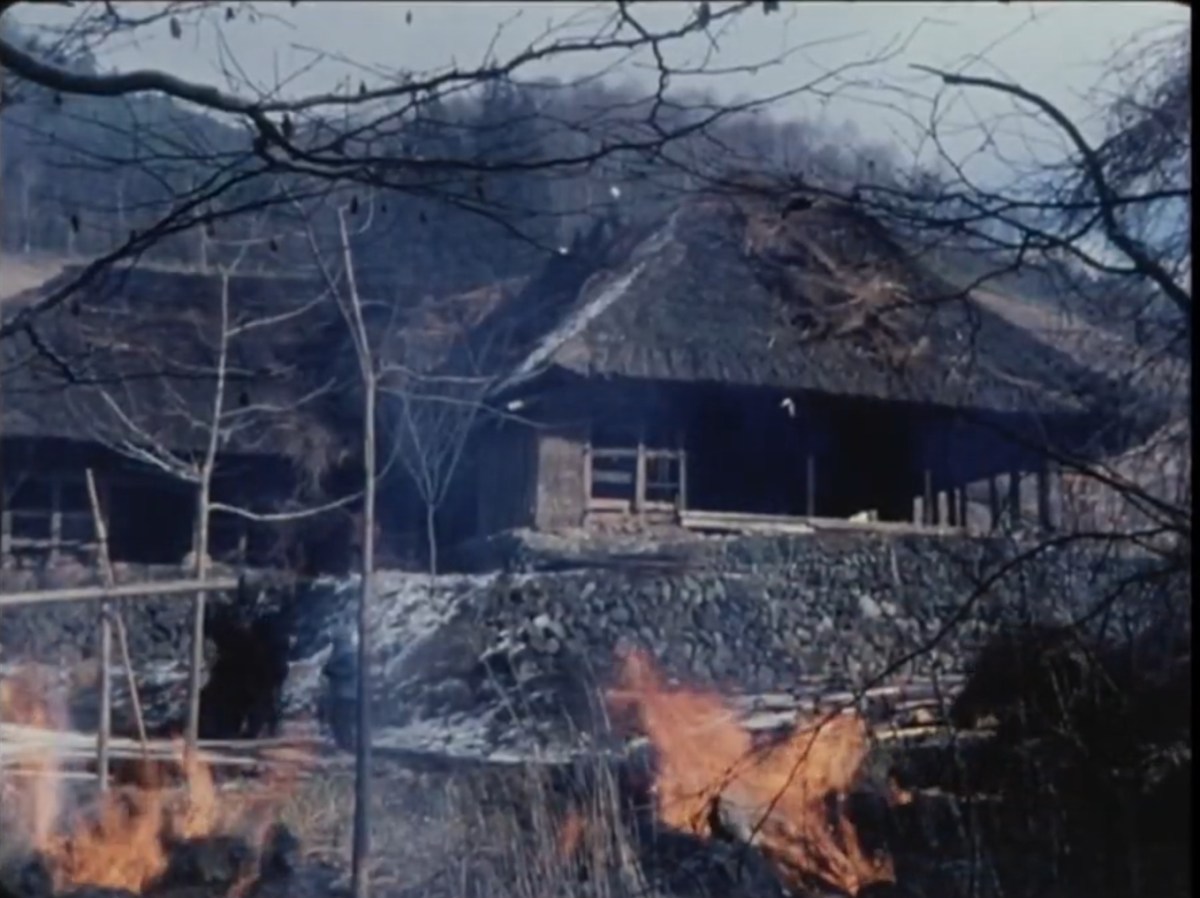
The short passages translated below—from 早池峰の賦 published in 1984—are very important and central to properly understand Ode to Mt. Hayachine, and more broadly, Haneda’s approach to documentary filmmaking. Just to provide a bit of background: Haneda discovered yamabushi kagura in 1964 in Tokyo, and the following year, the beauty of the performances and their connection with Tōhōku, when she visited Ōtsugunai, where she attended a kagura performed in an old magariya, an L-shaped farmhouse typical of the area. When she went back to the town in 1977, she noticed how the magariya and the culture associated with them were slowly disappearing from the scenery. She really wanted to start her documentary from a performance held in one of these old houses, an image that had stayed in her mind for decades, but instead she decided to go the opposite direction and started the movie by filming the demolition of one of these old farmhouses. It is interesting to note that, the first and shorter version of the documentary, 早池峰神楽の里 Hayachine kagura no sato, opens with kagura performed in the entrance of an old house, not a magariya, if I’m not wrong, and that the demolition scene is absent.

NOTE: This is by no means a professional translation, but I hope the readers can get the gist of it:

I first became aware of the Tōhoku region when I was in primary school, and read about a famine in the area in a children’s book. I think this was probably about the great famine of 1934. I had completely forgotten what it was about, but the tragic impression stayed with me for a long time. So when I think of the Tōhoku region, the first thing that comes to mind is a dark and impoverished image.

When I thought about making a movie about Hayachine kagura, I thought that Kagura is like a flower that blossoms and has its roots in the soil, that is, the harsh living conditions of the Tōhoku region. The true value of the flower cannot be understood unless it is depicted together with its soil. But how should this soil be expressed? In 1979, this was quite difficult.

When I first visited Ōtsugunai in 1965, the old farmhouses were still there, and the atmosphere of the old times was still strong. However, the rural landscape has now completely changed. Wide paved roads. Large concrete buildings. Houses just like in the city. Colourful tin roofs reflect the sunlight, and there is no longer any sense of history, poverty or darkness. I was at loss in front of this rural landscape.

The image of kagura I had in my mind was the one I saw during my first trip to Ōtsugunai [in 1965 when Haneda attended a kagura performed at the entrance of an old magariya, t/n]. I tried to find a place that somehow came close to that image, and in my mind I was constantly trying to recreate a scene like that. However, I soon began to feel that there was something wrong with obsessing over only old things. I realised that in order to depict the life of kagura, which has continued to live until today, even when the houses are new and the roofs are red, first of all it was important to accurately capture the present life of the farmers, and I also realised it would be a mistake to go too far in pursuing the perfect form, and thus to lose the vitality of the present. I was forced to change my methodology.

I thought that starting the shooting with the destruction of the magariya was quite symbolic. I filmed the demolition of the magariya as a symbol of the transfiguration of the rural areas in the Tōhoku region, but it also became the “demolition” of my own way of thinking. It doesn’t matter if the magariya are no more. It doesn’t matter if the roofs are blue or red. I wanted to make this work as an expression of the spirit of the farmers in Tōhoku, beyond what is visible to the eye, and as an expression of the ever-changing flow of history.

(pp 81-82)
Haneda Sumiko’s writings /4: from “Ode to Mt. Hayachine 早池峰の賦”

This is the 4th part of an ongoing series of translations dedicated to the writings of Haneda Sumiko (third part here, first and second here and here)

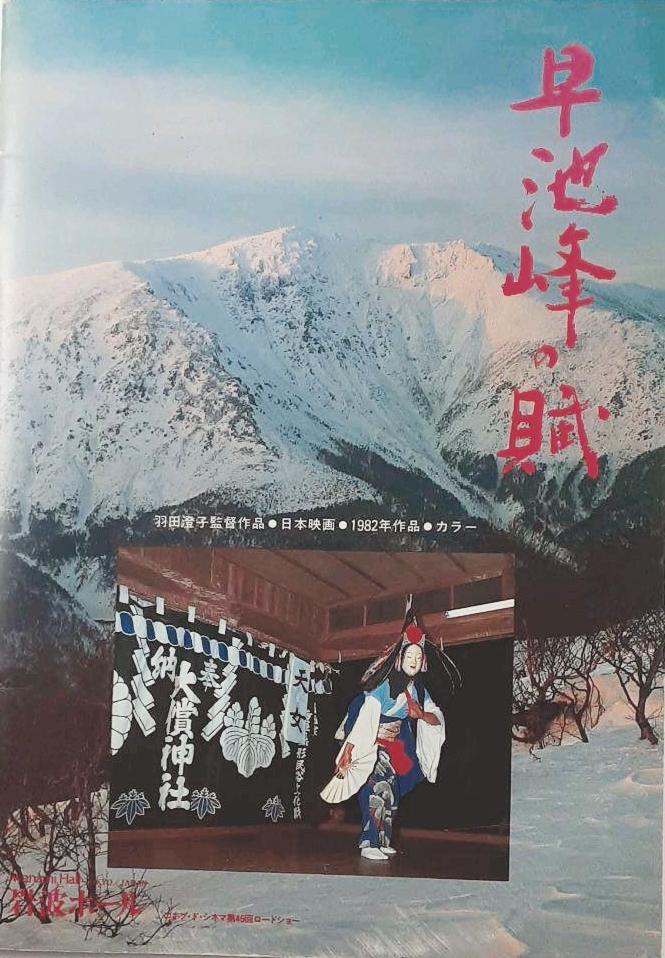
Distributed by Equipe de Cinema, 早池峰の賦 Ode to Mt. Hayachine (a.k.a. The Poem of Hayachine Valley) is the second work conceived and directed independently by Heneda Sumiko. The movie was released in 1982 at Iwanami Hall, where it stayed from May 29th to June 25th (and later, due to its success, again from August 7th to 13th). A booklet about Haneda and the movie was published and sold at the theater, and more importantly in 1984 Haneda published 早池峰の賦 (Hayachine no fu), a fascinating volume about the origin, production and shooting of the film, how the various versions of the documentary came about, and about her relationship with the people of Take and Ōtsugunai, the two villages where kagura is performed. As for the versions of the documentary, the first one, backed by Iwanami Eiga, is titled 早池峰神楽の里 Hayachine kagura no sato, a 52-minute long film that, among other things, is interesting in that it has a male voice narration, while the following versions have a female one. 早池峰の神楽 Hayachine no kagura is a second version, assembled by Haneda after the previous was completed, using more footage shot during the years, while the third one, 早池峰の賦 Ode to Mt. Hayachine, the version usually screened, is 185 minutes long , and very similar to the second one (195′), that was cut down of 10 minutes in order to be screened at Iwanami Hall. The book was, like the film, an unexpected and moderate success, and the first experience for Haneda writing a volume about one of her films.

In the short passages here translated from the volume 早池峰の賦, Haneda narrates the first steps that led to the conception and production of the documentary. She discovered yamabushi kagura when she attended a performance held in Tokyo in 1964, the following year, together with cameraman Segawa Jun’ichi, she visited the two villages of Take and Ōtsugunai, at the time part of Ōhasama town, where they witnessed the various kagura dances performed, also in a magariya, an old style farmhouse typical of the area. Haneda was so impressed by the area and its atmosphere, the people and the performances, that she decided to make a documentary. She even wrote a provisional script, but was not satisfied with it and so the project was shelved. The chance came again in 1977, after she independently made 薄墨の桜 The Cherry Tree with Grey Blossoms and gained more confidence in her career as a filmmaker.

NOTE: This is by no means a professional translation, but I hope the readers can get the gist of it:

To make a film I really wanted to shoot, that is, by myself [without the help of a production company, t/n] was for me something like a dream, almost impossible to realize. Thus, when I made The Cherry Tree with Grey Blossoms as an independent work, it was like a new road was opening in front of my eyes. When I made that movie its subject was one tree, it does not go away and it didn’t require so much time and money to be made, however, this time it was different, the subject was people, and many, since there are about 20 performers in the kagura group. If I wanted to film the kagura, I needed the proper filming equipment and a considerable amount of money, above all, what I needed to make the movie, was the cooperation and the understanding of the kagura performers and the people of the area. 

In the early summer of 1977 I visited, after 12 years, the town of Ōhasama. I told Ōhasama’s major, Murata-san, that I wanted to make a film that would not be a documentary about kagura, but would portray the culture, life and spirit of the land that has supported kagura, and that it would be a record of the town that I would make and give to the town. Often people came to the town to film kagura, leaving nothing behind for the people of the area. [in the conversation with the major recollected in the book, there are complaints about NHK troupes coming to the area and leaving soon after the main festival is over, without leaving behind anything, t/n]

The decision to form a group to make a movie was decided only a year and a half after this first meeting with major Murata, in the meantime we had the chance to visit and talk with him many times. (…) At the time I was still a Iwanami Eiga employee, and I was very happy to know Iwanami Eiga provided full support for this personal project. More fortunately, the fundraising campaign was able to secure a certain amount of funding, and Tohoku Electric Power agreed to purchase the film necessary. About a year and a half after meeting the mayor for the first time, on 13 February 1979, the 早池峰神楽の里を作る会 ‘Group for making the film Hayachine kagura no sato’ was established. The mayor himself named the film “Hayachine kagura no sato”, which I thought was not a bad title. The group started its activities with the goal of producing a film with a fund of 30 million yen, and a running time of 50 minutes. I thought that fifty minutes was too short, but the production costs would have been much higher otherwise.

However, it was not so easy to raise money, money could never keep up with the speed of film production, nduring filming and during the finishing touches, we still had to find the money. I still cringe when I think back on all the headaches over money we had during this period. In the end, we managed to reach the target amount in autumn of the following year, a year and a half after we had completed and delivered “Hayachine kagura no sato” to the town. During this period, all the footage shot for the film was fully utilized to produce the three-hour and five-minute Ode to Mt. Hayachine, which was shown at Iwanami Hall in Tokyo, gaining a good reputation and being seen by many people.

The film was screened twice a day at the City Hall. On that day, nearly 1,300 people gathered to watch it enthusiastically. We were thrilled that so many people came to see our film, even though the town had a population of less than 8,000.

The 52-minute film was appreciated by the local people, but the 3 hours and 15 minutes film was appreciated even more. Unexpectedly, a woman from Take told us that it was the first time she could properly see the festival and the kagura performances. Come to think of it, when they are busy with the preparation for the festivals and kagura, the women are so busy in the kitchen, that they don’t have time to watch them. Some of them were impressed that the dancers looked so divine when they danced in the film, even though they are usually normal people very close to them in everyday life. What was most gratifying for us was that many people said they felt proud of their hometown.

We were hesitant to let people see the three-hour 15-minute film we donated to the town, because it was so long, and we weren’t sure if it would work as a film to be released in a theater or not. Even though, I showed it to a few people.

A few months later, I was told that the film would be screened at Iwanami Hall as a film distributed by Equipe de Cinema, and I honestly couldn’t believe it. It was unthinkable that such a documentary film would be shown to the public. We reduced the length of the film to three hours and five minutes in order to be able to screen it at the theater, and named the film Ode to Mt. Hayachine. The title of the film best expresses our feelings about the twists and turns that led to the creation of the documentary.

Haneda Sumiko’s writings /3: Paulo Rocha on Ode to Mt. Hayachine

Third part (you can read the first part here and second here)

A slightly different post today, since it’s not about Haneda Sumiko’s own writings, but more about one of Haneda’s documentary, and one of the most significant in her career, Ode to Mt. Hayachine 早池峰の賦 (a.k.a. The Poem of Hayachine Valley). The movie was released in 1982 at the Iwanami Hall, distributed by Equipe de Cinema, where it stayed from May 29th to June 25th (and later from August 7th to 13th). A booklet about Haneda and the movie was published and sold at the theater, in it there are various writings by Haneda, Tsuchimoto Noriaki, people of the village in Iwate, and Paulo Rocha, among others. The Portuguese director, with whom Haneda collaborated as a screenwriter for a segment of his A Ilha dos Amores (released at the Iwanami Hall in December 1983), wrote an interesting piece on Ode to Mt. Hayachine; you can read my translation below (NOTE: This is by no means a professional translation, but I hope the readers can get the gist of it):

Paulo Rocha on Ode to Mt. Hayachine

In an Italian film similar to this one, L’albero degli zoccoli / The Tree of Wooden Clogs, director Ermanno Olmi told us, with rare insight, about the heart and the inner world of Italian peasants. Haneda goes here even further, for her, it is not only the heart of the people who speaks in her movie, but it is as the whole of nature, trees and stones, were speaking to us. Although we are in 1982, immersed in our contemporary problems, at the same time, we live with simplicity in an uncomplicated world that has just been created right now. There is a difference between Olmi and Haneda, and it may be a difference that exists between a country with a Catholic tradition and a country with a Shinto tradition, but still there is a miracle that is common to the two. This miracle is that in their clear mind everything is sublimated and yet, a direct and spontaneous force, an inspiration and a beauty in the detachment of modern daily life is gradually invading our hearts. For Haneda, the mountain gods, the plastic products in the small shops in the village, the people who dance the kagura, and the tourists are just as passionate and fantastic. Everything is just as important to her non-sentimental gaze. That is, past and future, nature and machinery, mountains and towns. What is art for, what is fiction for, what position does the profilmic material occupy in a movie, what position does fiction occupy in art? What about the artist? What happens to the artists filmed? Rarely in the history of cinema have such essential questions been asked in such a direct, simple, generous, and intelligent way. I am a filmmaker, and until now I believed that I would be closer to the truth if I approached it through fiction, but now, after seeing Haneda’s Ode to Mt. Hayachine, I realize that the idea is an arrogant one, we must take advantage of this opportunity, we must learn to see reality correctly in order to know the truth. Ode to Mt. Hayachine gave us the best example of this. In Europe, documentary films are being re-evaluated as part of a movement for a new type of cinema. If Ode to Mt. Hayachine were to be introduced in Europe, they would no doubt be surprised and respectful to find that the path they were looking for already existed in Japan.  Centuries from now, when people in the future will want to know what we were like, they will be able to watch Ode to Mt. Hayachine, and the movie will tell them about us, the audience of the film today, and about little-known people who were lost among the mountains, in an unknown valley.

Haneda Sumiko’s writings /2

Second part (first part here)

In 2002 Haneda Sumiko published Eiga to  watashi, a memoir of her career and experiences in the world of Japanese cinema from the 1950s to the late 1990s. A revised version titled Watashi no kiroku eiga jinsei came out in 2014. I’m translating and posting some of the most interesting passages of the first version of the book and other writings by Haneda, as I read it. Titles are mine.

At Iwanami Shashin Bunko

In the fall of 1949, Professor Hani Setsuko, a teacher at Jiyū Gakuen and mother of Hani Susumu, contacted me saying “Iwanami Shoten is starting to produce science films and educational films. Would you like to join?” I have never asked why I was the one chosen, but my reaction at that time was negative. Jiyū Gakuen was a strict Christian school, and while I was in school, I didn’t watch any movies. I saw films when I was a kid, when I was in girls’ school, and after the war, but the world of movies was so distant that I couldn’t imagine to be part of it. I also wasn’t really interested in the offer, because when I heard that it was about science and educational films, I thought about my father, who was a teacher, and felt like I didn’t want to be an educator.

I’m not very interested” I told her. It’s kind of scary to think about it now, but if the story ended there, my life would have been completely different. However, about a month later, she contacted me again “If you are not interested in movies, how about editing a book?”. “Editing a book” was something that I could see myself doing, and so I was happy to accept, because I thought it would be interesting to join the group. At first, I started as an assistant to Hani Susumu, it was in December 1949, and it was about editing a book for the Iwanami Shashin Bunko series. [a series of photo books, ndt]

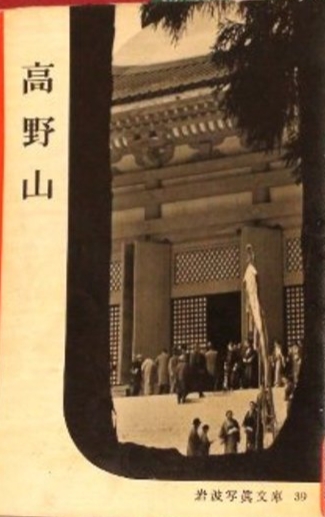
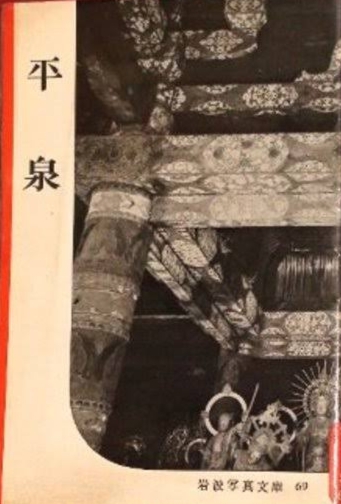
I was involved in making photography books for the first two years, and for about half a year I was an assistant to Hani Susumu. (…) As a photography book curator I edited 16 books, among which I will never forget “Koya-san” and “Hiraizumi”. I grew up in a foreign country without knowing much about “Japanese things,” so for me, the influence of making these two books was great, and later in my life I ended up using this experience.

Haneda Sumiko’s writings /1

If you follow this blog or my social media activity, you probably already know my love for the documentaries of Haneda Sumiko. One of the most important documentary filmmakers that Japan has seen in the last 70 years, Haneda is, in my opinion, the most important female director in the history of the cinema of the archipelago. One of my resolutions for 2021, time permitting, is to let more people know about Haneda, her career and impact in Japanese documentary cinema. In 2002 she published Eiga to watashi, a memoir of her career and experiences in the world of Japanese cinema from the 1950s until her more recent works. A revised version titled Watashi no kiroku eiga jinsei came out in 2014.

Starting from today I will post the translation of what I think are the most significant passages from the book (the first version) and other writings. Keep in mind that neither English or Japanese is my first language, and that I’m doing it just out of passion for the topic and admiration towards Haneda.

Titles are mine

Iwanami Shoten, and from China to Japan

Both before and after the war, the path for women to become directors was closed from the very beginning.  It took many years of long practice to become a filmmaker; to become a director, you had to start as an assistant director, but for women, this was never a possibility. There are of course some exceptions like Sakane Tazuko, who, before the war, seized this opportunity from working with Mizoguchi Kenji, or Tanaka Kinuyo, who grabbed the chance from being one of the first and biggest stars [in Japanese cinema].
That being said, the situation was apparently different in the world of documentary films, and I, knowing nothing of all this, one day, almost by chance, became a director.

Shortly after the end of the war, in 1949, Iwanami Shoten, through Nakaya Ukichirō, established a new branch, the Nakatani Laboratory. Iwanami Shigeo, the founder of the company, saw the situation of audiovisual education brought in by the United States after the war, and thought that not only print culture but also video culture would be important from that moment on, and that is the reason Iwanami wanted his company to venture in the world of video productions. However, Iwanami died without realizing this.

It was Kobayashi Isamu, the managing director of Iwanami Shoten, who continued the idea started by Iwanami. The Nakatani laboratory was established in the hope of becoming a place were “good science films” could be made. Under the guidance of professor Nakatani, renown for his research on snow, the staff centered around Yoshino Keiji, who shot “Snow Crystals” and “Frost Flowers”, at the time highly regarded science films. Kyodo News reporter Hani Susumu was also scouted and became one of the core members of the group.

I was born in Dalian, Manchuria, and lived in the mainland for several years, but went to Manchuria again and graduated from elementary school and girls’ school in Lüshunkou. After that, I entered Jiyū Gakuen in Tokyo and graduated there in the year of the end of the war. On August 15 1945, the day of the end of the war, I went back to Dalian. For three years until the repatriation, under the occupation of the Soviet army, I worked for the women’s department in the only permitted organization, the “Dalian Japanese Labor Union” in the Japanese settlement. I missed the first repatriation, which began in 1946, and with the second one I arrived in Maizuru in July 1948. I wanted to move to Tokyo, but at that time Tokyo had restrictions, and people without jobs could not move in. I worked for a company called Shizuoka Prefectural Educational Book Publishing for a while, but from the spring of 1949 I found a job at the GHQ Chapel Center near the Diet Building and so finally I could go to Tokyo.  I was 23 years old.

Second part here