Idemitsu Mako What a Woman Made (2026)/part 3

Continuing my articles about the exhibition, Part 3 (Part 1 here, Part 2 here)

The retrospective Idemitsu Mako What a Woman Made, currently on view at the Tokyo Photographic Art Museum (July-September 2026), is one of the most comprehensive exhibitions ever devoted to the pioneering video artist and filmmaker. Bringing together films, video works, installations, and archival materials, it offers an unprecedented overview of more than five decades of Idemitsu’s artistic practice, tracing the evolution of a body of work that has consistently explored gender, domesticity, motherhood, and the mediated construction of female identity, especially in Japan.
I visited the exhibition, which also featured special screenings of Idemitsu’s works, over two days in July, immersing myself completely in her world. It was one of the most extraordinary artistic experiences I’ve had in 2026, an aesthetic revelation that continues to resonate within me.
From the museum’s homepage:

Idemitsu Mako (b. 1940) is a pioneering artist in the fields of experimental film and video art in Japan. After spending time in the United States during the 1960s, she began creating works that explored themes such as the lives of women, family, and the relationship between media and society, using film and early video as her mediums. Her video works from the 1970s onwards in
particular incorporate the narrative techniques of television melodramas to depict themes such as mother-child relationships, the dynamics of marriage, and women’s social roles from a unique perspective. In recent years, as the global conversation surrounding gender and the body continues
to grow, her practice has received renewed attention.
The Tokyo Photographic Art Museum acquired Idemitsu Mako’s complete film and video works, as well as her major installation pieces, between 2017 and 2018. This large-scale retrospective offers a comprehensive overview of Idemitsu’s artistic practice, including works that are being exhibited for
the first time since their acquisition by the museum. A total of 45 works, including those in the museum’s collection, will be presented through exhibitions and screenings.

As a future reference for myself and for anyone who might stumble upon this page, I’ll be publishing my notes on every work I saw during my two-day stay in Tokyo. They’re rough impressions rather than finished reviews, but I hope they’ll prove useful, whether as a personal archive or for readers interested in Idemitsu remarkable body of work.
Hopefully I longer piece will eventually emerge from this work in progress.(Works are listed in the order I saw them)

Part 3

“My 16 mm works are about creating another world to escape the rigid routine of daily life. Even now, film retains something of that quality, whereas video is a reflection of everyday reality. These two mediums exist as completely distinct entities. When I shoot on film, I want to detach myself from daily life and capture images that are incredibly beautiful. I actually love these kinds of films. For me, film and video stand clearly apart from each other.”
Interview with Idemitsu Mako The Complete Works of Idemitsu Mako, 1970-1996, Pandora, 1996, p. 21

Yoji, What’s Wrong With You? (1987) video
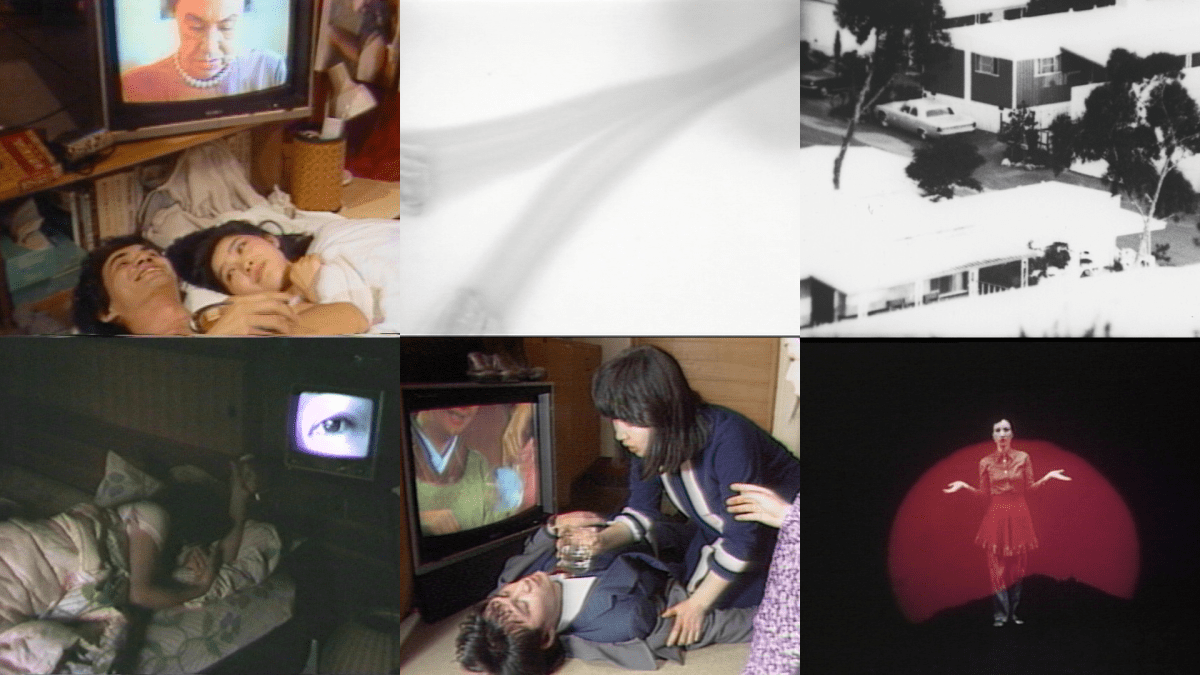
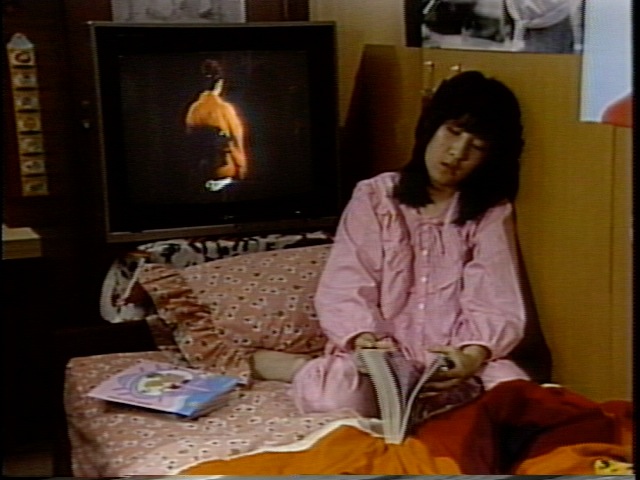
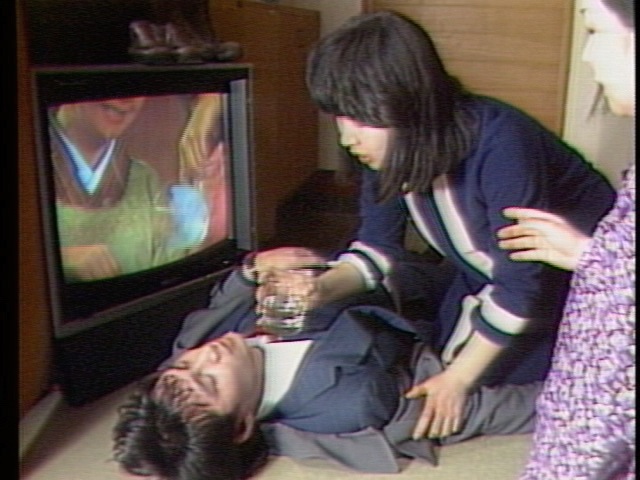
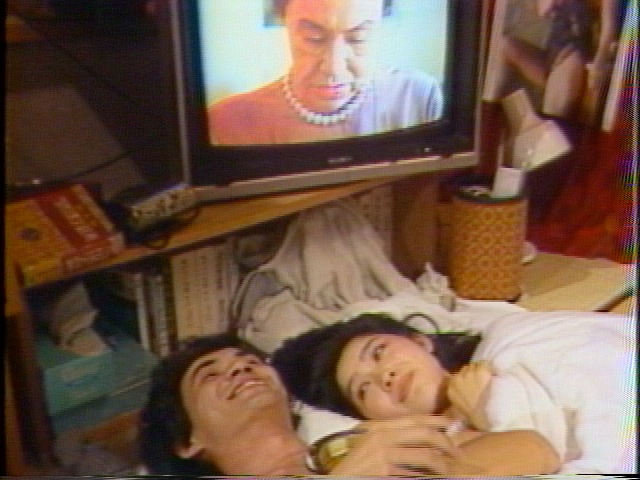
Of of Idemitsu’s best works. A Brechtian family psychodrama where absurdity reigns. Television screens function as magnifying lenses, enlarging and externalising the protagonists’ inner lives. The relationship between mother and son unfolds in a surreal, almost comical, and at times perverse register (as in the scene where the mother gazes at a monitor showing her son’s naked body), while the characters speak largely through clichés and stock phrases.
While the central narrative revolves around a mother struggling with the gradual loss of her connection to her son, and the prospect of old age, the simple mise-en-scène, and especially the pervasive presence of television screens (here arranged in more playful and unconventional ways than in Idemitsu’s earlier works) also turns the video into an almost X-ray-like examination and deconstruction of the social roles and expectations internalised by women in Japanese society.
Television monitors as a Cronenbergian and Ballardian materialization women’s dreams, memories, unrealized aspirations, fears, and desires…
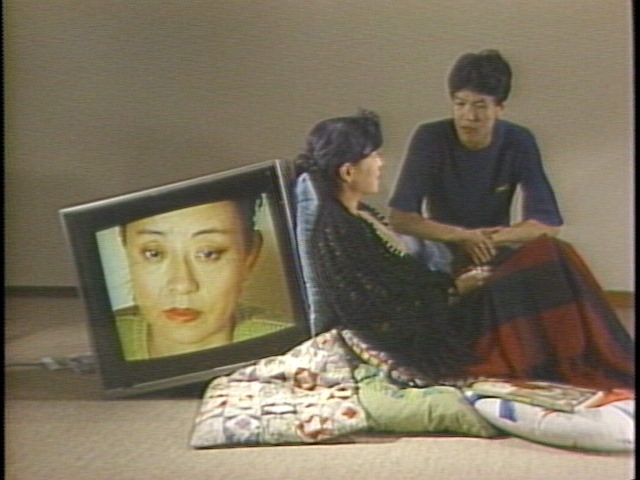
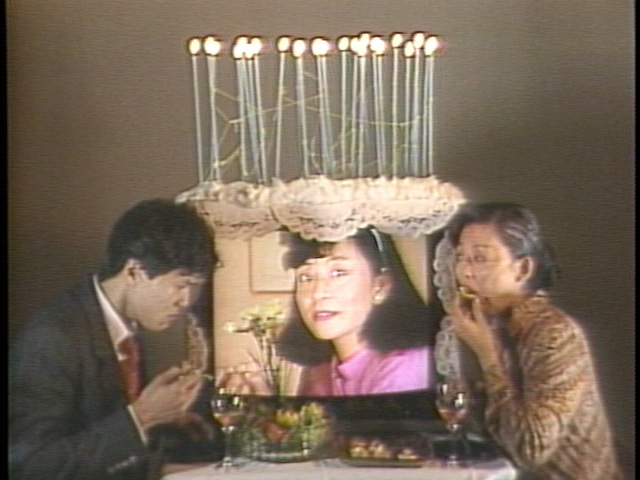
Grandmother, Mother, Daughter (1976) was displayed at the exhibition entrance on three TV monitors stacked in a column. In the piece, Idemitsu’s grandmother, mother, and daughter each appears in one screen with several packs of cigarettes, improvising and playfully interacting with them.
Women’s labor as captured and controlled by cameras?
First installation by Idemitsu and possibly the first instance in which she used monitors inside the frame, at least the first on video.

Animus Part 2 (1982) video
Another work inspired by Idemitsu’s fascination with women performing on stage. This time, Neo-Dada artist Kishimoto Sayako performs Messenger from Hell in Idemitsu’s living room. Over the footage, the filmmaker overlays an image of a pantomime figure in a yellow suit, and an oversized face. The work also includes English narration that does not fully translate Kishimoto’s words and carries a slightly ironic tone.
Kishimoto’s fierce performance brought to mind the avant-garde theater of the 1970s. The title, Animus, refers to the Jungian concept of the masculine side of the female psyche. Kishimoto was a fascinating artist.

Make Up (1978) video
Idemitsu is doing her make-up and uses a monitor as a mirrow.
Video as a make-up, a distortion, but also a revealing tool for self-awareness, and at the same time anticipating today’s obsession with one’s own image as continuosly reflected by contemporary mediascape (smartphone’s selfies, social media, etc.)
At Yukigawa 3 (1979) 16mm
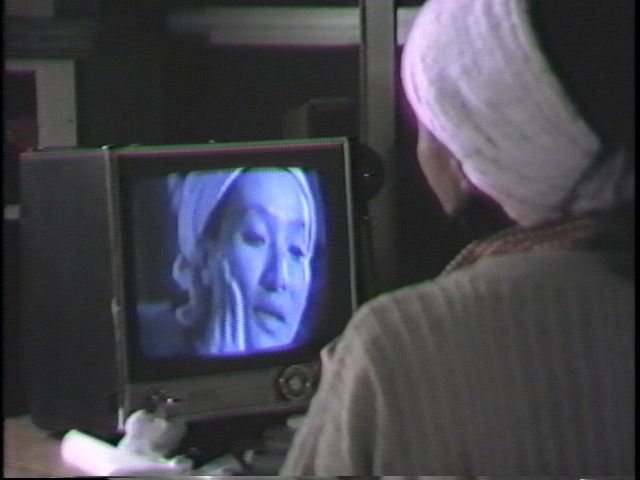
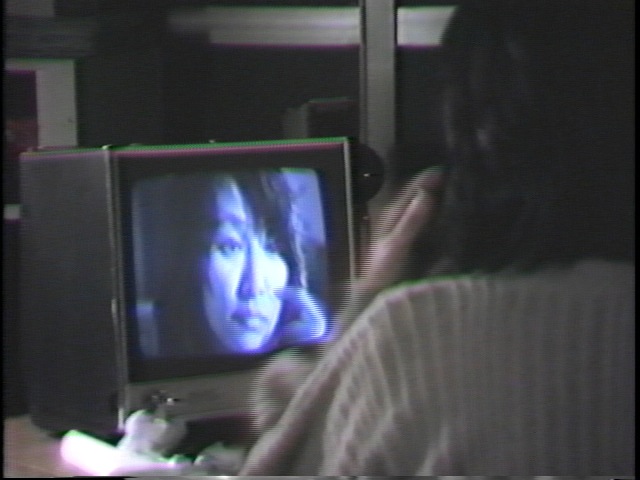
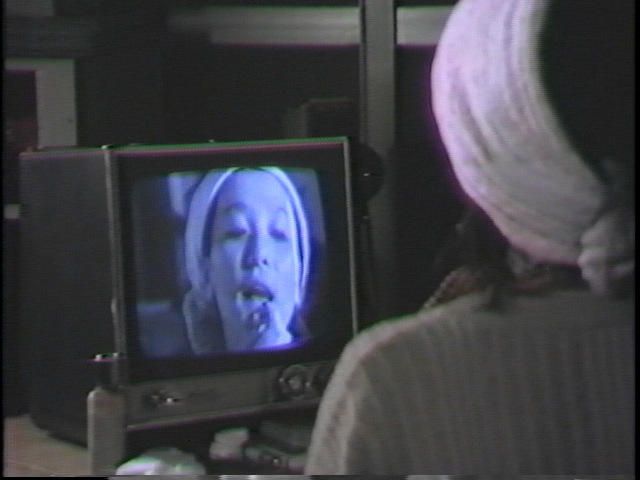
Everyday scenes of Idemitsu’s mother and the artist herself are intercut with images of the gardens surrounding their houses in Yukigaya and Aobadai, accompanied by Chopin piano music.
The editing is fast, alternating between interior spaces, where the mother sits at a table eating and drinking, and shots of trees gently swaying in the garden. Occasionally, the voices of children can be heard in the background.

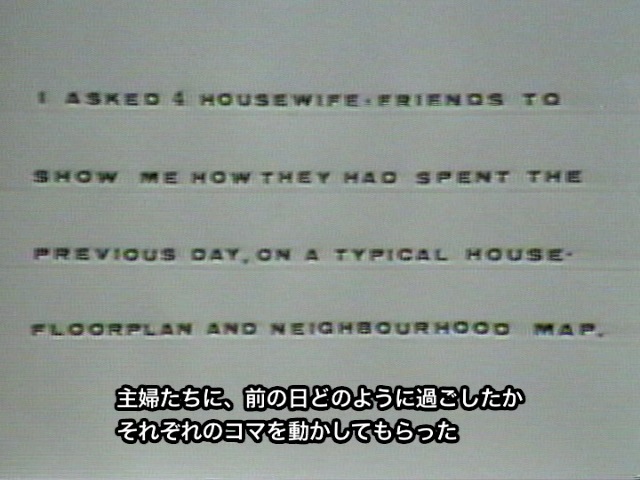
Housewives and a Day (1979) video
This was one of the highlights of the exhibition for me. While extremely simple in both structure and execution, it gradually acquires new layers of meaning as it unfolds.
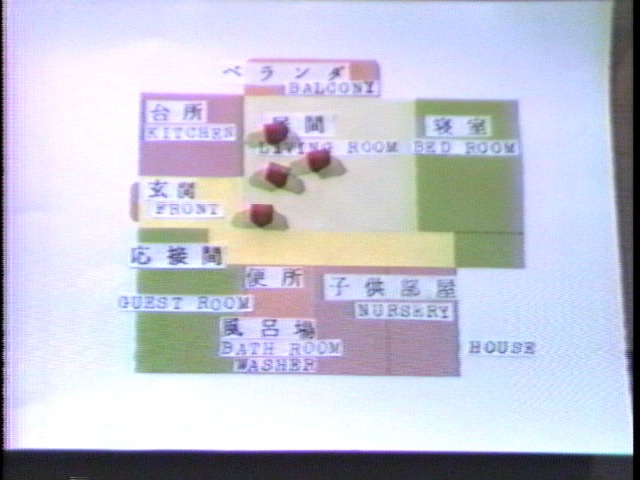
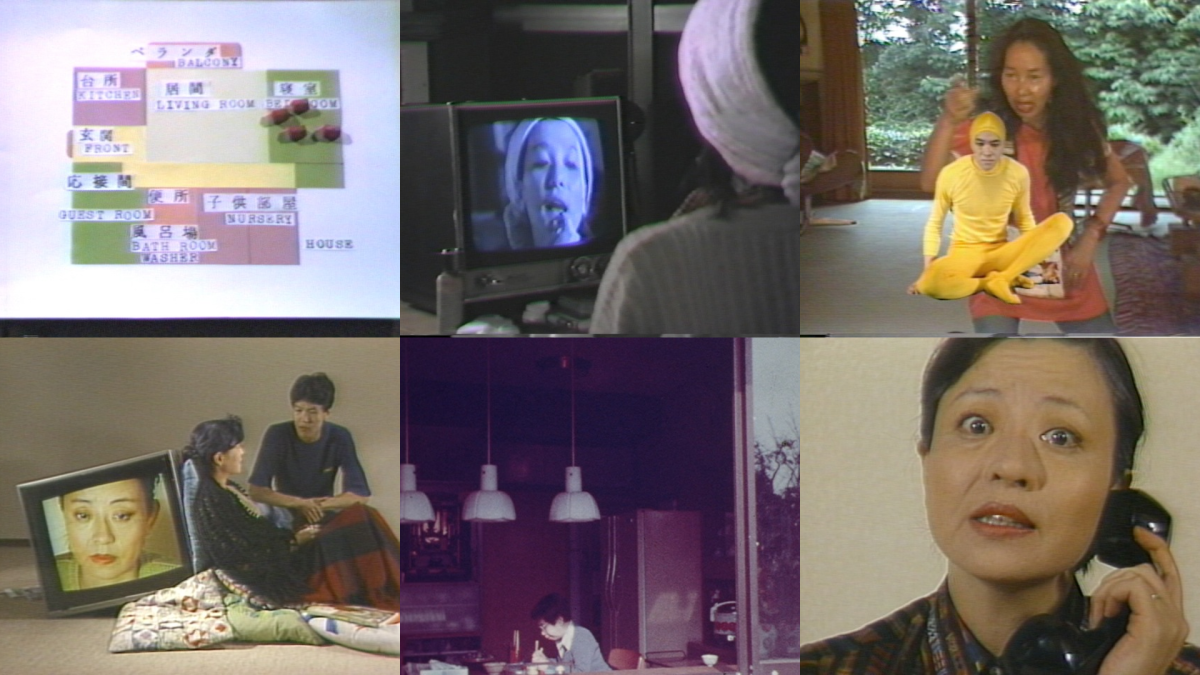
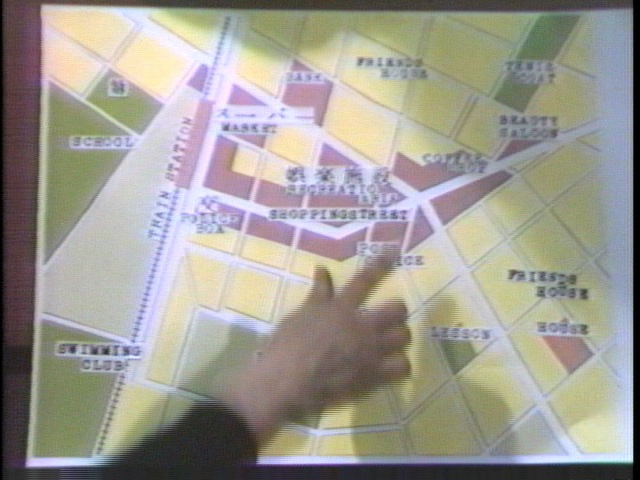
Four housewives, living in Idemitsu’s neighbourhood, gather around a table with a floor plan of a typical house placed in front of them. Using the map as a guide, they reconstruct their daily routine, recalling what they did and where they went the previous day.
Through this simple setup, the women trace their movements around the house while chatting freely and cheerfully about yesterday’s chores, often struggling to remember the exact sequence of their actions. At a certain point, the floor plan is replaced by a map of the surrounding neighbourhood as they describe going grocery shopping, picking up their children from school, returning home, and heading back out again to run more errands.
Beyond documenting their routines and movements, the video creates an opportunity for these women to talk about their everyday lives and give voice to experiences that usually remain invisible or unspoken. As the work progresses, it increasingly becomes a space for sharing and solidarity among housewives (it should be noted that the women all appear to belong to the middle class). The exhibition catalogue describes the work as an experiment reminiscent of sandplay therapy, one that gradually fostered greater self-awareness among the four participants.
The use of video technology also plays a crucial role in shaping the work. If I’m not mistaken, the piece consists of a single continuous take, or perhaps just two, and this technical choice informs both its aesthetic and the way its themes emerge.
Idemitsu Mako What a Woman Made (2026)/part 1

The retrospective Idemitsu Mako What a Woman Made, currently on view at the Tokyo Photographic Art Museum (July-September 2026), is one of the most comprehensive exhibitions ever devoted to the pioneering video artist and filmmaker. Bringing together films, video works, installations, and archival materials, it offers an unprecedented overview of more than five decades of Idemitsu’s artistic practice, tracing the evolution of a body of work that has consistently explored gender, domesticity, motherhood, and the mediated construction of female identity, especially in Japan.
I visited the exhibition, which also featured special screenings of Idemitsu’s works, over two days in July, immersing myself completely in her world. It was one of the most extraordinary artistic experiences I’ve had in 2026, an aesthetic revelation that continues to resonate within me.
From the museum’s homepage:

Idemitsu Mako (b. 1940) is a pioneering artist in the fields of experimental film and video art in Japan. After spending time in the United States during the 1960s, she began creating works that explored themes such as the lives of women, family, and the relationship between media and society, using film and early video as her mediums. Her video works from the 1970s onwards in
particular incorporate the narrative techniques of television melodramas to depict themes such as mother-child relationships, the dynamics of marriage, and women’s social roles from a unique perspective. In recent years, as the global conversation surrounding gender and the body continues
to grow, her practice has received renewed attention.
The Tokyo Photographic Art Museum acquired Idemitsu Mako’s complete film and video works, as well as her major installation pieces, between 2017 and 2018. This large-scale retrospective offers a comprehensive overview of Idemitsu’s artistic practice, including works that are being exhibited for
the first time since their acquisition by the museum. A total of 45 works, including those in the museum’s collection, will be presented through exhibitions and screenings.

As a future reference for myself and for anyone who might stumble upon this page, I’ll be publishing my notes on every work I saw during my two-day stay in Tokyo. They’re rough impressions rather than finished reviews, but I hope they’ll prove useful, whether as a personal archive or for readers interested in Idemitsu remarkable body of work.
Hopefully I longer piece will eventually emerge from this work in progress.
(Works are listed in the order I saw them)

Part 1

“My 16 mm works are about creating another world to escape the rigid routine of daily life. Even now, film retains something of that quality, whereas video is a reflection of everyday reality. These two mediums exist as completely distinct entities. When I shoot on film, I want to detach myself from daily life and capture images that are incredibly beautiful. I actually love these kinds of films. For me, film and video stand clearly apart from each other.”
Interview with Idemitsu Mako The Complete Works of Idemitsu Mako, 1970-1996, Pandora, 1996, p. 21


Another Day of a Housewife (1977) Video
Presented on a big television, this is the work that opens the exhibition.
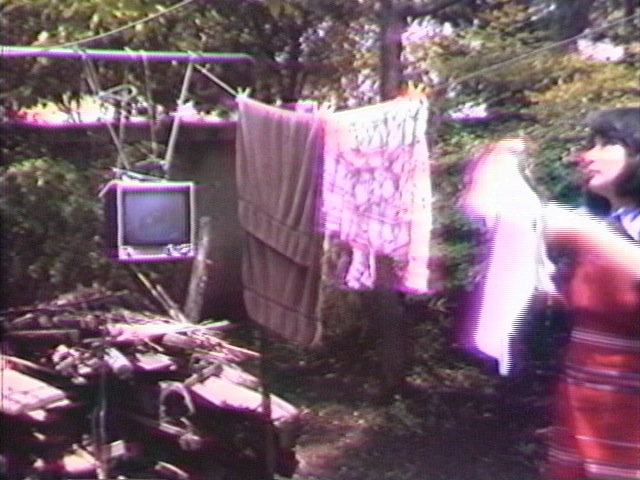
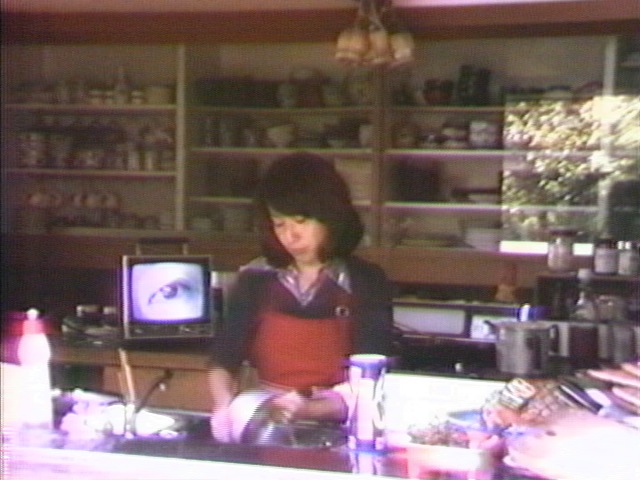
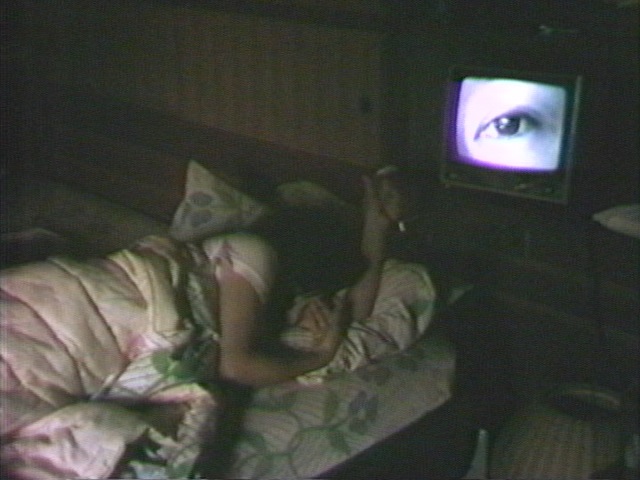
This early video observes the everyday routines of a housewife—played by Idemitsu herself—through a series of long, static takes. Waking up, cooking, washing the dishes, grocery shopping, hanging laundry, calling friends on the phone. Throughout the film, a giant eye—again, the filmmaker’s own—repeatedly appears on a television monitor, silently watching the protagonist.
The constant presence of this eye is deeply unsettling. It evokes the omnipresence of the media, but even more powerfully, especially in the film’s darker, more intimate scenes, it comes to embody the internalized gaze of society: an apparatus of self-surveillance through which the protagonist judges and disciplines herself. The eye is at once external and internal, suggesting that social expectations have become inseparable from the housewife’s own consciousness.
Although this is not the first work in which Idemitsu incorporates television monitors, Grandmother, Mother, Daughter (1976) is probably the one, it is perhaps the first in which they function as a channel and window to the protagonists’ inner world. This formal device would become increasingly central to her work throughout the 1980s, eventually evolving into one of the defining features of her visual language, often referred to as the “Mako Style.”

*

Woman’s House (1972) 16mm
First work in 16mm by Idemitsu, the film is the recording, a re-composition of Womanhouse, an exhibition conceived by Judy Chicago and Mirian Schapiro at the California Instutite of Arts in 1971.
Small objects, clothes, interiors of a room, curtains, dolls, everything bathed in bright light. The screen is saturated with white from the very first shot. Surreal: fake breast cover the ceiling and walls, later giving way to sunny-side-up eggs.

What a Woman Made (1973) video
Static white sceen with a voice talking on it, the topic is gender roles for children as expected and codified in Japanese society. The image on screen is out of focus, abstract-like, and only toward the end does it gradually come into focus, revealing a tampon swirling in a toilet bowl. Idemitsu’s first significant work, also from a feminist point of view.

Great Mother (Harumi) (1983) video
Great Mother (YUMIKO) (1984) video
Great Mother (Sachiko) (1984)
Trilogy inspired by the Jungian concept of the “Great Mother”.
The relationship between mother and daughter varied in each work, but it’s alway excessive in hate or love.
The rebellious girl in the seond part seems to represent Idemitsu herself, who grew up in an affluent and powerful family.
In the last segment the mother/daughter relationship it’s not only very strong, but also a necessary shield, a safe space, against the violence, physical and mental, perpetrated daily by the husband (another vile male figure in the Idemitsu’s universe). Of the three the last is perhaps the nastiest in relation to the position and role played by the man, who is a representation of the alpha male/Japan/masculinity embedded in Japanese society.
Worth noting: in the last video, the television monitor is used also horizontally, as a table.
What is most astonishing here is the way the television monitors function not only as a means of materializing Jungian archetypes, but also of introducing multiple temporalities. They become windows onto the past or onto moments from another person’s life, collapsing different psychological and temporal dimensions into the same video space (“video is time” as Nam June Paik has stated and Maurizio Lazzarato expanded upon).

*

At Santa Monica 3 (1975) 16mm
Black-and-white silhouettes, the sun slowly setting, shifting patterns of light and shadow, reflections in constant motion. Accompanied by music by John Cage “String Quartet in Four Parts”, the film unfolds as an impressionistic vision of her house in Santa Monica and surroundings, where Idemitsu lived for many years. Probably the best work of her first period (in 16mm), at least amongst the ones I’ve seen.

Next (1973) 16mm
Single channel video form the original 16mm, Next collects together several works by artist CIBA: colorful geometrical shapes on white background, reds and yellows predominate.

At Any Place 4: From the Habanera of a Housewife by Yoneyama Mamako (1978) 16mm
Projected on a wall of the exhibition on single-channel video. Idemitsu continues her interest in shooting and re-elaborating on stage performances, here pantomime Yoneyama Mamako’s performance is overlayed with images of natural places she filmed. Visually and for its use of a wide range of music is a very fascinating work.

Haneda Sumiko’s writings /3: Paulo Rocha on Ode to Mt. Hayachine

Third part (you can read the first part here and second here)

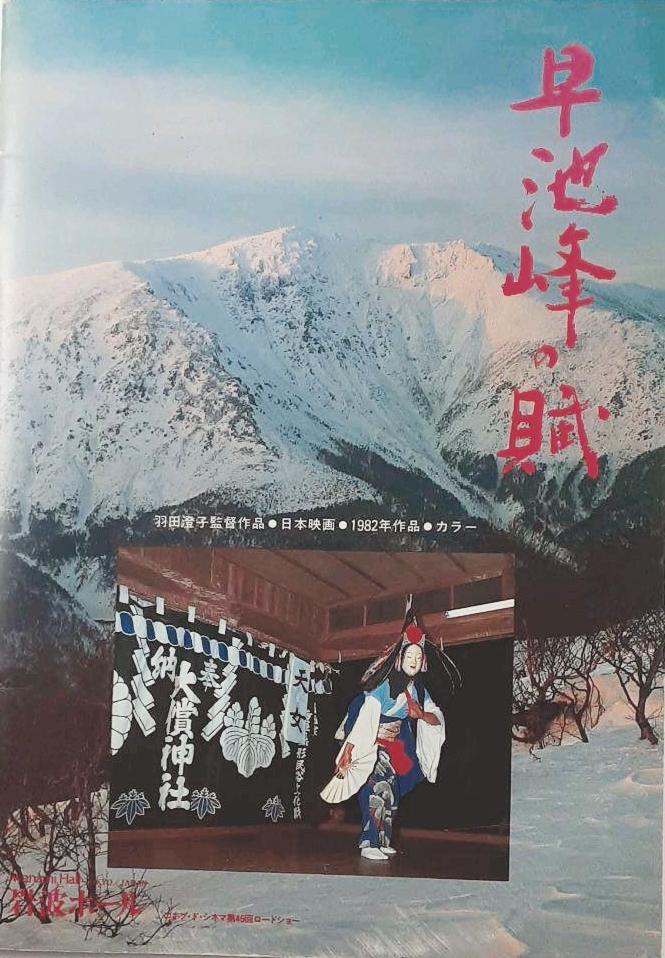
A slightly different post today, since it’s not about Haneda Sumiko’s own writings, but more about one of Haneda’s documentary, and one of the most significant in her career, Ode to Mt. Hayachine 早池峰の賦 (a.k.a. The Poem of Hayachine Valley). The movie was released in 1982 at the Iwanami Hall, distributed by Equipe de Cinema, where it stayed from May 29th to June 25th (and later from August 7th to 13th). A booklet about Haneda and the movie was published and sold at the theater, in it there are various writings by Haneda, Tsuchimoto Noriaki, people of the village in Iwate, and Paulo Rocha, among others. The Portuguese director, with whom Haneda collaborated as a screenwriter for a segment of his A Ilha dos Amores (released at the Iwanami Hall in December 1983), wrote an interesting piece on Ode to Mt. Hayachine; you can read my translation below (NOTE: This is by no means a professional translation, but I hope the readers can get the gist of it):

Paulo Rocha on Ode to Mt. Hayachine

In an Italian film similar to this one, L’albero degli zoccoli / The Tree of Wooden Clogs, director Ermanno Olmi told us, with rare insight, about the heart and the inner world of Italian peasants. Haneda goes here even further, for her, it is not only the heart of the people who speaks in her movie, but it is as the whole of nature, trees and stones, were speaking to us. Although we are in 1982, immersed in our contemporary problems, at the same time, we live with simplicity in an uncomplicated world that has just been created right now. There is a difference between Olmi and Haneda, and it may be a difference that exists between a country with a Catholic tradition and a country with a Shinto tradition, but still there is a miracle that is common to the two. This miracle is that in their clear mind everything is sublimated and yet, a direct and spontaneous force, an inspiration and a beauty in the detachment of modern daily life is gradually invading our hearts. For Haneda, the mountain gods, the plastic products in the small shops in the village, the people who dance the kagura, and the tourists are just as passionate and fantastic. Everything is just as important to her non-sentimental gaze. That is, past and future, nature and machinery, mountains and towns. What is art for, what is fiction for, what position does the profilmic material occupy in a movie, what position does fiction occupy in art? What about the artist? What happens to the artists filmed? Rarely in the history of cinema have such essential questions been asked in such a direct, simple, generous, and intelligent way. I am a filmmaker, and until now I believed that I would be closer to the truth if I approached it through fiction, but now, after seeing Haneda’s Ode to Mt. Hayachine, I realize that the idea is an arrogant one, we must take advantage of this opportunity, we must learn to see reality correctly in order to know the truth. Ode to Mt. Hayachine gave us the best example of this. In Europe, documentary films are being re-evaluated as part of a movement for a new type of cinema. If Ode to Mt. Hayachine were to be introduced in Europe, they would no doubt be surprised and respectful to find that the path they were looking for already existed in Japan.  Centuries from now, when people in the future will want to know what we were like, they will be able to watch Ode to Mt. Hayachine, and the movie will tell them about us, the audience of the film today, and about little-known people who were lost among the mountains, in an unknown valley.