It’s that time of year again: autumn arrives, bringing with it a cascade of film festivals around the globe. Just to name a few of the major ones in Asia, we have Busan and Tokyo, along with the Image ForumFestival, the biggest event dedicated to experimental cinema in Japan. December will also see the debut of the newly established Aichi Nagoya International Animation Film Festival in Nagoya. But I digress.
One of the oldest and most prestigious festivals in Japan is without doubt the Yamagata International Documentary Film Festival, an event I’ve been attending for more than a decade now (and about which I’ve written various reports and reflections on this very website).
I plan to attend this year’s edition (October 9–16) as well, though life is unpredictable and you never know what might happen in the “real” world. Below are some of the screenings and programs that have caught my eye and that I’m especially looking forward to.
Being a biennial festival, YIDFF is not the place to see world premieres, but rather a chance to catch up with significant films already screened elsewhere or to discover under-the-radar documentaries, often from the Asian continent. This year’s International Competition will showcase Park by So Yo-Hen, which won the Grand Prize at the Taiwan International Documentary Festival last year, and With Hasan in Gaza by Kamal Aljafari, presented at Locarno a couple of months ago. Aljafari will also present his more experimental A Fidai Filmin the program Palestine – Memory of the Land, a work I am eager to revisit on the big screen, this time with more information and conext to help decipher it.
Returning to the competition lineup, Letters to My Dead Parents by Ignacio Agüero weaves together personal stories with the history of the labor movement in Chile, while I Was, I Am, and I Will Be! by Itakura Yoshiyuki promises an exploration of Kamagasaki, a town of day laborers, at a moment when the city was preparing for Expo 2025.
New Asian Currents has usually been the section where I’ve made the most discoveries over my years of attending Yamagata. While many of these came from last-minute decisions or suggestions by friends and fellow critics on site, this time there are a couple of titles I’m especially eager to check out. Collective Dreams Stitched into December by Bappadittya Sarkar—a patchwork of interconnected stories set in the Indian city of Jaipur—promises to satiate my appetite for more documentaries from this vast country. Meanwhile, The Tales of the Tale by Song Cheng-ying and Hu Chin-ya captures the stories and dreams of an old mining town of Houtong in Taiwan.
In Perspective Japan,The Yoshida-ryo Dormitory by Fujikawa Keizō documents the ongoing battle to keep the country’s oldest student dormitory open—a struggle deeply intertwined with the social fabric of the city and the political activism of Japan at large (you can read more here). In the same section, Spring, On the Shores of Aga by Komori Haruka carries a special resonance for me, as it is connected to Satō Makoto, his cinematic legacy and the Agano area.
Every edition of the festival offers audiences a major retrospective, and this year it is Unscripted: The Art of Direct Cinema—32 works spanning five decades of a documentary mode that revolutionized the way non-fiction films are conceived, produced, and filmed. Although I have already seen most of these documentaries – but not all!- this is a perfect opportunity to revisit some “classics” and to gain deeper insights through the accompanying discussions.
Among the peripheral screenings and events, one that stands out is Feb 11, 1990 Rough Cut Screening: The Other Version—four and a half hours of material documenting the very first YIDFF in 1989, footage not included in Iizuka Toshio’s A Movie Capital (1991). For those, like me, fascinated by Sanrizuka, the resistance against the construction of Narita Airport, and the legacy of Ogawa Pro, the special presentation Sanrizuka: Disappearing Landscapes – The Heta Project Screening is not to be missed. Another highlight is the invitation of Voices of the Silenced, this year’s closing film—a reflection on counter-archives and the suppression of minorities in Japan (particularly the Korean minority) by Park Soo-nam and Park Maeui. The documentary screened in Berlin two years ago, but YIDFF lists it as 2025, so I wonder whether the film has been reworked.
All of these films, however, feel like just planets orbiting around the central sun: Palestinian cinema, and Palestine itself—the true core of this year’s festival, even if the number of works is not overwhelming. At least, that is how I perceive it. Palestine, its culture, and the struggle of its people have always held a special place at YIDFF. This year, while the dedicated program Palestine—Memory of the Land features only eight films, additional Palestinian works will appear across other sections, and I expect that conversations at nearly every venue will inevitably turn toward the ongoing genocide of the Palestinian people.
As it is the case for the Direct Cinema section, I’ve already seen most of the films in the Palestinian program, but here more than ever I’m eager for the post-screening discussions, and for the chance to share on the big screen—together with other viewers—some true masterpieces of political cinema.
The documentary I’d like to highlight in these closing lines is Fertile Memory (1980) by Michel Khleifi. When I first encountered it, the film was a revelation. It reflects a culture and a society oppressed and dispossessed by the Israeli state from the outside, while at the same time telling the story of two women struggling to navigate the shifts and tensions within Palestinian society itself.
What is equally striking is how the film unfolds as a meditation on landscapes: the geographical terrain, where human history and geological time are layered, and the human landscape of faces—faces that reveal emotions, hopes, regrets, and anger. In this sense, the breathtaking images of the Palestinian land, with its warm colors and sinuous contours, both contrast with and converse with the more intimate shots of the two women moving and working inside their homes. Particularly moving are the images of food and its preparation, as well as those moments when one of the protagonists is framed between a door left ajar and the jamb. We should keep the door open and continue to talk and discuss about Palestine, its people and memories.
This is an open space – open because it’s a work in progress – where I will attempt to collect and index articles, essays and discussions generated in Japan by the non-release (as of today, 10 March 2025) of Black Box Diaries, journalist Itō Shiori’s documentary about her 2015 sexual assault case. Since the discussion is mainly taking place in the Japanosphere, most of the articles are in Japanese, but I’ll try to provide a brief summary for each, even though here, more than ever, the details and nuances are of the utmost importance.
Updates:
– November 7, 2025: it has been announced that the film will be screened at T-Joy Prince Shinagawa in December. – November 7, 2025: added a link to a piece by researcher Heidi Ka-Sin Lee published on Tokyo Review. – October 29, 2025: Itō Shiori has reached a settlement with the taxi driver who was filmed without consent: a new version of the scene will be used in the documentary. The official apology and statement from Itō can be downloaded here. – April 22 2025, added a discussion between filmmaker Yang Yonghi and location Coordinator Nishiyama Momoko (FRaU) – April 1 2025, added the English version of the article written by Funahashi Atsushi and scholar Chelsea Szendi Schieder – March 29 2025, added professor Markus Nornes comments – March 23 2025, added Sōda Kazuhiro ‘s piece on Shūkan Kinyōbi
The Mainichi Shimbun has an article (February 21, 2025), following Itō’s press conference on February 20th, that summarises the situation and explains the reasons the documentary has yet to be released in Japan:
The documentary, “Black Box Diaries,” has been screened in over 50 overseas countries and regions since its world premiere at a film festival in January last year but not yet in Japan due to legal concerns. Lawyers, including those who represented Itō in a civil lawsuit over the case, have said that she broke a pledge to protect sources by using unauthorized footage and audio. (…)
Itō admitted that she used security camera footage at the hotel she was dragged into by the alleged assailant, a former television reporter, even though it was provided solely for use in the trial. She also used a phone recording of a conversation with one of the former lawyers, as well as footage of conversations with a taxi driver and a detective, without getting approval from the relevant parties for the film.
(…) Itō said in the statement that in seeking to prioritize the public interest, she decided to go ahead with using part of the unauthorized material, believing it “essential” to conveying the reality of sexual violence and “the only visual proof.” The incident occurred in April 2015 when Itō met the alleged assailant for dinner and she later filed a complaint with police, saying she had been sexually assaulted by him in the hotel room after losing consciousness. The Tokyo District Public Prosecutors Office decided not to prosecute the reporter, but Itō won a damages suit against him, with the Supreme Court finalizing a ruling that found there had been sexual intercourse without consent.
The journalist has announced that she will edit the film in order to hopefully have it released in Japan. As I said, the revelation that some material was used in the documentary without consent has sparked a growing number of articles and discussions, most of them about ethics in documentary, informed consent and the difference between journalism and documentary. As far as I can tell, most of them are appreciative of what the documentary is trying to achieve and respectful of the struggles and trauma Itō has had to go through.
One of the first articles on the subject was co-authored by filmmaker Funahashi Atsushi and scholar Chelsea Szendi Schieder (18 February 2025). Both believe that the film should be shown widely and that it would be an act of public interest to do so. The documentary is not just a visual record of an individual, but has a universality that makes the viewer think that to tolerate this injustice as a society is to ignore the long history of sexual abuse that Japan’s male-dominated society has imposed on women. I am paraphrasing here, please read the whole article for more details, if you can: https://note.com/bigriverfilms/n/nd58e6b238411
Now (March 29, 2025) there’s an English version of the article:
Through a brutally revealing account of how one individual woman’s bodily autonomy and reputation were violated, her film forces viewers to reflect on their complicity in perpetuating a culture of silence and male dominance.
(…)
We are hopeful that she can manage to adjust her film to address concerns about the ethics of her film around footage. (Reportedly, Ito made a new version, addressing some of the criticism.) Such adjustments could tighten the focus again on the important issue that Ito raises regarding the high price of speaking out about sexual violence.
So far, silence—keeping the black box tightly sealed—has served to create plausible deniability of endemic sexual violence. As a documentary that presents the evidence of this violence, “Black Box Diaries” is a film of public interest.
(…)
To truly reach the Japanese public, Ito may need to not only adjust the film but also find a way to reconnect with her supporters. Still, the film deserves a chance to be taken to the Japanese public, and to be seen, discussed, and acted upon. Its message is too important to remain locked away.
The full piece is available here (on a very side note: I really appreciate that is not posted on social media, but on a different platform): https://note.com/brooklyn11211/n/n480dc1044bfe
It’s interesting to me that two of the harshest criticisms of Itō Shiori’s approach in her film have come from two female documentary filmmakers, Mikami Chie (We Shall Overcome, The Targeted Village) and Yang Yonghi (Dear Pyongyang, Soup and Ideology). On their social media accounts, the two have repeatedly expressed their shock and disbelief at Itō’s unauthorised use of recorded material. I don’t want to redirect the reader to X or Facebook, so I won’t provide links(I wish people would write on other platforms and then link to their social media accounts).
Filmmaker Mori Tatsuya (A, Fake, I -Documentary of the Journalist-) has a long piece on Newsweek Japan (3 March 2025) that focuses on what are, according to him, the main differences between documentary and journalism:
Journalism and documentary are very different. Documentaries are self-expression. They reconstruct one’s own feelings and thoughts, that is, one’s own subjectivity, using fragments of reality. (…) Journalists are tasked with serving the public interest and realising social justice, monitoring power and helping the weak, and they impose many norms and rules on themselves, such as those that information providers must absolutely abide by. Double and triple-checking and fact-checking are also essential. They must also be as neutral and objective as possible. One reason for this is that the process of reporting and publishing information (especially in the case of video media) can take on a highly abusive nature.
Documentary filmmakers are free. It is about self-expression. The norms and rules are up to the individual. So you have to be prepared to hurt others. I don’t mean that we should be defiant, of course we want to minimise the damage. But as long as it is a documentary, the damage cannot be reduced to zero. You have to be prepared to be on the side of the perpetrator, but at the same time you have to bear the guilt and the blame. (…) This is the biggest problem with the documentary “Black Box Diaries”: not only the director Itō Shiori – who calls herself a journalist and claims that the unauthorised use of images and sound is in the “public interest” – but also those who defend the film and those who criticise it confuse documentary with journalism.
Journalism is not art. It is important to raise issues and make them known to society. But documentaries are works of art. (…) Documentary filmmakers should not use things like public interest or fairness as indicators of what they are doing. (..) I must always put my ego first and not submit to social norms, organisational rules or anyone else’s common sense.
Director Ito Shiori is free to call herself a journalist. But if she does, she must adhere to the principles and rules of journalism. She must protect informants thoroughly. She must minimise damage. She must prioritise objectivity and the public interest, and she must prioritise the realisation of social justice. These are the basic requirements. You can’t have the best of both journalism and documentary. It’s one or the other. If you’re making documentaries, you shouldn’t be using nice words like public interest and social justice.
What I fear most now is that in the aftermath of this incident, lines will be forcibly drawn in ambiguous areas about how documentaries should be made, that subjects must be shown the material in advance and that permission must be obtained in all cases. (…) The film is valuable. Not only does it have a strong perspective on the #MeToo issue, but it also strongly denounces the collusion between political and investigative powers, truly opening the black box. It should also be released in Japan. It would be really frustrating and unfortunate if it was not.
A discussion of the issues raised by the documentary between three women who, to varying degrees, supported Itō in her battles. Published on the Japanese magazine FRaU’s website, 9 March 2025:
Why are those who have supported Itō for many years now expressing concern? What are the problems? At a roundtable discussion, Hamada Keiko, who organised the Japanese preview in July 2024, Ogawa Tamaka, a journalist who attended all the trials, and Nakano Madoka, who studies gender, education and media issues, discussed the issues.
First, we asked each of the three about their involvement with Itō Shiori.
Nakano Madoka: I was just a viewer, and I only exchanged business cards with Shiori once, when she was at a panel discussion. However, as an adjunct professor at a university, I have studied this incident in my “Media and Gender” class. At the moment, I am working on DEI (Diversity, Equity & Inclusion) at my university, and I am dealing with the fact that within an individual there is majority and minority status, power and vulnerability, so I am interested in this case.
Ogawa Tamaka: A few months before our first press conference in 2017, Shiori was covering the issue of harassment in Japan with an Al Jazeera journalist, and I interviewed her, which is how I first met her. She spoke about her experiences then, and I’ve been supporting her ever since, attending the trial between her and Yamaguchi, as well as several trials related to slander and defamation.
Hamada Keiko: Since interviewing Shiori in the autumn of 2017 at the online media where I was editor-in-chief, I have supported her behind the scenes at her trials and have had personal contact with her. In 2024, there was a screening of the film in New York, and my friend said it was “very good”, so I thought, “Why don’t they have a preview screening in Japan? I want to see it soon.” In May, I asked Star Sands, the distributor, and Shiori if I could hold a special preview for media people and researchers who cover gender issues in Japan. At the time, I just wanted to see a film that had such a good reputation overseas, and I felt it would also help support Shiori. We held a screening in July [2024, tn] to coincide with Shiori’s return to Japan and planned a discussion after the screening.
(…)
Hamada : When we were deciding who to invite to the preview screening, I heard that the legal team that supported Shiori hadn’t seen the film yet, so I asked them, “Why don’t you come?” The list of participants was shared with Star Sands, with consideration for Shiori’s security, and we had also told Shiori that the lawyers would be coming.
When I actually watched the film, there was security camera footage, so I thought, “They must have gotten permission from the hotel,” and I gave my talk on that premise. I watched the film thinking that permission had also been obtained from investigators and the taxi driver, but after the event I was told that the lawyers representing the couple had left the venue immediately after the screening without listening to the talk event. I wondered why the legal team was so shocked. Afterwards, they pointed out issues with the positioning of the security camera footage and whether permission had been obtained for the testimony. I was shocked to hear that too. When I watched the film without any information, I thought it was a good movie.
The article also provides a clear explanation and timeline of the issues at stake:
The former legal team, which had been fighting the civil lawsuit with Ito for eight and a half years, learned about the contents of the film at the preview and had an exchange with Ito’s side. Then, about three months later, at a press conference held in October 2024, they pointed out the “problems” of the film:
1) The hotel security camera footage was used without permission. 2) Investigator A’s voice and image were used without permission. 3) The footage of the taxi driver was used without permission. 4) The content of the conversation with the lawyer was recorded without permission and edited to give a different impression from reality.
The discussion is really fascinating and worth reading in full, but I would like to highlight a few passages more where the three women talk about a journalist’s responsibility towards his or her sources, the case of Mommy (Nimura Masahiro, 2019), a documentary about the Wakayama curry poisoning case (1998) that was almost cancelled, and the role and responsibility of the producer in deciding the final cut of a film:
Hamada : I think this film could only have been made by Shiori, who is a survivor of sexual violence, a film director and a journalist, and I think that makes the film strong, but at the same time complicates the issues. When I first saw it without any information, I had the impression that it was a story about the rebirth of a survivor, in that there are several depictions of her mental state. However, she said that she made the film ‘as a journalist’, so I thought that she should have followed the minimum rules of ‘journalism’. (…) Shiori also said in a statement that she wanted to convey the state of society after reporting a sexual assault. I think this issue is very important. But if she wanted to convey it as a journalist, she could have done more to report objectively on the investigation and interviewed other survivors in addition to her own story. Why did she insist on using CCTV footage? It’s true that the inclusion of this footage has a powerful impact and adds to the strength of the work. But even in our interviews, we can’t use all the testimonies and footage we interview. When we think of the other person, we sometimes have to suppress our desire to inform society. I think many journalists, faced with this conflict, are still doing their job of conveying what needs to be conveyed, making the most of their limited resources.
Nakano : This point is not being criticised because Ito is a woman, but I think that no matter what kind of director you are, if your collaborators or actors say “Please don’t use that”, you have no choice but to respond. Recently, “Mommy”, which deals with the Wakayama curry incident, was almost cancelled. The eldest son of Hayashi Masumi, who is currently on death row, appears in the film, but just before its release the slander was so severe on social media that many asked for the film to be cancelled. In the end, however, the distribution company said: “After discussions between the producers, the distributor and the family involved in the film, we have decided to show a version of the documentary with some edits”, and released the film after reaching a mutually satisfactory agreement.
Such a dialogue should take place between the producers and the participants, and because not everyone may be able to speak out in this way, the producers must take as much consideration as possible in advance. The question “You were in the film, but did you have permission?” can be a secondary casualty, and viewers want to be able to watch without wondering about such things. As a journalist, I don’t want to be unable to use the testimony and footage that I’ve worked so hard to get, but that’s why I think it’s necessary to get permission from the participants before the film is released, and to take a stance of absolute protection of sources.
The weekly magazine Shūkan Kinyōbi, published on 21 March, devotes a large section to the case of the Black Box Diaries. Among the contributors to the issue is Sōda Kazuhiro, who has written a long essay discussing the issues surrounding the film from the perspective of the ethical responsibility of documentary filmmakers. According to Soda himself (on X, I’m not providing a link, sorry):
what complicates the discussion of this case is the unprecedented structure of the film, in which Ms Itō, a survivor of sexual assault, becomes the filmmaker and investigates and exposes her own case. However, it is necessary to make a clear distinction between Ms Itō as a survivor and Ms Itō as a filmmaker. Documentary filmmakers have a responsibility to their subjects and to their audiences, but because they wield considerable power, they bear a heavy responsibility and cannot be exempted from it simply because they are survivors of sexual assault.
Here are some extracts from the article (the introduction):
Most of the members [of the people who worked on Black Box Diaries, n.t.] are friends, so it’s difficult for me to talk about the film at all. The fact that I’m a man makes it even harder.
Documentaries should be something that every creator is free to make and release in their own way. That’s why I feel it’s presumptuous of me to comment on the way other people make their films. However, this film inadvertently raises important questions about the methods and ethics of documentary filmmaking. Even though it’s someone else’s work, it contains issues that a documentary filmmaker cannot overlook. In addition, because the methods and ethics of the work have generated controversy and the issue has become public beyond the scope of a single work, I feel that as someone in the documentary world I cannot shy away from discussing this issue.
But I am not a judge. I am not writing this article to condemn anyone, but rather in the hope of making the documentary world richer and fairer.
Professor and scholar Markus Nornes shared his opinion on the Black Box Diaries case on the Kine Japan mailing list on 18 February. I’m adding it only now because his interview with NeoNeo Magazine “Ethics is an inevitable issue for documentaries – Six perspectives and the ‘ethics machine'” has been shared several times on Japanese social media in the last month. http://webneo.org/archives/11537
Make no mistake, the film is a real achievement. It’s extremely compelling, a righteous condemnation of sexual violence. Itō shows remarkable strength in the face of (mostly anonymous) powerful men, while revealing the wages the rape took upon her psyche. While she’s clearly damaged and delicate, her inner resources and determination and resilience is incredibly moving.
The film is extraordinary and precious in many ways. It will go down as an historically important documentary for being a MeToo film from the point of view of a victim who refuses to remain silent.
(…)
As I watched Black Box Diaries, I could not help thinking of Hara Kazuo’s Emperor’s Naked Army Marches On. Both Hara and Itō embark on a quest to provoke, record, and preserve testimony of atrocious wrongdoing. Both weaponize image and sound technologies that possess that special ontological status that captures the stuff of reality, which makes visual and aural evidence palpable, immediate, powerful and believable.
But actually, when you get right down to it, Itō is less like Hara and more like Okuzaki. Both are relentless. Okuzaki is, not surprisingly, the more brutal of the two. But both brazenly pursue their recordings with a fervor that drives their respective films.
But the differences are instructive.
First, Okuzaki is on an insane mission from God; his mission has a metaphysical dimension, as he is doing this not just for the correction of historical record but to sooth the souls of the dead. Itō is on a righteous quest for justice, both for herself as victim and for social justice in the broadest sense, even geographically since her story has spread the world over. And now.
More importantly, Okuzaki’s strategy is completely open and transparent. Not only does he command Hara to record his encounters, but when his victims call for help he calls the police. And when they arrive, he is completely honest in describing his deeds. What’s more, he ultimately went to prison for them.
In contrast, Itō is completely surreptitious and opaque. Her unethical lack of transparency is inscribed in the photography; when she starts non-consensual encounters, the aim of the camera is haphazard and random. In one scene, a friend who now takes on the burden of her dubious filmmaking practice, photographs Ito and Whistleblower A with a hidden camera. The graininess from the darkness and the distance from the subjects mark the shot as deeply problematic.
Another article published in the online magazine FRaU (17 April, 2025) delves, in its first part, into the ethics and practical requirements necessary when filming a documentary. It is particularly interesting in that it’s a discussion between two women who have been working and fighting against sexual harassment and misogyny in the industry for decades: filmmaker Yang Yonghi, and Nishiyama Momoko, a location coordinator. An important fact highlighted by Nishiyama, which I personally think is crucial in all of this is the role of the producers:
It’s the job of the producers and production companies to deal with the practical aspects of rights clearance (…) so I wonder what the producers and production company have done this time.
in the second part of the discussion, the two women share their feelings about Itō, both as a victim of sexual violence and as a director. Yang painfully sums up why this case is so difficult and intricate:
I was torn between wanting to support Shiori Ito, a victim of sexual violence, and not hurt her, and being angry at her irresponsibility as a film director. Because I understand the pain of PTSD, I felt guilty about blaming her in my mind, asking myself, “Why didn’t you do your job as a film director honestly?
Going back to the topic of the filmmaker’s approach, in response to the opinions (for instance, those of Mori Tatsuya) that in same cases public interest should come before ethics and fair usage, Nishiyama shares an interesting and more general take about the state of non-fiction productions today:
Directors and filmmakers often want to create powerful images. But that’s not creativity. Isn’t it just sensationalism? If a documentary becomes popular, sponsors will come and it can be made again. But then it becomes a competition to produce something sensational instead of being honest and caring about the subject. Is it okay to leave ethics behind when something goes viral? It makes me sad that the world is moving in that direction.
The discussion between the two women is fascinating also because they are not necessarily opposing the release of the film.
However, we need to distinguish between the slander against Shiori Ito as a survivor and the criticism of Shiori Ito as a documentary director “.
Yang concludes:
I hope that discussion of “Black Box Diaries” will not be treated as a taboo subject, but will be openly discussed and unraveled, so that people from various positions can find their own perspective, and I would be delighted if this discussion can be one of those opportunities.
Film researcher Heidi Ka-Sin Lee has an interesting piece on the film and its destiny in the Japanese mediascape, published on Tokyo Review (November 2025):
(…) This rival rhetoric surrounding trust violation and privacy protection deflects the attention to Itō’s petition for justice and sympathy and instead serves symbolically as an act of character assassination. Most of all, it works to quash voices on sexual violence and societal complicity in its being a taboo subject, which indirectly perpetuates such violence. With the film’s limited domestic media exposure and her international success at foreign film festivals and university tours, Itō has been cast as an outsider in her home country, aligning with the dated perception of female victims yet proving her point in the documentary: (wo)men in power would do everything to name and shame those who displease or threaten them. But does this rhetoric really succeed in deflecting what was meant to be bypassed? The silence, marked by the lack of official explanation for the film’s yet-to-be-released status as well as a near-complete eschewal of domestic conversations about the subject, is deafening.
This is the translation of an article I originally wrote in Italian about two years ago for Sonatine.it, a contemporary Japanese cinema portal I often collaborate with.
Voices from the Waves is the second part of a trilogy of documentaries directed by Sakai Kō and Hamaguchi Ryūsuke about the disaster that struck northeastern Japan in March 2011. This second part consists of two documentaries, Voices of the Waves Kesennuma and Voices of the Waves Shinchi-machi. The only difference between the two works is that they were filmed in two different locations and are about the people who lived and experienced the disaster in two different but geographically very close areas. Both documentaries consist mainly of conversations between two people, often family members or colleagues, who survived the earthquake and tsunami.
Both films begin with images of the silent landscape of the areas, the sea and the waves, houses under construction and the remains of buildings that no longer exist. The idea around which the conversations take place is very simple: each person begins by telling where they were and what they were doing on the day of the earthquake and subsequent tsunami, and from there memories and reflections unfold.
In the first conversation of the Shinchi-machi film, a father and his grown-up daughter sit across from each other. As they recall the arrival of the tsunami and the size of the waves, their conversation is briefly interrupted by the father’s tears as he remembers friends and acquaintances who have disappeared, swept away by the tsunami. From the very first scenes, one of the trilogy’s strengths becomes clear: the moving stories of people who remember become something much more empathetic for the viewer than the flood of images of the disaster. In today’s mediascape, and the Japanese triple disaster of 2011 has become a striking case in point, spectacular images often fade from view in the few moments they are seen, leaving no trace. It is then that words, tone and intonation – in this case the man’s pronounced northeastern accent – manage to convey something much deeper and more affecting than the visual element alone.
Among the various couples we hear and see, whether friends, spouses or colleagues, some recall the difficulty of communicating with their loved ones in the moments immediately after the earthquake and the fact that they turned to images broadcast on television or circulated on the Internet. One of the most interesting parts of the first documentary is when we listen to two fishermen, both of whom were no longer fishermen at the time of the interview, but were doing other things to survive. This conversation, which is more edgy and direct and touches on the issue of radiation in the sea, reflects the character and occupation of the two and provides an interesting but painful variation on the people and personalities affected by the tragedy. The same problems that gripped the area in the aftermath of the disaster are perceived differently depending on people’s social class and economic background. It should be noted that some of these conversations are between a resident of the area and one of the two filmmakers, who then stands in for the second interviewee, but we will return to this important point later.
The second documentary, as the title suggests, was shot in Kesennuma, one of the towns hardest hit by the tsunami. It begins with a night-time view of the town’s harbour and then moves to the first conversation, probably recorded in the evening, between two colleagues working in a bar-restaurant. They share the memory and the feeling of despair and fear when they heard the sound of cars and houses colliding and destroying each other on that tragic day. A middle-aged couple does not want to remember the day of the tsunami because it is still so fresh, even though a year has passed since the tragedy. What emerges here is the willingness of the local people to forget, not to not remember, but to move on and not to base their future lives on the disaster. This is a sentiment that has emerged more and more in recent years, especially in Fukushima, and is often found in many communities affected by natural or man-made disasters, such as mercury poisoning and the resulting Minamata Syndrome, which Tsuchimoto Noriaki has explored in his documentaries. Tsuchimoto, one of Japan’s greatest documentary filmmakers, who has devoted much of his career to following the lives of the victims of Minamata Syndrome, has often commented on how, after decades of documentaries on the subject, many of the victims’ relatives began to treat him coldly. It is therefore important to emphasise one more time that the conversations in Hamaguchi e Ko’s documentaries were filmed just over a year after the triple disaster, when the pain and memories were still fresh, but also when the perspective of those affected by the earthquake and tsunami was slowly but surely changing.
The talking pairs are often in an airy space, especially in the first documentary, where the conversations take place inside buildings, but with large windows looking out. The chosen setting therefore gives a sense of spaciousness and grandeur that an enclosed space would not allow. Between one conversation and the next, there are short ‘pillow shots’, scenes showing the area being rebuilt, the sea, the waves, the excavators and cranes that are still constantly at work. Although these images often capture the landscape filmed by a horizontally moving camera, the entire trilogy differs from most documentaries made about the earthquake and tsunami in that it is composed of mostly static shots. Many of the works that have attempted to document the plight of the local population and the triple disaster over the years have in fact done so through shots taken from a moving vehicle, partly because the vastness of the area affected by the tsunami requires it, but this choice of filming also ended up becoming almost a documentary style in itself and a cliché of how to film the disaster.
It is also significant that the two documentaries are not constructed with interviews, a practice used and abused in the aftermath of the triple disaster, which establishes a relationship of power and impartiality between interviewee and interviewer. Conversations between two people, even though they take place in a staged and constructed space, with at least two cameras and two directors in the room, achieve something different. No one intervenes from outside, of course there is editing, but a kind of horizontal and equal dialogue is created, because these are people who have experienced the tragedy first hand. In this sense, the fact that the two directors intervene in some of the conversations is interesting, almost revealing the “artificiality” of the work, but in the long run it reduces the impact of the two films. The same could be said of the different angles and techniques used to film the two interlocutors (this insightful essay by Markus Nornes is illuminating); while in some cases this works almost perfectly, in others it exacerbates a sense of artificiality that detracts from what is being said. There is, however, one part where all these techniques are used to the full, and that is the final conversation of Voices From the Waves Kesennuma, when a young couple, a man and a woman aged 26 and 23, amid silences, awkwardness, nervous smiles, ringing mobile phones and yawns, bring out the cinematic power of the unspoken, of gestures and pauses, making this scene perhaps the most touching and at the same time amusing of all those seen in both works.
The second part of this ongoing series (first is here) is about words and the use, or the lack thereof, of certain terminology in Japanese cinema (studies). This is also the article I am less confident about, since it is, strictly speaking, about language, a field I am not an expert in. The following paragraphs are, thus, more a tentative search for words that might not even exist, than a proper analysis or definitive statement.
A necessary disclaimer: I am by no means advocating for a certain superiority of the English language (or French, Italian, etc.) over the Japanese, nor for a codification of a way to construct a documentary or a film that Japanese cinema should follow and adopt. My effort aspires more to be a survey of a situation that is open to external influences and thus in flux and evolving. I am also not advocating for a perfect correspondence and total translatability between languages, on the contrary, I am all for letting the specificities of geographical areas (not necessarily countries) and groups of people express themselves: different languages, dialects, political conditions and cultures give birth to different types of cinemas, and more broadly, to a diverse approach towards visual expression.
After all, in Japan this linguistic specificity goes back to the dawn of cinema and is still alive today: the galaxy of non-fiction films in Japanese has been rendered, throughout the years, with a variety of words such as ‘kiroku eiga (record film), the senden eiga (propaganda film), (…) the bunka eiga (culture film), and, finally, the dokyumentarii eiga‘ (Nornes 2003), and bunka eiga is still used today to categorize and award non-fiction films by the prestigious film magazine Kinema Junpo. It is interesting for the discussion to note how the term bunka eiga has a tendency to denote a certain type of non-fiction cinema that tackle historical and especially social themes, but without experimenting too much with the cinematic language.
While the absence of a terminology does not necessarily correspond to a lack of a certain mode of doing non-fiction cinema, what interests and fascinates me, is how the scarcity (yet to be proved) of certain documentary and experimental practices in the archipelago, is reflected in the lack of a terminology (again, yet to be proved), and how these two phenomena are related.
In search for words
As discussed in the previous entry, following the English literature on the subject, I have decided to use the terms archival film practices, found footage documentary and compilation documentary in the title. A constellation of expressions that, together with recycled cinema and collage film, better describes the field I’m here analyzing: a series of cinematic practices that employ found footage and archival images to create works of non-fiction, and visual essays.
That being said, the boundaries between what these practices are and what they are not, are often nebulous. As nebulous are the English terms used, a very shaky ground to build upon, but at least these expressions can function as a starting point. In Japanese, as far as I could gather from my inquiries, there is, again, a scarcity in the specific terminology, or at least, in the use of it .
The English term compilation documentary, for instance, appears not to have a corresponding Japanese translation. That is to say, it is rather rendered with sentences such as 映像素材を映画に編集した (edited the footage into a film), or 映像素材をコラージュした作品 (a work made of a collage of footage), and so on.
Recycled cinema and collage film are definitely two terms that point towards a practice more in tune with experimental filmmaking than documentary. While the former appears not to have a correspondent word in Japanese, the latter, コラージュ映画 collage film, or 映像コラージュ video collage, is a term that has been used in the archipelago for decades. It is probably so because the term collage came to film studies from and through the pictorial arts and the avant-garde movements of the early 20th century (Braque, Picasso). For instance, I found an essay written in 1998 for the Image Forum Festival by scholar Kitakōji Takashi about a program titled FAKE THE TIME dedicated to collage films—コラージュ映画 in the original title—shot on video or on 16mm by artist such as Johan Grimonprez, Jay Rosenblatt, or Martin Arnold.
As for the term found footage documentary, the situation is more muddled, since in Japan found footage horror is a subgenre, often overlapping with mockumentary, that enjoys great popularity (Noroi: the Curse, and in general the movies by Shiraishi Kōji). Searching ファウンドフッテージドキュメンタリー (found footage documentary) on the internet resulted in a plethora of horror movies and related papers, the only time I found ファウンドフッテージ used in a non-fiction context, was when the articles were translations of discussions in English.
Different is the case of アーカイヴァルドキュメンタリー or アーカイヴァル映画 (archival documentary or archival film), a term that seems to have gained currency in recent years, in concomitance with the so called “archival turn”. Especially when the writings are discussing the films of Sergei Loznitsa, an author whose works have been screened in Japanese cinemas on several occasions, and some of which are even available on streaming platforms. It is not far-fetched to say that probably the usage of the term started in Japan with the films of the Ukrainian author. So far, I have not found examples whereアーカイブヴァルドキュメンタリー is used to describe a film made in Japan, again my (re)search has not been deep, but I believe it to be indicative nonetheless.
In the next installment I will tackle some works made in Japan that fit the categories here discussed.
References:
Markus Nornes, Japanese Documentary Film: The Meiji Era Through Hiroshima, University of Minnesota Press, 2003.
This is a first in a series of short articles dedicated to archival film practices in Japan, an umbrella term that points towards a constellation made of found footage documentaries, compilation documentary, recycle cinema, and collage films.
While the practice of making found footage and compilation documentaries out of archival material is and has been widespread in Europe and in the U.S. for quite some time—I’m guilty of knowing too little about the history of these films in other parts of the world—researching these cinematic practices in Japan resulted, for me, in a deafening silence and in a dead end. This and the following articles are an attempt to make sense and examine this scarcity, and an opportunity to focus on the few works made in Japan that can be included into these “categories”.
In 1947, French filmmaker Nicole Védrès made Paris 1900, a compilation film assembled from footage shot between 1900 and 1914, while in 1965 Gianfranco Baruchello and Alberto Grifi experimented with found footage images from Hollywood movies destined to be trashed in Uncertain Verification, and in 1987 in From the Pole to the Equator, Yervant Gianikian and Angela Ricci Lucchi reworked the colonialist gaze of material shot in 1925 into something very different. These are just some of the most significant examples of compilation film or found footage cinema from the last century. Moreover, in the past few decades the practice of recycle cinema, another term to add to the constellation, has seen a surge in production and quality, brought about by the technological advance and the availability of archival material, but also by a will to inquire the meaning of reassembling images from the past and its impact in the present. Filmmakers as diverse as Bill Morrison, Haroun Farocki, Jonas Mekas, and Sergej Loznitsa have all extensively explored the possibilities and challenged the limits of archival film practices, assembling insightful and boundary-pushing works.
What about the history of these film practices in Japan? To my knowledge and according to my brief research, in the archipelago this is a story of an absence, as it were, both in the documentary and in the experimental field. Considering that Japan has a long, rich, and heterogeneous history of documentary filmmaking and of experimental cinema, this came to me as a surprise, but also as a topic worth of further investigation. There are, naturally, exceptions—I will touch on them in the the following articles dedicated to the subject—and there are several documentaries made in Japan that use indeed archival images, especially those dealing with and depicting the Pacific War or the social revolts of the late 1960s. However, these type of works—The tetralogy of documentaries (2014-2024) directed by Daishima Haruhiko about the Sanrizuka struggle and the students movements, or Boy Soldiers: The Secret War in Okinawa (2018) by Mikami Chie and Ōya Hanayo come to mind—are usually made by combining interviews, reenactments, newly shot scenes, and narration, thus I’m not sure they can completely count as the type of practices discussed here. In addition, the archival material in these films is usually used more to demonstrate a point than to provoke a sensation or a reflection on the status of the images.
I’m aware that this is a very debatable definition and stance, someone might argue that those are indeed archival documentaries, but I tend to side with the definitions provided on the matter by some scholars, who identify archival film practices as acts of creating something novel and aesthetically complex and layered. Alberto Brodesco and Maurizio Cau, for instance, state that ‘In general terms, the expression [archival cinema] describes the operation of reuse, recycling and reappropriation of material shot in the past, which is recomposed to produce new film texts’ (2023), and according to Eric Thouvenel ‘found footage films are far more than the “documentation” of an era; their significance is not located at the level of the represented event, but with the events occurring within the representation itself.’ (2008) Moreover, when writing about Jay Leyda and his landmark volume on the subject, Bill Nichols points out that ‘the core idea of the compilation film revolves around not only montage and photomontage but also ostranenie, the basic tenet of Russian formalism as put forward by Victor Shklovsky: “the purpose of art is to impart the sensation of things as they are perceived and not as they are known.”’ (2014) Furthermore, I believe it is also a matter of the length and the quantity of the material used: the more archival images or found footage are utilised, the more the films approach an idea of recycle cinema that opens new meanings for the images assembled, ‘in such a way as to produce new knowledge about history that evokes a deeper, more sensual, and experiential understanding of the past.’ (Russell 2018)
As for the reasons of the scarcity of these practices in the archipelago, the first that comes to mind is the incredible difficulty in obtaining and using images from films from Japanese production companies. Anyone who has ever tried to organize events, or just use still images from movies for publications is, sadly, well aware of this madness, and even when the permission is granted, more often than not, big studios are asking very high prices. However, this cannot be the only reason, since there are alternatives, such as using found footage from home-movies or other non-commercial or amateur sources. In the the next articles, I will write about a couple of exceptions, works that can be described as belonging to the categories here discussed, and that make use of some of the aforementioned archival alternatives.
References:
Alberto Brodesco and Maurizio Cau, ed. Found footage. Il cinema, i media, l’archivio. Cinema e Storia. Rivista di studi interdisciplinari n. 2023, Rubettino, 2023.
Jay Leyda, Films Beget Films: A Study of the Compilation Film, Hill and Wang, 1971.
Bill Nichols, Remaking History: Jay Leyda and the Compilation Film, Film History Vol. 26, No. 4, Indiana University Press, 2014.
Catherine Russel, Archiveology: Walter Benjamin and Archival Film Practices, Duke University Press, 2018.
Eric Thouvenel, How “Found Footage” Films Made Me Think Twice about Film History, in Cinéma & Cie, Milano University Press, 2008.
In the past days, the Taiwan International Documentary Festival (TIDF) has announced the official line-up for its 14th edition. Launched in 1998, the TIDF has slowly but surely become one of the most important festivals dedicated to documentary cinema in Asia. Held in various venues in the capital city of Taipei, the event will take place from May 10 to the 19, and will showcase the best non-fiction cinema produced in recent years —with a special attention and focus towards Asia, but also other parts of the world— through its four sections: the Asian Vision Competition, International Competition, Taiwan Competition, and TIDF Visionary Award.
This year, the festival will also commemorate two key figures in the development of documentary in Taiwan, Chang Chao-tang, author of works that are widely considered the first poetic and experimental documentaries in the island (The Boat-Burning Festival, Homage to Chen-Da), and ethnographic filmmaker pioneer Hu Tai-li (Voices of Orchid Island), who passed away in 2022. Unfortunately I will not be able to attend, one day though, one day…anyway these are the sections and the films.
Taiwan Competition A Holy Family Elvis LU|Taiwan, France
A Performance in the Church (World Premiere) HSU Chia-wei|Taiwan
All and Nothing (World Premiere) LIAO I-ling, CHU Po-ying|Taiwan
And Miles to Go Before I Sleep TSAI Tsung-lung|Taiwan
Come Home, My Child (Asian Premiere) Jasmine Chinghui LEE|Taiwan
Diamond Marine World HUANG Hsiu-yi|Taiwan
From Island to Island (World Premiere) LAU Kek-huat|Taiwan
I Must Keep Singing LIN Chih-wen, LIAO Ching-wen, CHUNG Hyeuh-ming|Taiwan
Lauchabo TSAI Yann-shan|Taiwan
Parallel World HSIAO Mei-ling|Taiwan
Taman-taman (Park) (World Premiere) SO Yo-hen|Taiwan
Pongso no Tao〜 Island of People TSAO Wen-chieh, LIN Wan-yu|Taiwan
The Clinic Midi Z|Taiwan、Myanmar
When Airplanes Fly Across LEE Li-shao|Taiwan
Worn Away CHEN Chieh-jen|Taiwan
Asian Vision Competition Atirkül in the Land of Real Men (Asian Premiere) Janyl JUSUPJAN|Czech Republic
As usual, the list below is a reflection of my taste, interests, and viewing habits during the past year. Some works are from 2022, but became available here in Japan just in 2023. The synopses are taken from Letterboxd (films are in no particular order).
R 21 aka Restoring Solidarity (Mohanad Yaqubi) The growing struggle for Palestinian self-determination between 1960 and 1980 was supported by radical left-wing movements worldwide, also in Japan. This is illustrated by a collection of 16mm films by militant filmmakers from various countries, which were dubbed and screened in Japan. Their Japanese audiences felt oppressed by the US after World War II, and not only sympathized but also identified with the Palestinians.
De Humani Corporis Fabrica (Lucien Castaing-Taylor, Véréna Paravel) An extraordinary adventure through the interior of the human body; or the discovery of an alien landscape of unprecedented beauty.
In the Rearview (Maciek Hamela) A Polish vehicle traverses the roads of Ukraine. On board, people are evacuated following the Russian invasion. This van becomes a fragile and transitory refuge, a zone of confidences and confessions of exiles who have only one objective, to escape the war.
Incident (Bill Morrison) Chicago, 2018. A man is killed by police on the street. Through a composite montage of images from surveillance and security footage as well as police body-cams, Incident recreates the event and its consequences, featuring vain justifications, altercations and attempts to avoid blame. Bill Morrison delivers a chilling political investigation in search of the truth.
Losing Ground (Anonymous) In February 2021, Myanmar wakes up to the sounds of a military coup. The hopes of an entire generation are extinguished. Protests are held, but the dictatorship is too powerful: arrests, imprisonments and threats of execution ensue. The capital becomes a large open-air prison, but a few anonymous voices still have the strength to cry out.
Raat: Night Time in Small Town India (The Third Eye Portal) What is that you can see at night? What is allowed, what is not? What do you become a witness to?
The Natural History of Destruction (Sergei Loznitsa) Is it morally acceptable to use the civilian population as yet another tool for waging war? Is it possible to justify death and destruction for the sake of supposedly lofty ideals? The question remains as pertinent today as it was at the beginning of World War II, and it is becoming increasingly urgent to answer, as countless tragedies have been caused by unethical political decisions.
GAMA 2023 (Oda Kaori) A storyteller of peace serves as a guide in the “Gama”—natural caves where many local people lost their lives during the Battle of Okinawa. The woman in blue standing by his side represents the intersection of the present and the past. Here my report from the screening of the movie last January.
Youth (Spring) (Wang Bing) This film was shot between 2014 and 2019 in the town of Zhili, a district of Huzhou City in Zhejiang province, China. Zhili is home to over 18,000 privately-run workshops producing children’s clothes, mostly for the domestic market, but some also for export. The workshops employ around 300,000 migrant workers, chiefly from the rural provinces of Yunnan, Guizhou, Anhui, Jiangxi, Henan and Jiangsu.
Waorani Omede Beye Ante Nee Adani (Luisana Carcelén) For thousands of years, the Waorani women of the Ecuadorian Amazon have lived in perfect harmony with Mother Earth in the most bio diverse spot on the planet: the Yasuní. They have coexisted within this delicate ecosystem, allowing them to flourish while preserving their unique customs and traditions. However, the winds of change have swept through their lands, and now, the sacred place that grandmothers, daughters, and granddaughters have cherished as home stands under grave threat.
In 1979, after the Formosa Incident, Taiwanese politician Hsu Hsin-liang was forced to leave the country for his opposition to the ruling party, the Kuomintang (KMT), he would spend the following ten years in exile in the US. In 1986, after the first opposition party in Taiwan, the Democratic Progressive Party (DPP), was created, and while the campaign for the upcoming election was getting to the heart, Hsu tried to return to Taiwan, flying back to his country via Japan. On November 30th 1986, thousands of supporters gathered at Taoyuan Airport to welcome back the politician. Not only was Hsu not allowed to repatriate, but the central government sent a large number of police and military personnel to the airport, attacking his supporters with water cannons and tear gas. The three national and pro-government television stations used the images of the clashes to craft a narrative in which the supporters were depicted as a violent mob attacking the police. A completely different narrative emerged from a series of videos that were shot on the ground, in the midst of the clashes, by a group of DPP supporters and activists. Images that clearly showed how it was the police that provoked and attacked the people, and not vice versa. These videos were edited together to create The Taoyuan Airport Incident (1986), the first documentary made by the Green Team, a group active between 1986 and 1990 in Taiwan. The collective was originally formed by “Mazi” Wang Zhizhang, Li Sanchong and Fu Dao, and later added members such as Lin Xinyi, Zheng Wentang, and Lin Hongjun. In these four years, the collective made more than 300 works, all of them shot using video camcorders. In their works the group documented the various movements and protests that swept and destabilized the social and political fabric of the Island, in the years soon before and after the lifting of the Martial Law (July 15th 1987).
In 1998, the Green Team handed over their videos to the National Tainan University of the Arts, and 2006 saw the creation of the Taiwan Green Group Image Record Sustainability Association (literal translation). This was done in order to digitize and preserve the original video tapes (more than 3000 hours), and to set up an archive and a searchable website. Moreover, in more recent years, the works of the Green Team have been presented internationally, circulating at different film festivals around the globe. The starting point could be considered the retrospective organized at the Taiwan International Documentary Festival in 2016, where 21 works of the collective were screened on the occasion of the 30th anniversary of The Taoyuan Airport Incident. Screenings at festivals around the world soon followed, in 2017 at the Ji.hlava International Documentary Film Festival, in the Czech Republic, and two years ago in Rome during Flowers of Taiwan, an event organized to promote the cinema of the island. Furthermore, in the past years, the online platform DaFilms has made them available on streaming a couple of times in collaboration with Taiwan Docs.
Green Team’s videos mark a pivotal moment in the history of documentary and in the evolution of alternative media in Taiwan. During the forty years of Martial Law, documentaries were still produced in the country and enjoyed some success—the Fragrant Formosa TV series, for instance—however, practically none of them, even those produced independently, depicted and commented overtly on the social, let alone the political, situation in the country.
By documenting protests and fights related to environmental issues, indigenous self determination, and women rights, Green Team’s output opened a path that many Taiwanese documentaries would follow in the next decades. Another important novelty brought in the field by the group was the use of portable and low-cost video cameras, a technology that had become affordable and mass-produced in the mid 1980s.
The intersection of this technological shift and a mutated socio-political situation, made possible a novel documentary practice and an alternative media approach that was unthinkable only a few years before. At the same time, Green Team’s activity represented also an evolution of what had been happening since the beginning of the decade, when the media control exerted by the state started to show its cracks as a consequence of the Formosa Incident in 1979. In the aftermath of the event, political magazines critical of the government began to flourish, and in the second half of the 1980s, thanks to the aforementioned technological shift, this radical dissent took the shape of independent videos. To be in the trenches criticizing the government you needed now to bring your videocamera.
One of the VHS camcorders used by the Green Team (source)
On a purely aesthetic level, this approach resulted in works of low image quality and an almost amateurish look. After all, Green Team’s videos were never meant to be shown on huge screens and in cinemas, and by the members own admission, they never tried to make cinematic works in the first place. The group was more interested in using their videos ‘to break the barrier of media control and fulfil the concept of social practice” (Chuan 2014). This “video revolution” was made possible and successful also because of the adoption of underground distribution and exhibition practices, a clear break with what was done in the past and what was going on, at the time, in the mainstream media. I will return to this point at the end of this piece.
Labor battles and environmental protests
I have watched only a small fraction of the videos made by the collective, but two of them stood out for me, both for the topics covered, labor disputes and environmental issues, and for their construction as visual expressions. While I have touched on other videos as well, I have spent more ink, so to speak, on those two.
In 1987 alone, Taiwan saw as many as 1835 protests erupting in different parts of the island. Demonstrations and acts of civil resistance sprung up in all areas of social life: from environmental to labor issues, from student movements to indigenous rights, and from feminist fights to peasants protests. Farmers resistance is at the core of The 20th May Incident (1988), a work that documents the demonstrations of thousands of peasants in the city of Taipei, protesting against the government’s indifference to their rights and requests. It was the first farmers’ demonstration after the abolition of the Martial Law. The protest turned into an urban battle when the police stopped some farmers from using the bathrooms. Led by the Yunlin Farmers’ Rights Association and supported by a group of university students, the protesters fought back and some of them were arrested. At night, peasants and students marched to the police station, demanding the release of the people imprisoned. The police instead reacted by attacking them and arresting in total more than a hundred people.
Similar to the strategy employed during the events at The Taoyuan Airport two years prior, the national TV stations kept spreading lies through their channels, labelling the protesters as members of a conspiracy group. When the Green Team released the documentary with the images of what really happened, the government, fearing to be exposed, tried to seize the VHS cassettes of the video circulating around the country.
In 1985, the KMT government greenlighted the construction of a titanium dioxide plant, by American company DuPont, near Lukang, Changhua County. In the following months, the local residents organized a series of demonstrations that eventually caused the project to be cancelled. Lukang Residents’ Anti-DuPont Movement (1987) documents this historical victory through images of street protests, peaceful (and less peaceful) demonstrations, and discussions about broader environmental and civic issues. The work opens with a brief explanation of the situation, and interviews with the opinions of the people of Lukang. The work then moves on to show the march of the citizens in front of the presidential office to give the authorities a petition to stop the construction of the plant. Next, we see professors, poets and experts speaking at a special seminar organized in the city. This is the most insightful part of the video in my opinion, the points touched are very nuanced, complex, and more relevant than ever, even today more than 35 years later. Environment should be considered as a public asset and a collective right, says one of the speakers, and if the government is not able to protect it, it should be prosecuted. Environmental rights do not just belong to the people who are now alive, the current generation, the speaker continues, but to the citizens of the future as well. A professor of law adds that environmental rights are part of the right to life, basic human rights, and constitutional rights. In the same seminar another speaker touches on the division of labor on the global scale, that is, the exploitative nature of multinationals, in this case DuPont coming to Taiwan to use the resources of the land, without giving back anything but pollution and empty promises of “progress”.
These words provide a perfect philosophical background and set the table for what is coming on screen in the second part of the video, when we see the protests and clashes between the police and the citizens, as the distrust of the people towards the institutions has increased. It is particularly impactful to see how these demonstrations are somehow reminiscent of local folklore festivals (plus the rage). A big drum is rhythmically struck and accompanies the protest on the streets, it is often heard and seen at the center of the action, and even used as a battering ram, as it were, to break the security cordon made by riot police. Ending the video with images of a religious festival, held to express the gratitude for the success of the protests to the goddess Mazu, is thus a natural continuation of what we saw before, and a conclusion that emphasizes a reinforced sense of identity and belonging for the people of the area.
In the work, we see an organization of university students being involved in supporting the protests and in helping to do environmental research in the area. One of the major traits emerging from the works made by the Green Team, at least the ones I was able to watch, is the almost constant presence and involvement of students from various universities, but especially from the capital, in most of the demonstrations and acts of resistance that shook Taiwan at the time. This is the case with Labour’s Battle Song (Laid-off Shinkong Textile Workers’ Protest) as well, a work shot by the collective in 1988.
The film opens with a brief overview of the events that happened in Shilin district, Taipei, in 1988, when the closure of the Shinkong Textile factory left hundreds of workers unemployed and without a place to live. Some workers decided to self-organize in groups and to occupy factory spaces to express their anger towards both the company and the government. From the very first sequence it is clear how this protest is not only aimed against the closure of the plant, but also against the exploitative nature of the job. Women seem to be the ones who were more affected by the demanding labor conditions in the factory: they had to work for long hours to provide an income for their families, but at the cost of neglecting their personal lives. The documentary also sheds light on the inherent dangers of the job done in the plant and on the conditions inside the factory. This is exemplified by a very young lady without a hand, shown and interviewed during a demonstration, and who painfully recalls the incident that left her disabled.
One of the major driving forces behind the movement is a group of aboriginal students from Taitung and Hualien. As the female narrator beautifully put it, their traditional war dances and songs—performed joyfully on the street, together with factory workers and as a form of protest—bring not only a sense of needed solidarity to the workers, but have the power to “challenge the discreteness of the middle class”. Singing and dancing become fundamental elements of the workers’ identity, class identity, both during the demonstrations and in their recreational time in the occupied spaces. A particularly creative move involves turning the repetitive movements of the assembly line in the factory into a choreographed dance to perform on the streets.
On November 12, 1988, the plant workers took part in a historical event, a demonstration joined by others labor groups from across Taiwan to protest the government’s proposed amendments to the Labor Standards Act and Labor Union Act. This event marked a pivotal moment in Taiwan’s independent labor movement, with Shinkong’s workers playing a crucial role in the fight. The class divide is a common thread permeating the whole work and that powerfully emerges when we see the workers camping on the cold streets in front of the company’s head office. It is winter and they are preparing food to share with their comrades, while life in the rest of the city goes on as usual, indifferent to their struggle.
As time passed, challenges started to surface. The company cut off water and electricity in the plant and dormitory, leading workers to question their strategy and methods of dissent. By December 23, after more than two months, many workers reluctantly started to give up the struggle as SWAT teams were deployed at the protest site. The video cut to scenes of empty factories and rooms where workers used to live, the sense of defeat brings with it also a feeling of personal loss, a period of 75 days of resistance and labor fights is ending, but with it are also fading the memories of lives lived together for years. As a counterpoint to this mood, the film concludes on a positive note, with a montage of black-and-white photos, primarily featuring female workers, set to a labor song. While this specific fight has ended, the broader message remains clear: “Oppose exploitation. Fight for equality. Keep Fighting. Tomorrow will be better!”
Underground distribution and exhibition practices
The Green Team was not the only group of video-activists operating in Taiwan at the end of the 1980s and at the beginning of the 1990s, but was the one that lasted longer, and whose works had a lasting impact on future generations of Taiwanese documentarians. The importance of the group and its activities is deeply intertwined with the manner their works were produced and distributed. The group released their works through video dealers—more than sixty at the height of their activities—selling their VHS cassettes at video rental shops and at night markets, but also through branches of the DPP, and by organizing screening tours in the countryside. Free copies were also made and dispatched for political movement purposes, for The Taoyuan Airport Incident, for instance, about 2000 cassettes were produced and distributed around the country. When the videos were about the peasants’ protests, such as The 20th May Incident, the collective formed a group in charge of screening them in rural villages to spread the knowledge, spark discussions, and as a vehicle for social and political participation. The production method behind these works is also very important, at first the funding came from donations (but not from political parties), and later mainly from the sales of their videocassettes. After shooting the footage, the members of the group edited all the material and made the cassettes, when possible on the same day, and on the following day the videos were already dispatched, by car, to the selling points. This was the case for the first years of their activities at least, and since they could not stay up to speed with the official media, later on, the collective tried to set its own underground TV station, an event documented in Green TV’s Inaugural Film (1989).
The reasons for the end of Green Team’s activities are multiple. On the one hand, the technological advance that made their success possible in the first place, brought about also a cheaper reproducibility. Piracy, that is to say, copying video cassettes illegally, became a problem, and selling videos through the channels described above became, thus, unsustainable. This happened also because other groups of video activists operating at the time in Taiwan were selling their videos at a cheaper price. On the other hand, the end of the Martial Law contributed to creating a freedom of speech that allowed the traditional media, TV and newspapers, to cover social and political issues considered taboo before, making the Green Team’s videos less exceptional. In truth, the issues affecting people living at the margins of society remained still very much ignored by mainstream media, and became a topic to explore for filmmakers and groups in the next two decades.
In this new cultural landscape and mediascape, the Green Team, their videos, and their distribution and exhibition practices partly lost their raison d’être. In the second half of the 1990s, cinemas and TV became the main release platforms for documentaries, and while maintaining their independence, documentaries started to be financed by the “system”, television channels or public institutions. The average documentary filmmaker changed as well, more directors came now from film studies and were naturally more interested in making documentaries as cinematic art—the 1980s saw also the ascent of the so-called Taiwan New Wave, capped by Hou Hsiao-Hsien winning the Golden Lion for City of Sadness at the Venice Film Festival in September 1989. Not to mention the advent of the digital revolution—smaller, cheaper and more portable cameras—an event that would radically change, in the following decades, the field of documentary, allowing filmmakers to shift their focus towards more personal and individual themes.
Yamagata International Documentary Film Festival 2023 wrapped up two weeks or so ago. It was a nice and enriching experience to attend the festival in presence again (the 2021 edition was held online only), and to catch up with old and new friends.
Most of my viewing time was cannibalized (and I mean it in a good way) by Noda Shinkichi‘s huge retrospective, a deep dive into the works of a pivotal figure in the development of documentary filmmaking in post-war Japan. I’m planning to write about this fascinating and almost overwhelming viewing experience in the following weeks, but today I’m going to focus on some of the other films I saw in Yamagata.
Three documentaries about the current socio-political situation in Myanmar, films shot in the country, were screened in the always interesting New Asian Currents program.
Losing Ground (anonymous, 2023) is a short film (23’ in the version presented in Yamagata) about the filmmaker’s own personal experiences in the protests that erupted in Myanmar, after the coup d’état brought chaos to the country, in February 2021. A somber, and beautifully shot, personal reflection on how the event altered his life and those of the people who joined the resistance. After actively participating in the demonstrations on the streets, the anonymous director was imprisoned for eight months, and once released, he was unable to return to his “normal” life. The film is a recollection of what happened in 2021 and a depiction of his current situation, trapped in his house, his dreams and those of his generation have been destroyed by the military regime. This sense of entrapment is expressed by images enveloped in darkness mainly shot in and from his home, also a way not to show the filmmaker’s face and thus guarantee his safety. After the time spent in prison, the director’s house and the city where he lives, Yangon, have also become a prison, a metaphorical but inescapable one. As the filmmaker states in the film, the sense of dread experienced during his imprisonment now pervades every fiber of his body. Just seeing a police or army vehicle from his window makes him feel nauseous and shake with fear. The sense of defeat and existential paralysis emanating from the minimalistic images is extremely powerful, and the whole movie feels like a desperate scream for help. It is thus very important that Losing Ground was awarded with the Ogawa Shinsuke Prize, and I couldn’t agree more with the comment of the jury’s members: “We want to send a strong message to this as well as other filmmakers who are similarly trapped or imprisoned, physically or metaphorically, that we see you. We care, and we are in solidarity with each and everyone of you.”
Conceptually and stylistically very different, but equally interesting, is Journey of a Bird (anonymous, 2021). Filmed in the days and months following the coup d’état, the short work documents the daily life of a group of young people, all in their early twenties, facing the lack of freedom brought after the military seized power. Shot with smartphones and a small digital camera, the film chronicles the daily life of a group of friends: organizing and protesting in the streets, changing apartments to avoid being followed, drinking and singing together, and dealing with their parents and the world of adults. While on the opposite spectrum of Losing Ground—it is a less reflective work and it feels like the director and his friends were thrown into making a film almost by chance—the situation depicted on screen reveals, in all its complexity, the struggle to keep living in a country under a dictatorial regime.
Also filmed in Myanmar, but not dealing directly with the consequences of the coup d’état, is Above and Below the Ground (Emile Hong, 2023). The work depicts events that happened before February 2021, and it is set in a peripheral area of the country, the Kachin region in the north of Myanmar, near the border with China. The life of a small community, the ethnic Christian minority that inhabits the area, is about to be disrupted by a soon-to-be-built dam, whose construction has been entrusted to a Chinese company. The resistance to the project and their fight for self-determination is described from the point of view of two of the women at the forefront of the protests, probably the better part of the documentary. To this storyline the film interweaves that of a local rock band invested in the demonstrations, a section too meandering and that lessens the impact of what the documentary is trying to say.
Women’s voices are also featured in two documentaries filmed in India about the Citizenship Amendment Act (2019), and more broadly on the political and social situation since Narendra Modi’s far-right government was elected in 2014. A Night of Knowing Nothing is an experimental documentary, screened and awarded at Cannes in 2021, directed by Payal Kapadia. The film has been critically praised internationally, a trend that continued in Yamagata, where it won the competition’s Grand Prize, The Robert and Frances Flaherty Prize. It was a very impactful viewing experience for me, the grainy black-and-white images perfectly convey the sense of horror and terror in which young generations of Indian students live in New Delhi, amid caste discrimination and police repression. However, it is a movie that I would like to watch again to better assess and appreciate the nuances and aesthetic choices made. I find the statement from the jury illuminating:
“A Night of Knowing Nothing adopts a fictional conceit in order to historicize the reality of a tumultuous present, crafting a portrait of a nation in crisis that is equally a story of love, friendship, memory, and youth. Marshaling a vast array of cinematographic techniques and technologies with skill and creativity, Payal Kapadia reflects on how and why images are made and what they can do. This enchanting and risk-taking film abandons all didacticism while retaining a political acuity that resonates intellectually and emotionally”.
Formally very different, Land of My Dreams (2023) addresses the same period and social tensions from a more feminist, more direct, and perhaps more articulate and critical point of view. Director Nausheen Khan, a university student, crafts a piece of resistance cinema that depicts, through interviews and images shot in the midst of the action, the story of the women who formed the non-violent movement against India’s Citizenship Amendment Act. Between 2019 and 2020, for over 100 days, the women of Shaheen Bagh in New Delhi, students, mothers and older women, protested the systematic repression against the Muslim minority, one of the pillars of nationalist propaganda set in motion by the government. Month after month these peaceful sit-ins spread to the rest of the capital, and eventually of the country, creating a broader movement that criticized the right-wing policies of Modi. In addition to providing a complex and dynamic picture of the socio-political situation in New Delhi, the film is also a painful reflection by the filmmaker herself on her identity. As a Muslim and as a woman, she finds herself at the center of personal tensions between the religious beliefs she grew up with, and her social experiences. The film (unsurprisingly, it’s Yamagata!), was awarded the Citizen’s Prize.
A special mention goes to Night Walk (Sohn Koo-yong, 2023), a work without sound, and with static images of night landscape accompanied with written poems on screen. An extreme visual experiment I could not completely connect with, but that still fascinates me. Predictably, many people walked out of the theater, but it was refreshing to hear, in the after talk, that many viewers were mesmerized by and could engaged with it. Again, the words of the jury come to rescue: “Night Walk might be called an anti-cinematic, anti-poetic, and anti-landscape-theory documentary.”
Today, October 21st, the National Film Archive of Japan organized a special screening of four films by Yamazaki Hiroshi, and 山崎博の海 The Seas of Yamazaki Hiroshi (2018), a short movie about the filmmaker and photographer, made by his friend and colleague Hagiwara Sakumi. The screening was part of the series of exhibitions and events connected to the T3 PHOTO FESTIVAL TOKYO 2023.
In addition to the screening, a series of panels, reproductions of Yamazaki’s photos discovered only after his death in 2017, were displayed in the Film Archive’s entrance hall.
I had already seen all of the films of the program years back, when the Image Forum Festival organized a bigger retrospective on the filmmaker. I also had the chance to write about Yamazaki’s masterpiece, Heliography (1979), and about his other experimental films he made during his career for this site. Moreover, a longer piece, where I draw connections between Heliography, Ogawa Pro’s Magino Village, and Matsumoto Toshio’s Ātman (1975), was recently published on Chute Film-Coop.
All of this to say that I went to Tokyo to revisit and rewatch Yamazaki’s films on a bigger screen, and possibly to experience them in a better quality. I had read, before attending the event, that the works would be screened digitally (ProRes), but I was a bit disappointed and sad to learn about the story of their condition and preservation. Of the four, a print exists only of Heliography, prints or negatives of the other three, Vision Take 1, Observation, and Motion are regrettably lost. To my surprise, the digital copies screened at the event were made from VHS tapes (!) Yamazaki used to show in the university where he worked.
the event
The after talk between Ishida Tetsurō, curator for the Tokyo Photographic Art Museum, and organizer of Yamazaki’s last exhibition, and the aforementioned Hagiwara was casual, but interesting. Some anecdotes about Yamazaki’s life were shared, but most importantly for me, the two revealed some technical and conceptual aspects about Yamazaki’s filmmaking process.
Vision Take 1 (1973, 8mm, 4′) presents the viewer with the images of the sea, a constant in Yamazaki’s career, and a beach were a television stands. As soon as the landscape gets darker the TV set starts to light up with images of the same sea. This is probably the weakest of the bunch.
観測概念Observation (1975, 16mm, 10′) is a film that starts with a fixed and very dark image of the filmmaker’s neighborhood. Slowly and gradually the scene, a couple of roofs, antennae and the sky, with students and a small truck passing on the street at the bottom of the frame, turns whiter and whiter. The screen turns dark again, and from the upper left side of the screen, accompanied by a pulsating sound, one after another, many small bright “suns” appear drawing an arc of sorts in the dark sky above a house. However, as emerged from the discussion, probably this is not the arc drawn by the Sun in the sky captured in time-lapse, like in Isobe Shinya’s 13 for instance, but something different that Yamazaki created to make it look like the real thing. “It’s fiction” as said by one of the two people on stage.
Yamazaki himself was interested in photography and filmmaking in that “the world created through media is different from what humans see with their eyes”. For instance, the two half of Heliography, first the Sun filmed in time-lapse setting over the sea, and then, after a couple of seconds of darkness, the star resurfacing from a city seen upside down, were shot from two very different locations. If we think about it from a technical point of view, it is quite obvious. However, in the film it feels like the point of view is conceptually the same.
The after talk revealed also how Motion (1980, 16mm, 10′) was made, or better, how the two speakers think it was made, because Yamazaki was quite secretive about his methodology. According to Hagiwara, the film was made by shooting in a shower with a strobe lens. Motion is a fascinating film, without sound, composed of a series of tiny specks of liquid reflecting light, superimposed with layers and layers of more lights, sometimes edited slowly, sometimes faster. Besides Heliography, this was the film that impressed me the most. For the way it is constructed, but also for its trance-inducing quality, it felt like an experiment by Makino Takashi.
The event was interesting, but I wish there were more films screened, because to understand what Yamazaki was trying to do with images and light, one needs to be immersed longer and deeper in his world, photographic or filmic (also, I’d really like to see Sakura, his film about “dark” cherry blossoms again).


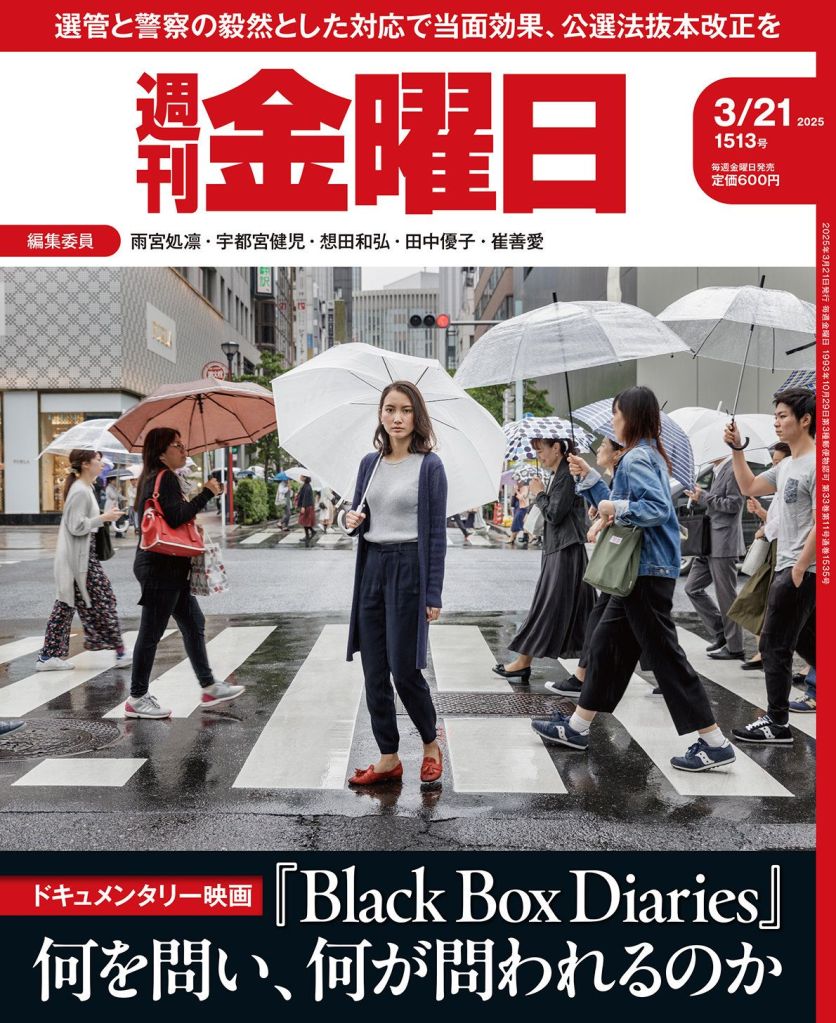
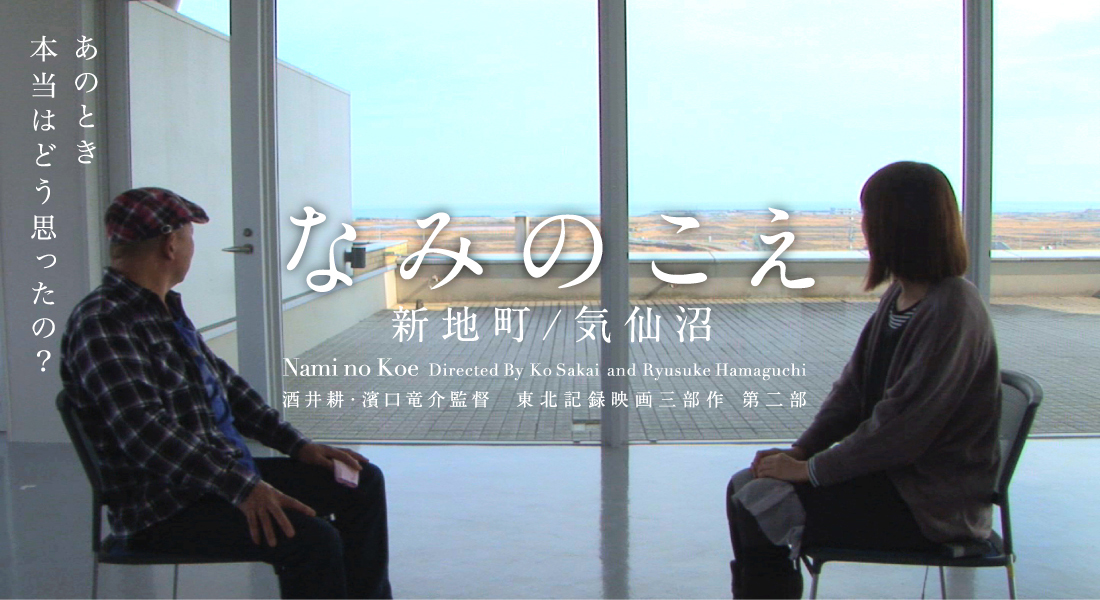
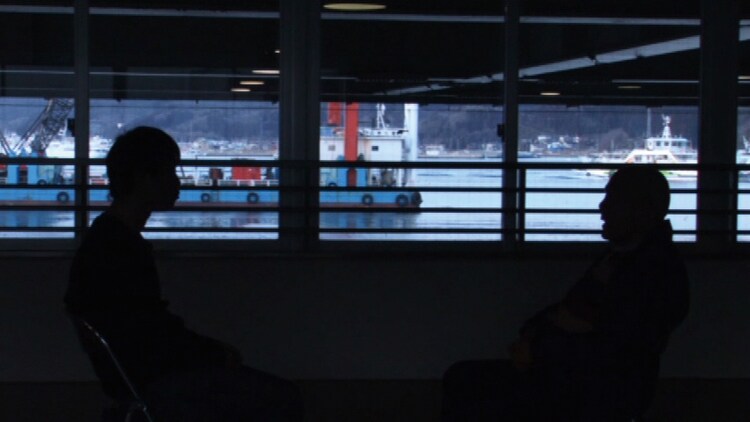


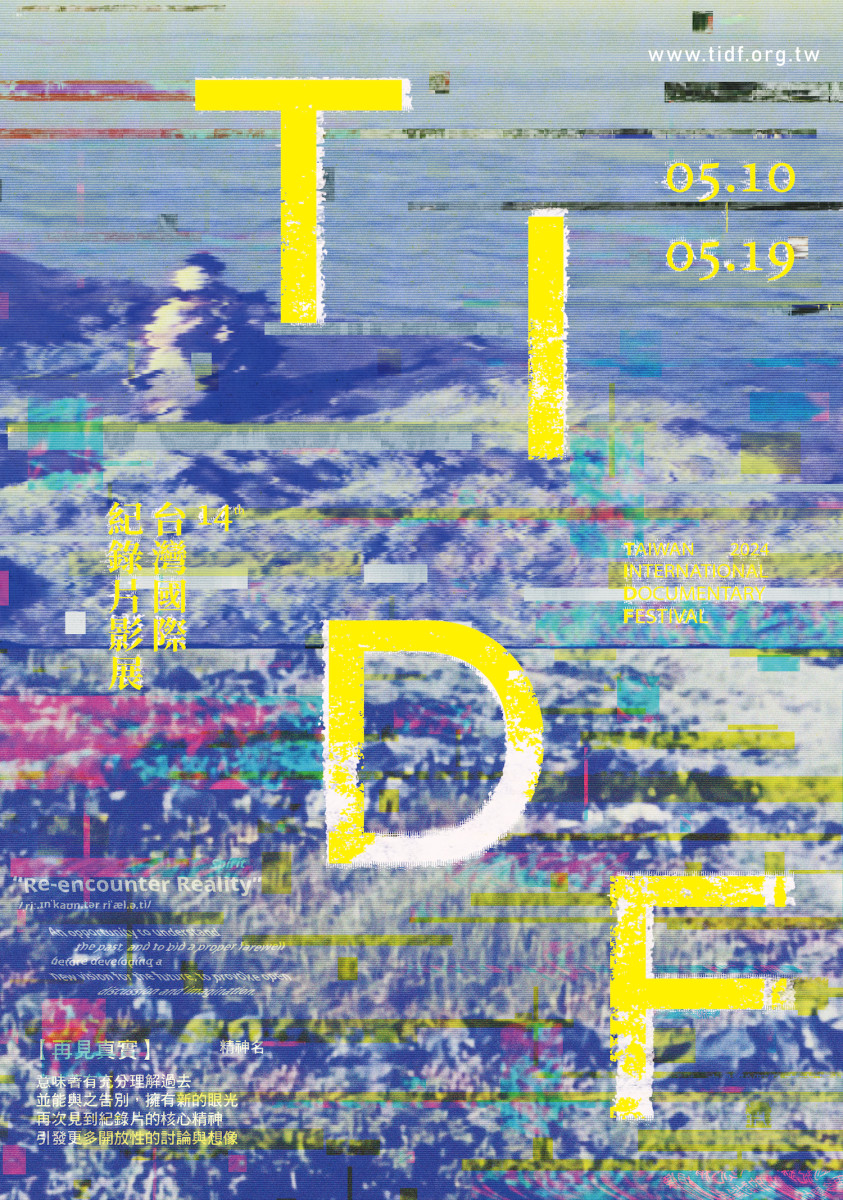
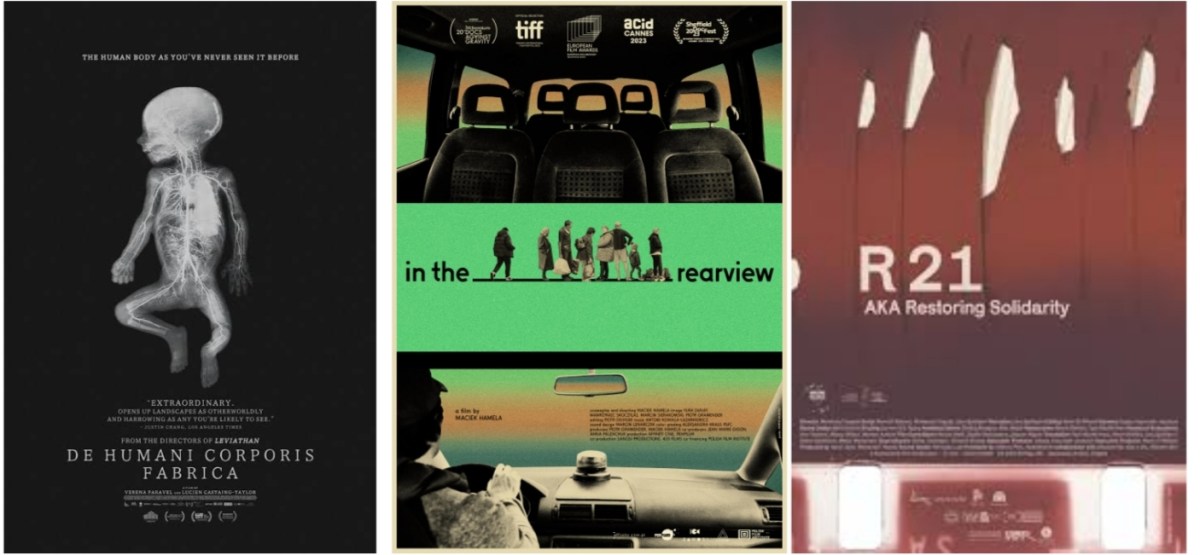
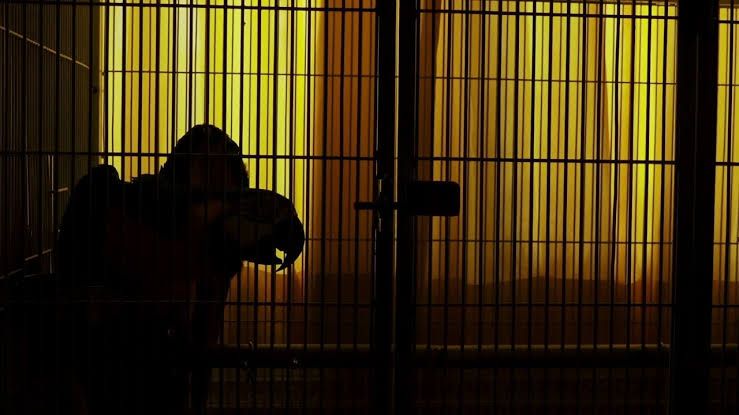


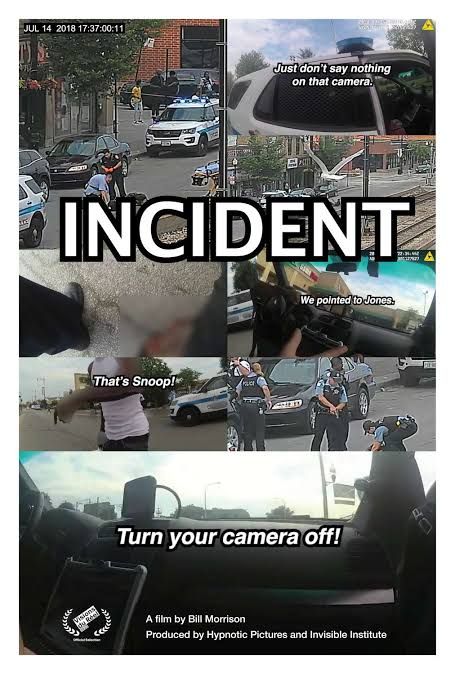
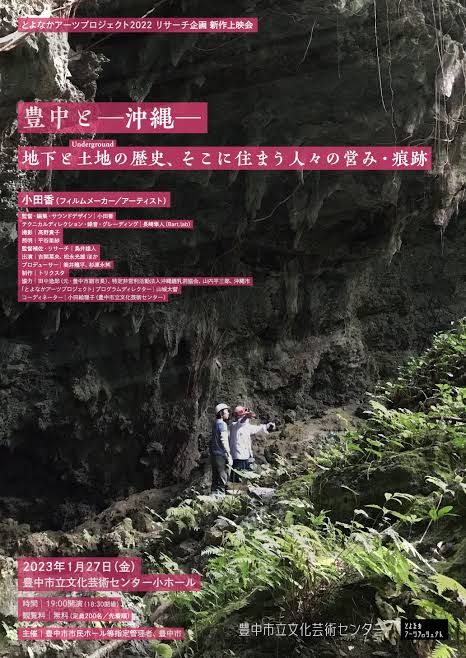

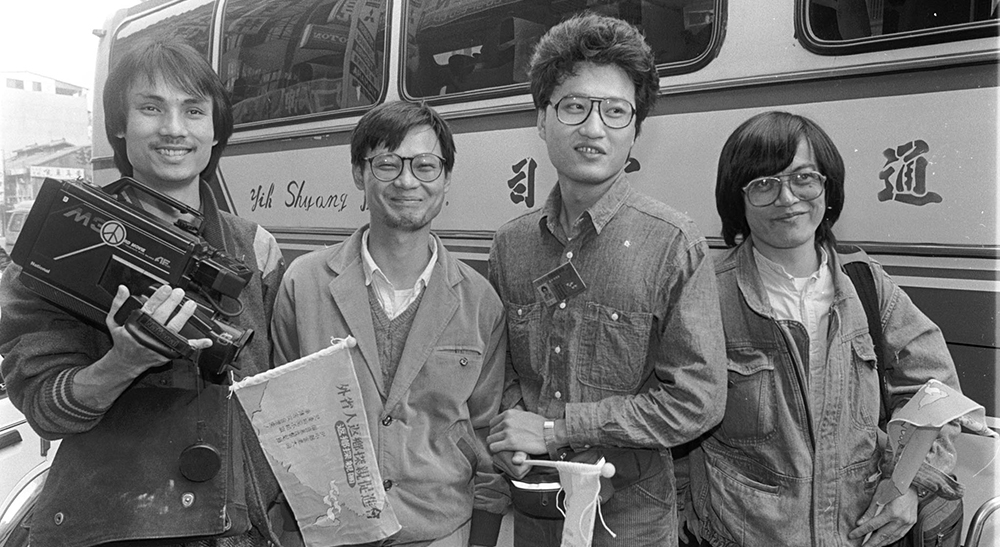


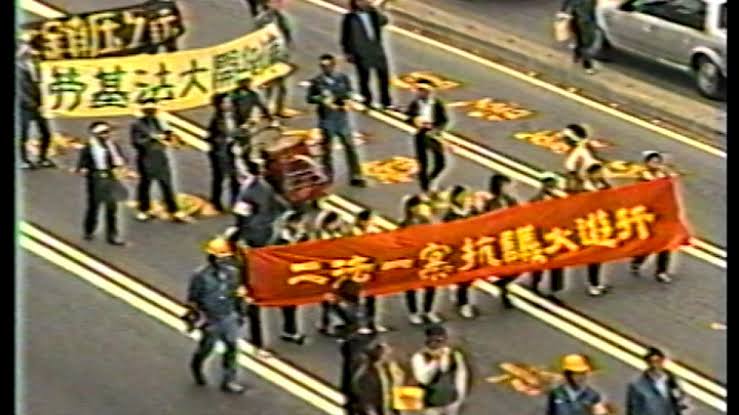
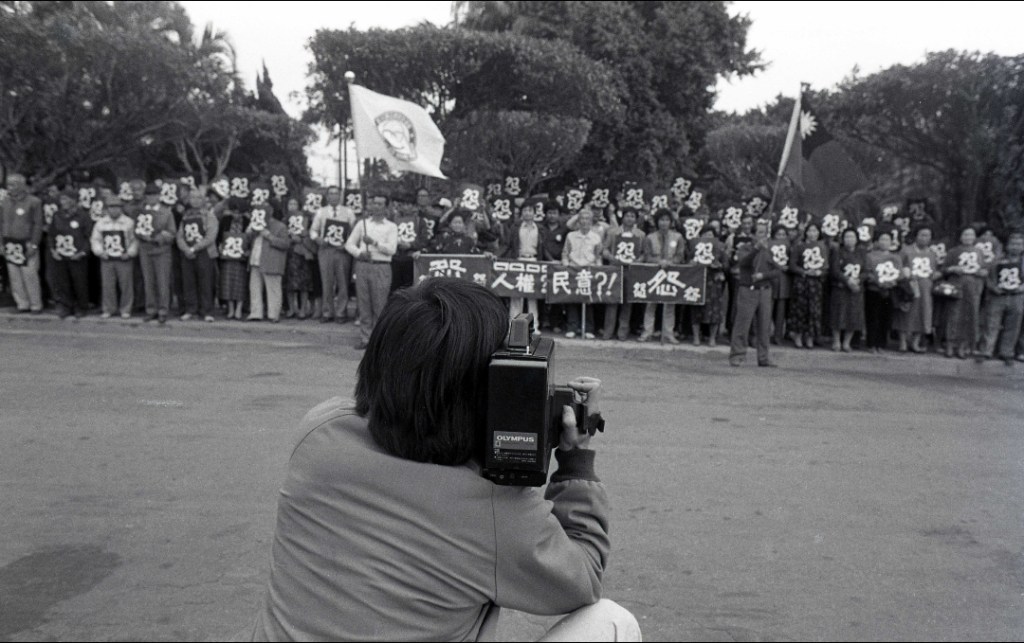
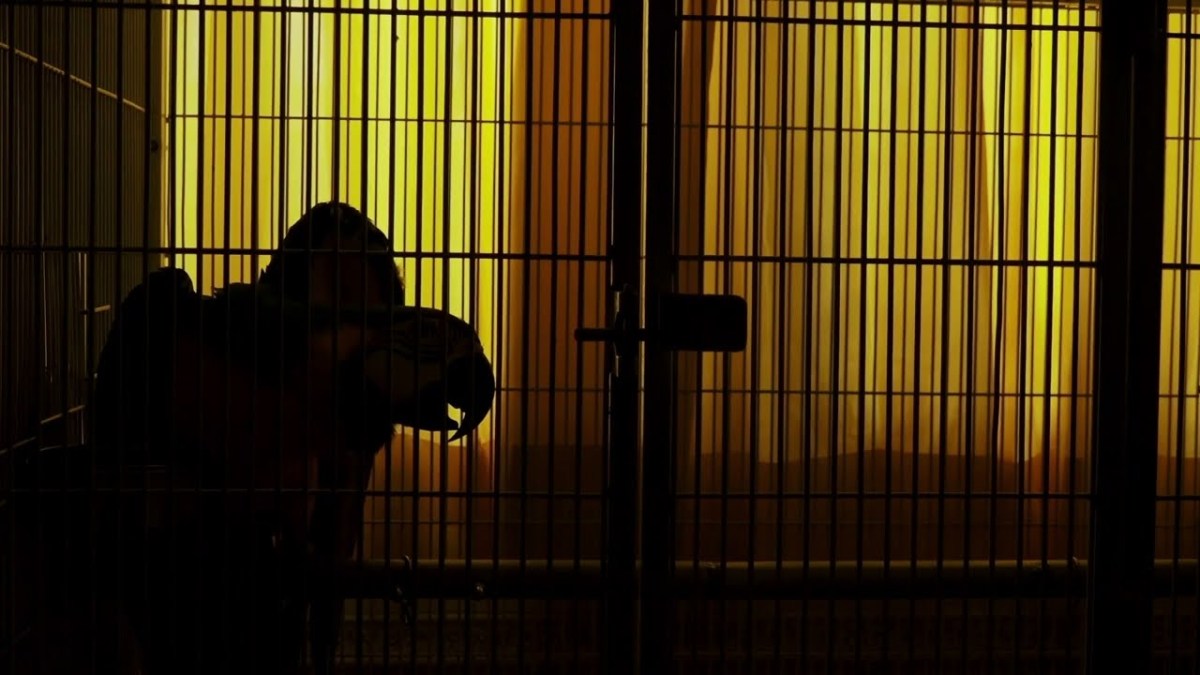

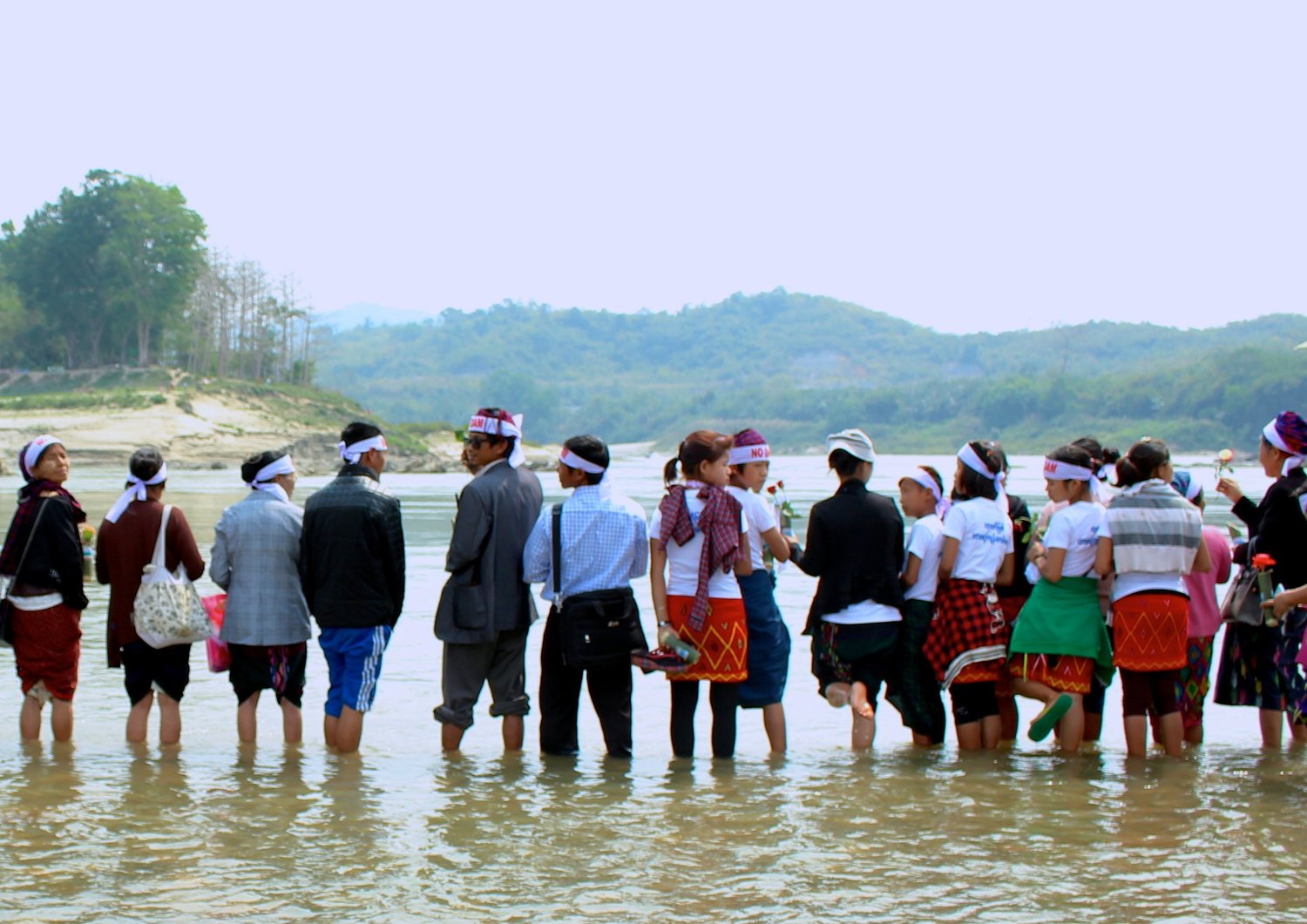
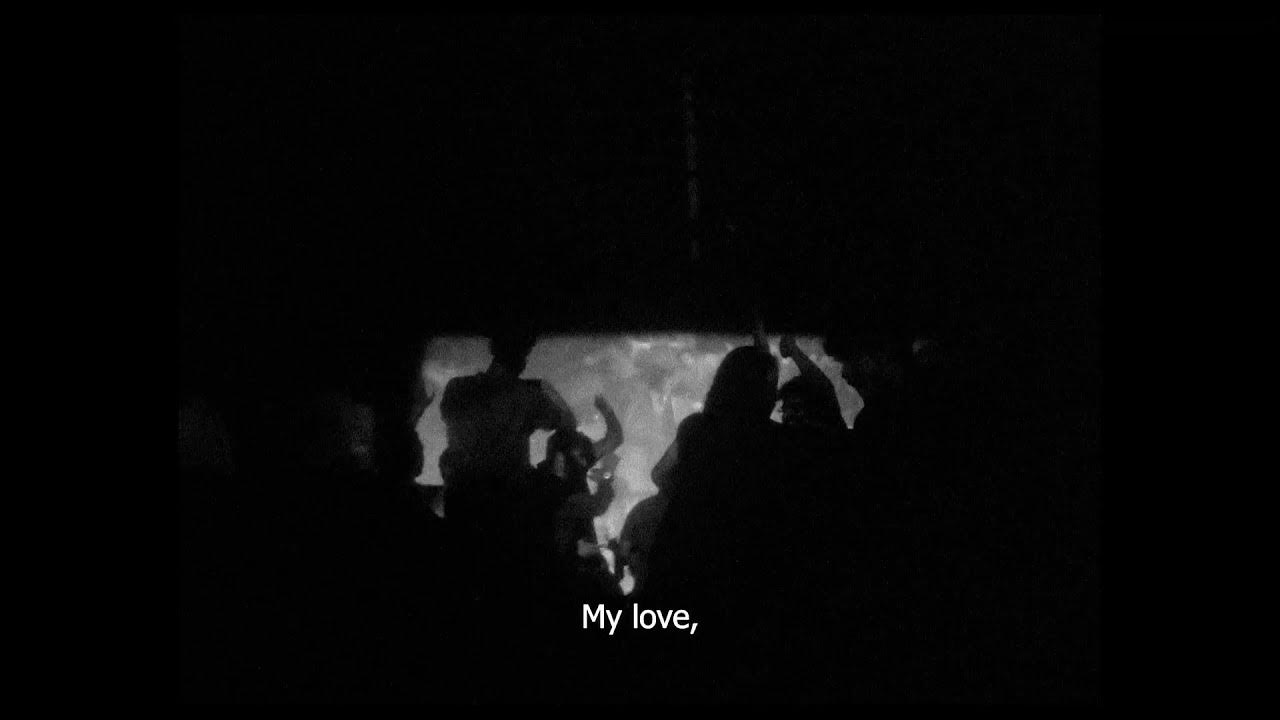


 Asian Docs
You must be logged in to post a comment.