A mini retrospective on the streaming platform DAfilms.com, from 17 January to 6 February (free of charge until 24 January) introduces 10 Japanese documentaries presented at the Yamagata International Film Festivalfrom 1989 to 2021. A fascinating path through the cinema of the real produced in Japan in the last three decades.
In 1973 when the Ogawa Production collective made Narita: Heta Village, the sixth documentary on the struggle and resistance of the peasants in Sanrizuka against the construction of the new Narita airport, they not only created one of the most important documentaries in the history of Japanese cinema, but also captured and foreshadowed a series of shifts that would take place in the archipelago in the following years. By moving the attention and the camera from the clashes, a “civil war” as it has been described by many, to focus more on the life of the peasants, their customs and their sense of time, the collective anticipated the interest that cinema and literature would later show towards rural and provincial areas. From a cinema more linked to contingent events taking place in the political and social sphere, towards one more interested in macrohistory and its large movements and cycles. This interest of the group, led by Ogawa Shinsuke, is reflected in their decision to move to the north of Japan, to the Yamagata prefecture, where the collective lived for 14 years, from the second half of the 1970s until the end of the following decade. As it was revealed later, after Ogawa’s death, this period was not without internal conflicts, and within itself it had many of the problems that had already poisoned many of the New Left groups during the 1970s, such as a marked authoritarianism, and an absolute lack of female presence in crucial positions. If the cinematic peak of this long period spent in Yamagata is Magino Village – A Tale / The Sundial Carved with a Thousand Years of Notches (1986), an unidentified filmic object that constructs a mythological and epic mapping of the area and its inhabitants, perhaps it can be said that the most important legacy of the collective and of Ogawa himself is the creation, in 1989, of the Yamagata International Documentary Film Festival (YIDFF).
Held once every two years in the Japanese city, the festival has become, in its three decades of existence, an important event for those who love the cinema of real and its infinite expressive possibilities. The festival has always stood out to me for the way it is experienced, horizontally so to speak, after the screenings: professionals and filmmakers mingle and interact with enthusiasts, cinema lovers or even just the curious, who come to enjoy the almost party and rock concert-like atmosphere of the event. At the same time, however, Yamagata has also been, since its very beginning, an important launching pad for many Asian authors and for the creation, especially in the 1990s, of a transnational documentary film culture. The first of its kind in Asia, the event contributed to the birth of other festivals, the Taiwan International Documentary Festival for instance, and it also functioned as a pole of attraction for the new wave of Asian filmmakers who came to the fore during a crucial period for the area, the period of democratisation of art with the advent of digital, in China but also in Hong Kong and other parts of South East Asia more generally.
The online retrospective organised by the YIDFF in cooperation with DAfilms is an excellent opportunity to discover some of the most important Japanese films presented at the festival since its foundation. Two works ideally open and close the retrospective, A Movie Capital, a documentary on the first edition of the festival made in 1991 by Iizuka Toshio, one of the members of Ogawa Production, beautifully captures that sense of collaboration and artistic brotherhood between Asian directors mentioned above. While Komian and Pickles by Satō Koichi— presented during the 2021 edition, moved online due to the pandemic— gives an idea of the sense of commonality in Yamagata during the event. The closure of Komian, a popular venue for post-screening discussions and meetings, follows to the closure of a local tsukemono (pickled food) business, Maruhachi Yatarazuke pickling company, the owner of Komian. The film is an occasion to remember and treasure the experiences offered at the venue, but also an example of how the gentrification process, magnified by the economic damage caused by COVID-19, is active and reshaping the urban texture even in small Japanese cities.
The most artistically accomplished works presented in the retrospective are, however, others. All of them are worth watching of course, but I would personally recommend Living on the River Agano by Satō Makoto (I wrote about three of his movies here), Yang Yonghee’s 2005 film Dear Pyongyang, Storytellers by Hamaguchi Ryūsuke and Sakai Kō, and Cenote (2019) byOda Kaori (here an interview with the artist and a piece on the movie). Here the complete line-up:
A Movie Capital // Toshio IIZUKA // 1991
Living on the River Agano // Makoto SATO // 1992
The Weald // Naomi KAWASE // 1997
The New God // Yutaka TSUCHIYA // 1999
A2 // Tatsuya MORI // 2001
The Cheese and the Worms // Haruyo KATO // 2005
Dear Pyongyang // Yong-hi YANG // 2005
Storytellers // Ko SAKAI, Ryusuke HAMAGUCHI // 2013
As usual, the list below is a reflection of my taste, interests, and viewing habits during 2021, this year mainly, but not exclusively, online. I’m not sure all the titles can be considered documentaries, but this is, after all, the fascinating beauty of dealing with documentary cinema. Synopsys in italics, followed by my quick take and, when available, the trailer:
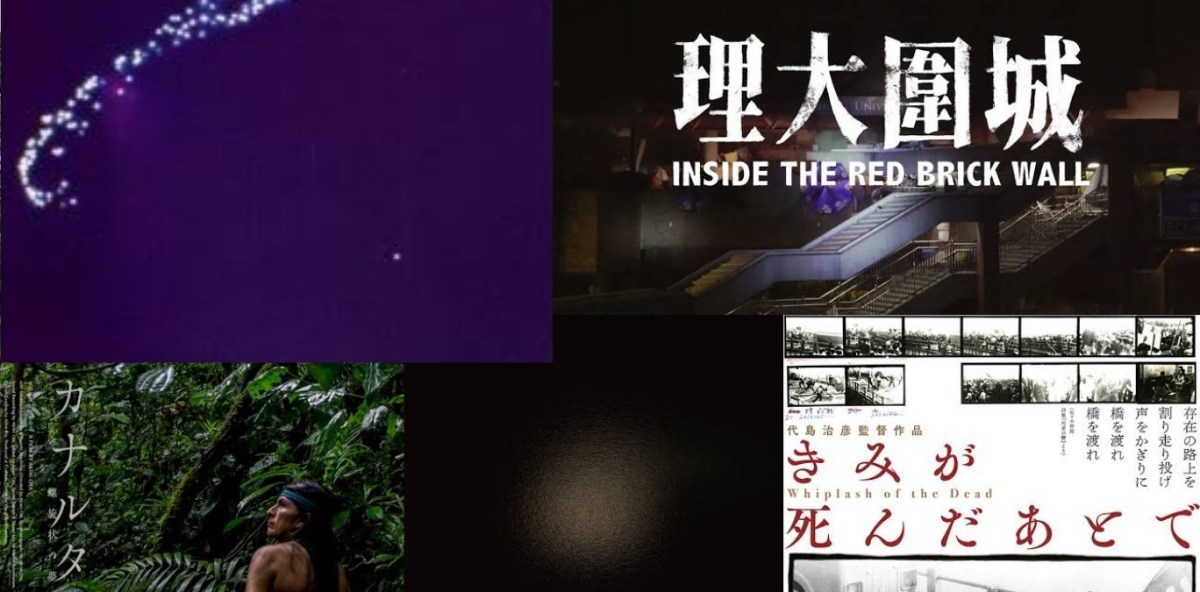
Kanarta – Alive in Dreams (Ōta Akimi). Sebastian and Pastora live in a Shuar village in the upper Amazonia of Ecuador. Sebastian is not only a respected healer, but also a medicinal botanist who experiments with unknown plants he encounters in the forest. His unique practice seeks to cultivate new knowledge, reconnecting him with his ancestors. Pastora is one of the rare female leaders in Amazonia, who struggles to negotiate with local authorities for her community. With powerful plants such as ayahuasca, they revive and energise their perceptions of the future. These plants allow them to acquire power and a faith to cope with the obstacles they now face, given that their lives have been irreversibly affected by the modern state system. There is a lot to like about this movie, and, like in the best works that cross the boundaries between documentary, visual anthropology and experimental cinema, every new viewing reveals extra layers. On the one hand Kanarta shows the problems Shuar people and their culture encounter in dealing with modern society and the way their community adapts and changes in response. On the other, it also offers a glimpse of their being part, almost as if made by the same flesh, of the Amazon forest, and their vital connection with the medicinal plants, “plants that make reality” as one of the people suggests. However, what really kept me engaged throughout the whole movie is that the documentary is permeated by joy, there are lots of laughs and funny scenes, usually fuelled by chicha, an alcoholic beverage made of fermented potatoes. The joy is also coming from the movie and its protagonists being in a constant state of exploration, through the visions and through the wandering in the forest in search for new plants or new places where to build a house. Kanarta offers also some emotional and even dramatic scenes, it’s very touching for instance, when we see Sebastian’s son receiving his medical diploma during a small ceremony, and father and mother posing with him for the camera with pride and smiles. This contributes to build a stronger sense of attachment for the two protagonists, Sebastian and Pastora, who are willing to show and tell the director about their culture and their way of living. The main reason why everything works though—from the more poetic scenes, to the more visceral ones, when Sebastian takes ayahuasca for instance—is because the documentary is structured in a dialogic manner, so to speak. The camera is not a passive actor in the scenes, but it’s part of, and often influences, what is going on, directly or indirectly. Furthermore, Ōta is very good at transmitting, through an immersive visual and sensorial experience, the powerful feeling of empathy that emanates from Sebastian and Pastora, and the Amazon forest itself.
13 (Isobe Shinya) The filmmaker left his camera in exactly the same spot for five years to shoot a picture of the sunset every thirteen seconds. In a series of merged time-lapses, we see the sun(s) moving repeatedly from the left part of the screen to the right. One of the best movies I’ve seen this year, documentary or not, I wrote about it here.
.
Inside The Red Brick Wall (Hong Kong Documentary Filmmakers) On 17 November 2019, the police laid siege to protestors at the Hong Kong Polytechnic University in a blockade lasting nearly two weeks. Beleaguered students fought teargas with makeshift whiteboard shields, hoping to escape and return home to safety. With the media barred from on-site access, an anonymous collective films from within the campus, recording the teenage protesters’ hopes and distress. From the very first shot the documentary is imbued with a sense of precariousness and anger, and by filming the violence between riot police, students, aid people, and members of the press —mainly independent press that live-streamed the battles on the internet— captures and creates, through a masterful use of editing, a very powerful sense of space and proximity with the students, a visual cartography of violence and resistance. The scenes when many of the young students break down, cry and walk out, defeated, from the campus, often criticized by their comrades, is— although it is something I have seen over and over again in the documentaries about the Japanese protests of the 1960s and 1970s—heartbreaking. What is also extremely fascinating for me, is that all the young people wearing masks and gear, for protection and for anonymity, form, more than a revolt of the individuals, a resistance of the multitude. The sense that the struggle is about something bigger than the siege itself is very palpable.
.
Minamata Mandala (Hara Kazuo) After years of dumping industrial wastes from the factory to the ocean, Chissō Chemical Corporation contaminated the area of a small Japanese fishing village with excessive amounts of methylmercury. This highly toxic chemical bioaccumulated in fishes of the local water, which when consumed by the local populace resulted in mercury poisoning. In 1977, Minamata disease certification criteria was set by a strange method that tried not to recognize the rights of environmental disease patients. However, an Osaka court won the case for some patients because of a newly developed theory by medical doctors’ recent experiments and proofs. For decades, these patients struggled within the Japanese judicial system for their rights to receive compensation as victims of environmental disease. Those different aspects of these patients’ lives have been filmed by director Hara for the last 15 years, inspired by the late director Tsuchimoto’s documentary MINAMATA: THE VICTIMS AND THEIR WORLD (1971). Not a minute of the documentary (it’s 373′ long) is superfluous. This is, in my view, one of Hara’s best works, and so far the pinnacle of the second part of his career as a filmmaker.
.
The Works and Days (of Tayoko Shiojiri in the Shiotani Basin) (C.W. Winter, Anders Edström) An eight-hour fiction shot for a total of twenty-seven weeks, over a period of fourteen months, in a village population forty-seven in the mountains of Kyoto Prefecture, Japan. It is a geographic description of the work and non-work of a farmer. A portrait, over five seasons, of a family, of a terrain, of a soundscape, and of duration itself. Undeniably it’s an impressive cinematic achievement and is worth engaging with it, but for me, once the “artificiality” of the movie becomes apparent, it loses part of the appeal and power. I’m not revealing more to avoid spoilers (but are there really spoilers?). Also, I’m approaching the movie from a special angle: I live in Japan, in a somehow similar place to the one depicted in the film. All that being said, the soundscape is astounding, and I like how the movie’s editing is often constructed following the sounds. I really should, and I wish to one day, experience it in a theater.
.
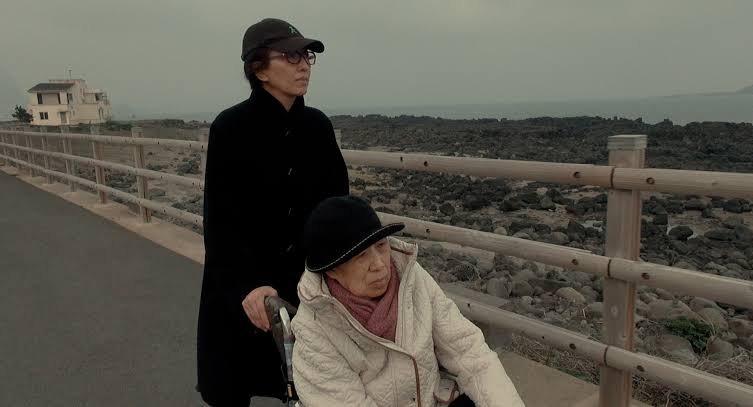
Soup and Ideology (Yang Yong-hi) Confronting half of her mother’s life—her mother who had survived the Jeju April 3 Incident—the director tries to scoop out disappearing memories. A tale of family, which carries on from Dear Pyongyang, carving out the cruelty of history, and questioning the precarious existence of the nation-state. With her latest documentary Yang Yonghi continues to explore how her own personal life is tragically connected to the post war history of Japan and Korea. The movie presents not only the painful memories of the Jeju massacre (April 3rd 1948) as remembered by the director’s mother, and the destruction a family, her three brothers were sent from Japan to North Korea at a young age, but it is also an emotional portrait of her frail and ageing mother. As the film progresses she is diagnosed with senile dementia, and little by little she loses her memories, including those of the massacre she witnessed, only 18, in the small Korean island. The movie is also partly an act of self-reflection by Yang Yonghi herself, if in the first part she is the one filming her mother, and we don’t really see her too much, in the second, when her mother condition worsens, she enters the frame more often, and becomes the co-protagonist of the film. We can clearly see her emotions, especially when she visits the island, with mother and husband, for the anniversary of the massacre. There, Yang Yonghi understands that her mother’s affiliation and attraction for North Korea, something the director had never completely forgiven her for, was also caused by the atrocities committed by the South Korean Army her mother saw with her own eyes. It would have been a better movie for me, had not been for the five or so minutes of animation used to explain her mother story in Jeju in 1948. I found the segment out of place and it really took me out of the movie.
.
Shiver (Toyoda Toshiaki) A music movie featuring a performance of Taiko Performing Arts Ensemble ‘Kodo’ and Koshiro Hino. Filmed entirely on Sado island. Partly a filmed music performance, partly a visual experiment connecting music, landscape and spirituality, Shiver is a fascinating piece of work that fits perfectly with what Toyoda has being creating in recent years. Through the spiritual encounter between Sado landscape and the hypnotic music of the taiko drummers, Toyoda touches and expands some of the themes tackled in some of his most recent films, such as the The Blood of Rebirth, Monsters Club, and The Day of Destruction. That is, the primal nature of the world we inhabit, and how we, humans, can connect with it through music, a similar approach was also at the core of Planetist in 2020. Something primal not in a temporal sense as something that comes before, or ancestral, but more as something essential that is always present and awaits to be discovered and brought to light. Like the rock/monolith towards the end of the work, which seems to have some kind of energy inside, and whose light is filtering through the cracks only when the music plays.
.
Whiplash of the Dead (Daishima Haruhiko) Weaving together the memories of Yamazaki Hiroaki, a university student who lost his life in the First Haneda Struggle in 1967 through the words of his bereaved family and ex-classmates, this film turns the memories of those who protested against government power into questions for the future. The movie is comprised of two parts, for a total of 200 minutes, in the first 90 minutes the director focuses on the events preceding the death of Yamazaki, while in the second segment, that could easily have been another movie, the protagonists of the students protests of the late 1960s, reflect on the reasons of the implosion of the new left and its movements. The story of the Mito family, not affiliated with any left group, but a family that helped the young people in prison, and later promoted anti-nuclear activism and whose members (father and two sons) tragically died in 1986 in a mountain incident, is so fascinating that would deserve its own documentary.
.
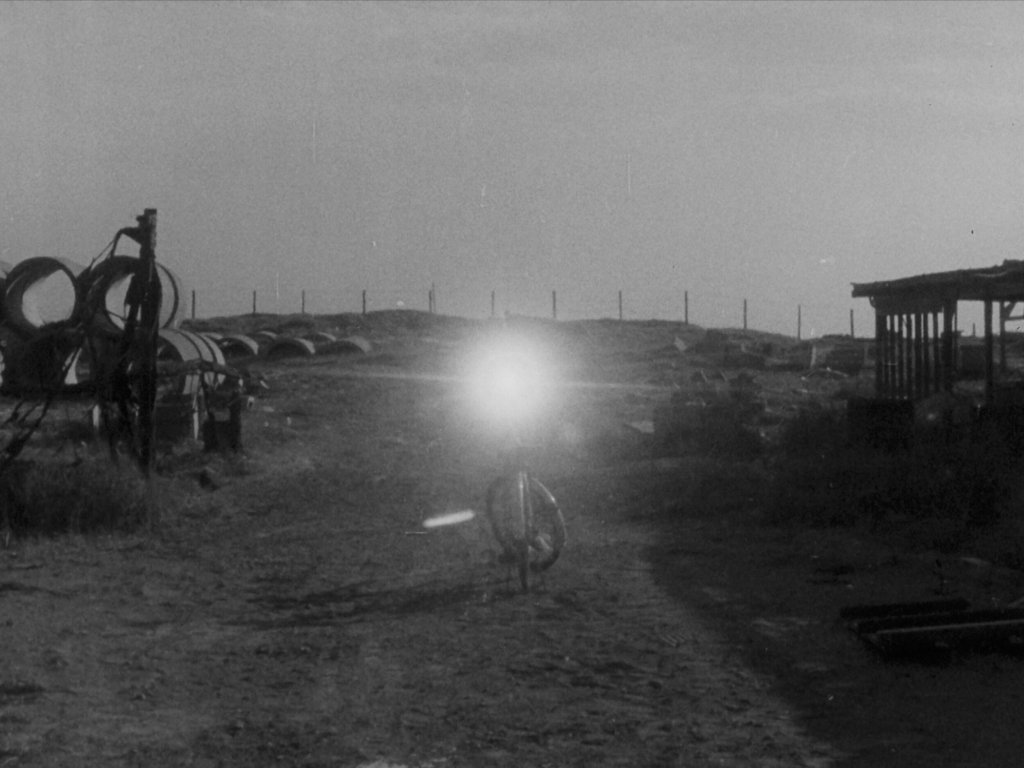
Discovery of the year: Alchemy (Nakai Tsuneo, 1971). The camera slowly zooms, in over a long period of time, on the light of the sun reflected in the mirror of a bicycle parked at the construction site. To this is added a slowly evolving flicker effect derived from negative-positive reversals, progressively dismantling the distance from the subject. Nakai created a masking film with a calculated pattern of black and white frames into which he inserted positive and negative images and made a print out of two separate rolls of film. The original projection speed was 16 frames per second, but the sound is separate from the open-roll tape rather than burned in, so it can also be screened at 24fps. Also, the original sound consisted of the friction noise of rubbing steel, but in 2019 a new version of the sound was created featuring the friction noise of glass. Two versions of the film exist: 24:15 mins at 24 fps and 40 mins at 16 fps. A structuralist film made in 1971 by Nakai, clearly inspired by Michael Snow’s Wavelength, but at the same time highly original, and somehow anticipating Matsumoto’s Atman.
.
Honourable mentions: Her Socialist Smile (John Gianvito), Summer of Soul (…or, When the Revolution Could Not Be Televised) (Questlove)
Some thoughts on three interesting films I’ve seen in the last couple of months.
13 (Isobe Shinya, 2020) For me easily one of the best works of 2021 so far. Here the synopsis from IDFA:
Filmmaker Shinya Isobe left his camera in exactly the same spot for five years to shoot a picture of the sunset every thirteen seconds. In a series of merged time-lapses, we see the sun moving serenely from left to right. Over and over again. First in a neat line, in total silence. Later patterns appear, supported by a minimalist soundtrack. Isobe overlaid analogue shots from different seasons to produce clusters of shining spots.
The film reminded me of Yamazaki Hiroshi‘s Heliography, his photographs and his collaboration with Ogawa Pro for Magino Village: a Tale (the time-lapse scenes of the Sun). 13 is an incredible viewing experience that connects our human time, the 5 years of the shooting, to the cosmic time of the star(s). The apex of this sensation for me is when a bunch of luminous suns appear on screen towards the middle of the work. The overlapping images shot on film (16mm) reach here an almost haptic quality, and the bright spots are, as it were, holes in the sky that let an otherwise unbearable light filter through. The instrumental music used enhances this overwhelming sense of joy and cosmic gratitude, yet, 13 works without music as well, and like in the best examples of pure experimental cinema (Brakhage), the succession of images by itself creates a visual, and almost musical, rhythm.
Ecosystem 5: A Tremulous Stone (Koike Teruo, 1988)
The Ecosystem movies are a series of films that work with abstract patterns of extraordinary density and complexity; the series is inspired by the complex chaos systems present in nature.
A storm of materiality in flux, a very tactile visual experience, a cacophonous but smooth, almost Merzbow-like (and not because of the sound), experience. I would love to see it on a big screen.
Youth: The 50th National High School Baseball Tournament (Ichikawa Kon, 1968) Unpopular opinion maybe, but I prefer this to Tokyo Olympiad, and I don’t even particularly like baseball. The first part is among the best examples of cinema I’ve seen this year: beautiful photography, really stunning, by Uematsu Eikichi (a cinematographer who worked for Kamei Fumio’s Record of Blood: Sunagawa, among other works), fast-paced editing like in an action movie, incredible popping colours, a moody music, inventive camera angles, a clever sound design, and an exploration of different landscapes and lives of young students practicing baseball in Japan. The most fascinating moment for me was when the movie touches on how the history of the tournament and that of the country are indelibly intermingled. There’s a cut in the first 30 minutes or so, from the smiling faces, in colours, of contemporary (at the time) fans, to the bombings of the Pacific War, that is pure cinema, and it’s worth alone the viewing. The second part, where the 50th tournament itself is the main subject on screen, loses for me, a non baseball person, some of the appeal, but it is still very well crafted and a showcase of Ichikawa’s cinematic touch, and has a very poetic ending. One of the discoveries of the year for me.
In 2002 Haneda Sumiko published Eiga to watashi, a memoir of her career and experiences in the world of Japanese cinema from the 1950s to the late 1990s. A revised version titled Watashi no kiroku eiga jinsei came out in 2014. I’m translating and posting some of the most interesting passages of the first version of the book and other writings by Haneda, as I read it. Titles are mine.
At Iwanami Shashin Bunko
In the fall of 1949, Professor Hani Setsuko, a teacher at Jiyū Gakuen and mother of Hani Susumu, contacted me saying “Iwanami Shoten is starting to produce science films and educational films. Would you like to join?” I have never asked why I was the one chosen, but my reaction at that time was negative. Jiyū Gakuen was a strict Christian school, and while I was in school, I didn’t watch any movies. I saw films when I was a kid, when I was in girls’ school, and after the war, but the world of movies was so distant that I couldn’t imagine to be part of it. I also wasn’t really interested in the offer, because when I heard that it was about science and educational films, I thought about my father, who was a teacher, and felt like I didn’t want to be an educator.
“I’m not very interested” I told her. It’s kind of scary to think about it now, but if the story ended there, my life would have been completely different. However, about a month later, she contacted me again “If you are not interested in movies, how about editing a book?”. “Editing a book” was something that I could see myself doing, and so I was happy to accept, because I thought it would be interesting to join the group. At first, I started as an assistant to Hani Susumu, it was in December 1949, and it was about editing a book for the Iwanami Shashin Bunko series. [a series of photo books, ndt]
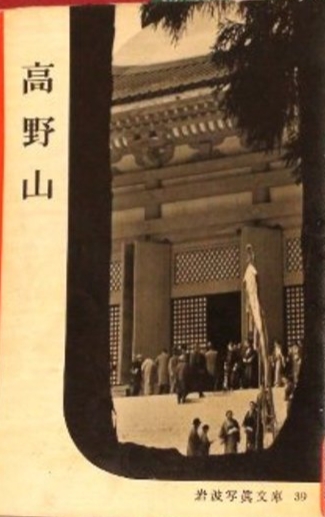
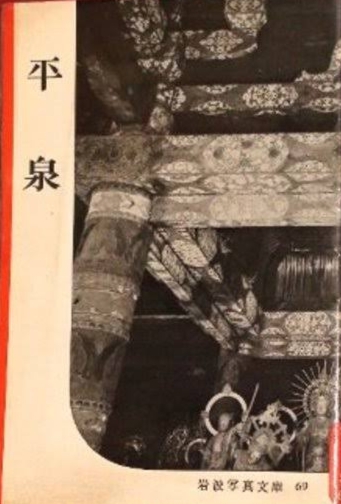
I was involved in making photography books for the first two years, and for about half a year I was an assistant to Hani Susumu. (…) As a photography book curator I edited 16 books, among which I will never forget “Koya-san” and “Hiraizumi”. I grew up in a foreign country without knowing much about “Japanese things,” so for me, the influence of making these two books was great, and later in my life I ended up using this experience.
If you follow this blog or my social media activity, you probably already know my love for the documentaries of Haneda Sumiko. One of the most important documentary filmmakers that Japan has seen in the last 70 years, Haneda is, in my opinion, the most important female director in the history of the cinema of the archipelago. One of my resolutions for 2021, time permitting, is to let more people know about Haneda, her career and impact in Japanese documentary cinema. In 2002 she published Eiga to watashi,a memoir of her career and experiences in the world of Japanese cinema from the 1950s until her more recent works. A revised version titled Watashi no kiroku eiga jinsei came out in 2014.
Starting from today I will post the translation of what I think are the most significant passages from the book (the first version) and other writings. Keep in mind that neither English or Japanese is my first language, and that I’m doing it just out of passion for the topic and admiration towards Haneda.
Titles are mine
Iwanami Shoten, and from China to Japan
Both before and after the war, the path for women to become directors was closed from the very beginning. It took many years of long practice to become a filmmaker; to become a director, you had to start as an assistant director, but for women, this was never a possibility. There are of course some exceptions like Sakane Tazuko, who, before the war, seized this opportunity from working with Mizoguchi Kenji, or Tanaka Kinuyo, who grabbed the chance from being one of the first and biggest stars [in Japanese cinema]. That being said, the situation was apparently different in the world of documentary films, and I, knowing nothing of all this, one day, almost by chance, became a director.
Shortly after the end of the war, in 1949, Iwanami Shoten, through Nakaya Ukichirō, established a new branch, the Nakatani Laboratory. Iwanami Shigeo, the founder of the company, saw the situation of audiovisual education brought in by the United States after the war, and thought that not only print culture but also video culture would be important from that moment on, and that is the reason Iwanami wanted his company to venture in the world of video productions. However, Iwanami died without realizing this.
It was Kobayashi Isamu, the managing director of Iwanami Shoten, who continued the idea started by Iwanami. The Nakatani laboratory was established in the hope of becoming a place were “good science films” could be made. Under the guidance of professor Nakatani, renown for his research on snow, the staff centered around Yoshino Keiji, who shot “Snow Crystals” and “Frost Flowers”, at the time highly regarded science films. Kyodo News reporter Hani Susumu was also scouted and became one of the core members of the group.
I was born in Dalian, Manchuria, and lived in the mainland for several years, but went to Manchuria again and graduated from elementary school and girls’ school in Lüshunkou. After that, I entered Jiyū Gakuen in Tokyo and graduated there in the year of the end of the war. On August 15 1945, the day of the end of the war, I went back to Dalian. For three years until the repatriation, under the occupation of the Soviet army, I worked for the women’s department in the only permitted organization, the “Dalian Japanese Labor Union” in the Japanese settlement. I missed the first repatriation, which began in 1946, and with the second one I arrived in Maizuru in July 1948. I wanted to move to Tokyo, but at that time Tokyo had restrictions, and people without jobs could not move in. I worked for a company called Shizuoka Prefectural Educational Book Publishing for a while, but from the spring of 1949 I found a job at the GHQ Chapel Center near the Diet Building and so finally I could go to Tokyo. I was 23 years old.
I wrote a longer and in-depth piece on Cenote, Aragane, Towards a Common Tenderness, and Oda’s filmmaking more in general for a film publication (hopefully out next year), so what follows are just some of my thoughts on the movie, and my experience with Cenote after multiple viewings. My interview with Oda, and my piece on Aragane.
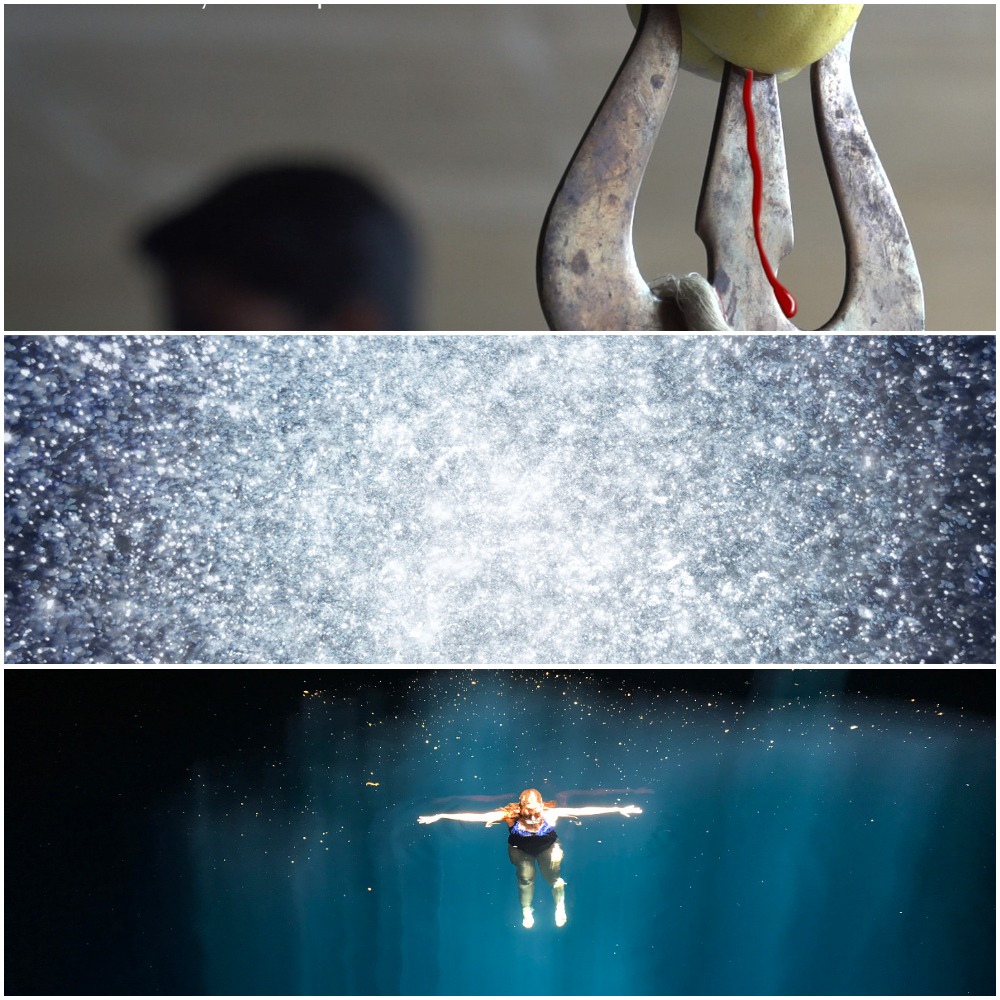
The past and present of those living around the cenotes coalesce in this mysterious place. Long-lost memories echo in hallucinatory turquoise underwater footage, an entrancing game of light and dark. Swimming in these sinkholes, director Oda Kaori encounters intriguing shapes and beams of light, the water heaves, drops fall like razor blades.
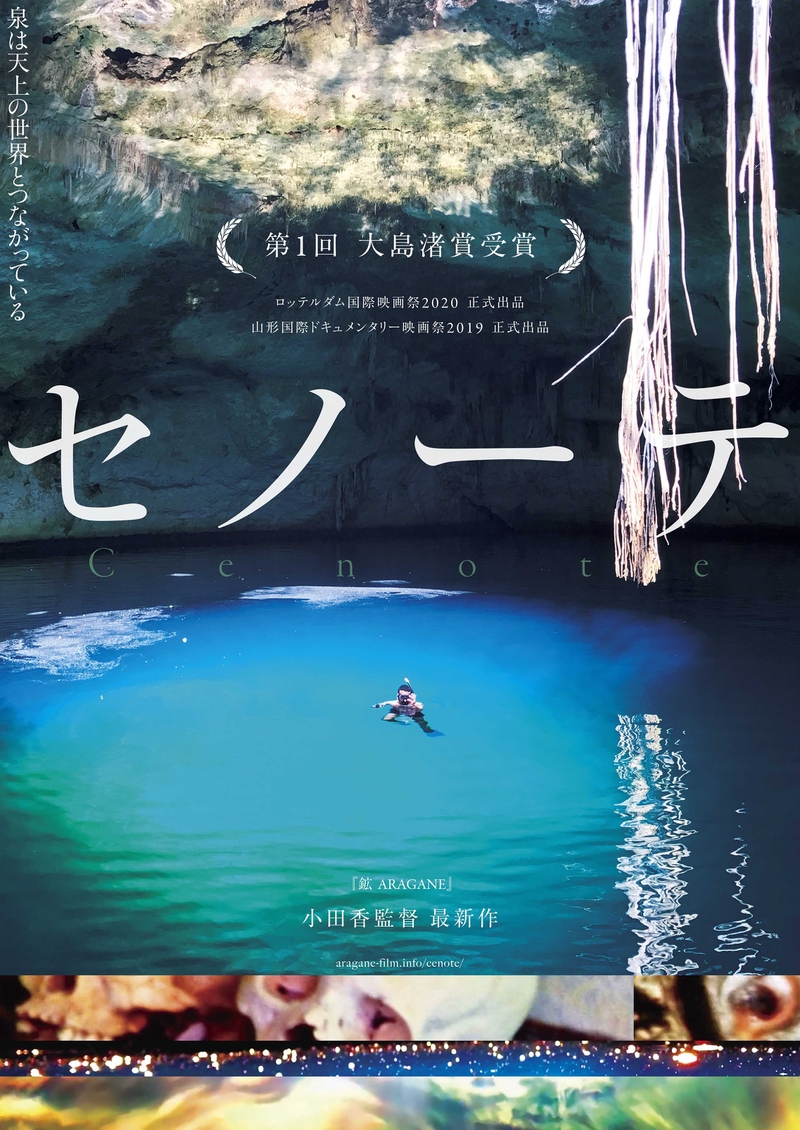
After debuting on the international scene with Aragane in 2015, although Thus a Noise Speaks (2010) was her actual debut in the film/documentary scene, two years later young filmmaker Oda Kaori released Towards a Common Tenderness, her second feature film. This is a movie about her journey from Japan to Europe, and there across the borders of the former Yugoslavia, and also about the possibilities, limitations, and responsibilities that come with documentary filmmaking. Her new film, Cenote, is again shot outside of Japan, this time in Northern Yucatan, Mexico, and almost completely filmed with an iPhone inside a few ts’onot/cenotes, sinkholes that were used by ancient Mayans as a primal source of water. Some of these sinkholes were also used during ritual sacrifices, and in the Mayans belief system they were considered holy springs able to connect this world to the afterlife.
When I first saw Cenote at a special screening organized at the Aichi Arts Center in Nagoya exactly a year ago, in July 2019 (the movie was partly funded by the venue), what impressed me the most were the first twenty minutes of the film. It was an exhilarating sensorial experience, almost an unveiling of a new world: the abstract images shot underwater and those gliding on the surface of the liquid, blended with grainy images of people whispering old Mayan stories, all of this soaked in a haptic soundscape, are to this day one of the best combination of images and sound I saw on screen in recent years. However, the second part of the work did not really work for me, the incredible first part was not followed by an equally intense second half, I couldn’t completely connect with it, especially with the way the movie was constructed. This was my reaction after the first viewing, anyway.
In the months that followed, I had the chance to watch Cenote several more times, one more time on the big screen at the Yamagata International Documentary Film Festival in October, and later on through a screener I was kindly given. After multiple viewings some recurring patterns and figures presented throughout the movie started to slowly reveal, and Cenote began to resonate with me in a very different manner compared to when I first saw it. I realized how the whole work is permeated with a dialogic tension, a relation between complementary opposites. For instance, cenotes as a geological phenomena resulting from the impact of a shower of meteorites with the crust of the earth, on the one side, and these sinkholes as a mythical space connecting with the afterlife, on the other. A tension between opposites that is also embodied in the aesthetics deployed by Oda, the digital images shot underwater with an iPhone are counterpointed with those shot in Super 8 and depicting faces, animals, festivals, and ceremonies honoring the dead. This exploration of afterlife and the deceased and their relation with the space they used to inhabit is what especially surfaced for me after multiple viewings. The connection between the dead and the living, and the blurring of the two reigns is made more explicit in a brief and beautiful passage when the movie gazes at funeral rituals in the area, when human bones and skulls are brushed, polished and collected with extreme care as remnants of past lives, but somehow still very present.
While I think Aragane is a more accomplished and well-balanced work, I believe Cenote is a more deep (non pun intended) and powerful visual experience, and definitely a film more important for Oda’s career. First of all, the movie gave her the chance to became the recipient of the first Ōshima Nagisa Prize, an award newly established by Pia Film Festival for “young, new talents who pioneer the future of film and attempt to spread their wings around the world”, and secondly to be invited to different film festivals around the world, such as Nippon Connection and Japan Cuts. This international recognition will hopefully expand even further her career, giving Oda the chance, and the funds, to work on the next project. It seems that after having explored two of the classic elements of nature, earth in Aragane, and water in Cenote, she would like to make her next work in (!) and about space, as she stated in a couple of interviews.
More importantly from an aesthetic point of view, with Cenote Oda not only went back to the sensorial filming approach used in Aragane, but she also expanded it and enriched it with the poetic touches that permeates Towards a Common Tenderness. As I wrote at the beginning of this article, the peaks in Cenote are very high and point towards an idea of cinema and filmmaking that, in my opinion, has yet to realize its full potential.
We are currently navigating uncharted waters and I hope all you readers out there are safe and doing well, so today just a brief post to point to the release of an important volume: The Japanese Cinema Book, edited by Hideaki Fujiki and Alastair Phillips for Bloomsbury. As stated by the editors, the volume
provides a new and comprehensive survey of one of the world’s most fascinating and widely admired filmmaking regions. In terms of its historical coverage, broad thematic approach and the significant international range of its authors, it is the largest and most wide-ranging publication of its kind to date.
Ranging from renowned directors such as Akira Kurosawa to neglected popular genres such as the film musical and encompassing topics such as ecology, spectatorship, home-movies, colonial history and relations with Hollywood and Europe, The Japanese Cinema Book presents a set of new, and often surprising, perspectives on Japanese film.
With its plural range of interdisciplinary perspectives based on the expertise of established and emerging scholars and critics, The Japanese Cinema Bookprovides a groundbreaking picture of the different ways in which Japanese cinema may be understood as a local, regional, national, transnational and global phenomenon.
The book’s innovative structure combines general surveys of a particular historical topic or critical approach with various micro-level case studies. It argues there is no single fixed Japanese cinema, but instead a fluid and varied field of Japanese filmmaking cultures that continue to exist in a dynamic relationship with other cinemas, media and regions.
The Japanese Cinema Book is divided into seven inter-related sections: · Theories and Approaches · * Institutions and Industry · * Film Style · * Genre · * Times and Spaces of Representation · * Social Contexts · * Flows and Interactions
There are a couple of chapters, or parts of them, that cover what is the main interest of this site, the production and evolution of documentary cinema in the Japanese archipelago, experimental cinema, and amateur/home films. I was positively impressed by the scope of The Archive Screening locality: Japanese home movies and the politics of place by Oliver Dew, the ever-shifting boundaries between amateur/professional filmmaking, and everything that exceeds what we usually consider “cinema” are problematics that fascinate me. I might write something about Dew’s essay and Japanese home movies in general at another time, but today I want to briefly touch on the chapter written by Hata Ayumi. Filling Our Empty Hands’: Ogawa Productions and the Politics of Subjectivity is a dive into Ogawa Productions, with a special focus on how the collective changed their film-making identity, a process seen through the lens of three works made by the group at different times of their trajectory, Forest of Oppression (1967), Sanrizuka – Heta Village (1973), and The Magino Village Story – Raising Silkworms (1977). I will highlight some of the passages in the essay that more resonated with me, mainly those about the collective and their period in Yamagata.
One of the most interesting issues tackled in the chapter is for me the connection the author draws between, on the one hand, the portrayal of farmers and farmers’ life created by the group throughout their career, and the rise of the minshūshi movement during the 1960s and 1970s in Japan, on the other. “The minshūshi, or ‘people’s history’ project, was part of a larger intellectual movement of the 1960s and 1970s that sought to construct new representations of the minshū, or non elite ‘people’ as political and historical agents, and overcome the view that they had been inert and passive objects of rule throughout history.”
The shift from a style of film-making more focused on the political struggle to a depiction, almost an ethnographic exploration, of the histories and cultures traversing villages and people in Sanrizuka, is one of the reasons Heta Village is a pivotal movie for Ogawa Productions. Hata argues that, what I call a tectonic shift for Japanese documentary, was possible also by the influence and the interaction of the collective with the minshūshi movement, thus repositioning the path of the collective in a much larger historical and political canvas.
One of the most astonishing artistic achievements in the long years spent by the collective in Yamagata filming and farming, was the ability to reach a degree of proximity, almost a merging and an identification, with the subject filmed, the taishō. Not only a proximity with people and their point of view, but also a quasi-fusion with the landscape and its non-human elements as it were, the plants, the seasonal changes, the weather, the geological time of the area, or the Sun perceived as a orbiting star. To read in the essay that Ogawa and his group “took this ideal subjectivity even further with the idea of ‘the human possessed by the rice plant’ (ine ningen), an imagined, metaphorical entity that they strove for in order to capture the essence of rice cultivation” was for me a confirmation and a revelation.
The beautiful poster of Magino Village: A Tale (1986)—some of the words on it are pure poetry, “a movie mandala”, “to carve the time of life into the body of film”—beautifully embodies this strive towards the becoming-rice plant of the collective, and it is in itself a work of art, in my opinion.
There are several scenes in Magino Village that encompass this love and obsession towards rice, farming, and all the human and non-human life that revolves around a plant so important for Japan and its people. Tamura Masaki patiently filming rice flowers bloom is one of the most famous, used also as the cover of the Japanese DVD, but my favourite is the one you can watch below, a scene Markus Nornes has described in his book on Ogawa Pro as “the most prominent haptic images” in the film.
Here we go again, like every year and like all (wanna-be) respectable cinema blogs or cinephiles around the web, these are my personal favorite documentaries of 2019. As usual, and it goes without saying, the list below is a reflection of my taste, interests and viewing habits during 2019, and thus it is mainly composed of documentaries made in the Eastern part of the Asian continent (but there are few exceptions of course).
Outstanding works (unranked)
Many Undulating Things (Wang Bo, Pan Lu) History, art, geography and colonialism mixed in an aesthetically challenging piece of work. The movie is an expansion of Miasma, Plants, Export Paintings, a short made in 2018 by Wang Bo and Pan Lu.
No Data Plan (Miko Revereza)
A travelogue and a drifting through America to explore the identities of undocumented immigrants, the director himself and his mother.
Memento Stella (Takashi Makino)
Like a wave of spiritual materialism in continuous becoming.
Cenote (Ts’onot) (Oda Kaori)
After Aragane, and Toward a Common Tenderness Oda moves her attention to the cenotes in Mexico. It’s not a perfect movie, but has some of the most impressive combination of sound and images I’ve seen last year. Entrancing to say the least.
Reason (Anand Patwardhan)
Fascism in contemporary India.
This slideshow requires JavaScript.
Honorable mentions:
Indiana, Monrovia(Frederick Wiseman)
Happy Android (Jaina Kalifa)
The Holiday Inn-Side (Charby Ibrahim)
Dutch Angle: Chas Gerretsen & Apocalypse Now (Baris Azman)
Special (re)discoveries:
The Man Who Has a Camera (Liu Na’ou, 1935)
Kobayashi Issa (Kamei Fumio, 1941)
Senso Daughter (Sakiguchi Yuko, 1990)
Best cinematic experience
By far the best viewing experience I had in 2019 was not at all an orthodox cinematic experience. At Yamagata I was lucky enough to be at a Gentou (magic lanterns) screening, dedicated to the grass-roots movements in the Miike mine’s strikes during the 1950s.
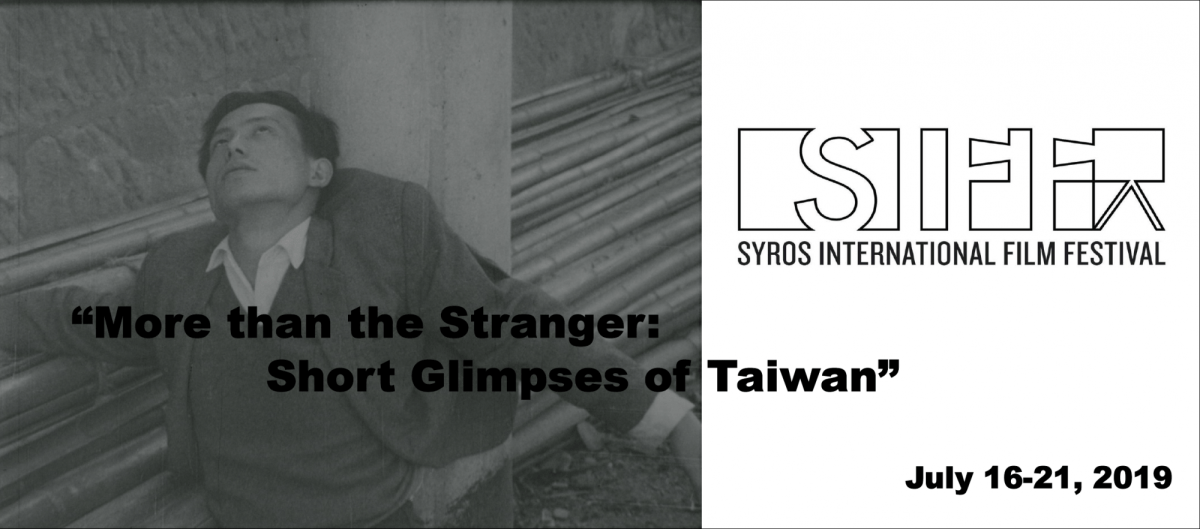
This year’s edition of the Syros International Film Festival (July 16-21) will dedicate a special program to Taiwanese documentary, More than the Stranger: Short Glimpses of Taiwan. The section includes 13 short films, from 1930 to the present, of distinguished Taiwanese artists, divided into two parts, Stranger#1 and Stranger#2. The experimental non-fiction presented in the small Greek island, will offer a glimpse of the historical and political landscape of Taiwan during the last 80 years, and its connection with a sense of “national” identity always complex and in flux. The program is made possible by the collaboration between the Syros festival, the Taiwan International Documentary Festival, and Taiwan Docs, a platform very actively promoting Taiwanese documentary films abroad.
Among the films screened, A Man Who Has a Camera – Parade (Llu na-ou, 1933), one of the earliest accounts on film of a religious event in the island, and Fisherwomen, a series of home movies shot between 1935 and 1941 by photographer Deng Nan-guang. There are also two more recent works that I had the chance to see in the last couple of years, Spectrum of Nostalgia (Chen Yi-chu, 2017), and Nostalgia of the Chinatown (Chen Chun-tien, 2016), an interesting meditation on memories and the disappearance of a special communal space in the city of Tainan. You can download the SIFF catalog here.
In related news, The 16th EXiS (July 24-31), held at the Korean Film Archive in Seoul, will screen 9 experimental films made in Taiwan during the 1960s, a program presented last year in California and this year in Thailand, and probably other countries as well.
In 2007, just before making one of his best movies, Still Walking, Kore’eda Hirokazu started to film the Japanese singer Cocco and her concerts throughout Japan. The result was So I Can Be Alright : Cocco’s Endless Journey 大丈夫であるように-Cocco 終らない旅, a movie released theatrically in Japan the following year. It wasn’t a new encounter between the two, Cocco had collaborated before with Kore’eda when he directed two music videos for her, in 2002 Mizukagami, and in 2006 Hi no teri nagara ame no furu.
Cocco is probably more known outside Japan, especially among cinephiles, for her intense interpretation in Tsukamoto Shin’ya’s Kotoko, in my opinion, one of the best Japanese movies of the decade. The role she played in the movie had some affinities with her persona, a complex, delicate and troubled artist (at least she was so at the time of the shooting). Cocco’s eating disorders and self-harm tendencies are not a secret, when her diaphanous and skinny figure, not hiding the self-inflicted cuts on her wrists, appeared on the cover of the magazine Papyrus in October 2009, it caused quite a stir in the media.
It’s probably Cocco’s exceptional figure and personality, together with her uniqueness in Japanese show business world, that might have convinced Kore’eda to direct a documentary after more than five years from his previous one. As it is now well known, Kore’eda started his career in documentary, mainly for TV, when he joined the independent production company TV Man Union. However (1991) about the Minamata Disease and the legal struggles of the victims for compensation, was his debut, followed by Lesson from a Calf (1991) and I wanted to Be Japanese… (1992), the latter about the rights of second and third generation Koreans born and resident in Japan. In 1994 he directed August Without Him, a film that documents the fights of an AIDS patient and the relationship with his friends and with Kore’eda himself. From 1995 onwards, after his exceptional feature debut Maborosi/Maboroshi, Kore’eda then shifted towards fiction, but never really abandoned documentaries, a passion that he kept alive on the background of his main career. In 1996 for instance he was behind the camera for Without Memory, an indictment of medical malpractice and reflection on memory and loss, themes that feature prominently in all his fiction films. The most recent documentary-like work he directed was Ishibumi in 2015, a remake of a TV program made in 1969 about the tragedy of Hiroshima. While his commitment to documentary is still present, it is also obvious that his main career as a director has now moved away from it. Yet many of the qualities he developed as a documentarist are still very present in many of his feature films: the ability to improvise and capture the rawness of the moment, working with non-professional actors and children, and the use of natural light, for instance.
Cocco’s Endless Journey follows the Okinawa-born artist in an important period in her life and career, during her Kira-Kira Live Tour between 2007 and the beginning of 2008. The tour marked the 10th anniversary from her solo debut, and also a time when her insecurities as an artist and as a human being clashed, deteriorating her physical and mental condition.
The film moves pretty smoothly and ordinarily for most of its 110 minutes, performances by Cocco are alternated with the artist speaking with her staff or going back to Okinawa for a family reunion. But it’s in the last 20 minutes or so that the movie becomes a remarkable and fascinating watching. From a musical documentary following an artist, her concerts and her preoccupations with civil and environmental battles—Cocco’s tour touches Rokkasho, a town with a huge nuclear reprocessing plant in Aomori, and Okinawa with all the problems related to the presence of American bases, one of which being the extinction of the Okinawa dugong—the movie becomes something totally different. Cocco insecurities, her death drive and her fragile physical and psychological condition slowly come to the surface. It was something that was present before of course, we see her crying many times before or during the performances, but a long conversation with Kore’eda towards the end of the movie pushes the documentary to a different and somehow uncomfortable place. The long scene has a direct-cinema touch and works almost like a confession. On a hill facing the beautiful sea of Okinawa, Kore’eda, off camera, listens to Cocco talking about the difficulty of staying alive and about her suffering, but also the novelty brought to her life by the birth of her son (if I’m not wrong he was 7 at the time).
For instance, she explains the difference between watching Miyazaki’s Princess Mononoke by herself, disappointed by the hopefulness of the ending, and together with her son, when on the contrary she was relieved and glad for the happy end. The very last scene takes place on a beach at night, here after digging a hole in the sand, Cocco and her staff starts to fill it with the fan letters she received and read and a lock of her hair, a cleansing fire that ends the movie.
Before the ending roll we’re informed by intertitles about all the recent developments that occurred in Okinawa and Rokkasho after the shooting of the movie, and that in April of the same year, 2008, Cocco was hospitalised for treating her anorexia.
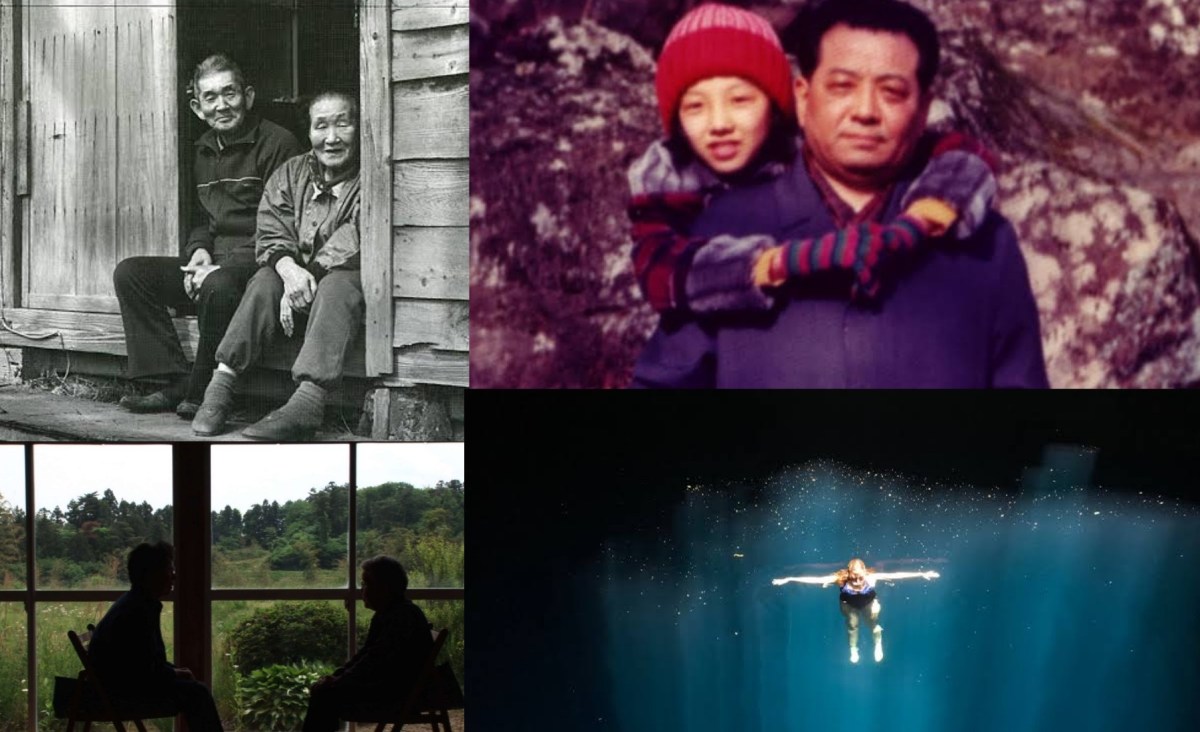






 Asian Docs
You must be logged in to post a comment.