Best (favorite) documentaries of 2019

Here we go again, like every year and like all (wanna-be) respectable cinema blogs or cinephiles around the web, these are my personal favorite documentaries of 2019. As usual, and it goes without saying, the list below is a reflection of my taste, interests and viewing habits during 2019, and thus it is mainly composed of documentaries made in the Eastern part of the Asian continent (but there are few exceptions of course).


Outstanding works (unranked)

Many Undulating Things (Wang Bo, Pan Lu)
History, art, geography and colonialism mixed in an aesthetically challenging piece of work. The movie is an expansion of Miasma, Plants, Export Paintings, a short made in 2018 by Wang Bo and Pan Lu.

No Data Plan (Miko Revereza)
A travelogue and a drifting through America to explore the identities of undocumented immigrants, the director himself and his mother.

Memento Stella (Takashi Makino)
Like a wave of spiritual materialism in continuous becoming.

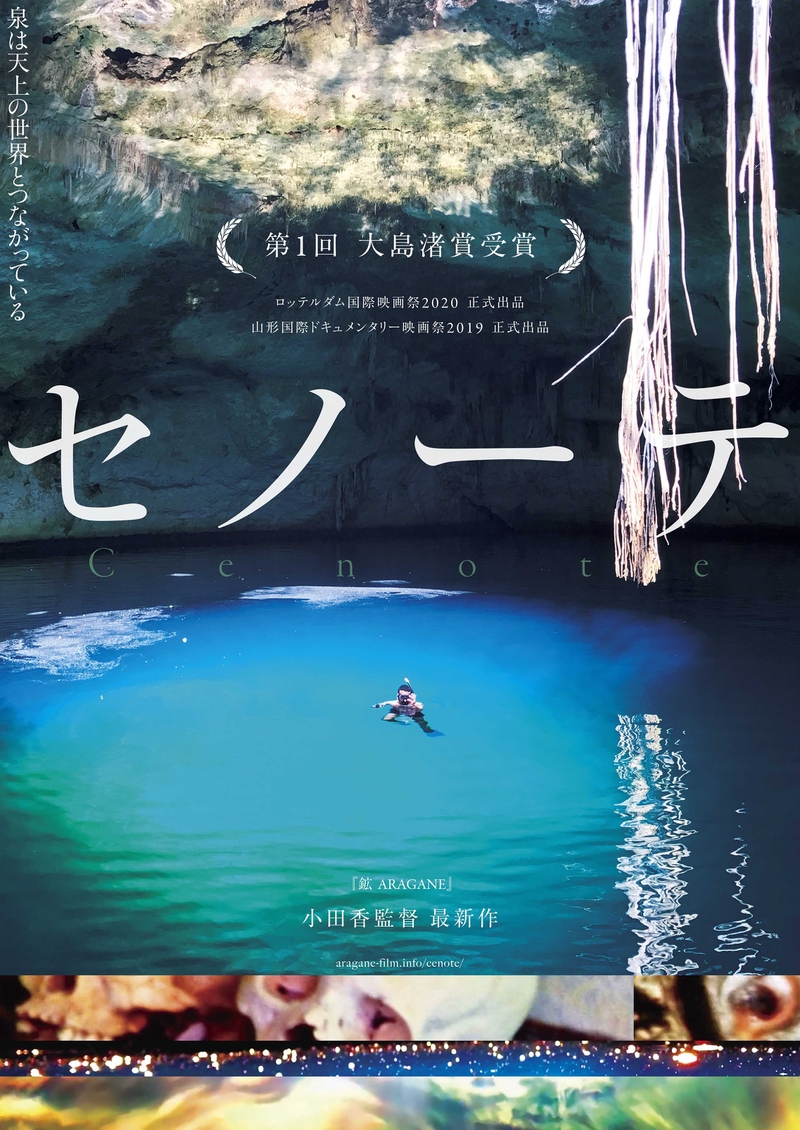
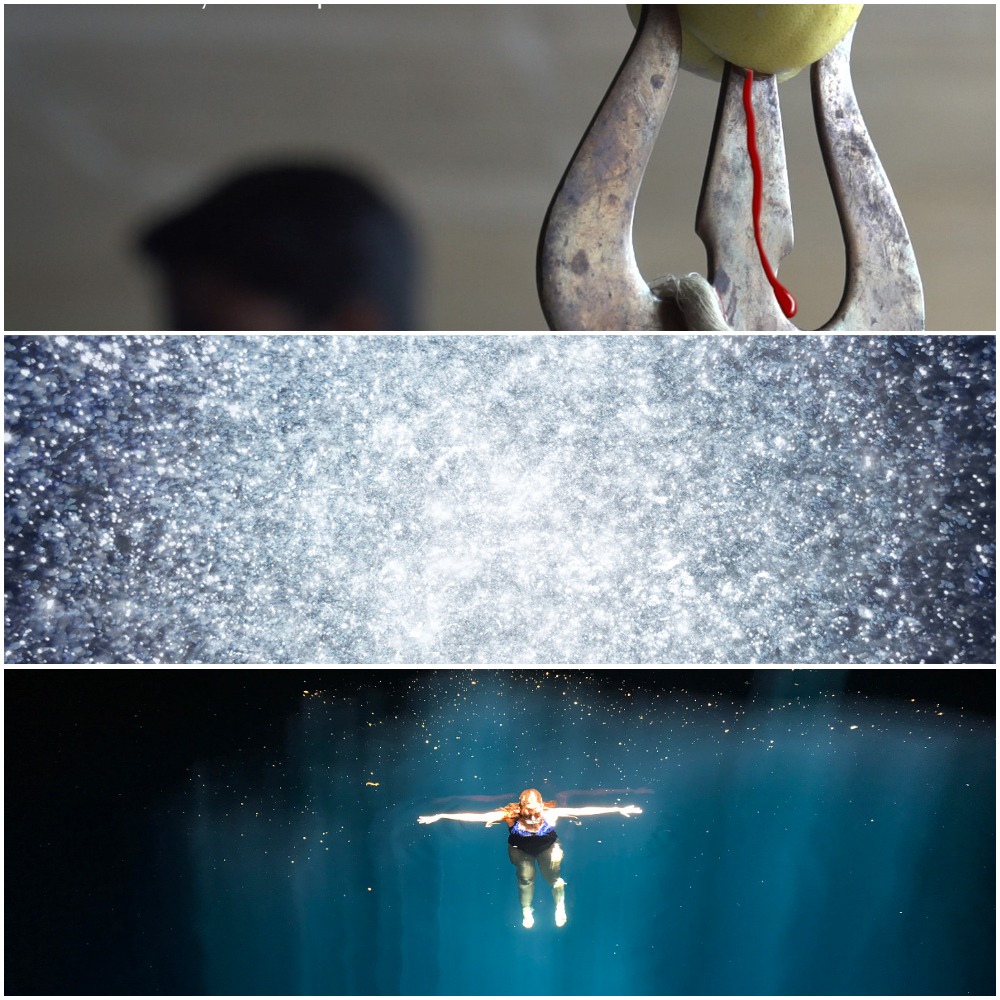
Cenote (Ts’onot) (Oda Kaori)
After Aragane, and Toward a Common Tenderness Oda moves her attention to the cenotes in Mexico. It’s not a perfect movie, but has some of the most impressive combination of sound and images I’ve seen last year. Entrancing to say the least.

Reason (Anand Patwardhan)
Fascism in contemporary India.

This slideshow requires JavaScript.

Honorable mentions:

Indiana, Monrovia(Frederick Wiseman)

Happy Android (Jaina Kalifa)

The Holiday Inn-Side (Charby Ibrahim)

Dutch Angle: Chas Gerretsen & Apocalypse Now (Baris Azman)


Special (re)discoveries:

The Man Who Has a Camera (Liu Na’ou, 1935)

Kobayashi Issa (Kamei Fumio, 1941)

Senso Daughter (Sakiguchi Yuko, 1990)


Best cinematic experience

By far the best viewing experience I had in 2019 was not at all an orthodox cinematic experience. At Yamagata  I was lucky enough to be at a Gentou (magic lanterns) screening, dedicated to the grass-roots movements in the Miike mine’s strikes during the 1950s.


Taiwanese Documentaries at the Syros International Film Festival

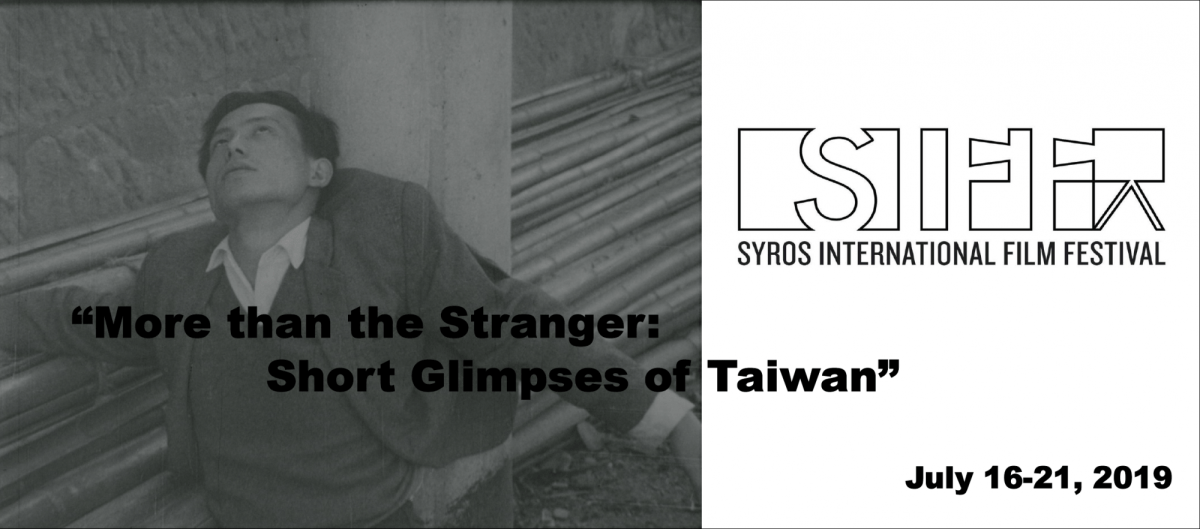
This year’s edition of the Syros International Film Festival (July 16-21) will dedicate a special program to Taiwanese documentary, More than the Stranger: Short Glimpses of Taiwan. The section includes 13 short films, from 1930 to the present, of distinguished Taiwanese artists, divided into two parts, Stranger#1 and Stranger#2. The experimental non-fiction presented in the small Greek island, will offer a glimpse of the historical and political landscape of Taiwan during the last 80 years, and its connection with a sense of “national” identity always complex and in flux. The program is made possible by the collaboration between the Syros festival, the Taiwan International Documentary Festival, and Taiwan Docs, a platform very actively promoting Taiwanese documentary films abroad.
Among the films screened, A Man Who Has a Camera – Parade (Llu na-ou, 1933), one of the earliest accounts on film of a religious event in the island, and Fisherwomen, a series of home movies shot between 1935 and 1941 by photographer Deng Nan-guang. There are also two more recent works that I had the chance to see in the last couple of years, Spectrum of Nostalgia (Chen Yi-chu, 2017), and Nostalgia of the Chinatown (Chen Chun-tien, 2016), an interesting  meditation on memories and the disappearance of a special communal space in the city of Tainan. You can download the SIFF catalog here. 

In related news, The 16th EXiS (July 24-31), held at the Korean Film Archive in Seoul, will screen 9 experimental films made in Taiwan during the 1960s, a program presented last year in California and this year in Thailand, and probably other countries as well.


So I Can Be Alright : Cocco’s Endless Journey 大丈夫であるように-Cocco 終らない旅 (Kore’eda Hirokazu, 2008)

In 2007, just before making one of his best movies, Still Walking, Kore’eda Hirokazu started to film the Japanese singer Cocco and her concerts throughout Japan. The result was So I Can Be Alright : Cocco’s Endless Journey 大丈夫であるように-Cocco 終らない旅, a movie released theatrically in Japan the following year. It wasn’t a new encounter between the two, Cocco had collaborated before with Kore’eda when he directed two music videos for her, in 2002 Mizukagami, and in 2006 Hi no teri nagara ame no furu.
Cocco is probably more known outside Japan, especially among cinephiles, for her intense interpretation in Tsukamoto Shin’ya’s Kotoko, in my opinion, one of the best Japanese movies of the decade. The role she played in the movie had some affinities with her persona, a complex, delicate and troubled artist (at least she was so at the time of the shooting). Cocco’s eating disorders and self-harm tendencies are not a secret, when her diaphanous and skinny figure, not hiding the self-inflicted cuts on her wrists, appeared on the cover of the magazine Papyrus in October 2009, it caused quite a stir in the media.

It’s probably Cocco’s exceptional figure and personality, together with her uniqueness in Japanese show business world, that might have convinced Kore’eda to direct a documentary after more than five years from his previous one. As it is now well known, Kore’eda started his career in documentary, mainly for TV, when he joined the independent production company TV Man Union. However (1991) about the Minamata Disease and the legal struggles of the victims for compensation, was his debut, followed by Lesson from a Calf (1991) and I wanted to Be Japanese… (1992), the latter about the rights of second and third generation Koreans born and resident in Japan. In 1994 he directed August Without Him, a film that documents the fights of an AIDS patient and the relationship with his friends and with Kore’eda himself. From 1995 onwards, after his exceptional feature debut Maborosi/Maboroshi, Kore’eda then shifted towards fiction, but never really abandoned documentaries, a passion that he kept alive on the background of his main career. In 1996 for instance he was behind the camera for Without Memory, an indictment of medical malpractice and reflection on memory and loss, themes that feature prominently in all his fiction films. The most recent documentary-like work he directed was Ishibumi in 2015, a remake of a TV program made in 1969 about the tragedy of Hiroshima. While his commitment to documentary is still present, it is also obvious that his main career as a director has now moved away from it. Yet many of the qualities he developed as a documentarist are still very present in many of his feature films: the ability to improvise and capture the rawness of the moment, working with non-professional actors and children, and the use of natural light, for instance.

Cocco’s Endless Journey follows the Okinawa-born artist in an important period in her life and career, during her Kira-Kira Live Tour between 2007 and the beginning of 2008. The tour marked the 10th anniversary from her solo debut, and also a time when her insecurities as an artist and as a human being clashed, deteriorating her physical and mental condition.
The film moves pretty smoothly and ordinarily for most of its 110 minutes, performances by Cocco are alternated with the artist speaking with her staff or going back to Okinawa for a family reunion. But it’s in the last 20 minutes or so that the movie becomes a remarkable and fascinating watching. From a musical documentary following an artist, her concerts and her preoccupations with civil and environmental battles—Cocco’s tour touches Rokkasho, a town with a huge nuclear reprocessing plant in Aomori, and Okinawa with all the problems related to the presence of American bases, one of which being the extinction of the Okinawa dugong—the movie becomes something totally different. Cocco insecurities, her death drive and her fragile physical and psychological condition slowly come to the surface. It was something that was present before of course, we see her crying many times before or during the performances, but a long conversation with Kore’eda towards the end of the movie pushes the documentary to a different and somehow uncomfortable place. The long scene has a direct-cinema touch and works almost like a confession. On a hill facing the beautiful sea of Okinawa, Kore’eda, off camera, listens to Cocco talking about the difficulty of staying alive and about her suffering, but also the novelty brought to her life by the birth of her son (if I’m not wrong he was 7 at the time).

For instance, she explains the difference between watching Miyazaki’s Princess Mononoke by herself, disappointed by the hopefulness of the ending, and together with her son, when on the contrary she was relieved and glad for the happy end. The very last scene takes place on a beach at night, here after digging a hole in the sand, Cocco and her staff starts to fill it with the fan letters she received and read and a lock of her hair, a cleansing fire that ends the movie.
Before the ending roll we’re informed by intertitles about all the recent developments that occurred in Okinawa and Rokkasho after the shooting of the movie, and that in April of the same year, 2008, Cocco was hospitalised for treating her anorexia.

Image Forum Festival 2018 イメージフォーラムフェスティバル 2018

The 32nd Image Forum Festival ended last Sunday in Tokyo. The nine-day-long event, hosted at two different locations in the Japanese capital, the Theatre Image Forum and the Spiral Hall, screened in total more than 80 films, including 23 in the East Asian Experimental Film Competition, the main section. Established in its present form in 1987, the festival succeeded and replaced an experimental film festival that was held, in various phases and different shapes, in the capital from 1973 to 1986.

To this day the festival continue to embody the mission and the legacy of its predecessors. Primarily dedicated to experimental cinema and video, the event provides a special opportunity for the viewers to experience on a big screen a mix of feature films, home cinema, documentary and experimental animation.
After Tokyo, the festival will move to Kyoto, Yokohama and Nagoya, with slightly different contents, there will be special sections dedicated to artists of each city. This is a right and welcomed decision, since too often Tokyo ends up cannibalizing the cultural and artistic events taking place in the archipelago.

This slideshow requires JavaScript.

This year’s special retrospectives were dedicated to the provocative films of Christoph Schlingensief, German director who expanded his works beyond cinema to touch theater, television and public happenings, Kurt Kren, Austrian artist associated with Viennese Actionism, but also author of structural films, and the experiments on celluloid by Japanese photographer Yamazaki Hiroshi. I wasn’t aware of the films of Schlingensief, and I have to say that it was at the same time a discovery and a delusion. While I really liked 100 Years of Adolf Hitler (1989), claustrophobic and parodic reconstruction of the last hours of the dictator and comrades in his bunker, I couldn’t digest the other two movies of the so called German Trilogy. German Chainsaw Massacre (1990) and especially Terror 2000 (1992) are too much of a mess and stylistically all over the place , and probably too bound to the events of the time, the Fall of the Berlin Wall and the consequent unification of the two Germanies, for me to decipher them.

Unfortunately I wasn’t able to check the works of Yamazaki, but I’m planning to see them at the end of September, when the festival will come to Nagoya. As with his conceptual photos, the shorts made during his entire life explore the relationship between time and light, a topic I’m very attracted to.
I also missed the screening of Caniba (2017) by Lucien Castaing-Taylor and Véréna Paravel, about the “cannibal” Sagawa Issei, if I’m not wrong, this was the Japanese premiere of the film, and the special focus Experimenta India, a collection of visual art from the Asian country.
Interesting was to catch Matangi/Maya/M.I.A. (Steve Loveridge, 2018), about the famous ex-refugee of Tamil origin, now a pop icon and singer, an artist I was completely unaware of. The documentary is based on more than 20 years of footage filmed by herself and her friends in Sr Lanka and London. While I didn’t connect with the first part of the movie, too self-indulgent for my taste, the film gets much better in the last 30-40 minutes when, albeit briefly, touches on complex and fascinating topics such as immigration and art, fame, and social awareness in the show business.

The East Asia Experimental competition was pretty solid, besides several short films coming from a variety of areas like South Korea, China, Hong Kong, Taiwan and naturally Japan, two were the long documentaries screened. A Yangtze Landscape (Xu Xin, 2017), a visual exploration of the social and geographical landscape along the longest river in Asia (you can read my review here), and Slow Motion, Stop Motion (Kurihara Mie, 2018) a movie that positively surprised me and won both the Grand Prize and the Audience Award. A review is coming soon, stay tuned.

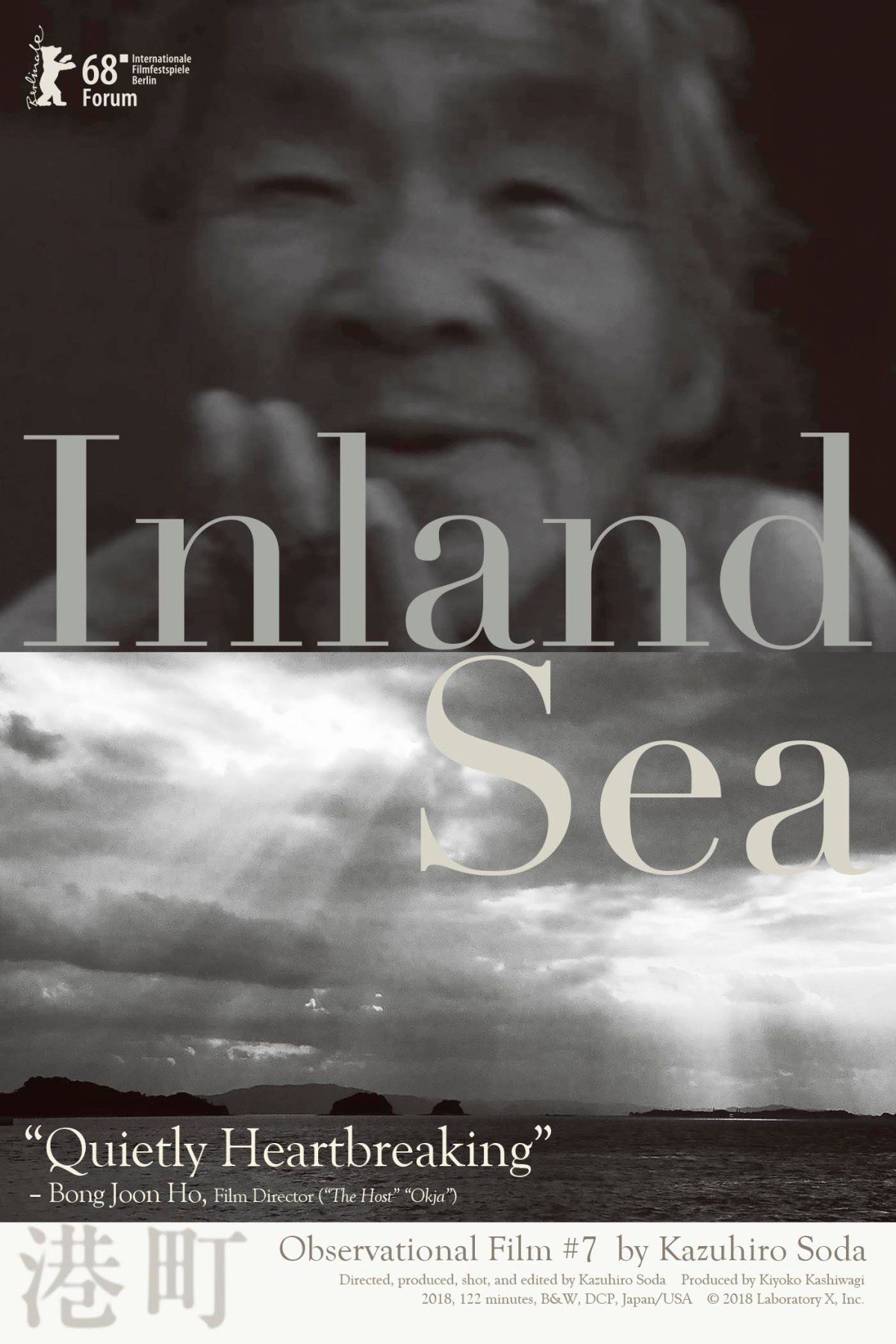
Inland Sea 港町 (Sōda Kazuhiro, 2018)

Screen at this year edition of the Berlinale (Forum), Inland Sea is the latest documentary by one of the most interesting and original voice working in Japanese non-fiction today, Sōda Kazuhiro.  Based in New York, Soda in the last 10 years or so has built an impressive body of work, Inland Sea is the seventh documentary in his ongoing observational series, among my favorite Theatre 1 and 2, a diptych about playwright Oriza Hirata and his theatrical company, and Oyster Factory, a documentary premiered at the Locarno International Film Festival in 2015. Inland Sea was filmed soon after Oyster Factory, in fact the town is the same, Ushimado, a small village facing the Seto Inland Sea in Okayama prefecture. While in the previous film Soda focused his gaze on a small oyster factory and the problems of surviving in a globalized world (you can read more here), in Inland Sea he follows three elderly people living in the village and their daily activities. Here the synopsis:

Wai-chan is one of the last remaining fishermen in Ushimado, a small village in Seto Inland Sea, Japan. At the age of 86, he still fishes alone on a small boat to make a living, dreaming about his retirement. Kumi-san is an 84 year old villager who wanders around the shore everyday. She believes a social welfare facility “stole” her disabled son to receive subsidy from the government. A “late – stage elderly” Koso-san runs a small seafood store left by her deceased husband. She sells fish to local villagers and provides leftovers to stray cats. Foresaken by the modernization of post-war Japan, the town Ushimado’s rich, ancient culture and tight-knit community are on on the verge of disappearing.

While, as mentioned above, the film is part of his observational series, from the very first scene is clear how Soda with his camera and his voice is an important and catalytic presence in the relational texture that is Inland Sea. As Nichols would put it, while Sōda is filming and representing a certain reality, the documentary and the act of filming itself becomes also an important part of that reality. More than in his other works, his voice and that of his wife and their presence is here a fundamental part of the movie, often the people filmed converse with Sōda and we, as spectators, are always aware of the relationship between the camera and its environment. Naturally all documentaries are works of fiction, to one degree or another, but to my eyes acknowledging the presence of the camera and its effects in a documentary shot in an observational style, is one of the main qualities of the movie. It’s a honest and ethic filmic approach that I really value as important, especially in the contemporary documentary landscape, an approach that stems also from the style and methodology adopted by Sōda:

I spontaneously roll my camera, watching and listening closely to the reality in front of me, banning myself from doing research or prescribing themes or writing a script before shooting. I impose certain rules (‘The Ten Commandments’) on myself to avoid preconceptions and to discover something beyond my expectation.

The movie is shot in its entirety in black and white, the only case in Sōda’s filmography, just the very last scene, a boat floating, is in colour. I haven’t read so much about the movie, I wanted to experience it without preconceptions, so I don’t know the reason behind not shooting in colour, but certainly this choice gives a very distinctive elegiac tone to the movie, and a flavour of obsolescence and marginality to the places and the people depicted in it. Compared to Sōda ’s previous movies there is, at least in the first hour or so —  the last 30 minutes are basically a very long and touching monologue of one of the old ladies, Kumi-chan — less talking and more insistence on the daily routine of Wai-chan and Koso-san, long periods of time are spent with the old man on the boat, fishing, and with the old lady, selling the fish.

By focusing on a place on a relatively far corner of Japan, far away from the metropolitan excitement that too often is associated with Japan, a place not yet forgotten, but on the edge of disappearing, and where the population is shrinking — the akiya (empty houses) seen in a sequence are becoming part of the present and near future of the archipelago — Sōda is also hinting, consciously or not, to one of the crucial issues of contemporary Japan and its geopolitical construction as a nation. That is, the parasitic relationship between sprawling urban centers and countryside, often forgotten, exploited (as highlighted by the situation in Fukushima or the Rokkasho Reprocessing Plant), or reduced to the folkloric image and touristic destination of Japan National Railway’s posters. In a post on his blog last year commenting on the Ogawa Pro’s Sanrizuka series, Soda wrote that, I’m paraphrasing, the struggle and resistance to the construction of the airport, because of the thick dialect spoken by the farmers at the time, almost incomprehensible to a person born and raised in Tokyo, felt like an act of exploitation perpetrated by the central state towards its colonies.

Another aspect of Sōda’s style that really stands out in Inland Sea and a direct consequence of his methodological approach, is the absence of any explanation on the historical background and context of the subject filmed. His films do not offer any extra information about the people he meets and the places he shoots, but the camera and his documentaries are, in a certain way, an extension of his gaze. It is up to us the viewers to decipher and image what stories lie behind the landscapes and the people captured on screen, for instance we don’t know if the stories told by the very talkative Kumi-san, to whom the movie in dedicated (she passed away in 2015),  are completely true or to what degree they’re even truthful, yet this is life and it is here presented in all its complexity, sadness and beauty.

https://player.vimeo.com/video/250935060

Inland Sea – Trailer from Laboratory X on Vimeo.

Record of a Marathon Runner あるマラソンランナーの記録 (Kuroki Kazuo, 1964)

The Winter Olympics in Pyeongchang, the next edition of the Summer Olympics in Tokyo on the horizon, and the massive 100 Years of Olympic Films box set released last year by the Criterion Collection, revived and rekindled my interest in sport documentaries. I decided to revisit one of my favourite non-fiction films dedicated to sport, Record of a Marathon Runner, a movie made by Kuroki Kazuo between 1963 and 1964 about Kimihara Kenji, a Japanese marathon runner active during the 1960s and 1970s. Kuroki was a director who, long before establishing himself as an author somehow associated with the Japanese New Wave (Silence Has No Wing and Ryōma Assassination are two of his best work of the period), was a respected and innovative documentary filmmaker at the Iwanami Production, where he and other friends, Tsuchimoto Noriaki and Ogaka Shinsuke among others, formed the Ao no Kai (Blue Society), a group that tried to experiment and find new ways of expression through non-fiction cinema.

Record of a Marathon Runner is a PR movie (a sponsored movie) founded by Fuji Film, but paradoxically shot almost entirely on a Eastman Kodak film. If you want to know more about the movie’s troubled production and have more insights on Kuroki career, this interview is a must read.

It is possible to watch the relatively short documentary (only 62 minutes) on The Science Film Museum’s Yutube official page, unfortunately it’s without English subtitles.

For some scholars, and I couldn’t agree more, Record of a Marathon Runner represents the other side of the official discourse about the Olympics, the one exemplified, with great artistic results I have to admit, by Ichikawa Kon’s Tokyo Olympiad (1965). In Record of a Marathon Runner the connections with the big event are very thin if not completely absent, in fact someone could argue that the movie is not even about the Olympics at all, we don’t see the marathon or the games themselves, the camera “just” follows Kimihara Kenji, who would eventually finish in eighth place at the competition in Tokyo, throughout his training and running in the winter and spring of 1963-64, as he prepares for the big event.

Although originally the documentary was conceived by Kuroki without narration, the movie uses a traditional narration alternating with the words spoken by the marathon runner himself and his coach. However, the tone of the words is so flat and has an almost matter-of-fact quality in it, that there’s no glamour nor pathos, on the contrary, everything, from the endless and solitary training, to the foot injury and the recovery, is displayed like some sort of natural phenomenon. Drained of any passion, the style of the movie reflects the act of running as felt by Kimihara himself, or at least as it is presented in the film, mechanical and without a real purpose, but it is also a way of transferring on screen the gray skies and the dull landscapes depicted, Kitakyūshū city with its industrial suburbs often drenched in rain, or the very ordinary countryside roads in Kagoshima prefecture.

This sense of necessity and that of the loneliness of the runner is amplified by the use of an eerie, dissonant and minimalist music, and by a cinematography that often uses long shots when depicting the athlete while training on the track, on the beach or on the streets. Even in the only scene when Kimihara is shot on a close-up while running, the monotonous sound design and the circularity of his movements form a hypnotic run that seem to lead nowhere. Another scene towards the end is also exemplary about this aesthetic approach: Kimihara after recovering from his injury participate in a competition- the Asahi road relay as the last runner – the only proper race we see on screen. After he wins and crosses the finish line though, he goes on running for a couple of minutes among people and trees like in a state of trance and without goal.

Focusing on the experience of running in preparation for a competition, highlighting its harshness and solitude, Kuroki also depicts indirectly the social background which Kimihara belongs to, the working class of a highly industrialized Kita Kyushu, and the life of an athlete before the brief and ephemeral light cast by the Olympic event.

Remembering Matsumoto Toshio

…good starting point for this (re)discovery could be the recent release (by Cinelicious Pics) of Funeral Parade of Roses on Blu-ray and DVD, Matsumoto Toshio’s masterpiece newly restored in 4K, released in Japan in 1969 and recently screened in selected theaters around the U.S.A. The release is significant not only for the film itself, a unique movie experience indeed, but also because included in the package are eight extra works that Matsumoto made between 1961 and 1975: Nishijin, The Song of Stones, Ecstasis, Metastasis, Expansion, Mona Lisa, Siki Soku Ze Ku and Atman.
More than ten months have passed since the death of Matsumoto, and this release is a good and timely opportunity for me to collect my thoughts, trying to position his oeuvre in the context of post-war Japanese cinema, and to draw connections between Matsumoto and others filmmakers and the cultural milieu he grew up in as a filmmaker and artist.
In a career spanning more than fifty years Matsumoto made short and feature movies and moved freely from documentary to art-house films, and from pure experimental cinema to expanded cinema and video installations, in a very unique process of hybridization and genre overlapping that has few parallels in the world of cinema and image making.
In the seven months since his passing, prompted by the tragic event, I decided to

Continue reading “Remembering Matsumoto Toshio”

Yamagata 2017 – day 5 (finale)

October 10th

My last day in Yamagata. The festival will officially wrap up in a couple of days, but there are only a few screenings left and the main part of the festival ended de facto today. It would be a good idea if the organizers could spread the movies a bit more, as the festival is designed now, everything tends to be concentrated during the long week end (Friday to Monday) when film buffs from other part of Japan visit Yamagata.

In the morning I saw Genet in Shatila (1976) by Richard Dindo, long time ago I read the book the movie is based on (Four hours in Chatila) and it was a pleasure to rediscover its poetry and Jean Genet’s attachment to the Palestine cause. The second movie of the day was Here and Elsewhere by J.L. Godard and J.P. Gorin, a turning point in Godard’s career because it trailblazed and anticipated an approach towards the image and the use of it and many stylistic elements that would fully thrive and bloom in his next movies, culminating with Histoire(s) du Cinéma.

The last movie I saw at the festival was The Targeted Island: A Shield Against Storms by Mikami Chie. Although the movie is shot like a TV documentary and I have some other issues with it, it ends with the most powerful final scene I’ve seen in Yamagata this year, a very young female protester and a very young policeman facing each other in silence under the rain. Breathtaking.

I guess that’s all for this year in Yamagata, the festival is always a special experience, even though keeping the quality of the movies selected high is becoming every time more and more difficult.
I’d like to give special thanks to all the people (directors, critics, scholars, film lovers and volunteers) I met and I discussed with during these five days, it has been an enriching experience.

Yamagata 2017 – day 4

October 9th

Today I had to write an article for Il Manifesto about the Politics and Film: Palestine and Lebanon 70s–80, so I could not see as many movies as I’d have liked to. Anyway, the first work of the day was Tremorings of Hope by Agatsuma Kazuki, a movie depicting the struggles of the people of Hadenya, one small community in Miyagi prefecture, to rebuild their lives after the tsunami completely erased their town. It was as I expected, not a bad movie but nothing exceptional or new, definitely too long though.

The only other movie I had the time to see was Once Upon a Time in Beirut: The Story of a Star by Jocelyne Saab, a complex interweaving of history and history of Lebanese cinema through the personal and fictional gaze of the director. A mesmerizing, tragic and fun film composed by images taken from Lebanese and not Lebanese movies of the first half of the 20th century. The icing on the cake was a Q & A with Saab herself via Skype.

Yamagata 2017 – day 3

October 8th

In the morning I attended the screening of my favorite documentaries by Satō Makoto, Self and Others and Memories of Agano, the latter just confirmed its powerful impact it has every time on me and its endless rewatchability. In the afternoon the panel with Mark Nornes and Akiyama Tamako, Satō Makoto Seen from Abroad, was very enriching from many different points of view and it cemented my belief that Satō, especially at the end of his career, was more in tune with the international context that the Japanese one.

I also had the chance to catch up with Ex Libris—The New York Public Library by Frederick Wiseman, not my favorite of his works perhaps, but still a compelling documentary masterfully constructed. I feel it’s a very American film, all his works are “very American” of course, but this one, just my opinion, can be appreciated more by people who live or have lived in the U.S.

The two night screenings were really different, both experimental, but one a complete let down (Hurrahh! by Jung Jae-hoon) and the other a small and unexpected jewel of a movie. Rubber Coated Steel by Lawrence Abu Hamdan mixes video art, documentary and a strong political stance like few other works have been able to do recently. Time permitting, I’ll write something in the near future.