A mini retrospective on the streaming platform DAfilms.com, from 17 January to 6 February (free of charge until 24 January) introduces 10 Japanese documentaries presented at the Yamagata International Film Festivalfrom 1989 to 2021. A fascinating path through the cinema of the real produced in Japan in the last three decades.
In 1973 when the Ogawa Production collective made Narita: Heta Village, the sixth documentary on the struggle and resistance of the peasants in Sanrizuka against the construction of the new Narita airport, they not only created one of the most important documentaries in the history of Japanese cinema, but also captured and foreshadowed a series of shifts that would take place in the archipelago in the following years. By moving the attention and the camera from the clashes, a “civil war” as it has been described by many, to focus more on the life of the peasants, their customs and their sense of time, the collective anticipated the interest that cinema and literature would later show towards rural and provincial areas. From a cinema more linked to contingent events taking place in the political and social sphere, towards one more interested in macrohistory and its large movements and cycles. This interest of the group, led by Ogawa Shinsuke, is reflected in their decision to move to the north of Japan, to the Yamagata prefecture, where the collective lived for 14 years, from the second half of the 1970s until the end of the following decade. As it was revealed later, after Ogawa’s death, this period was not without internal conflicts, and within itself it had many of the problems that had already poisoned many of the New Left groups during the 1970s, such as a marked authoritarianism, and an absolute lack of female presence in crucial positions. If the cinematic peak of this long period spent in Yamagata is Magino Village – A Tale / The Sundial Carved with a Thousand Years of Notches (1986), an unidentified filmic object that constructs a mythological and epic mapping of the area and its inhabitants, perhaps it can be said that the most important legacy of the collective and of Ogawa himself is the creation, in 1989, of the Yamagata International Documentary Film Festival (YIDFF).
Held once every two years in the Japanese city, the festival has become, in its three decades of existence, an important event for those who love the cinema of real and its infinite expressive possibilities. The festival has always stood out to me for the way it is experienced, horizontally so to speak, after the screenings: professionals and filmmakers mingle and interact with enthusiasts, cinema lovers or even just the curious, who come to enjoy the almost party and rock concert-like atmosphere of the event. At the same time, however, Yamagata has also been, since its very beginning, an important launching pad for many Asian authors and for the creation, especially in the 1990s, of a transnational documentary film culture. The first of its kind in Asia, the event contributed to the birth of other festivals, the Taiwan International Documentary Festival for instance, and it also functioned as a pole of attraction for the new wave of Asian filmmakers who came to the fore during a crucial period for the area, the period of democratisation of art with the advent of digital, in China but also in Hong Kong and other parts of South East Asia more generally.
The online retrospective organised by the YIDFF in cooperation with DAfilms is an excellent opportunity to discover some of the most important Japanese films presented at the festival since its foundation. Two works ideally open and close the retrospective, A Movie Capital, a documentary on the first edition of the festival made in 1991 by Iizuka Toshio, one of the members of Ogawa Production, beautifully captures that sense of collaboration and artistic brotherhood between Asian directors mentioned above. While Komian and Pickles by Satō Koichi— presented during the 2021 edition, moved online due to the pandemic— gives an idea of the sense of commonality in Yamagata during the event. The closure of Komian, a popular venue for post-screening discussions and meetings, follows to the closure of a local tsukemono (pickled food) business, Maruhachi Yatarazuke pickling company, the owner of Komian. The film is an occasion to remember and treasure the experiences offered at the venue, but also an example of how the gentrification process, magnified by the economic damage caused by COVID-19, is active and reshaping the urban texture even in small Japanese cities.
The most artistically accomplished works presented in the retrospective are, however, others. All of them are worth watching of course, but I would personally recommend Living on the River Agano by Satō Makoto (I wrote about three of his movies here), Yang Yonghee’s 2005 film Dear Pyongyang, Storytellers by Hamaguchi Ryūsuke and Sakai Kō, and Cenote (2019) byOda Kaori (here an interview with the artist and a piece on the movie). Here the complete line-up:
A Movie Capital // Toshio IIZUKA // 1991
Living on the River Agano // Makoto SATO // 1992
The Weald // Naomi KAWASE // 1997
The New God // Yutaka TSUCHIYA // 1999
A2 // Tatsuya MORI // 2001
The Cheese and the Worms // Haruyo KATO // 2005
Dear Pyongyang // Yong-hi YANG // 2005
Storytellers // Ko SAKAI, Ryusuke HAMAGUCHI // 2013
As usual, the list below is a reflection of my taste, interests, and viewing habits during 2021, this year mainly, but not exclusively, online. I’m not sure all the titles can be considered documentaries, but this is, after all, the fascinating beauty of dealing with documentary cinema. Synopsys in italics, followed by my quick take and, when available, the trailer:
Kanarta – Alive in Dreams (Ōta Akimi). Sebastian and Pastora live in a Shuar village in the upper Amazonia of Ecuador. Sebastian is not only a respected healer, but also a medicinal botanist who experiments with unknown plants he encounters in the forest. His unique practice seeks to cultivate new knowledge, reconnecting him with his ancestors. Pastora is one of the rare female leaders in Amazonia, who struggles to negotiate with local authorities for her community. With powerful plants such as ayahuasca, they revive and energise their perceptions of the future. These plants allow them to acquire power and a faith to cope with the obstacles they now face, given that their lives have been irreversibly affected by the modern state system. There is a lot to like about this movie, and, like in the best works that cross the boundaries between documentary, visual anthropology and experimental cinema, every new viewing reveals extra layers. On the one hand Kanarta shows the problems Shuar people and their culture encounter in dealing with modern society and the way their community adapts and changes in response. On the other, it also offers a glimpse of their being part, almost as if made by the same flesh, of the Amazon forest, and their vital connection with the medicinal plants, “plants that make reality” as one of the people suggests. However, what really kept me engaged throughout the whole movie is that the documentary is permeated by joy, there are lots of laughs and funny scenes, usually fuelled by chicha, an alcoholic beverage made of fermented potatoes. The joy is also coming from the movie and its protagonists being in a constant state of exploration, through the visions and through the wandering in the forest in search for new plants or new places where to build a house. Kanarta offers also some emotional and even dramatic scenes, it’s very touching for instance, when we see Sebastian’s son receiving his medical diploma during a small ceremony, and father and mother posing with him for the camera with pride and smiles. This contributes to build a stronger sense of attachment for the two protagonists, Sebastian and Pastora, who are willing to show and tell the director about their culture and their way of living. The main reason why everything works though—from the more poetic scenes, to the more visceral ones, when Sebastian takes ayahuasca for instance—is because the documentary is structured in a dialogic manner, so to speak. The camera is not a passive actor in the scenes, but it’s part of, and often influences, what is going on, directly or indirectly. Furthermore, Ōta is very good at transmitting, through an immersive visual and sensorial experience, the powerful feeling of empathy that emanates from Sebastian and Pastora, and the Amazon forest itself.
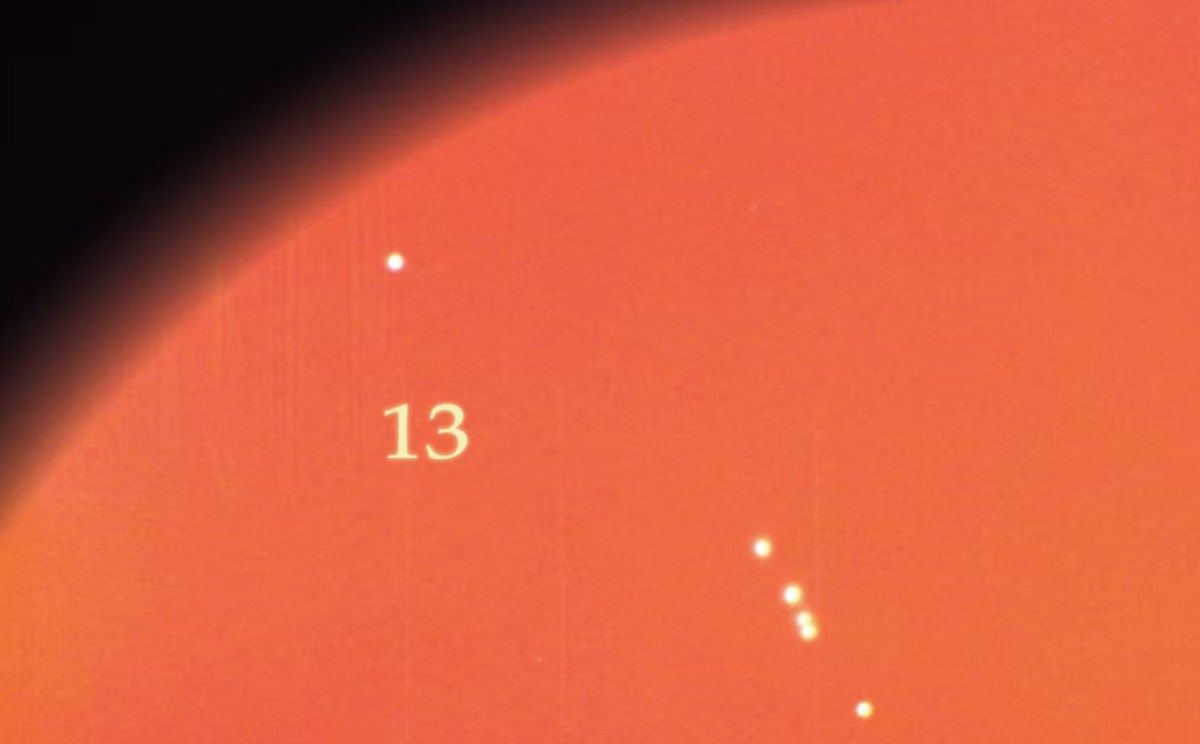
13 (Isobe Shinya) The filmmaker left his camera in exactly the same spot for five years to shoot a picture of the sunset every thirteen seconds. In a series of merged time-lapses, we see the sun(s) moving repeatedly from the left part of the screen to the right. One of the best movies I’ve seen this year, documentary or not, I wrote about it here.
.
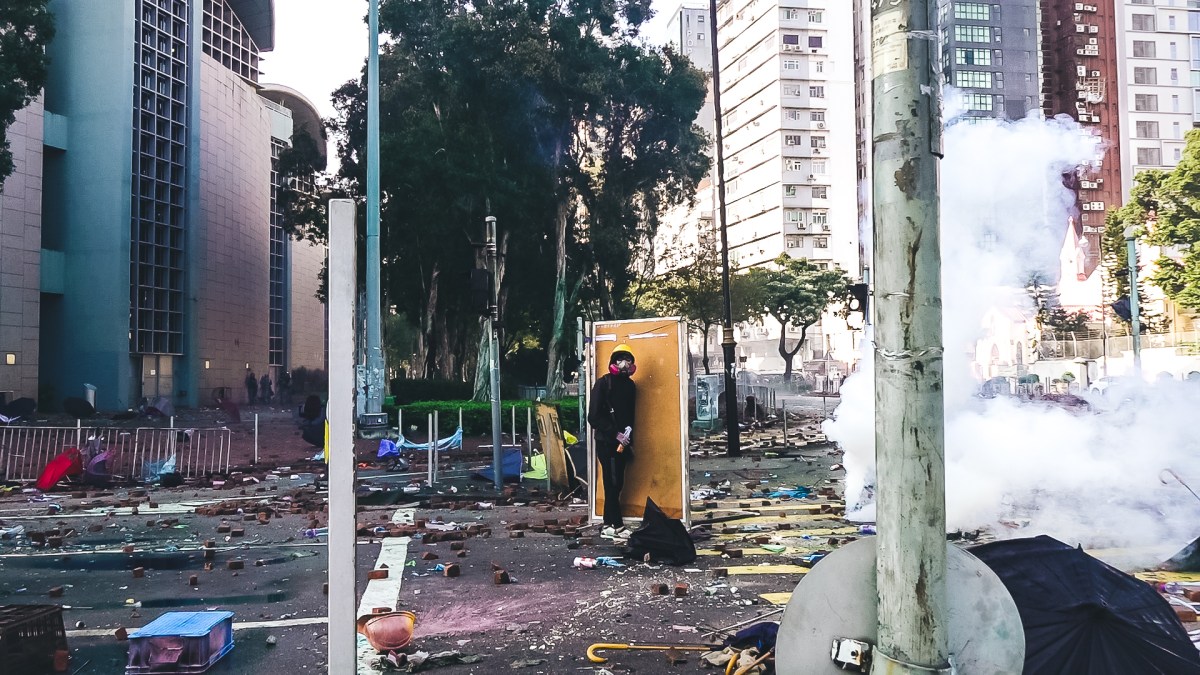
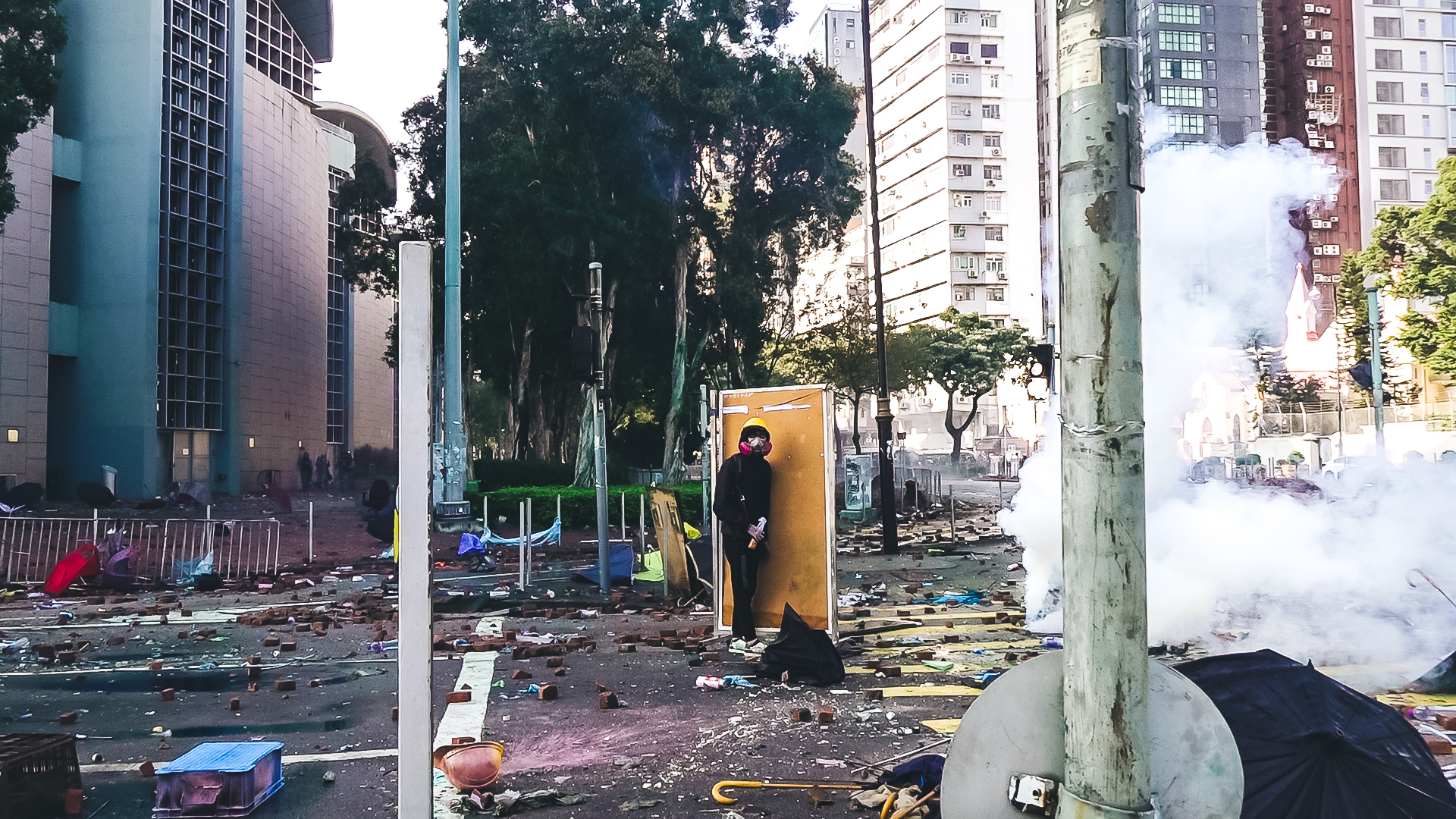
Inside The Red Brick Wall (Hong Kong Documentary Filmmakers) On 17 November 2019, the police laid siege to protestors at the Hong Kong Polytechnic University in a blockade lasting nearly two weeks. Beleaguered students fought teargas with makeshift whiteboard shields, hoping to escape and return home to safety. With the media barred from on-site access, an anonymous collective films from within the campus, recording the teenage protesters’ hopes and distress. From the very first shot the documentary is imbued with a sense of precariousness and anger, and by filming the violence between riot police, students, aid people, and members of the press —mainly independent press that live-streamed the battles on the internet— captures and creates, through a masterful use of editing, a very powerful sense of space and proximity with the students, a visual cartography of violence and resistance. The scenes when many of the young students break down, cry and walk out, defeated, from the campus, often criticized by their comrades, is— although it is something I have seen over and over again in the documentaries about the Japanese protests of the 1960s and 1970s—heartbreaking. What is also extremely fascinating for me, is that all the young people wearing masks and gear, for protection and for anonymity, form, more than a revolt of the individuals, a resistance of the multitude. The sense that the struggle is about something bigger than the siege itself is very palpable.
.
Minamata Mandala (Hara Kazuo) After years of dumping industrial wastes from the factory to the ocean, Chissō Chemical Corporation contaminated the area of a small Japanese fishing village with excessive amounts of methylmercury. This highly toxic chemical bioaccumulated in fishes of the local water, which when consumed by the local populace resulted in mercury poisoning. In 1977, Minamata disease certification criteria was set by a strange method that tried not to recognize the rights of environmental disease patients. However, an Osaka court won the case for some patients because of a newly developed theory by medical doctors’ recent experiments and proofs. For decades, these patients struggled within the Japanese judicial system for their rights to receive compensation as victims of environmental disease. Those different aspects of these patients’ lives have been filmed by director Hara for the last 15 years, inspired by the late director Tsuchimoto’s documentary MINAMATA: THE VICTIMS AND THEIR WORLD (1971). Not a minute of the documentary (it’s 373′ long) is superfluous. This is, in my view, one of Hara’s best works, and so far the pinnacle of the second part of his career as a filmmaker.
.
The Works and Days (of Tayoko Shiojiri in the Shiotani Basin) (C.W. Winter, Anders Edström) An eight-hour fiction shot for a total of twenty-seven weeks, over a period of fourteen months, in a village population forty-seven in the mountains of Kyoto Prefecture, Japan. It is a geographic description of the work and non-work of a farmer. A portrait, over five seasons, of a family, of a terrain, of a soundscape, and of duration itself. Undeniably it’s an impressive cinematic achievement and is worth engaging with it, but for me, once the “artificiality” of the movie becomes apparent, it loses part of the appeal and power. I’m not revealing more to avoid spoilers (but are there really spoilers?). Also, I’m approaching the movie from a special angle: I live in Japan, in a somehow similar place to the one depicted in the film. All that being said, the soundscape is astounding, and I like how the movie’s editing is often constructed following the sounds. I really should, and I wish to one day, experience it in a theater.
.
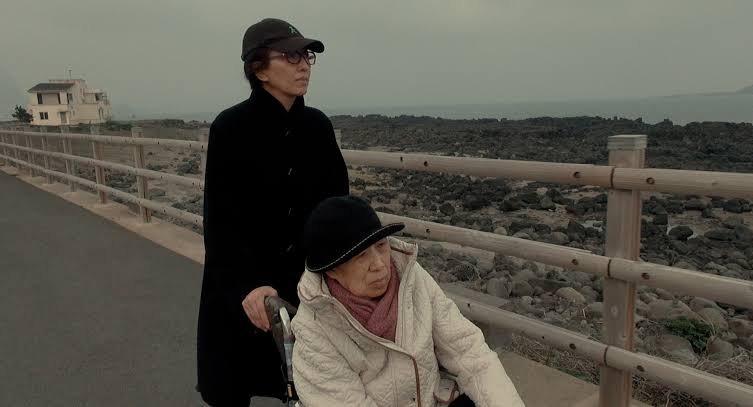
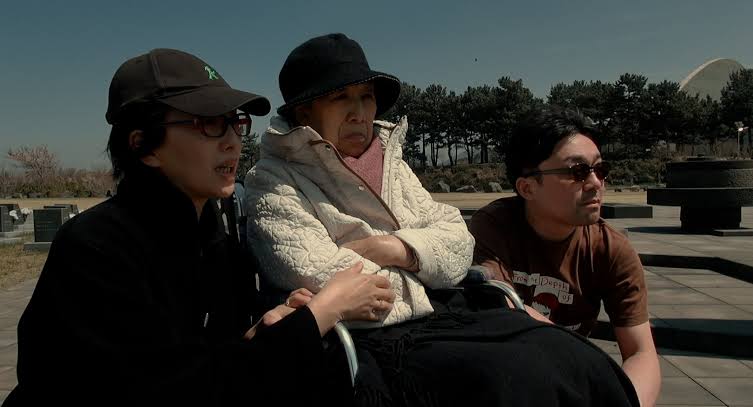
Soup and Ideology (Yang Yong-hi) Confronting half of her mother’s life—her mother who had survived the Jeju April 3 Incident—the director tries to scoop out disappearing memories. A tale of family, which carries on from Dear Pyongyang, carving out the cruelty of history, and questioning the precarious existence of the nation-state. With her latest documentary Yang Yonghi continues to explore how her own personal life is tragically connected to the post war history of Japan and Korea. The movie presents not only the painful memories of the Jeju massacre (April 3rd 1948) as remembered by the director’s mother, and the destruction a family, her three brothers were sent from Japan to North Korea at a young age, but it is also an emotional portrait of her frail and ageing mother. As the film progresses she is diagnosed with senile dementia, and little by little she loses her memories, including those of the massacre she witnessed, only 18, in the small Korean island. The movie is also partly an act of self-reflection by Yang Yonghi herself, if in the first part she is the one filming her mother, and we don’t really see her too much, in the second, when her mother condition worsens, she enters the frame more often, and becomes the co-protagonist of the film. We can clearly see her emotions, especially when she visits the island, with mother and husband, for the anniversary of the massacre. There, Yang Yonghi understands that her mother’s affiliation and attraction for North Korea, something the director had never completely forgiven her for, was also caused by the atrocities committed by the South Korean Army her mother saw with her own eyes. It would have been a better movie for me, had not been for the five or so minutes of animation used to explain her mother story in Jeju in 1948. I found the segment out of place and it really took me out of the movie.
.
Shiver (Toyoda Toshiaki) A music movie featuring a performance of Taiko Performing Arts Ensemble ‘Kodo’ and Koshiro Hino. Filmed entirely on Sado island. Partly a filmed music performance, partly a visual experiment connecting music, landscape and spirituality, Shiver is a fascinating piece of work that fits perfectly with what Toyoda has being creating in recent years. Through the spiritual encounter between Sado landscape and the hypnotic music of the taiko drummers, Toyoda touches and expands some of the themes tackled in some of his most recent films, such as the The Blood of Rebirth, Monsters Club, and The Day of Destruction. That is, the primal nature of the world we inhabit, and how we, humans, can connect with it through music, a similar approach was also at the core of Planetist in 2020. Something primal not in a temporal sense as something that comes before, or ancestral, but more as something essential that is always present and awaits to be discovered and brought to light. Like the rock/monolith towards the end of the work, which seems to have some kind of energy inside, and whose light is filtering through the cracks only when the music plays.
.
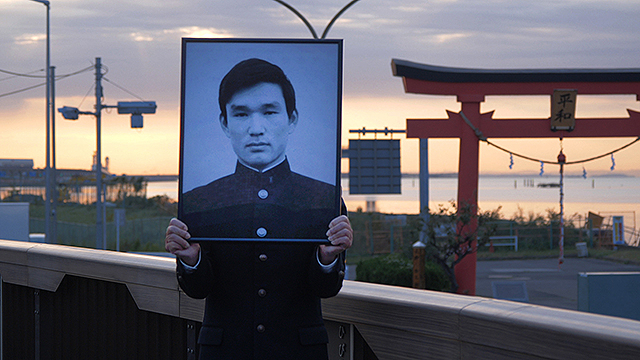
Whiplash of the Dead (Daishima Haruhiko) Weaving together the memories of Yamazaki Hiroaki, a university student who lost his life in the First Haneda Struggle in 1967 through the words of his bereaved family and ex-classmates, this film turns the memories of those who protested against government power into questions for the future. The movie is comprised of two parts, for a total of 200 minutes, in the first 90 minutes the director focuses on the events preceding the death of Yamazaki, while in the second segment, that could easily have been another movie, the protagonists of the students protests of the late 1960s, reflect on the reasons of the implosion of the new left and its movements. The story of the Mito family, not affiliated with any left group, but a family that helped the young people in prison, and later promoted anti-nuclear activism and whose members (father and two sons) tragically died in 1986 in a mountain incident, is so fascinating that would deserve its own documentary.
.
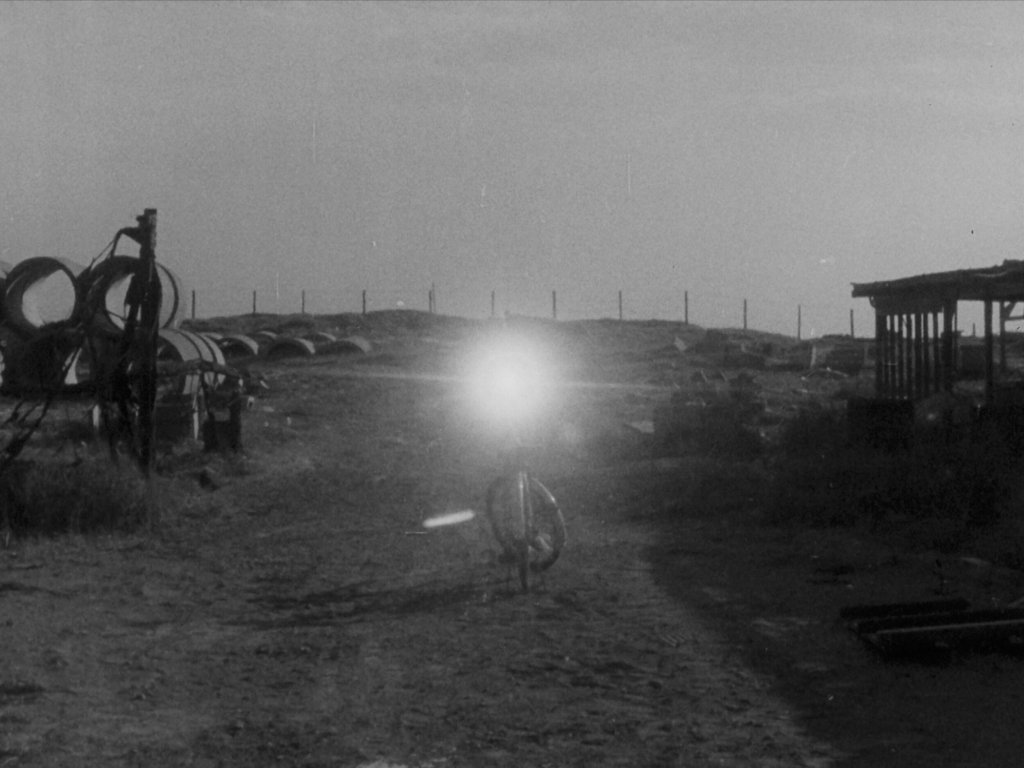
Discovery of the year: Alchemy (Nakai Tsuneo, 1971). The camera slowly zooms, in over a long period of time, on the light of the sun reflected in the mirror of a bicycle parked at the construction site. To this is added a slowly evolving flicker effect derived from negative-positive reversals, progressively dismantling the distance from the subject. Nakai created a masking film with a calculated pattern of black and white frames into which he inserted positive and negative images and made a print out of two separate rolls of film. The original projection speed was 16 frames per second, but the sound is separate from the open-roll tape rather than burned in, so it can also be screened at 24fps. Also, the original sound consisted of the friction noise of rubbing steel, but in 2019 a new version of the sound was created featuring the friction noise of glass. Two versions of the film exist: 24:15 mins at 24 fps and 40 mins at 16 fps. A structuralist film made in 1971 by Nakai, clearly inspired by Michael Snow’s Wavelength, but at the same time highly original, and somehow anticipating Matsumoto’s Atman.
.
Honourable mentions: Her Socialist Smile (John Gianvito), Summer of Soul (…or, When the Revolution Could Not Be Televised) (Questlove)
In a peripheral corner of Japanese cinema, one where experimental film, photography, and documentary film encounter, overlap, and merge, there seem to be a thread connecting some films made by different artists in different eras. Alchemy (Nakai Tsuneo, 1971) and Heliography (Yamazaki Hiroshi, 1979), but also parts of Magino Village: A Tale (Ogawa Shinsuke, 1986) and Gootariputra (Yamazaki Mikio, 1999), just to name a few, all share a common fascination for, and a total cinematic dedication to the Sun, its path, and its astral movements in the sky.
The photographer and filmmaker Yamazaki Hiroshi (1946-2017) is particularly important in this context, in the past I wrote about Heliography, here, and on his photographic works, here. After having dedicated a large part of his career to the creation of long-exposure photographs of the sun, Yamazaki in 1979 crowned this artistic path with the short film Heliography, one of the most important experimental films in the history of the genre in Japan. In the work, as the title indicates, the sun is placed at the center of the filmed universe, while everything else moves around it, horizon, sky and city. A visual and artistic vertigo that in the following years evolved and took a similar path when Yamazaki collaborated with Ogawa Production. Yamazaki went to Yamagata prefecture and for the collective filmed the time-lapse sequences of the Sun for the masterpiece Magino Village: A Tale (1986).
This “solar community” has now a new practitioner, Isobe Shinya. In 13 the young Japanese filmmaker left his camera in exactly the same spot for five years to shoot a picture of the sunset every thirteen seconds. In a series of merged time-lapses, we see the sun(s) moving repeatedly from the left part of the screen to the right. Superimposing these images collected over half a decade, Isobe created a work where the sky, while going through a series of permutation in colours, from black to purple, from red to blue, is also being slowly populated by fluorescent dots, the sun(s), gradually clustering the screen.
13 begins with a black screen and without sound, but soon the sun(s) and other drapes of light begin to appear from the upper left corner. As the progression and arcs of the sun(s) get faster, the images are paired first with a what could be described as a sort of background noise, and as the film moves along, with a soundscape composed of accelerating instrumental music. This musical progression peaks with the arrival on screen of a C-shaped cluster of sun(s), a sensorial explosion in a screen now transformed almost into a pink canvas perforated by a multitude of blinding lights. 13 offers a vision of the cosmos and of life conceived as the alternation of solar cycles, and this passage of time – the years, the sun(s), the skies – is condensed and visualised in its 10 minutes with an intense and almost haptic quality. The travel in time that 13 represents, the creation of a different time, could be also read as a travel in space: from the deep darkness of the first images, the journey passes through different phases and different colours of the universe – the sky – to land, in the last minute or so, again on planet earth. The sun(s) turn here into a singular Sun, and the purple, red and pink skies make way to a blue one. We are now back on earth, we can finally see the horizon, the clouds passing, and the shape of a house with its antenna. The singular Sun is setting, concluding its astral path. The film definitely belongs to the same realm of visions created by Yamazaki, and with his solar works, both cinematic and photographic, almost establishes an artistic and long-distance dialogue.
13 has won several awards around the world, and in 2021 has been shown in many festivals, online and in-presence, in the United States and Europe. If you read this in 2021, the film is made available by Isobe himself on Vimeo until December 28th:
At the end of last February, I had the pleasure of interviewing Hamaguchi Ryūsuke about his Wheel of Fortune and Fantasy, a movie that would debut at the Berlinale. The short interview was conducted on zoom and it was published in the Italian newspaper I usually write for, Il Manifesto.
In recent months, with the release and success of Drive My Car, many long and more in-depth interview with the Japanese director have been published around the world, but I decided nonetheless to translate my interview in English and post it here on the blog (even if it’s not really related to documentary). As said, the conversation was about Wheel of Fortune and Fantasy and before the release of Drive My Car. In recent months, with the release and success of Drive My Car, many long and more in-depth interview with the Japanese director have been published around the world, but I decided nonetheless to translate my interview in English and post it here on the blog (even if it’s not really related to documentary). As said, the conversation was about Wheel of Fortune and Fantasy and before the release of Drive My Car.
Interview with Hamaguchi Ryūsuke (February 27th, 2021)
Although you had already made short and medium length films in the past, this is the first time you have tackled the anthology film format, could you tell us more about this choice?
A few years ago, I made the medium length film Heaven Is Still Far Away, a project also born out of a collaboration with actresses and actors that for me worked partly as a sort of review of HappyHour, and partly as preparation for my next film, Asako I & II. This experience was also very useful to me because I was able to find my own rhythm, so to speak, in alternating feature films and short or medium length films, something that I think I will continue to do in the future. However, one of the problems with short films is not having a real exhibition outlet, that is, it is very difficult to find a proper distribution for these kinds of works. The solution I tried this time was to combine three shorts into an anthology, making them into a feature film that thus could be distributed.
Compared to feature films, do you think the format you worked on this time opens up different expressive possibilities?
Of course. All works, whether long or short, must have an end, a point at which they stop and leave the viewer with a strong feeling of having seen a world. Having said that, short films have the possibility, in my opinion, to leave a more intense and vivid impression as they only offer a brief glimpse into a certain world. A shorter film can also show something rare, events whose existence is not certain, leaving everything in suspense and without going too deep into it.
In each of the three episodes that make up the film there are at least three scenes of strong aesthetic and emotional impact. In Magic (or Something Less Assuring), the first episode, the long initial part with the two women in a taxi, in Door Wide Open the scene where the female protagonist visits the professor and in the last episode, Once Again, the final part with the two women embracing. Each of these scenes uses very different acting styles, yet there are parts in them where the characters, within the narrative, are acting, and where the boundary between what is real in the story and what is acted is ambiguous and fluid. Could you tell us how you worked with the actors to create this ambiguous feeling?
I wanted to create this ambiguity, but I also tried to create a clear sense of ambiguity, so to speak. That is, I wanted to create something defined, but something that can be interpreted in different ways. The fascinating thing for me is that the act of acting itself is ambiguous, and in the three scenes you mentioned, the actresses themselves in the midst of their performances must surely have noticed the ambiguity of the question “what is real?”. One strategy I used to create this ambiguity was, first of all, to write it into the scenes themselves, by inserting the act of acting into the narrative. I could not ask the actors to emphasise the fact that they were acting, it was rather a matter of achieving a very light and thin performance that, as in the case of the two women in the taxi, could later be read differently in the continuation of the story, when more information is revealed to us. In addition, it is important that there is something hidden in the performance, as happens for example in the second episode where even the main character, Nao, realises that she does not know exactly why she is doing what she is doing, thus generating a sense of displacement in the scene.
The third episode is set in a world where a computer virus has made the internet unusable. Could you tell us more about the reasons for this choice?
I shot the first two segments in 2019 and the last one in 2020. I originally planned to shoot it in spring, but the pandemic disrupted all the plans and we ended up shooting it in summer. The script was already completed, but an event as big as the pandemic made me tweak it. I couldn’t avoid taking into account the effect the Corona virus had on all of us, so I decided to set it in a kind of parallel world where the internet is no longer usable, a world disrupted by a different kind of calamity.
One last question about the situation of independent cinemas (mini-theaters) in Japan at the time of the pandemic, a culture that is very close to your heart and for which you are fighting with various initiatives, such as Mini-Theater Aid (crowdfunding that helped these small cinemas survive last year and that is still active with various support initiatives). What is your relationship with these independent theatres?
For me, they have been an important place to discover films that are completely different from the Hollywood films or TV series I was used to, films that were “boring” compared to the ones I used to see. Seeing these “boring” films in the space of these small independent theatres, I discovered a new kind of feeling, my body changed and I learned to appreciate a different kind of cinema. Now my films are shown here in Japan, mainly in these independent theatres, and I am in contact with all the people working there, it is for these reasons that I have been actively participating and supporting projects like Mini-Theater Aid.
Third part (you can read the first part here and second here)
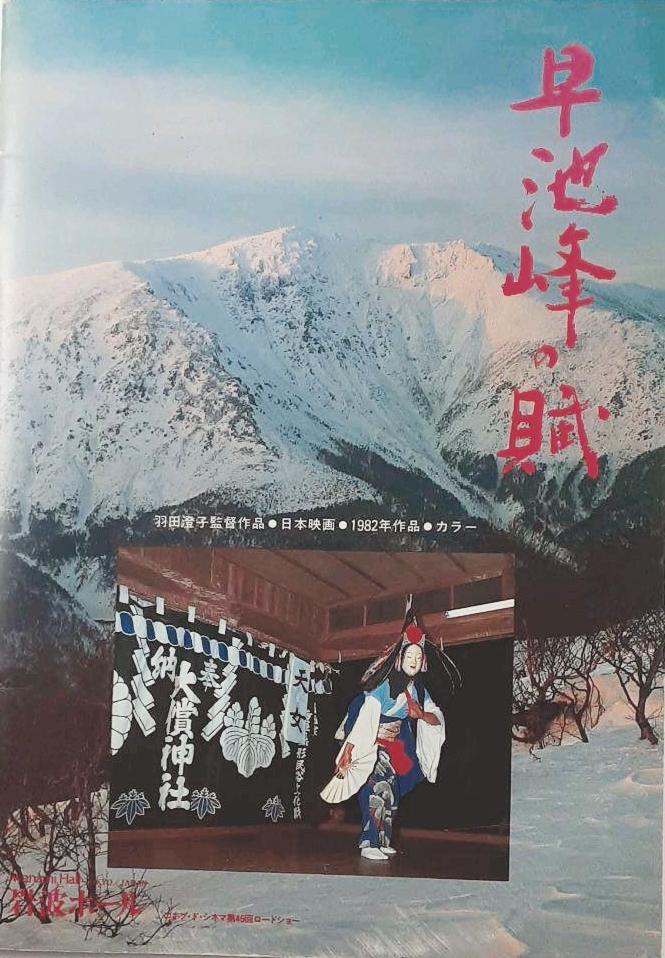
A slightly different post today, since it’s not about Haneda Sumiko’s own writings, but more about one of Haneda’s documentary, and one of the most significant in her career, Ode to Mt. Hayachine 早池峰の賦 (a.k.a. The Poem of Hayachine Valley). The movie was released in 1982 at the Iwanami Hall, distributed by Equipe de Cinema, where it stayed from May 29th to June 25th (and later from August 7th to 13th). A booklet about Haneda and the movie was published and sold at the theater, in it there are various writings by Haneda, Tsuchimoto Noriaki, people of the village in Iwate, and Paulo Rocha, among others. The Portuguese director, with whom Haneda collaborated as a screenwriter for a segment of his A Ilha dos Amores (released at the Iwanami Hall in December 1983), wrote an interesting piece on Ode to Mt. Hayachine; you can read my translation below (NOTE: This is by no means a professional translation, but I hope the readers can get the gist of it):
Paulo Rocha on Ode to Mt. Hayachine
In an Italian film similar to this one, L’albero degli zoccoli / The Tree of Wooden Clogs, director Ermanno Olmi told us, with rare insight, about the heart and the inner world of Italian peasants. Haneda goes here even further, for her, it is not only the heart of the people who speaks in her movie, but it is as the whole of nature, trees and stones, were speaking to us. Although we are in 1982, immersed in our contemporary problems, at the same time, we live with simplicity in an uncomplicated world that has just been created right now. There is a difference between Olmi and Haneda, and it may be a difference that exists between a country with a Catholic tradition and a country with a Shinto tradition, but still there is a miracle that is common to the two. This miracle is that in their clear mind everything is sublimated and yet, a direct and spontaneous force, an inspiration and a beauty in the detachment of modern daily life is gradually invading our hearts. For Haneda, the mountain gods, the plastic products in the small shops in the village, the people who dance the kagura, and the tourists are just as passionate and fantastic. Everything is just as important to her non-sentimental gaze. That is, past and future, nature and machinery, mountains and towns. What is art for, what is fiction for, what position does the profilmic material occupy in a movie, what position does fiction occupy in art? What about the artist? What happens to the artists filmed? Rarely in the history of cinema have such essential questions been asked in such a direct, simple, generous, and intelligent way. I am a filmmaker, and until now I believed that I would be closer to the truth if I approached it through fiction, but now, after seeing Haneda’s Ode to Mt. Hayachine, I realize that the idea is an arrogant one, we must take advantage of this opportunity, we must learn to see reality correctly in order to know the truth. Ode to Mt. Hayachine gave us the best example of this. In Europe, documentary films are being re-evaluated as part of a movement for a new type of cinema. If Ode to Mt. Hayachine were to be introduced in Europe, they would no doubt be surprised and respectful to find that the path they were looking for already existed in Japan. Centuries from now, when people in the future will want to know what we were like, they will be able to watch Ode to Mt. Hayachine, and the movie will tell them about us, the audience of the film today, and about little-known people who were lost among the mountains, in an unknown valley.
The 2021 edition of the Yamagata International Documentary Film Festival has ended last Thursday. Like many other events in the past two years, the festival took place exclusively online, this is the second and final dispatch, you can read the first one here.
This is the list of the movies awarded:
The Robert and Frances Flaherty Prize (The Grand Prize): Inside the Red Brick Wall
The Mayor’s Prize: Camagroga
Awards of Excellence: City Hall , Night Shot
Ogawa Shinsuke Prize: Little Palestine, Diary of a Siege
Awards of Excellence: Three Songs for Benazir, Makeup Artist
Special Mention: Broken,
Citizens’ Prizes: Writing With Fire
(Synopses are from the official homepage of the festival)
Wuhan, I Am Here (2021, Lan Bo) A film crew that had traveled to Wuhan to make a fiction film is confronted with the sudden lockdown of the city and decides to go film in the streets. They race through the city, joining forces with volunteers who are offering free resources collected through the internet to the elderly and the homeless. The director and his troupe were able to capture on camera the chaos, tensions, fears and pain experienced by the citizens of Wuhan during the first lockdown of the city, in the first months of 2020. A woman crying on a sidewalk because her husband, at home with cancer, cannot be hospitalised due the Covid situation. A group of volunteers distributing food to the various communities of elderly, but often halted and contested because of bureaucracy and the lack of passes. People denied their right to visit relatives in hospital…the documentary is about stories of struggle and grief, death is very present in the film, stories we all became accustomed to witness in the last two years. This is a documentary whose appeal and point of interest will probably increase with the passing of time, when one day, hopefully, we will look back at the pandemic days and reflect on this huge historical juncture.
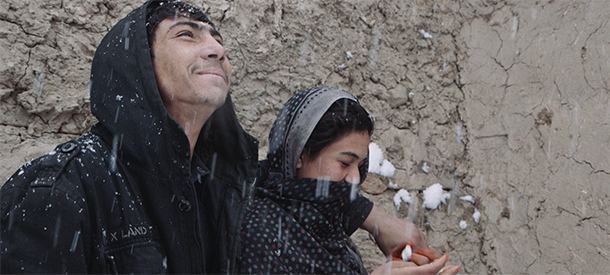
Three Songs for Benazir (2021, Gulistan Mirzaei, Elizabeth Mirzaei) In a camp for displaced persons in Kabul, a young man sings for his beloved wife Benazir as if the whole world was theirs alone. We see him next four years later, facing the consequences of the path he was forced to choose in providing for his family, after his struggle to find work. In just twenty two minutes the film says more about contemporary Afghanistan than a dozen newspaper articles about the subject.
Three Songs for Benazir
Soup and Ideology (2021, Yang Yonghi) Yang Yonghi is a zainichi director born and rised in Osaka. When her father passed away in 2009, of her family, only her mother and herself were left in Japan. The director who now lives in Tokyo, is worried about her aged mother living alone, so she visits her home in Osaka every month. One day, the mother suddenly tells her that she had experienced the Jeju uprising as a young woman. Her memories of the tragic event, buried deep in her heart, resurfaced and came back to life. She begins to talk specifically about how she got involved in the Jeju uprising. With her latest documentary Yang Yonghi continues her exploration of her family history and the history of the two countries she is connected with, Japan and North Korea. The movie opens in 2018, with her mother lying on a bed remembering the killings and the dead bodies piled along the roads, as she was escaping from Jeju island in 1948. Soup and Ideology is a very touching viewing experience, and on many different levels. The movie presents not only the painful memories of the Jeju massacre (April 3rd 1948) as remembered by the director’s mother, and the destruction of her family, her three brothers were sent from Japan to North Korea at a young age, but also an emotional portrait of her frail and old mother, as a Korean who grew up in Japan worshipping North Korea. As the film progresses she is diagnosed with senile dementia, and little by little she loses her memories, including those of the massacre she witnessed, only 18, in the small Korean island. The movie is also partly an act of self-reflection by Yang Yonghi herself, if in the first part she is the one filming her mother, in the second, when her mother condition worsens, she enters the frame, so to speak. We can clearly see her emotions, especially when she visits the island, with mother and husband, for the anniversary of the massacre. There Yang Yonghi understands that her mother’s affiliation/attraction for North Korea, something the director had never completely forgiven her and her father for, was also partly caused by the atrocities committed by the ROK her mother saw with her own eyes. It would have been a better movie for me, had not been for the five or so minutes of animation used to explain her mother story and the historical situation in Jeju in 1948. I found the segment unnatural and it really took me out of the movie. The soup of the title is a dish that her mother usually prepares, and that is later cooked by Yang Yonghi’s Japanese husband, we see the first meeting between her mother and him in one of the first scenes of the movie, as a way of entering or belonging to her wife’s family, the director parents had always wanted her to married exclusively a North Korean national. Soup and Ideology is important piece of documentary and was one of the highlights of the festival for me.
Soup and Ideology
Other documentaries I’ve watched: The Buddha Mummies of North Japan (2017, Watanabe Satoshi), about the practice of sokushinbutsu orself-mummification through which some mountain monks, usually related to Shugendō, are believed to have attained satori. The World’s “Top” Theater (2017, Satō Kōichi), a fascinating trip into post-war film culture in Yamagata, the film focuses on the Green Room, a cinema in Sakata City that was completely destroyed in a fire in 1976. Before the Dying of the Light (2020, Ali Essafi); Dorm (2021, So Yo-hen), partly documentary and partly performance/reenactment, female Vietnamese laborers arrive at a dormitory in Taiwan. Creative and surprising the finale.
Some final thoughts. After going to Yamagata for almost a decade, it was a very singular experience to join the festival online—the system adopted, with movies available only in Japan and at certain time, like in the in-presence edition, raised more than a doubt (I had a press pass, but I will write more on this in the following weeks). Of course I missed the people, the discussions, the city itself, experiencing the movies on a big screen, the food and the drinks, however, the festival turned out to be a satisfying experience. Of the works I watched, a couple were outstanding, but each one was interesting in its own way. Yamagata is, among other things, a nice occasion to reflect on what happened in the documentary world in the past two years, with a particular focus on Asia: new trends and new voices, but also how the cinema of the real captured, mirrored, and represented the events that took place around the globe. See you in two years Yamagata!
This year edition of the Yamagata International Documentary Film Festival is, like many other events in the past two years, taking place exclusively online. The festival is available only for viewers in Japan and will end next Thursday (October 14th). This is a first dispatch, others, will possibly follow.
(Synopses are from the official homepage of the festival)
Pickles and Komian Club (2021, Satō Kōichi) Questions and heartbreak emerge from the closing of long-established pickled foods store, Maruhachi Yatarazuke, whose 135-year operation was brought to an abrupt end during the pandemic. The film follows the store owner, forced to make a difficult decision, and those who freely gathered at the store and supported the space. If you have attended at least once the YIDFF, you certainly know about Komian Club, the place where all the people of the festival, directors, producers, cinema lovers, press, or just people from the prefecture, used to gather and discuss about cinema, fueled by sake, beer, or just pure passion for documentaries. Unfortunately, the place, together with the pickled store that ran it, closed down and was demolished, in part due to the pandemic. The documentary is a nice glimpse of what the Komian represented for the documentary community in Yamagata, but also a look at the dire situation of old and historical properties and buildings in peripheral areas in Japan.
Komian Club
Self-Portrait: Fairy Tale in 47KM (2021, Zhang Mengqi) The newest instalment in a series set in a small village in a mountainous region in China. In the winter marking ten years since the director began filming, she tries to get a new building constructed in the village. The girls, who had thus far been the subjects of her films, take up the camera themselves, and begin recording scenes of the village. This is a lovely addition to the series the director has been making since 2011, here the focus is on the children and their interaction with the landscape they inhabit, always breathtaking I have to say, through the mediation of video cameras.
Whiplash of the Dead (2021, Daishima Haruhiko) Weaving together the memories of a university student who lost his life in the First Haneda Struggle in 1967 through the words of his bereaved family and ex-classmates, this film turns the memories of those who protested against government power into questions for the future. The movie is comprised of two parts, for a total of 3 hours and 20 minutes. While in the first 90 minutes the director focuses on the events preceding and leading to the the death of Yamazaki, in the second segment (it could easily have been another movie), the protagonists of the students protests of the late 1960s, now in their 70s, reflect on the reasons of the implosion of the Japanese new left and its movements. The latter part is definitely the one I latched more with, listening to some of the protagonists of the season of politics in Japan, explaining how the hierarchical structure of the factions, the almost military attitude of its members, and last but not least, how the uchi-geba, the internal purges, de facto destroyed the movements, was mind-opening. Of course I’ve read about it in books and papers, and watched movies depicting this falling (and even wrote about it), but hearing it from the people who were on the frontline, was, weirdly enough, liberating. The story of the Mito family, not affiliated with any left group, but a family that helped the young protesters in prison, and later promoted anti-nuclear activism, and whose members (father and two sons) tragically died in 1986, is so fascinating, that would deserve its own documentary.
Whiplash of the Dead
Inside the Red Brick Wall (2020, Hong Kong Documentary Filmmakers) Hong Kong, shaken by the “one country, two systems” policy. November 2019, protestors calling for democratic reform are besieged in a university by heavily armed officers. In scrupulous detail, these anonymous filmmakers capture the worn out and anxious youth who are being beat into submission by the violent and cunning forces of power. This was for me the highlight of the festival, so far. Not only a raw punch in the stomach and a visceral viewing experience, but also and incredibly fascinating film on so many other different levels. First of all, there’s the emotional and political side of the resistance, seeing the events of the siege after almost two years, and from a different point of view was, once more, enraging. The second part of the film, when many of the young students broke down, cried and walked out, defeated, from the campus, often criticized by their comrades, was — although something I’ve seen over and over again in the documentaries about the Japanese protests of the 1960s and 1970s—heartbreaking. What was also extremely fascinating, was that all the young people wearing gas-masks and gear, for protection and for anonymity, formed, shall we say, a multitude, a resistance, expressed not through the act of individuals, although there are some speakers who stand out, but more through a sense community and togetherness. It is true that it’s a community that in the second part of the documentary, as I said above, partly dissipates. However, for the period of the siege, twelve long days, it shone as a fight of the multitude. Very interesting was also how the documentary, by filming the violence between riot police, students, aid people, and members of the press (mainly independent press that live-streamed the battles on the internet) was able to capture and create a very powerful sense of space and proximity. A visual cartography of violence, but also of resistance.
Inside the Brick Wall
Other documentaries I’ve watched: Entropy (2021, Chang Yu-sung), a short and abstract experimentation with images shot in a mine; It’s Just Another Dragon (2020, Taymour Boulos); Broken (2021, Nan Khin San Win) a short but touching portrait of abuse and violence in Myanmar. Her Name Was Europa (2020, Anja Dornieden, Juan David González Monroy) a playfully and fascinating trip into the obsession of recreating/simulating/reviving things from the past/present with a deranged and derailed finale. Afternoon Landscape (2020, Sohn Koo-yong), more an installation than a movie, better to be experienced on the big screen probably; Nuclear Family (2021, Erin Wilkerson, Travis Wilkerson) a descent into the heart of darkness of the US; and The Still Side (2021, Miko Revereza, Carolina Fusilier) the latest from the talented duo Revereza/Fusilier, but one I could not really connect with.
Before being overwhelmed by the wave of film festivals approaching —like last year Yubari, Pordenone, OpenCity and for the first time Yamagata are offering an online edition—I wanted to gather some thoughts on a couple of documentaries (and experimental works) I recently watched.
Sayonara TV (Hijikata Kōji, 2020) It’s a pity that the documentaries produced by Tokai Terebi are not released, by their own choice, on DVD and more widely known, and as far as I know they are not even streaming. I had the chance to see some of them in theater here in Japan in the past ten years or so, and while they are not formally challenging, some of the documentaries are really good and worth watching, this one included. I would also suggest Aozora Dorobō (2011) and Shikei bengonin (2012).
Sayonara TV starts as an investigation into the routine of the news channel Tokai TV in Nagoya, at first a camera films the daily work in the office, but after most of the employees express a sense of uneasy at being followed around and filmed, Hijikata moves his focus on three specific employees. However in the course of the documentary the director starts to doubts the factuality of his own endeavour. Reminded me of some work by Mori Testuya and Imamura Shouhei.
The Witches of the Orient (Julien Faraut, 2021). A pop-documentary about the Japanese volleyball players called the “Oriental Witches”, now in their 70s, a team that took the world of sport by storm during the 1960s. The film follows the formation of the team of the Dai Nippon Spinning’s factory in Kaizuka, Osaka, until their victory at the Tokyo Olympics in 1964. Not the kind of documentary I’m usually attracted to, but well, this was highly entertaining. The cinematography is by the great Yamazaki Yutaka (Still Walking, Nobody Knows), and splashy is the use of animation from Attack No. 1, a manga and series inspired by the team itself. The great animation at the beginning is Dan Dan’emon bakemono taiji (1935) by Kataoka Yoshitaro, and the images of the team’s training are from the short documentary Challenge by Shibuya Nobuko.
Shibuya Nobuko in the 1960s
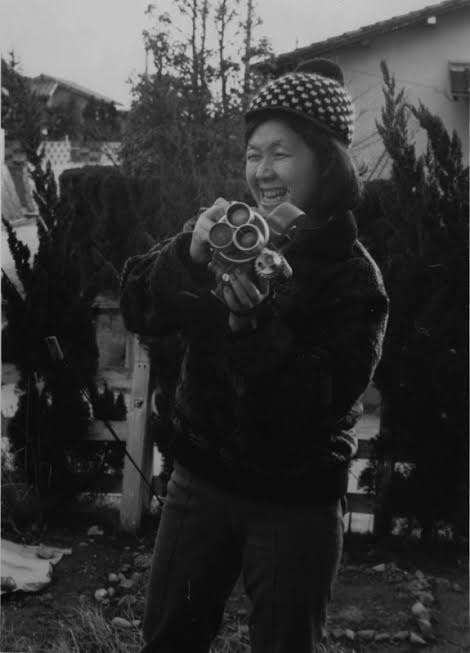
As written above, Challenge, also known as The Prize of Victory (Shibuya Nobuko, 1963) is a short documentary about the so called Oriental Witches, the legendary Japanese women’s volleyball team active in the late 1950s and 1960s. The short was awarded a prize at Cannes in 1964, and Shibuya ended up contributing to Ichikawa’s Tokyo Olympiad, she filmed the section about volleyball of course. Shibuya was a script supervisor, filmmaker, and video reporter born in Dalian, occupied China, in 1932, and she moved to Japan only after the war. As a script supervisor she worked also for Dokuritsu Pro with Imai Tadashi, Shindō Kaneto, and Yamamoto Satsuo. After this documentary, in the next decades she would work mainly for TV, and, as far as I know, worked as an editor for some non-fiction films directed by others (Iizuka Toshio, for instance). She passed away in 2016. Shibuya is a fascinating figure, another forgotten Japanese female filmmaker and documentarian I would like to explore more in the future. On YouTube there’s a channel dedicated to her films, I believe it’s a semi-official one:
Minamata Mandala (Hara Kazuo, 2020). Synopsis from Letterboxd: After years of dumping industrial wastes from the factory to the ocean, Chisso Chemical Corporation contaminated the area of a small Japanese fishing village with excessive amounts of methylmercury. This highly toxic chemical bioaccumulated in fishes of the local water, which when consumed by the local populace resulted in mercury poisoning. In 1977, Minamata disease certification criteria was set by a strange method that tried not to recognize the rights of environmental disease patients. However, an Osaka court won the case for some patients because of a newly developed theory by medical doctors’ recent experiments and proofs. For decades, these patients struggled within the Japanese judicial system for their rights to receive compensation as victims of environmental disease. Those different aspects of these patients’ lives have been filmed by director Hara for the last 15 year inspired by the late director Tsuchimoto Noriaki documentaries.
This would need a longer and in-depth piece, but for now suffice it to say that Minamata Mandala is, in my view, one of Hara’s best works, and the masterpiece of the second part of his career. Not a minute of the documentary (373 minutes!) is superfluous.
Alchemy (Nakai Tsuneo, 1971). Official synopsis: The camera slowly zooms, in over a long period of time, on the light of the sun reflected in the mirror of a bicycle parked at the construction site. To this is added a slowly evolving flicker effect derived from negative-positive reversals, progressively dismantling the distance from the subject. Nakai created a masking film with a calculated pattern of black and white frames into which he inserted positive and negative images and made a print out of two separate rolls of film. The original projection speed was 16 frames per second, but the sound is separate from the open-roll tape rather than burned in, so it can also be screened at 24fps. Also, the original sound consisted of the friction noise of rubbing steel, but in 2019 a new version of the sound was created featuring the friction noise of glass. Two versions of the film exist: 24:15 mins at 24 fps and 40 mins at 16 fps. This was one of the best discoveries of the year for me, thanks to the Collaborative Cataloging Japan (CCJ), a structuralist work made in 1971 by Nakai, clearly inspired by Michael Snow’s Wavelength, but at the same time highly original, and somehow anticipating Matsumoto’s Atman.
Some thoughts on three interesting films I’ve seen in the last couple of months.
13 (Isobe Shinya, 2020) For me easily one of the best works of 2021 so far. Here the synopsis from IDFA:
Filmmaker Shinya Isobe left his camera in exactly the same spot for five years to shoot a picture of the sunset every thirteen seconds. In a series of merged time-lapses, we see the sun moving serenely from left to right. Over and over again. First in a neat line, in total silence. Later patterns appear, supported by a minimalist soundtrack. Isobe overlaid analogue shots from different seasons to produce clusters of shining spots.
The film reminded me of Yamazaki Hiroshi‘s Heliography, his photographs and his collaboration with Ogawa Pro for Magino Village: a Tale (the time-lapse scenes of the Sun). 13 is an incredible viewing experience that connects our human time, the 5 years of the shooting, to the cosmic time of the star(s). The apex of this sensation for me is when a bunch of luminous suns appear on screen towards the middle of the work. The overlapping images shot on film (16mm) reach here an almost haptic quality, and the bright spots are, as it were, holes in the sky that let an otherwise unbearable light filter through. The instrumental music used enhances this overwhelming sense of joy and cosmic gratitude, yet, 13 works without music as well, and like in the best examples of pure experimental cinema (Brakhage), the succession of images by itself creates a visual, and almost musical, rhythm.
Ecosystem 5: A Tremulous Stone (Koike Teruo, 1988)
The Ecosystem movies are a series of films that work with abstract patterns of extraordinary density and complexity; the series is inspired by the complex chaos systems present in nature.
A storm of materiality in flux, a very tactile visual experience, a cacophonous but smooth, almost Merzbow-like (and not because of the sound), experience. I would love to see it on a big screen.
Youth: The 50th National High School Baseball Tournament (Ichikawa Kon, 1968) Unpopular opinion maybe, but I prefer this to Tokyo Olympiad, and I don’t even particularly like baseball. The first part is among the best examples of cinema I’ve seen this year: beautiful photography, really stunning, by Uematsu Eikichi (a cinematographer who worked for Kamei Fumio’s Record of Blood: Sunagawa, among other works), fast-paced editing like in an action movie, incredible popping colours, a moody music, inventive camera angles, a clever sound design, and an exploration of different landscapes and lives of young students practicing baseball in Japan. The most fascinating moment for me was when the movie touches on how the history of the tournament and that of the country are indelibly intermingled. There’s a cut in the first 30 minutes or so, from the smiling faces, in colours, of contemporary (at the time) fans, to the bombings of the Pacific War, that is pure cinema, and it’s worth alone the viewing. The second part, where the 50th tournament itself is the main subject on screen, loses for me, a non baseball person, some of the appeal, but it is still very well crafted and a showcase of Ichikawa’s cinematic touch, and has a very poetic ending. One of the discoveries of the year for me.
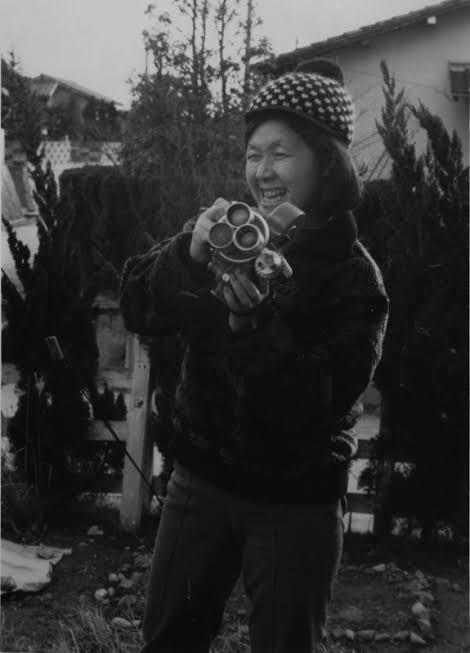
In 2002 Haneda Sumiko published Eiga to watashi, a memoir of her career and experiences in the world of Japanese cinema from the 1950s to the late 1990s. A revised version titled Watashi no kiroku eiga jinsei came out in 2014. I’m translating and posting some of the most interesting passages of the first version of the book and other writings by Haneda, as I read it. Titles are mine.
At Iwanami Shashin Bunko
In the fall of 1949, Professor Hani Setsuko, a teacher at Jiyū Gakuen and mother of Hani Susumu, contacted me saying “Iwanami Shoten is starting to produce science films and educational films. Would you like to join?” I have never asked why I was the one chosen, but my reaction at that time was negative. Jiyū Gakuen was a strict Christian school, and while I was in school, I didn’t watch any movies. I saw films when I was a kid, when I was in girls’ school, and after the war, but the world of movies was so distant that I couldn’t imagine to be part of it. I also wasn’t really interested in the offer, because when I heard that it was about science and educational films, I thought about my father, who was a teacher, and felt like I didn’t want to be an educator.
“I’m not very interested” I told her. It’s kind of scary to think about it now, but if the story ended there, my life would have been completely different. However, about a month later, she contacted me again “If you are not interested in movies, how about editing a book?”. “Editing a book” was something that I could see myself doing, and so I was happy to accept, because I thought it would be interesting to join the group. At first, I started as an assistant to Hani Susumu, it was in December 1949, and it was about editing a book for the Iwanami Shashin Bunko series. [a series of photo books, ndt]
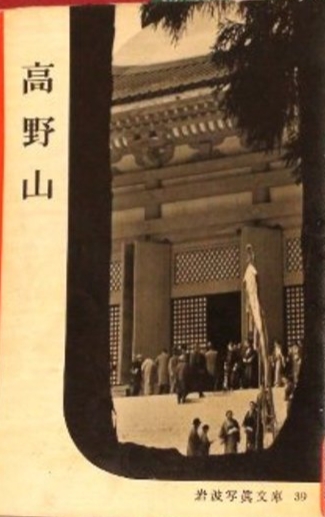
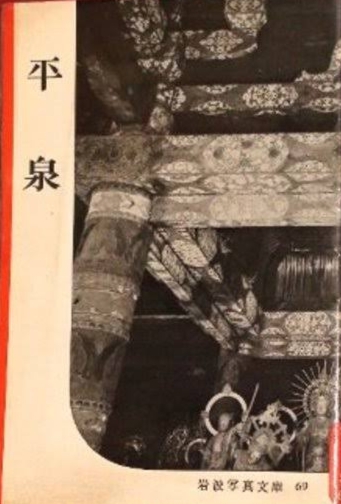
I was involved in making photography books for the first two years, and for about half a year I was an assistant to Hani Susumu. (…) As a photography book curator I edited 16 books, among which I will never forget “Koya-san” and “Hiraizumi”. I grew up in a foreign country without knowing much about “Japanese things,” so for me, the influence of making these two books was great, and later in my life I ended up using this experience.






 Asian Docs
You must be logged in to post a comment.