Starting this October, Planet +1 in Osaka is hosting a retrospective of most of the films made by NDU (Nihon Documentarist Union, 1968-1973), and by the works directed by one of its founding members, Nunokawa Tetsurō.
If you follow this space, you know that I have dedicated many articles to the collective over the years. Still, I believe that much more can, and should, be written about NDU, and in a much better form. The retrospective offers a perfect opportunity to revisit their films, and hopefully, a deeper knowledge of their activities, a better understanding of the sociopolitical context in which they operated, and a clearer picture of the evolution of Japanese documentary cinema will allow me to engage more deeply with works.
The retrospective will run for almost half a year, with each film screened twice a month. The final screening, scheduled for February, will be Asia Is One. I am not sure I will be able to attend every screening, but in any case, I intend to at least revisit and rewrite my older pieces. Each screening will be introduced by Nakamura Yōko, a scholar who will also offer a short analysis of the film afterwards and is currently writing a book on NDU and Nunokawa Tetsurō.
Onikko—A Record of the Struggle of Youth Laborers (鬼ッ子 闘う青年労働者の記録, 1969)
“…the notion aimed to conceptualise class as a process, as the transitory phase experienced by a social group that is constantly created, fragmented, recreated and dissolved in a continuous movement.”1
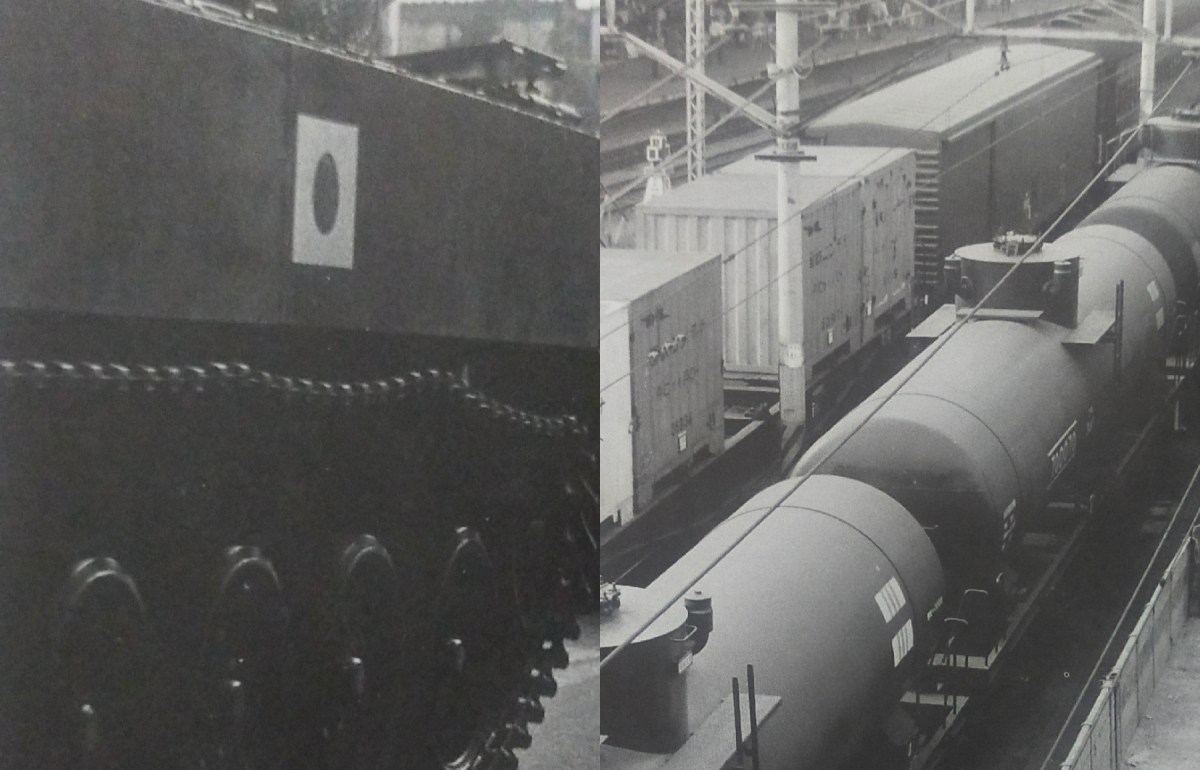
On 8 August 1967, a freight train carrying jet fuel to the U.S. air bases at Tachikawa and Yokota collided with another train and caught fire at Shinjuku Station. The incident exposed the role played by Japan and its railway system in transporting military supplies for the U.S. war in Vietnam, bringing the issue to public attention. It also turned Shinjuku Station into a focal point for subsequent protests, which would reach their peak on 21 October 1968, during what became known as the Shinjuku Riot (Shinjuku Sōran). This is the starting point of Onikko, the first film made by NDU, a documentary made with the sponsorship of the Tokyo section of the Japanese Socialist Party.
The title Onikko itself suggests a break between generations, reflecting the younger generation’s desire to distance themselves from their parents. The word onikko means a naughty or devilish child who disobeys their parents, capturing the spirit of rebellion that runs throughout the film.
The documentary shows how students and railway workers organized and took part in protests at three different locations in Tokyo in autumn 1968: the National Diet, the Defense Agency, and the area around Shinjuku Station. One of the things the film brings out is how these protests, and the work that went into preparing for them, brought together people from very different backgrounds. The movement involved established student groups and workers, particularly railway workers, but also individuals who joined the Hansen Seinen Iinkai (Antiwar Youth Committee) on their own, motivated by their opposition to the Vietnam War and their desire to challenge the existing order. The two people interviewed in the middle of the film—a 19-year-old woman and a man who had not been able to pursue his education—are good examples of the class composition process here displayed.
Onikko is shot mainly in black and white, with occasional scenes in color that really stand out for their vividness. Perhaps the most striking example comes in the final minutes of the film, when we see a young man spray-painting graffiti on a wall built around Shinjuku Station to conceal the tankers carrying fuel to U.S. military bases. The scene is filmed from four different angles, using multiple cameras in a guerrilla-style approach. Christmas decorations and a Christmas song played remind us that the events take place during the holiday season. In the foreground, we see a young girl elegantly dressed in red, while the young man appears in the background. The perspective shifts several times between them as he writes on the wall: “On the other side of this wall is Vietnam.”
Walls separate and conceal, but they also enclose, and in doing so, shape identities. One of the most fascinating themes formally embedded in Onikko, as in NDU’s other works, is the act of revealing, drawing attention to, and crossing borders and walls—whether physical, cultural, geographical, or political.
In one section of the film, the camera follows one of the trains carrying fuel to U.S. military bases, while the driver is interviewed about his financial struggles. By getting on the train, NDU crosses a threshold and shifts the perspective on Japan and the Japanese state. The country is now being seen from the outside, as though the camera were crossing an internal border. As Nakamura pointed out during the post-screening discussion, it is in this section of the film that we, the viewers now identifying with the point of view of the camera, catch glimpses of Japanese people going about their everyday lives, while the material support for the war in Vietnam passes by, largely unnoticed.
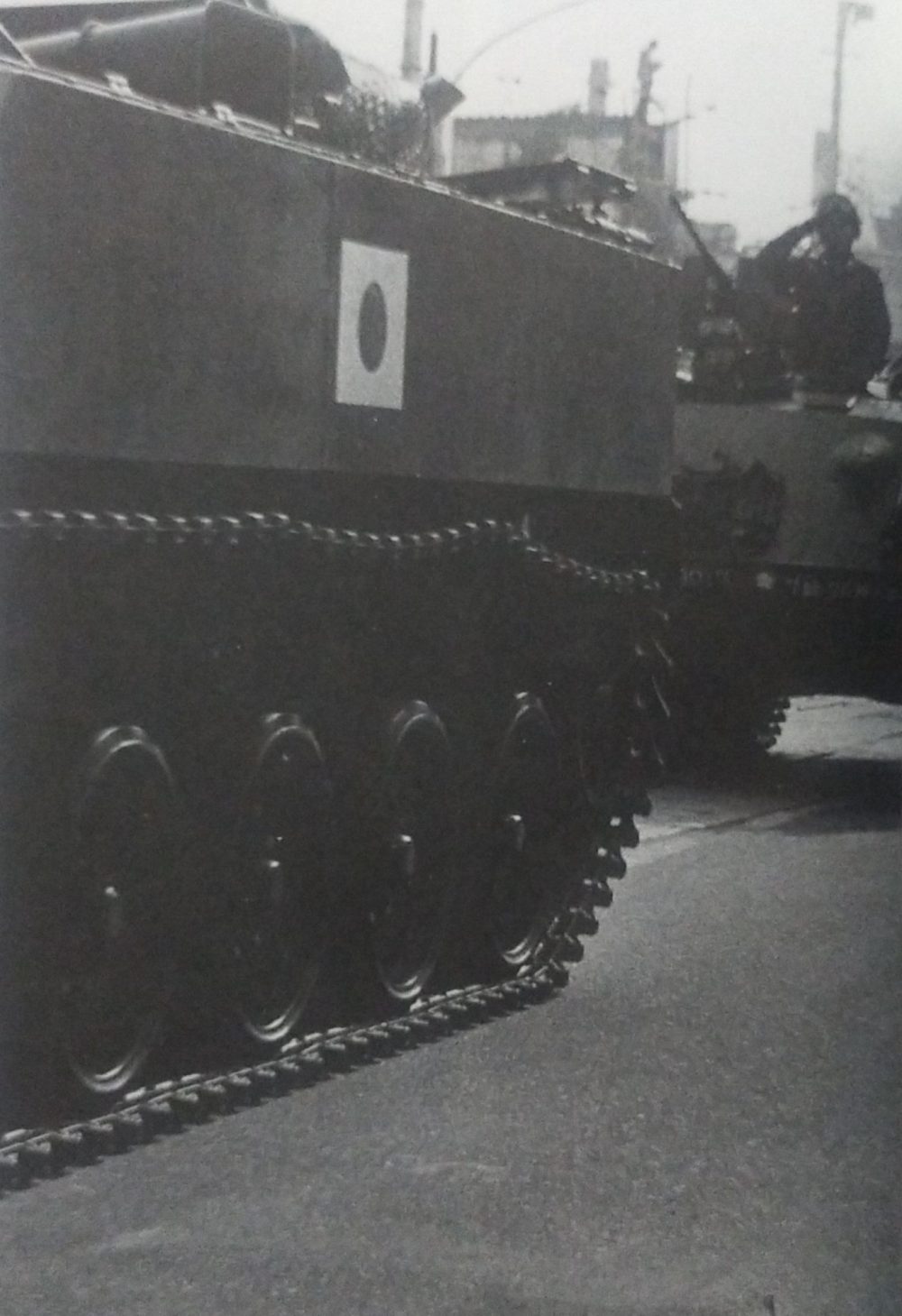
The scene is followed by what is the closing of the film: a parade of Japanese Self-Defense Forces’s tanks passing through Meiji street in Shinjuku in November 1968. War has entered the frame.
Much can and should be said about the formal approach developed by the collective during its years of activity. I will try to write something more comprehensive once the retrospective is over, but for now, suffice it to say that the editing in Onikko favors a rhapsodic rhythm of images and a noticeable detachment between sound and visuals. The latter is one of the recurring features of NDU’s work, pushed to its extremes especially in Asia Is One (1973).
To trace the origins of this interest in sound, we have to go back to the beginnings of the collective, which was formed by dropouts and students from Waseda University, many of whom belonged to the university’s photography and radio broadcasting clubs. According to Inoue Osamu, one of its members, NDU, besides 16mm films also produced “animated slide shows in addition to publishing issue-oriented newsletters”2.
The collective’s experience with radio broadcasting is evident in many of the choices made in Onikko, where pop music and advertisement-inspired voice-overs are used to displace and disorient the images on screen. A particularly striking example comes in the sequence where a series of photographs of the Shinjuku Riot are rapidly edited together, accompanied by distorted electronic music that borders on cacophony. This formal choice was reportedly dictated by the fact that Nunokawa, who was in charge of filming, had already used up all the available film stock in the days leading up to the event.
Another creative use of sound occurs in a sequence showing missiles and bombs, accompanied by a male voice endlessly repeating “shin hatsubai, shin hatsubai, shin hatsubai” (newly on sale, newly on sale, newly on sale).
Beside the historical significance of the film in depicting a cardinal event for the archipelago, the effect produced by watching Onikko now is one of chaosmosis, in which different elements come together in a mosaic-like vortex of sounds and images, with everything at play remaining active and engaged, as it were, on the same plane. A chaos-cinema which will be explored more in the collective’s next endeavor, Motoshinkakarannu (1971).
Footnotes:
- Jacopo Galimberti, Images of Class: Operaismo, Autonomia and the Visual Arts (1962-1988), Verso Books, 2022 ↩︎
- Inoue Osamu, What was the NDU? – Forty Four Years of the NDU, from Onikko to Headhunter’s Song, in The Legendary Filmmaking Collective NDU and Nunokawa Tetsuro, Editors Yasui Yoshio, Tanaka Noriko, Cinematrix and Kobe documentray Film Festival Committee, 2012. ↩︎

